Who am I?

Standard

I don’t know who I am these days. I have been married to the same man for over 30 years, and he thinks he has been married to the same woman for the exact amount of time. (You’re not going to believe this crazy coincidence: we both got married on the same day!  Just one more sign we were meant for each other.)


I have always thought of myself as a small woman with a talent for getting older. Although I have not always liked who I am, I haven’t doubted who I am. Until now.


We don’t have cable TV, partly because we don’t have that much time or interest, and partly because we are more interested in saving our money. But sometimes when I exercise on the treadmill, I go to hulu.com to watch a TV show or documentary on my laptop.


Hulu features hundreds of old programs and many episodes of current shows. I have walked through miles of Alfred Hitchcock Presents and the Alfred Hitchcock Hour, along with a lot of other shows. Sometimes I watch the ads; other times I take my headphones off.


Recently, while watching a show, a Weight Watchers ad came on. Jennifer Hudson smiled at me and belted out, “You are me and I am you.” I looked down at my plaid pajama bottoms and green sweatshirt, then looked back up at Jennifer in her form-fitting black top and tight pants, compared my clunky white running shoes with her open-toed stilettos, and said, “Okay.” I continued belting out that song, while Jennifer slogged forward on the treadmill, and then I disappeared. When the show came back on, we switched places again. It was weird, but then I’m used to weird.




The other day, instead of Jennifer (who is me and I am her), a young blonde woman smiled at me and said, “I am you.” But before I had a chance to be her, a young brown-haired woman smiled at me and announced, “You are me.” That was beyond weird.


Needless to say it left me shaken, but not stirred. I feel like Jackie Chan in the movie Who am I? I sure hope I’m not him. I’m not up for all those action movie stunts.


I have to be one of four women, but I have no idea which one I am or which one is sleeping with my husband. Should I ask him? Should I contact Weight Watchers and ask them to send me home? Should I change my gravatar picture?


I had no idea that on Weight Watchers you lost not only weight but also your sense of identity. Will I have to join in order to find myself? I’m starting to miss me. Should I be alarmed that one of the anagrams for Weight Watchers is “Wager the Switch”? Or should I focus on the other anagram, “Great with Chews.”


I need help people.


(Note to Weight Watchers: I borrowed these pictures from your ad, and I’ll give them back in exchange for you know who.)

On the outside

Standard


I learned the language of abandonment early. Before I knew words, I studied its grammar in my mother’s eyes.


I came unannounced and snuck into her womb. Although I did my best to stay small, she found me out. She tried to hide her despair at yet another child, so soon after the one before.


The child that came before me was my father’s first, my mother’s sixth. He felt delight to have another child of his own. So mother hid her sorrow and did her best. But children know.


I lived in my father’s delight for eight years and rested in that love. Mother lived on the edges of my life, but when he died, she was all I had.


His death felt like a leaving, not an ending. I saw his body in the coffin at the funeral, but no matter how much the adults tried to explain the empty place he left, I thought he had made a choice.


Years later, when I was in college, I went to see a counselor because my mind was unraveling. The woman welcomed me into her office and began to ask some background questions. First, she asked about my mother. I explained that she was a waitress, living in a different city. When she asked about my father, I said, “He’s dead.”


And then I wept.


My heart at last brought me the news that he had died; my tears flowed because my grief was fresh. I had always felt abandoned by him, left with my mother who seemed unable to accept me, even though I know she tried. That day I understand he had no choice.


Growing up I felt unwanted and believed that pleasing other people would make them love me. It never worked, but still I tried, making one bad choice after another, including trying certain drugs and smoking marijuana. It seemed harmless, and for some perhaps it was, but not for me. My mind unraveled and I came undone.


I never went back to the counselor. After I shared my grief with her that day, she opened up and told me of her impending divorce and the surgery she faced to deal with an inner ear problem. I must have seemed a sympathetic stranger, like someone on a bus you tell your every heartache. I listened well, but never told her of my unspooled thoughts or my tangled dreams and fears.


It took me years to understand my father’s death, and even more to understand my mother’s pain. I have lived on the outside so long, I have grown used to living on the fringes, unnoticed and unnamed. Now it’s the place of my own choosing.


When you step outside today, you’ll see the world is full of strangers.


I am one of them.


If you took a bath today, thank a pig

Standard


Seriously. If you took a bath today (and we all hope you did), thank a pig. Actually, you should thank a pig farmer. Sort of.


Okay, not a pig, and not a pig farmer. You should thank the state of Wisconsin and its city Sheboygan, and the foundry it once had that was bought by John Michael Kohler and his partner Charles Silberzahn in 1873, who founded a company called Kohler & Silberzahn, which made farm equipment, including big tubs used as watering troughs and hog scalders.


I guess we also have to be thankful for the fire that burned down that original foundry seven years later because Kohler added an enameling shop when he rebuilt. Now he could cover his cast-iron troughs with a protective coat of enamel.


Three years later in 1883, Kohler came up with the idea of selling an enameled hog scalder as a bathtub. In exchange, he supposedly received a cow and 14 chickens. I’m curious about what gave Kohler the idea. He must have been on farms and seen hogs immersed in those tubs. Did one of the hogs remind him of someone he knew? History would be a lot more interesting if we had the answers to questions like that.


From that point on, Kohler focused on enameled bathroom fixtures. In 1911 the company introduced a built-in, one-piece tub, and the rest of us have been awash in their products since then.


I had no intention of writing about bathtubs today. Although I manage to get in hot water on a regular basis, I hardly ever take a bath. I prefer showers.


I started out today planning to write something about the word “bubbler,” Wisconsin talk for drinking fountain. It seems that Kohler is responsible for that, too; he put the capital “B” in the word when he trademarked it in 1889. Now it’s used generically, mostly in Wisconsin but also in Rhode Island, eastern Connecticut, southeastern Massachusetts, and Australia. In my experience, I’ve never heard anyone pronounce it with the capital, but then I’ve never been to Sheboygan.


In spite of its usage in both the U.S. and Australia, neither the Oxford English Dictionary nor the Cambridge Dictionary Online has an entry for “bubbler.” Merriam Webster Online and the Random House Dictionary (dictionary.com) give one of its meanings as “a drinking fountain that spouts water.”


If you go to Kohler’s website, you’ll find at least 53 different bathtubs: rectangular, circular, key-hole shaped, kidney-shaped, free-standing, sunken, and jet-streamed. They still make the Bubbler, too. Americans love their tubs and drinking fountain; go to Facebook and you’ll find that bathtub and Bubbler have their own Facebook pages. I also discovered that Pig scalder is on Facebook. In one of instances that proves that history sometimes moves backwards, it mentions that in New Zealand some farmers use their old cast-iron bathtubs for hog scalding.


Posters courtesy of http://blog.kohler.com/2011/05/18/the-one-piece-bath-turns-100/

Frequently Not Asked Questions: One

Standard

Frequently Not Asked Questions (FNAQ) is a new feature on this blog. This feature will appear infrequently, so I suggest that you frequently not expect it.


How did you get so old?


This is a great question. Thank you for asking.


First, let me say that it takes time. You cannot rush into it. I’ve discovered what I call the Seven Secrets to Growing Older. (It’s the title of my new book, soon to be launched on the Amazon.) I don’t want to give too much of it away, but I’ll let you in on the first secret: it’s called Monday. In the book, I explain how Monday and the six steps that follow are the key to getting older. I am confident that by practicing these steps over and over, anyone can grow older. In fact, I am so confident that my book comes with a lifetime guarantee!


Second, it helps if you start when you’re very young. I began at such a young age that I don’t have any recollection of when I started. Just as many writers can’t remember a time when they didn’t write, I can’t remember a time when I wasn’t getting older. Please don’t think I’m bragging; I’m merely answering the question.


Third, you have to stay consistent. You can’t just stop and pick it up at a later date. Once you stop, you lose your chance to continue. This is probably the number one reason so many people fail to get old.


Fourth, you have to practice breathing. It’s related to the third point because it requires consistency. Some people find it tedious – in and out, in and out, all the livelong day – but I’ve found that once you do it enough, it becomes automatic. In fact, now I feel that I can’t live without it.


I credit time, an early start, consistency, and breathing with my ability to grow old. I would be remiss if I didn’t mention my mother who not only encouraged me in my early efforts but also modeled the seven steps, soon to be revealed in my book. Of course, I don’t discount food and water any more than I discount my book.


(For more information about my book, stay here and read that first point again. For more information about the Amazon, go here.)

Last century’s pivotal event: The explication

Standard

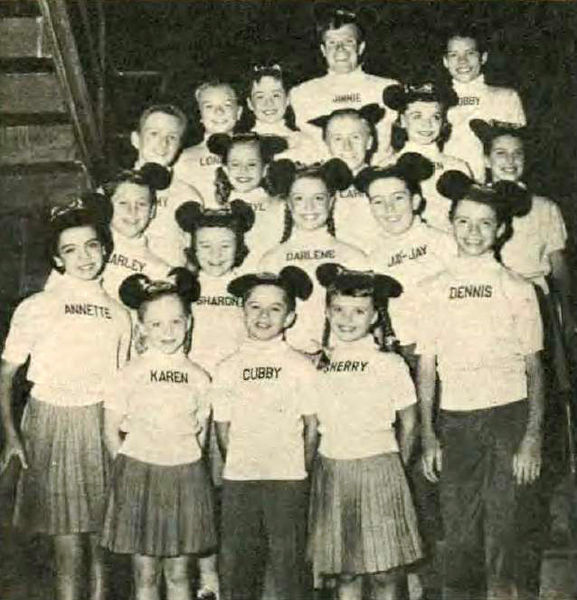
Before yesterday few people knew that the pivotal event of the last century was the airing of the Mickey Mouse Club in October 1955. Each week, millions of little Poppers (later known as Boomers) tuned in to watch the show and without even trying, memorized the catchy theme song.

The world has never been the same since. Most people of a certain age know most if not all of these words, but they have no idea what they really mean. That’s why I’m here, to reveal the true meaning.

Just for fun, let’s start at the beginning since it comes first. Feel free to sing the words as you read them.

Who’s the leader of the club

That’s made for you and me

M-I-C-K-E-Y M-O-U-S-E

Hey! there, Hi! there, Ho! there

You’re as welcome as can be

M-I-C-K-E-Y M-O-U-S-E


Mickey Mouse!


Mickey Mouse!

First, note how it begins with the three words, “Who’s the leader.” Like the first three words of the Constitution, We the People, it is revolutionary and sets the tone for all that follows. The well-known bumper sticker “Question Authority” paraphrases those initial words and became the mantra of the 1960s.

The use of “club” in this lyrical question is used in the benign sense, and the following words “that’s made for you and me” led directly to the civil rights movement and the idea that everyone should be included in the “club,” which stands for U.S. society. Note the significance of “You’re as welcome as can be.” I hardly need to tell you that this is a paraphrase of Emma Lazarus’ poem “The New Colossus:”


“Give me your tired, your poor,

Your huddled masses yearning to breathe free,

The wretched refuse of your teeming shore.

Send these, the homeless, tempest-tossed to me,

I lift my lamp beside the golden door!”

Next, think about the fact that Mickey’s name is spelled out. Is it any wonder that those hours spent spelling Mickey’s name led directly to spell-check on computers?  This point needs no further explanation.

Now let’s look at a portion of the song that had both a positive and negative influence.

Forever let us hold our banner

High! High! High! High!

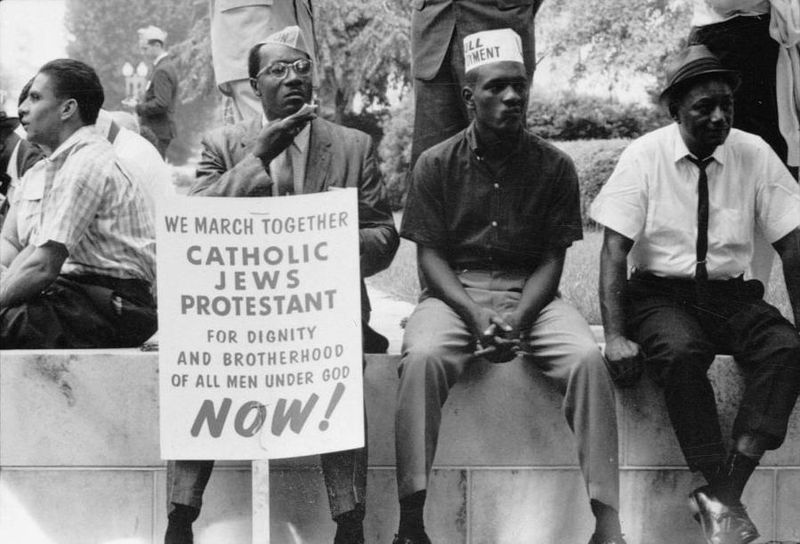
The first line, Forever let us hold our banner, explains all of the banners and signs carried during the 1960s protesting war and discrimination. However, that four-fold repetition of the word “high” led directly to indiscriminate drug use in the 1960s and beyond. Was it intentional? It’s hard to say. However, if you recall, Disney was born on Tripp Avenue. You decide.

Come along and sing a song

And join the jamboree!

M-I-C-K-E-Y M-O-U-S-E

In this verse, we must look carefully at the word “jamboree,” which means “noisy revel.” This planted the idea for both rock concerts, most notably Woodstock, and in the same year,  the TV show, Hee Haw. 


Mickey Mouse club

We’ll have fun

We’ll be new faces

High! High! High! High!

In this stanza, we see the modern emphasis on having fun. All things and all events, including funerals, must have an element of fun if we want people to enjoy themselves. More importantly, the phrase We’ll be new faces led to a demand for  facelifts and fueled the $1.8 billion cosmetic surgery industry.

We’ll do things and

We’ll go places

All around the world

We’ll go marching


While this stanza is responsible for the invention of the computer and all other technological inventions of the last 50 years (We’ll do things) and the creation of our highly mobile society (We’ll go places), it undoubtedly influenced some of our policymakers to send our soldiers marching around the world. That’s the problem with taking too much of this song literally.

As you can see, there is much more to the Mickey Mouse Club theme song than most people realize. Many people are baffled by how cultures develop and history unfolds. I hope I have helped you in this.

Wikipedia helps everyday by sharing its photo album. Thank you, Wikipedia.

Last century’s pivotal event: The introduction

Standard

Few people know the source of the radical change that convulsed the United States during the 1960s. Other than my imagination, in fact, I may be the only person who really knows. Since I am only a few hours of Internet searching away from becoming a full-fledged cultural anthropologist, I felt it I should share my findings with you.


Due to time constraints and my boss’ insistence that I show up for work, I will share this in two parts: the introduction and the explication.


THE INTRODUCTION

The pivotal event that led to the revolutionary change in U.S. society happened in October of 1955. Some things happened before that, of course, but if I go down that road, one thing will lead to another, and before you know it, we’ll be talking about the Greeks and Romans: it’s all connected. So, let’s just stick to October 1955 when the Mickey Mouse Club first aired.


The mastermind behind the show was named after a theme park: Disney. His parents called him Walt for short. For reasons that you’ll understand later, he was born on Tripp Avenue. He also had a childhood. He liked trains and, according the WTF encyclopedia (Wikipedia, the free), he liked to put his ear to the tracks to listen for trains coming. Apparently his sight and hearing weren’t very good, but in this way he developed what people in the arts call a “trained ear.” After dropping into high school, he dropped out. When enough time passed, he produced the Mickey Mouse Club.


A raging debate has been going on between me and my imagination about whether Disney knew what he was doing when he introduced America’s children to the Mickey Mouse Club through its theme song. It’s still raging, so I can’t give you a definitive answer. We do know that revolutionary ideas were planted in the minds of millions of children. I tend to believe that Disney had some inkling; he used a lot ink in his drawings. Also, he had a trained ear, so he must have known about the power of song.


But before we can get to the explication, which is not even completely written yet, we must note the name of the TV program. Mickey seems like a harmless name, but don’t be deceived. It refers to “a drink laced with a drug” (WTF encyclopedia) that makes a person susceptible to suggestion and manipulation. Mouse also signifies something. Club carries at least two meanings: the benign meaning of an organization of people, and the sinister meaning of a big stick to whack people with.


To be fair, and according to my mirror, I am the fairest in the land, I am here only to point out the significance of the song. Personally, I believe that a majority of the ideas propagated by the theme song of the Mickey Mouse Club brought beneficial changes to our society, only a few were negative. But please don’t tell the other cultural anthropologists I said that; we’re supposed to remain objective.


Please come back tomorrow for the explication.


Photos courtesy of WTF encyclopedia. 

Important: You may be entitled to money

Standard


IMPORTANT NOTICE

This notice is to advise you that you have been identified as a potential plaintiff in a class action suit.

1.If you or any member of your family, literate or illiterate, are in any way, shape, or form offended, perplexed, flummoxed, miffed, piqued, ticked off, galled, mauled, stalled, appalled, or put out, in, on, through and/or by any letter, word, phrase, clause, dangling modifier, use of punctuation or lack thereof; or, if after experiencing any of the heretofore said offenses to any of your real or imaginary sensibilities, which, in my humble opinion, should really be dealt with in therapy, counseling, neurofeedback, breathwork, mindfulness, mindlessless, psychoanalysis, and all other things psycho; and, if you have experienced any type of hypochondria, including, but not limited to, dizziness, headaches, even more cellulite than you already have, nausea, nervousness, prolonged eructation, syncopated flatulence, memory loss, or the inability to lose memories of posts you have read, scanned, skimmed, explicated, or deleted from your inbox without reading; then, you may be entitled to join a class action suit against yearstruck.com.


2. Should a Superior Court, or a lesser Inferior Court,  find any merit in this claim, all plaintiffs, heretoafter referred to as tiffs, since some may be plain and others may be fancy, will, should, can, might, ought to, must, and could receive a complete and total refund of all monies spent on therapy and/or merchandise from the heretobefore not named person or persons responsible for trying to sell affixation kits, exercise DVDs, and re-discovered miracle cures, which may or may not exist outside of the imagination of not-said and still-not-named person or persons.


3. This notice is time sensitive because time is of the essence, it flies, it waits for no man, woman, or child under the age of three, who is at least 26 inches tall and must be accompanied by a parent at all times; otherwise, the management cannot be held responsible or reprehensible for what happens to unattended baggage; therefore, potential tiffs, plain or otherwise, must respond to this notice by no later than, but no earlier than noon (GMT) on any Monday, or a reasonable facsimile, designated as April 9 in the year 2012, or any other year whose digits match those numbers exactly.


4.  All claims must be accompanied by receipts, copies of promises, billing statements, and cash or a check in the amount of, but not limited to, $5.00 (U.S.) for handling fees. Once this claim is won, all handling fees will be returned, drawn from the large amount of money that the now-said defendant yearstricken will receive from one Chang Zhang who recently informed the again-said yearstricken, in an e-mail obtained in a manner that may or may not be admissible in court: An arab made a fixed deposit of $25,500.000.00 in my bank branch where i am adirector and he died with his entire family in the war leaving behind no next of kin.If you choose to stand as my deceased client’s next of kin and if interested, mail me at the address below:changzhang23(at)yahoo(dot)com.hk
Yours Truly,
Chang Zhang.


5. Based on all, some, or none of this evidence, which may or may not be true, but you never know, you may be entitled to a portion, or a part of the soon-to-be deposited money, including any and all of the zeroes; but only if act now because this offer won’t last long.

When chocolate disturbs

Standard

I like chocolate dark, three taste buds shy of bitter. One small bite and I start getting messages from my brain saying, “Thank you,” and “More, please.” As food, it delights my tongue, and as medicine, it soothes my brain.


I have liked chocolate since I was a small child and discovered that the Easter bunny laid small chocolate eggs in my Easter basket. I later learned that rabbits do not lay eggs; they do, however, extrude something that is eerily similar to little chocolate pellets. I lived with that disturbing juxtaposition of ideas for years, but eventually got over it and continued trying to consume my allotted 11.64 pounds of chocolate each year. That’s how much each American averages. The Swiss eat almost twice that. Clearly, I was born in the wrong country.


http://www.flickr.com/photos/wheatfields/2310156154/


As an adult I have lived a relatively undisturbed life as far as chocolate goes. However, these last few years, an uncomfortable truth has been knocking on the door of my brain. It has pamphlets, which is always a bad sign. Opening the door means I must listen to a prepared speech, sign a petition, and probably donate some money. Maybe even the money I would use to buy chocolate.


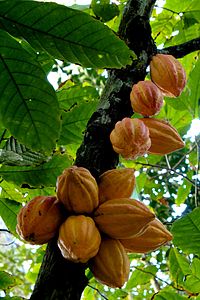
For me, the best chocolate has at least 70% cocoa. That’s the ingredient that has so many health benefits, including helping to protect my heart. Cocoa makes my brain happy; and like so many gifts, it grows on trees.


The cocoa plant is delicate, especially when it is young. It requires attention, care, and nurture to develop properly. If a plant is tended carefully, it can start bearing fruit when it is four or five years old and produce for several decades.


Cocoa plants sound a lot like children, don’t they? Children need care and nurture to grow properly, too. And that’s the problem. Many cocoa farms employ children, and some farmers enslave children, making them work 12 hours a day without pay or much to eat.  At night, the children are locked up. If they try to run away, they are beaten.


I don’t want to eat chocolate that has someone’s childhood as its main ingredient. No amount of sweetener can make that kind of bitterness palatable. And if I know that the price on my candy bar is low because some children are forced to pay the real price by spending their childhood enslaved on farms, no amount of inexpensive chocolate is going to make me happy. My tongue doesn’t mind at all; it likes chocolate no matter what, unlike my brain, which has nothing better to do than gossip with my heart.  Once my heart gets involved, the two of them always insist that I do something.


Refusing to buy chocolate might make me feel good, but that’s about all it will do. It won’t help the thousands of smallholder farmers in West Africa, Indonesia, Brazil, and Ecuador who grow cocoa. They deserve a living wage; however, they receive only a pittance of what I pay for chocolate. Some of these farmers resort to forced labor to make growing cocoa worth their while. If I’m going to enjoy eating chocolate, I can’t ignore these facts.


Ignorance is bliss until it isn’t. Now I have to pay attention, read labels, and check up on the companies I buy from. I have to sign petitions. And I have to pay more money for chocolate that doesn’t have “essence of childhood” as an ingredient. But I don’t mind because then I can start listening again when my brain says, “More, please.” And it will make my heart happy again in more ways than one.


To see the places I have been that knocked the bliss out of my ignorance, go here, here, here, and here. To see the places my heart and brain conspired to send me, go here, here, or here to see what people are doing about it.


(Chocolate kisses go to Wikipedia and <http://www.flickr.com/photos/wheatfields/2310156154/ > for the pictures.)

How to be a medical expert

Standard

Some of my imaginary friends have been asking me if I have had medical training. My incisive advice for the doldrums, warts, and CPS (coach potato syndrome) astounds them. They shake their heads in disbelief when I casually mention that I have self-diagnosed any number of serious medical conditions (coronary toenail disease, flatulence of the brain, and astigmatic kidney syndrome) and spontaneously healed without the aid of so-called medically trained personnel.


Now I know exactly what you are thinking: How can such a simple person gain that degree of knowledge and ability? First, I would appreciate it if you would just go ahead and ask me out loud. If we’re going to have any kind of healthy relationship, you can’t expect me to keep reading your mind. My therapist said that’s one of the problems we need to work on.


Second, I pride myself on being a simple person (my mother, may she rest in peace, recognized my lack of pretentious thinking early in my life and often called me simple-minded). So you can understand why I believe anyone can attain my level of medical knowledge and insight.


Third, to reach my level of expertise, you must have Internet access, an inordinate amount of time and imagination, as well as an ability to ignore information that fails to pass the test of aligning with what you already know to be true. This is what we call “fact-checking.”


Fourth, you must have restraint. Most people do not know how to use search engines correctly.  To illustrate, let’s say you type in “health benefits of chocolate.” A list of articles appears, and the majority of the titles declare that chocolate is healthy. Some will mention that it is good for your heart. Others will link it to weight loss. Yes, weight loss. Really. If you don’t believe me, look it up. But let me say this, your need to look it up says a lot about our relationship, doesn’t it?


Fourth and three-quarters, we haven’t finished with restraint. Most people lack it. They click on the articles about chocolate and then read them. Don’t do it my friend. Accept what the headline or title says. Nine out of ten articles are what I like to call “motorboat articles.” They rev up the article by stating that chocolate is good for you and then go but, but, but, but, but all the way home. Trust me, all those facts will only confuse you.


Fifth, as is my wont, I am developing a revolutionary new medical degree for those who have the necessary qualifications (see the third point). I call it the Medical Advanced Degree (MAD).


Sixth, it won’t cost you a thing. I, on the other hand, will spend a lot of time and money on development, advertisements, and shipping. But that won’t matter to you, will it? I am still grieving over your lack of interest in that other scheme. But don’t worry about me and my little bank account. We’ll manage somehow.


Seventh, I know exactly what you are thinking right now, and I wish you would stop it. Reading your mind and listening to my imaginary friends all day is driving me mad.


Eighth, I recently rediscovered the secret formula of H.H.H., the greatest discovery of the age, or what I call “The Greatest Re-discovery of the Age.”  Once I find time in my busy schedule, I plan to make it available on this website. Not that you would buy it because no matter how hard I try, it’s just never good enough for you, is it? But that’s okay because I am totally over it. Really. You may, however, be interested to know that my advertising agency (see picture above) can be found here.