Listening to your eyes

Standard

Sight seems simple enough. First, you open your eyes. If the room is dark, you go back to sleep. If not, the lenses in your eyes focus. If your eyes find this difficult to do, your nose offers to hold your external lenses because it, too, would like to get a better look at what is right in front of it. Photons of light, like tourists hurrying off the bus, rush into your eyes to see your retina. They crowd around the retina while the brain takes their pictures, and then they rush out, so the next crowd can come in. Some of the same ones visit every single day. Apparently they have nothing better to do, or perhaps the retina is worth seeing again and again.


The brain collects these photos from morning till night, ignoring the most familiar, studying the unfamiliar, and sorting them into piles of those it likes and those it doesn’t. But what is the point of taking pictures if you don’t have someone to share them with? So, the brain shares them with the heart and that complicates sight. Hearts may be born with 20/20 vision, but over time they can change. Life can scar the lens of the heart and pressure can change its ability to focus. An astigmatic heart can’t see clearly, and looking through the lens of expectations only makes it half-blind. Even with the corrective lenses of a friend, lover, or family member, some things remain distorted, blurry, or impossible to see.


If the heart insists loudly and persistently enough that its way of seeing things is true, the brain can start believing the heart instead of the eyes. And the heart is often right. The eyes need light to see; the heart sees in both the light and the dark and can feel truth even when she can’t see it.

But sometimes the heart isn’t right. You come to a crossroads and see a sign telling you where you are. The heart reads the unfamiliar script, not even sure how to pronounce it. Lost again, she says. One more sign of failure. Everyone, except me, knows where to belong. I will never find my way home now. The eyes, however, see the bright, bold letters, the flourishes around the words put there by some sign painter writing his heart in simple words for the weary traveller who would surely walk this way and need some direction. You are here. Just follow the sign. A place of rest lies up ahead. This road might be the one that leads you home.


This time the eyes are right. The heart must trust and follow.

I dream of flying

Standard

For as long as I have remembered, I have dreamt of flying. I stand under a blue sky with my arms lifted and then gently push off from the earth and fly, almost float, above my world.  Hope follows me out of these dreams, and I feel as if I share a secret with the sky.


When I was five or six, my father went on a trip and came home with a bracelet and necklace for me. I still have the set. Patterned after the silver and turquoise jewelry common among Native American tribes of the West, it is imitation jewelry, made for children. The necklace holds a rounded horseshoe-shaped piece in the middle, and my father told me that if I held that piece and made a wish, any wish, it would come true.


When you are a child, your nighttime dreams seem as real as your daytime life. I never thought that I was just dreaming about flying; I believed I was flying at night. In the morning, I landed back in this other world, held firmly in the arms of the jealous earth.

The day after I received the jewelry set from my father, I stood on the red brick planter in front of our porch, wearing the bracelet and necklace. One hand grasped the turquoise piece in the middle of the necklace, and the other held my nighttime dream, wrapped up in a daytime wish. I named my wish and saw myself soaring near the elm trees in the yard. Then I jumped.


The earth would not let go of me, and I landed on my feet, one hand still grasping the necklace, the other one empty. I watched my hope take wing and leave me, the sky indifferent to my longing. Children have their own sorrows and know the loss of dreams, sometimes before they have the words to tell you.


For many years, I kept a journal of my nighttime dreams, but for the last five years, my mind has chosen to forget. The other night I stood in a field and the sky called for me, like an old friend inviting me back. Featherless, I flew into that place of my childhood joy, the place of belonging. When I awoke, I could almost hear birds singing in the empty winter trees, a song familiar and forgotten, with a melody of hope.

I practice dying every night

Standard

My strength comes in the morning. The early hours wake me at sunrise, smelling of promise and first light. I listen to their bright voices and learn what it means to be born and how to unspool the day from the spinning earth. They carry bird songs in their pockets. Morning is the time for listening. I reach into my heart for crumbs of dreams I’ve carried, toss them at my feet, and wait for the words to land, to eat. Sometimes I hold a word with feathers in my hand and let the tears roll down. It is morning. My strength comes in the morning.


The day is for duty. Small hands point and I must follow. Time schools me, teaches me to climb, move, sit, walk, listen, speak, hurry, wait, and serve. I eat sunlight and grow wings. I cannot fly, but they lighten my load. Duty has a face I love, she never tires, and helps me when I climb. The hours are full of people; we follow time together. Sometimes I rest and wash my feet in their laughter. I give my strength to the day. The day is for duty.


The night is for dying. The words leave me and I watch them rise and go, swallowed by the sky. Sorrow, my sweet sister, whispers in my ear that the time of rest is near. Memories and desires take their leave, sail across the pool of thought till only ripples of their passage remain. I listen to the silence, wrap myself in quiet. The time of letting go has come. My heart steps softly into the dark. I close my eyes, my hands open, releasing every face, dream, and hope I gripped so long, yielding to that other world until I am gone. The night is for dying.


I practice dying every night.


Lost in the crowd

Standard

In Tokyo’s Shinjuku station, multiple train lines and subways intersect, carrying over 3.5 million people every day. Waves of people shoulder past, hurrying, blurring by, always faceless. Once while transferring to another line, I met someone I knew. Just once, while moving through a crowd of millions, I saw a face I knew, one that knew me. Another time, a fellow foreigner stopped me to ask for directions. His was the only face I remember from that day.

One part of Shinjuku Station (courtesy of Wikipedia)

I move through life  in a crowd of moments that are faceless, anonymous, and almost indistinguishable from one another. When I least expect it, one of them stops and looks me in the face, forever changing who I am. Sometimes it is a welcome and familiar face that helps me find my way or whispers words of encouragement; other times it wears the face of sorrow, speaking words I fear to hear. I memorize the contours of that face, take whatever is given, while all around the crowd never stops moving, in its urgent, restless rush. The moment that shatters my life is just another faceless person in the crowd to you, utterly forgotten, yet terribly unforgotten by me. And the moments that changed your life? To me, merely moments blurred into days, unmarked and unknown. We each carry our own calendar of joy and pain, of remembered days and moments, but most of the days are missing, torn off to mark the passing time.


We live our lives in moments, sought out by love, hate, hope, sorrow, comfort, happiness, or death. When you least expect it, a hand reaches out to grab your arm, or a voice speaks your name. You are pressed in on every side, where else can you go? You must stop, receive the word, receive the gift, you must face the moment; and you will remember that face for the rest of your life. Then you are swallowed up once more into that crowd, moving, ever moving, carrying your joy or sorrow home.

Carried

Standard

Carried by my father.


I’ve been carried all my life, though at first I was too small to see. My father carried half of me in a small pouch, until he met my mother. I would have been forgotten, but mother came alongside of him with the other half, then placed me in the pocket she put all her children in.


So spare, so silent, she hardly knew I was there, listening, wondering, and waiting. All day she walked and rocked me. I slept as she moved through her day. When she lay down to rest, I woke. Day and night were both dark to me.


Before I knew the words, I heard voices muffle and murmur love, felt the soft bounce of laughter, and the sharp shake of tears. Hands spoke their joy and expectation, now patting, now prodding, now pushing against my feet as I pushed back. Too young for school and all alone, I tried to find the formula for X and Y that would please them. Outside they waited for a boy, inside I waited as a girl.


I tried my best to stay by staying small, but the pocket could not hold me. I knew I had to go. Thinking I should travel light, I even grew a smaller brain. How was I to know I would need a larger one when I got to that other place?


Leaving was the hardest; the passage, dark and narrow. Mother never had a smaller child or one so fearful to appear before the others. We struggled, both of us, until I was carried home.


Almost forgotten once, half here, half there, now here. Carried, always carried, by stories, time, and secrets.


I’ve been carried all my life. How about you?

I got my poetic license!

Standard

Long before I started blogging, I wanted a poetic license. But like so many of my dreams, I let go of it and tried to move on with my life. Blogging rekindled my desire and with the support and urging of my imagination, I decided to apply.


I had to submit all of my blog posts, and that was scary because I have a number of posts  that are about things that actually happened. I was afraid there would be too much truthy stuff on my blog, which would disqualify me.


The rules for getting a poetic license are strict, but thankfully only 70% of your writing (or in my case, typing) needs to comply. After several weeks of fact checking, the review board discovered that the majority of what I type is pure nonsense and includes only a modicum of truth. I can’t tell you how happy that makes me, to say nothing of my imagination, who suddenly feels vindicated.


I hope you all don’t mind me bragging a bit, but I’m happy this morning and feel like my efforts have finally paid off. I guess dreams do come true sometimes.


One order of ordinary, hold the extra

Standard

I like a perfectly shaped tree all dressed up for Christmas, wrapped in lights and spangles, gold star atop its head, pretending to be indifferent to all of the gifts strewn at its feet. A tree like that gets my attention; it probably gets your attention, too. When you’re the only tree in the room, you shine in an extraordinary way.


I like Christmas trees; I even admire them. But the trees I love don’t stand around in people’s living rooms doing their best to call attention to themselves. The trees I love live in groves and glades and forests. You can hardly tell one from another. They are ordinary trees, living and dying where they were planted but so full of beauty that if you took the time to learn the history of what they have seen and known and endured, your heart would break with either joy or sorrow, or more likely, both.


Ordinary trees sparkle sunlight across our paths; spend their lives scattering their strength to raise up new generations of trees; nurture winged delight; throw out shadows like carpets, inviting us to stop and rest awhile; whisper truth to those with ears to hear; take our breath away and then give it back. They do this every day, whether anyone notices or not.


Popular American culture values the extraordinary, at least that’s the message I hear. Ordinary is not good enough. You must be smarter, more beautiful, or more athletic than everyone else. You must write better, or be funnier, or take better pictures than other people. If you don’t, you won’t stand out, you won’t be somebody, people won’t know your name or be able to pick you out from a crowd. You will have to wander through life without the only prefix that matters, “extra.” Maybe because extra is rare, everybody wants it. People feel compelled to express their superiority, to trumpet their accomplishments, and to tell people over and over how extraordinary they are, thinking that by saying it often enough, the prefix will magically attach to their ordinary selves.


I appreciate and admire extraordinary people. I listen to their music, enjoy their art, read their books and poems, and enjoy the benefits of their research and inventions. I’ve even known a few I would call extraordinary, but maybe because I am an ordinary person, I like ordinary people best. If I were a tree, no one would choose me to be the centerpiece in a room of celebration. I look like a thousand other trees and even if you walked by me everyday, I doubt you would remember me or be able to pick me out. I am the small, asymmetric tree with the missing branches, standing over there in the northeast corner of the grove.


Twice in the last month, I have touched on this issue with two people who blog. A while back, I  nominated ShimonZ of thehumanpicture for an award. He thanked me but asked to be excused from posting the award on his blog. With his permission, I am including some of what he wrote in response:


Thank you very much for nominating me…I have been nominated for a few awards, and I have tried as best I could to extricate myself without offending those who wished to be nice to me. I don’t want any prizes. I come from a different culture, in which people don’t walk around with medals on their chest, and it is usually an embarrassment to one of us, to get a prize or an award. For me, it is my reward that you read my blog from time to time, and respond here and there.


I like those words. Behind that simplicity, I believe there is a willingness to embrace being ordinary.


Then on the blog The Heartbreak of Invention, I read patricamj’s essay “Why Psychotherapy Doesn’t Work for You” and when I commented I said I thought she must be a good therapist because she seems like an ordinary person. As soon as I wrote that, I realized I needed to qualify it, so I added that I meant it as high praise. I did and I still do.


The world is full of ordinary things and ordinary people, and I am one of them. I read books and stories by famous writers who knock my socks off.  Some of them are extraordinary people. But I am also left sockless by some of the ordinary people who write blogs: people like ShimonZ and patriciamj. They scatter patterns of light that brighten my day; offer shade if I need some rest; delight me with words that soar and sing; blind me with beauty, then teach me to see; whisper truth; take my breath away, and then give it back with laughter. And they do it every day, whether anyone notices or not.


That’s what ordinary people do.

1. If you want to join the pantheon of the blog gods, the number one thing to remember is to make your post title short so search engines will have an easy way to find you; in other words, use key words, keep it simple, and don’t make it a complete sentence!!!

Standard


2. Try to link as many words as possible to the worldwide web. The more the merrier. Haste makes waste. It’s the magic of SEO and all the cool kids do it. Avast and away.


3. KIM-ize your posts, or in other words, KARDASHIAN-ize them. Keep aBREAST. If that’s too much for you, sprinkle a little SNOOKI here and there. For real class, mention PARIS and your time in the HILTON. Occasionally, mention NUDE-colored stockings if you like fashion. Search engines are all about what is important; you should be, too.


4. Your blog is not your writing junk drawer. You need a theme or purpose. Go to https://year-struck.com/ to see a blog that epitomizes themelessness. Avoid that. First, the reader doesn’t know what to expect; and second, themelessness is not a word. Search engines will have a hard time with words that don’t exist. Write about what others are not writing about: nun fun, earwax, dryer lint, flatulence, and eructation, to name a few. Another idea is to take two topics and create something new and fresh. The Importance of Lint to Nuns would stick in people’s minds, and no one has yet written a blog about the bowels, personifying air as a naughty schoolboy called Bad Air is Expelled. Be creative, okay.


5a. Slick, glossy photos like this are a must!

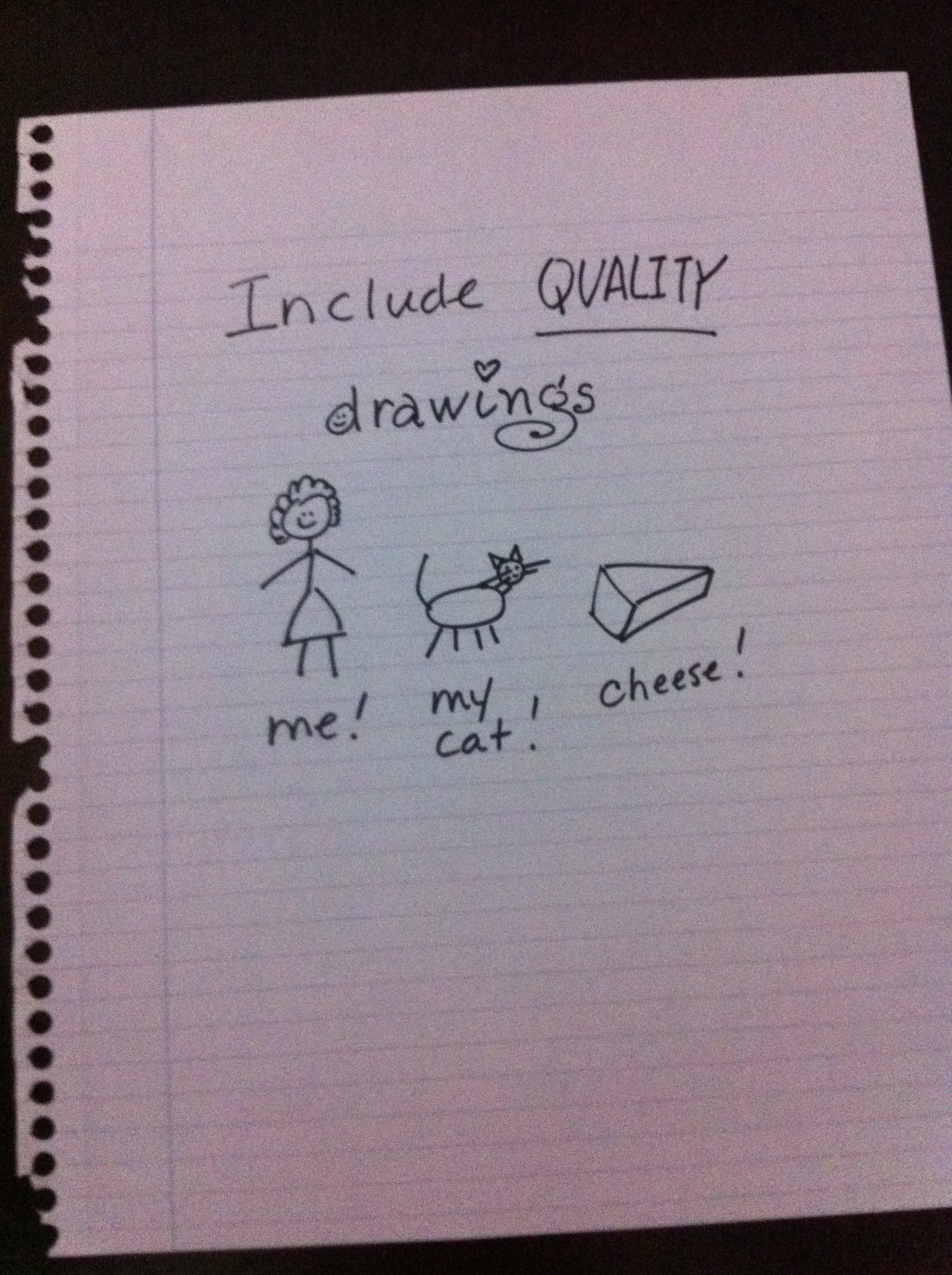
5b. Drawings of this caliber are rare, but you should strive to develop your skill! (Hint: stop watching so much TV!)


6. Do you use questions in yours posts? Why not? Don’t you know that you must engage the reader? Why do you not have a question at the end of each and every post? Is it really that hard? Do you think they only want to read what you have to say? Are you a narcissist or something?


7. At the very beginning of your post, make sure you let the reader know what you are going to talk about. For example, don’t wait until the very end to let them know you are going to give them the 7 secrets every blogger should know.


Y’all write purty and you’re mighty kind

Standard

So many of the bloggers I read write purty. They corral a bunch of words and make them  do all kinds of tricks that make me ooh and aah and say, Boy howdy, how do they make those critters do that?


Poet lariat

After I read their posts, I start thinking that I need to get me one of them poet lariats and lasso me some of those big words and teach them a thing or two. I’ve hung around the corral enough to recognize a big word when I see one, so the problem is not with my sight; I just can’t steer them in the right direction, no matter how many puns I make. Even if I caught one, which is highly unlikely since I don’t know how to use a rope, I’m not sure what I would do with it after I got it. They have pointy horns, y’all.


Some of you don’t even need a lasso; you tame them with your voice, like some kind of word-whisperer. Then the words do whatever you tell them to do. How do y’all do that?


*******The above portion of this blog was brought to you by my inner Texan********


Dick and Jane, along with their pets, Spot and Puff, taught me how to read in the first grade, and while I can read just about anything, I have never been able to write much beyond that level. In fact, my blog is suitable for your average 11-12 year old who is in sixth grade. How do I know? I went to www.read-able.com and typed in my website address. This could explain why I often feel like the only non-grownup in the room.


If I have visited your blog, you know that this extends to the comments I make. I often write one or two paragraphs in the comment box, reread them, and decide I had better erase them to save myself embarrassment. Then I write, “I see the words, The words are good. I see the good words. Run, Spot, run. Come see the good words.” I know I’m exaggerating; I hardly ever express myself that well but on better days I do.


In spite of that, I have received several awards in the past month. I assume this is because you think I really am an 11 year-old hiding behind the gravatar of a more mature woman and are impressed that I have a blog. Or maybe it’s my juvenile sense of humor.
 

For whatever reason, both Susan at susanwritesprecise and Elyse at fiftyfourandahalf were kind enough to nominate me for the Awesome Blogger Award which involves writing something about yourself using the ABCs. I just put my blocks away or I would take pictures of them for the list. The links to Susan and Elyse are to the posts that have the nominations. Please be sure to read more of their posts.


Things I like:


Before we go further, raise your hand if you read the word for U as underpants. That’s what I thought. Although I like underpants, it’s the underparts, or hidden parts of stories, and lives that I find interesting.


These same two writers, Susan and Elyse, nominated me for the Kreativ Blogger Award, which requires me to write 10 things about myself.

  1. I thought Kreativ was spelled “creative.”
  2. Nine times out of ten I write “blooger” instead of “blogger.”
  3. I like the word “blooger.”
  4. My cat, Puff, likes the word “blooger.”
  5. I don’t have a cat.
  6. I have an ice orchid.
  7. I think some of you reading this will google ice orchid.
  8. I am already counting the days to summer vacation.
  9. I am planning to go to Europe this summer.
  10. I am planning not to fulfill the requirements of these awards.


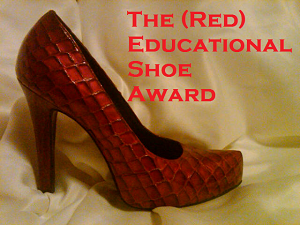
Elyse has a soft spot in her heart for junior high bloggers and also nominated me for the Red Educational Shoe Award. Thankfully I don’t have to write anything about myself, just nominate five supportive commentators. Here are some of the top commentators listed on my dashboard. My mom and I thank you.


Worrywarts-guide-to-sex-and-marriage

Just Add Attitude

Kate Crimmins

Kathryn Ingrid

RAB at youknowwhatimeant

Thank you so much for reading and commenting!


The last award I want to mention is the 7×7 Link Award from vixytwix at stayoutofmyhead. She also has a lot of good things to say, so be sure to read more of her posts. The requirements for this one are as follows:

1.  Share something about me that no one knows

2.  Link 7 of my posts that I think are worthy

3.  Nominate 7 bloggers for this award and notify them


Number 1: I often don’t want to push the publish button.


Number 2: Here are the 7 posts I think are worthy by virtue of being some of my oldest posts:

Furniture Envy

People I have a hard time trusting

Gobsmacked

You were here

Whinge

In which she rationalizes her addiction by blaming her mother (I miss you, Mom) and realizes that the title to the post is probably going to be longer than the post

After finding a cure for breast cancer, would someone please answer my question

Number 3: Here are the 7 bloggers I nominate:


dan4kent

Blondzombie

Rob Slaven

ShimonZ

JSD

Sam Flowers

Kojiki in Japan

It’s always hard to pick other blogs because there are so many good ones. I didn’t want to nominate people that I know have already received awards. Enjoy your reading.

I have to go now, I hear my mom calling.

The memory collector

Standard

My small self

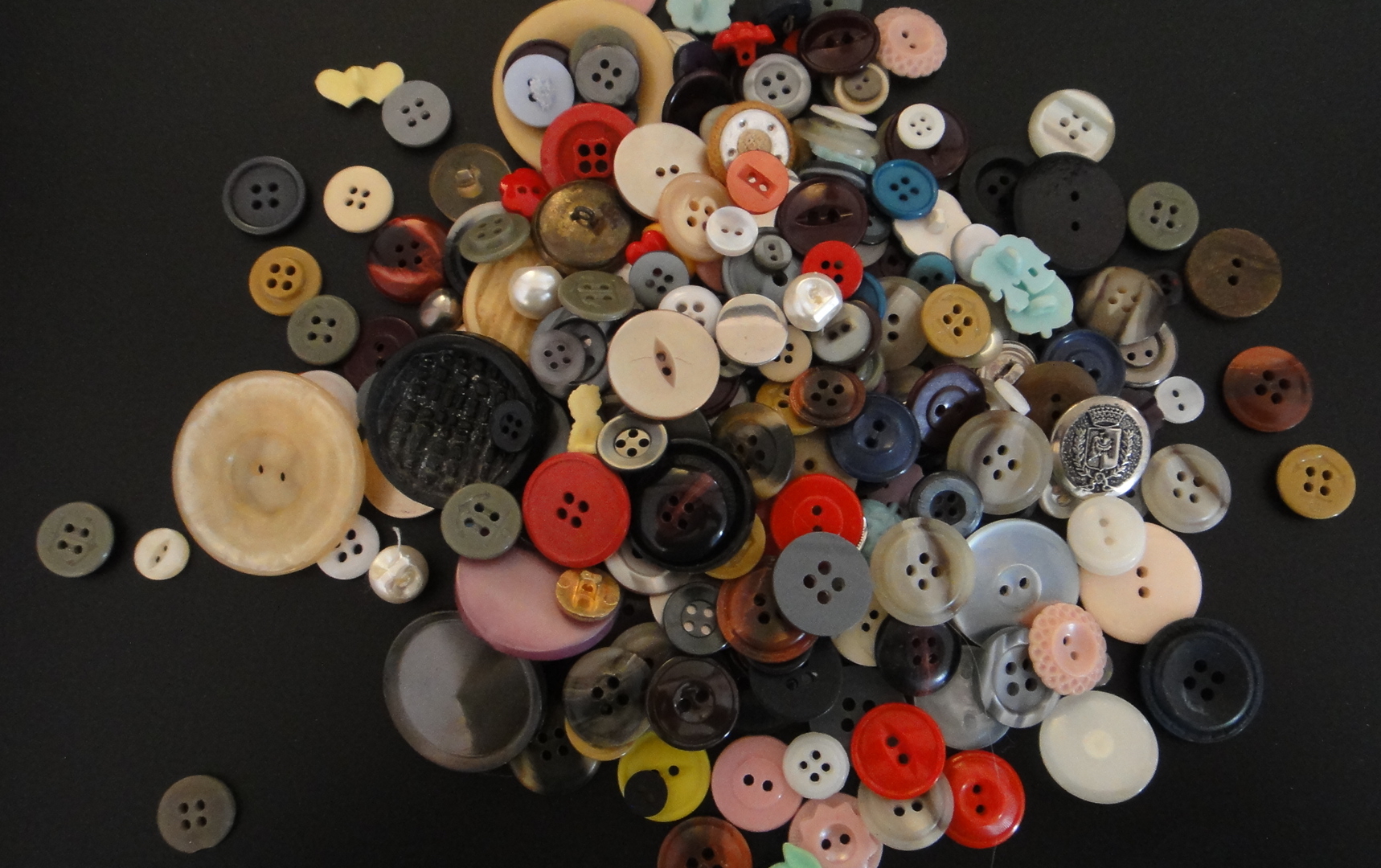
When I was small, I collected things I found: shiny objects, buttons, leaves, and feathers, especially feathers. I often dreamt I could fly and feathers seemed like a promise of that dream. Finding something of beauty felt like an accomplishment. My reward for paying attention. Somewhere on the road to adolescence, I lost every one of those treasures.


In my teens, I kept a drawer filled with notes, jewelry, stray buttons, foreign coins passed on from relatives, ticket stubs, a lock with a forgotten combination, and pictures of my friends and the boy I loved my freshman and sophomore year. One scrap of paper I saved until I was in my mid-twenties. The library in my high school sent out notes to students who had delinquent books. The notes were short and to the point; they had the student’s name on one line and the name of the book on another line, nothing else. I don’t remember if I was assigned to read Dostoevsky’s Crime and Punishment or if I chose it on my own, but I loved it and wanted to read more of his work. I kept that second book too long because one day in class the teacher handed me a note from the library. All that was written on it was my name and below that, The Idiot. I kept the note for years, my private joke with the universe.


I think objects might want to be found. Maybe a button works for months to untie the strings that bind it to a shirt, and when it leaps out into the unknown, it is looking for adventure. I want to see more of the world, it says; I’ve been manhandled enough, put in my place for too long. Imagine the pleasure it feels when a child or an adult picks it up, admires it, and carries it home as a treasure. At least, that’s how I would feel if I were a button.


My crown

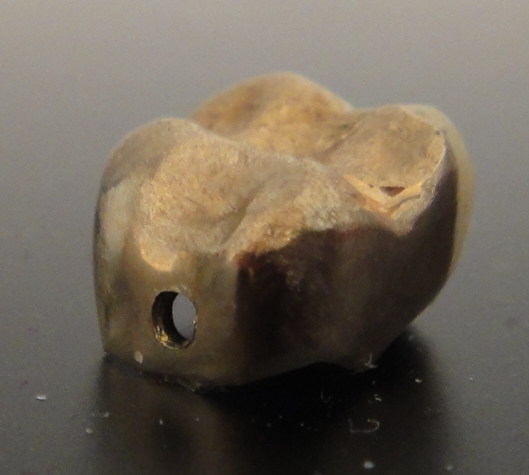
I still have a box of small findings and remembrances, including a gold crown that was fitted for one of my molars but never put on. I could tell a great story about that, but unfortunately, I don’t remember much about it. My mother wore it on her charm bracelet for years and it has come back to me. Last summer I bought a wooden art box for my grandchild and filled it with some of the things I cannot throw away.


Over the years I have tried collecting things of value, but I can’t sustain my interest. In Japan, I started a collection of the holders used to rest chopsticks on, called “hashioki,” but I grew tired trying to find a place to display them and gave most of them away. I use two of them for brush rests when I do Japanese calligraphy.


For a long time, I collected dreams, and for safekeeping, I put them in my heart. When I was alone, I would take them out, whisper promises I thought I could keep, believing that some day every one of them would grow wings and fly. I never thought I could lose them, but I did. And now I know why: my heart is a pocket full of holes.


When mother knew love


Memories are the only thing I am interested in collecting now. These stories, like the flightless feathers I loved as child, or like the fallen petals that when crushed still give off the faint aroma of the rose, or like the empty shell left by a cicada who grew away from her old self but left a part behind for me to hold and remember, these stories are the only treasures I have.