If you see a big dog, duck

Standard

A few weeks ago on my morning walk, I looked up ahead on the sidewalk and noticed a jogger heading my way, pulling a dog on a leash. As soon as my imagination saw the dog, it starting telling me it was the vicious Pit Bull I had read about online.


I considered crossing the street, but there was too much traffic, and I was afraid if I started to run, the dog would attack me in the middle of the street. I edged over as far as I could to allow them plenty of room. The jogger ran along the opposite edge of the sidewalk, leaving the dog between us, no doubt to allow it easy access to my legs. Once I was down, it would be just a matter of time before the dog went after my jugular. Then the jogger could finish her run and get on with the day.


As often happens when I take my imagination out for a walk, the closer the jogger came, the smaller the dog grew. When I squinted, it started to look like a small Doberman Pinscher who had a bone to pick, a bone that belonged to me, the one I  carry between my ankle and knee.


The jogger, a young woman wearing Princess Leia earphones and slim hips, drew closer, but never looked at me. She did, however, look at her pooch and repeat three or four times, “Don’t bark!”


Up close, the dog looked a lot like a frisky little Spaniel. When we passed one another, the woman looked straight ahead, lost in her music, but still repeating, “Don’t bark!”


In an effort to be neighborly, I smiled, the sun glinting off my canines, and said, “I’ll try not to.” I was pretty sure she didn’t hear me because of the earphone muffs, so once she had passed me, I barked out loud two times, “Arf! Arf!”


Oddly, I haven’t seen her since, even though I have walked the same route for the last  two weeks.


Crop circles

Standard


After much cogitating and looking up the definition of cogitate in various dictionaries, from which I learned its connection with “agitate,” and the idea of something revolving around in your head, much like the mind on the spin cycle, I finally decided to put an end to this first sentence. It was getting out of hand. If you’ve been reading along, you should be right about here by now. And since we have gotten past the awkward first-sentence introductory thing, we can move on. After all, you’re not here to diddle and dawdle. You’re here for answers, and unfortunately that’s what you’re going to get.


Since this is a blog post and not a dissertation, I can only scratch the surface of the topic. And although I know you are itching to hear my theory; first, I must address the rash of ideas out there about what causes crop circles.


I have to talk about other people’s ideas, which frankly don’t interest me much, but it’s necessary to try to appear fair and open-minded. One theory attributes them to hoaxsters (AKA pranksters), probably just youngsters who are hipsters and jokesters. Another blames Jerry Lee Lewis and his “Great Balls of Fire.” People with video-editing skills have captured pictures of these flaming balls of light on video (AKA moving pictures).


As to be expected when there are unexplained phenomena around, sandwiched somewhere into the plethora of theories, you’ll find a BLT (Burks, Levengood, and Talbott). These three biophysicists have checked out crop circles and discovered they could use a lot of biophysical words like node, expulsion, macroscopic, anomalous alterations, and magnetite to describe crop circles, but not explain how they got there.


Additional ideas have to do with the earth’s magnetic personality (AKA fields), the diatonic scale of music, and, of course, UFOs. Like I said, the theories are like a rash.


If you’ve read this far without having any idea where this is going, I both congratulate you and sympathize with you. I really don’t know how I got here either.


It had something to do with realizing the similarities between crop circles and cowlicks. Close-ups of crop circles whirl and swirl in the same pattern as the cowlick on the back of my head, which made me think of cows in space, soaring through the Milky Way. I’m pretty sure there’s a post in there somewhere, and I promise to publish it as soon as I can write myself out of this one.


(Photo courtesy of Wikipedia.)

For Emily

Standard

                                    I do prefer a book

                                    to laboratory looks

                                    at writhing specimens

                                    each dancing on a pin.

                                    I’d really rather read

                                    of how the hero bleeds

                                    than try to staunch the flow

                                    and feel my heart go slow.

                                    The lab’s the class to miss

                                    and if I had my wish

                                    I’d have a textbook life

                                    and skip formaldehyde.

Books I almost wrote

Standard

The Midges of Bradison County


This is the riveting story of a well-endowed female entomologist, Roberta, who travels to Bradison County in the wilds of Wisconsin to take pictures of midges for a journal article she is writing. In a completely uncontrived way, she runs into Francis, a Wisconsin bachelor farmer, but he suffers only minor injuries. When she discovers that Francis not only has a few cows but also raises sorghum, she falls in love with him because she is writing her article on Cecidomylidae, the gall midges that infect sorghum. Over a period of four days, in between taking pictures of midges, Roberta does her best to seduce Francis. To fill out the middle of the book, Roberta spends several chapters wearing not-appropriate-for-work clothes trying to pique Francis’ interest, but her revealing cleavage only reminds him that he needs to milk the cows. Just before the book is about to end, Roberta throws herself at Francis and misses. When she stands up, she promises to explain how to eliminate his midges, and Francis takes Roberta to a Friday night fish fry. Roberta leaves town sadder but wiser; Francis doesn’t.


Fifty Shades of Grayscale


Oddly, this is another riveting story, but this time it is about an insanely rich female photographer, Christina, who eschews color photography because she likes the word “eschews” and thinks it’s way cooler than “avoids” or “shuns.” In a somewhat contrived way, a young man from Ace Hardware shows up at her mansion to interview her for his blog. He has a photo blog, and it just so happens that he is into black and white photography too!  It takes Christiana a few chapters before she asks Andy, the blogger/clerk, to be her assistant in her dark room, with the emphasis on “dark.” As their relationship develops, he discovers she has a bandage fetish. Christina introduces Andy to the various kinds of bandages, showing him how to apply the four main kinds: strip, roller, tubular, and triangular. First she gets him to wear an Ace bandage, which he finds somewhat binding, but then makes a link to his former job at the hardware store: a “hard-wear” Ace bandage. Somehow this makes it okay. He moves onto wearing a bunch of strip bandages and experimenting with tubular bandages. A lot of the chapters are about how things get weirder. One day in the dark room,  Andy realizes they just don’t have the right chemistry; he put the wrong chemical in the pan. After he cleans up, Andy leaves the dark room sadder but wiser; Christina doesn’t.


Midge photo courtesy of Wikipedia.

Why I don’t call myself a writer: part one

Standard

Four hours set aside for writing


Hour one:

I open my computer. Then I remember I need to throw a load of clothes into the washing machine. I go down to the basement and notice the new containers we bought to organize the boxes of pictures, the winter clothes, and other must-save-because-you-never-know-when-you-might-need-it items sitting on the shelves.


Hour two:

The basement is organized. I open my computer. I hear the dryer buzzer. If I get the clothes out now, I won’t have to iron anything or, more likely, wear wrinkled clothes. When I’m putting away my blouses, I notice how messy the closet is. That is one of the things on my to-do list. After I finish, I do the hall closet as well. When I carry out the bag of clothes to give to the Goodwill, I notice my computer.


Hour three:

I open a blank Word document. It looks sad, bereft of words. My mind, ever sympathetic, also goes blank. I enter the is-ness of the blankness. I am one with the nothing that is, or is it? Maybe nothing is not. This makes me thirsty and a little bit hungry. I make a cup of tea and cut up a mango.

I notice three or four documents on the desktop that I have not put into files. I drag them to the appropriate folders. One of the files is for the genealogy folder. Last night I had an idea about how to search for one of my great-great grandparents. I’ll do just that one thing before I start. When I find something, I get another idea.

While I’ve been researching the dead, the living have been sending me emails. I will check quickly, just in case someone in Nigeria wants to share $23 million dollars with me because, of all the people on the wide world’s web, he or she selected me.

I finish the mango and open the folder marked “Blog Ideas.” I read through all of the files. Frankly, I’m appalled. Who comes up with these ideas? Then I remember I do. I close that folder and open the one called “Blog Ready.” It’s empty. I close the computer.

Hour four:

I search for the green notebook, the one in which I write other appalling ideas. Now I must find one of my Pilot Hi-Tec-C 0.3mm pens. I convince myself that the words I need are hidden in one of those slender tubes.  I find one of the pens in the office cabinet on the upper left-hand shelf. The contents of the cabinet need sorting. When I sit down and begin writing, I notice I have thirty minutes left to write.

The moral of the story:

Some are called to write; I am called to clean and sort. My legacy will be clean closets. At my funeral, I expect one of my children to say, “Mother was a fairly good woman, almost average in the areas of mothering, being a wife, and writing; but, heaven’s above, she could clean out closets like nobody’s business. I’ll always remember her for that and for the way she organized her spices. And I’m so grateful she left all these papers for me to line my pantry with.”


Frequently Not Asked Questions: Four

Standard

Why do you have that perpetual bedhead look?


First, thank you for noticing and pointing it out. Heaven forbid I should go one day without being reminded. Second, why the sudden interest in my hair? The last frequently not asked question was about my still-brown hair. Third, looks are deceiving: it’s not a bedhead; it’s a cowlick.


I have a beef with the cow that licked the top of my head with her big slobbery tongue. Since that time, I have lived in a whorl of pain. I am forced to wear left-headed hairstyles, in spite of the fact that I am right-handed. This leads to a lot of mental confusion, which explains much of what you read on this blog.


Cow Snout


I suppose it’s better than a calf-lick, which happens when the smaller, less slobbery tongue of a calf licks your forehead. In that case, you are forced to face the permanent tuft of hair sticking up. Since my cowlick is on the back of my head, I am able to forget  about it until some kind reader points it out and asks me about it.


Although I wear corrective lenses for my focus-challenged eyes, I have yet to find a truly corrective hairstyle. On a website I will not name, one writer mentioned the seriousness of cowlicks. Apparently, they’ve been known to turn hostile and threaten someone’s image. Since reading that, I have grown afraid and keep anticipating turning on the TV and hearing the news anchor say, “Spencer, we’re here at the Cow Palace near San Francisco. The entire building was evacuated earlier this evening during a concert when the cowlick on the singer’s head suddenly stood up and threatened the singer’s image. Our sources tell us this that the cowlick has shown signs of belligerence for years, but no one has been able to get to the root of the problem. Earlier tonight the mayor called in the SWAT team; you can see that they’re lobbing canisters of hair gel and hairspray into the building now. Soon they’ll storm the building with curling irons. It’s been a hairy night for all of us, Spencer, but we’ll be here until the cowlick is forced down.”


Thankfully I don’t have an image to threaten, but just knowing that cowlicks threaten some people unnerves me. I guess you could say I’m a tiny bit cowed.


Now do you see what I mean about the mental confusion?


Photo: stuartncook on Flicker

Six or maybe seven reasons you should have an imaginary cat

Standard

My imaginary cat is hiding behind the sofa. You can probably see it better if you close your eyes.


Imaginary cats (Non litterus boxis catus, also known as Felix silvesteris imaginarius catus) make excellent pets. You may prefer the term “companion” if you eschew “pet” as a patently humancentric, exploitive term based merely on bipedalism, world domination, and the ability to operate a can opener. Find out why you should have one, or two, probably at least two of them.


1. Imaginary cats are easy to feed. As you have no doubt guessed, they feed on your imagination.


2. Imaginary cats are completely believable. Put out a litter box and food dish; then tell people your  cat is shy and always hides when other people show up.


3. Imaginary cats provide you with hairballs. Due to their hairier-than-thou nature, cats, even imaginary ones, produce hairballs. Few things are more satisfying than placing one or two in the envelope along with your tax payment to the IRS.


4. Imaginary cats make your posts popular. If you want to claw your way to the top of internet posts, you must include cat pictures. Where do you get the pictures? Use your imagination. Take pictures of your couch and say the cat is hiding underneath it. Or use the cat pictures hiding inside your computer. Go to your search engine and type in images:cats and make sure you select “labeled for reuse.” (WARNING CLAUSE: Do not view cat images until you finish this post; otherwise, you will not finish this post.)


5. Imaginary cats offer an endless source of excuses. If you fail to post on your blog, do your homework, or write a work report, you can say your cat ate your mouse; when your family has a get-together that you don’t want to go to, you can say the cat is sick; and you can get time off from work nine times because your cat died.


6. Imaginary cats provide you with companionship. Instead of just typing back and forth with your imaginary friends online, you can talk out loud to your imaginary cat, and unlike your imaginary friends, your imaginary cat truly appreciates all of your catty remarks.


 BONUS REASON!! 7. Just today, on this blog, you can get not one, but two imaginary cats for the low, low price of $9.99. But hold your horses (cats don’t like them), I will also throw in five free hairballs, a forever litter box, a food dish, and a slightly scratched vinyl record featuring 22 minutes of hissing sounds, which sound very much like an angry cat. For an additional $5.00, I can send you an 8-track instead. Hurry, this offer won’t last long because someone is bound to complain about sending imaginary cats through the world-wide litter box. Then all my imaginary cats will end up as spam.


Kittens


None of my cats would come out for a picture, but they look exactly like these kittens photographed at www.christianholmer.com

Writing by foot

Standard


Few people realize that the word “way” comes in two different lengths. Articles like “Twelve Ways to Iron Cheese” or “Twelve Original but Disturbing Ways to Use Your Neti Pot” or “Twelve Ways to Remove Cheese from Your Neti Pot” proliferate on the web. Most people see no problem with this. I do.


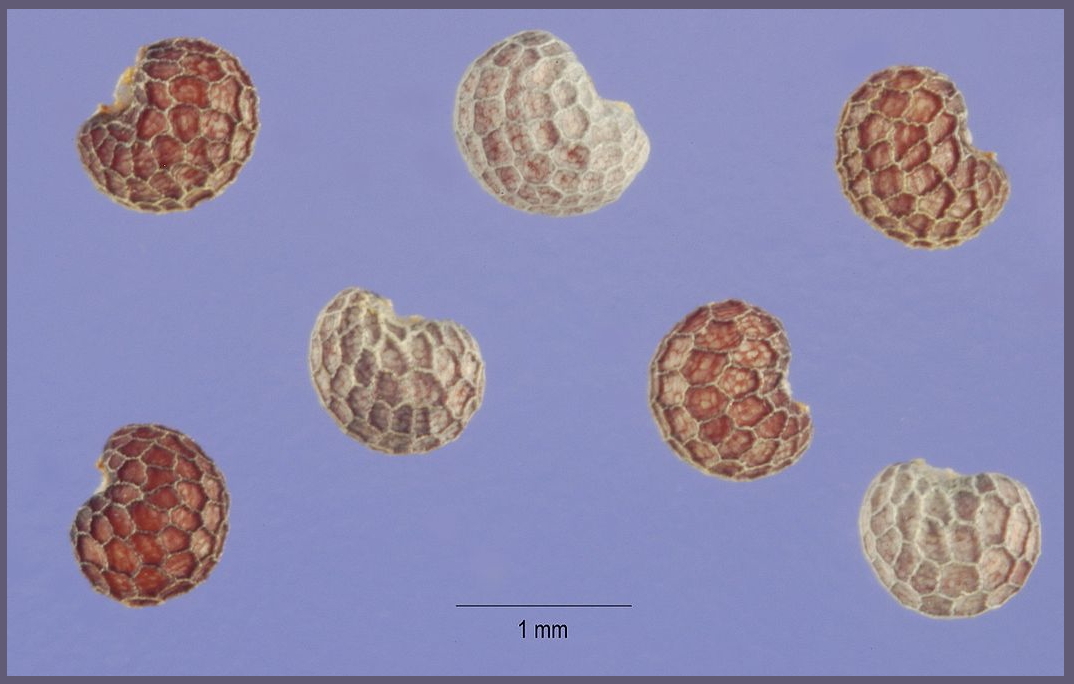
The word “way” comes from Old English and means “road” or “path,” and when you travel on a road or path, you must use a system of measurement to determine the distance covered. Back in the day when the thirteen British colonies were not yet the thirteen American states, our former overlords introduced English units as the American system of measurement.  Both the British and the Americans measured by the length of the poppy seed, which was one fourth of a barleycorn. When they laid three barleycorn end to end, they had the equivalent of twelve poppy seeds, or one inch. Providing the wind wasn’t blowing, they could lay down 36 barleycorn (144 poppy seeds) and create a foot. They only needed to do that one more time to have two feet, which is all anybody needs to head down a road or path.
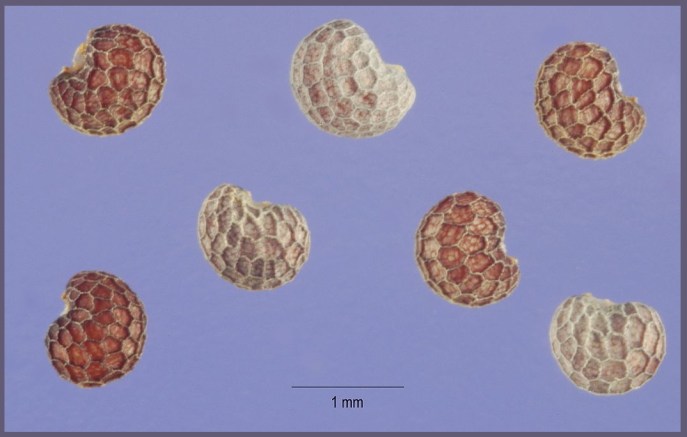
 

Poppy seeds (Steve Hurst @ USDA-NRCS PLANTS )


Of course, the British didn’t invent the foot. In the first century, when people finally started counting the years up instead of down, someone brought a Roman foot to Britain. Where the foot came from is anyone’s guess, so let me guess. Prior to the Romans, there doesn’t seem to have been a standard measurement for the foot. They must have realized how handy it would be to know exactly how far it was to the next village they planned to pillage. Counting footsteps would vary based on the size of the solider’s foot, so they needed a standard. And where else to find un unneeded foot than the battlefield. I haven’t yet discovered any record of how the foot was preserved, but that doesn’t prevent me from promoting my theory. At any rate, this foot was used for years and years, until the Anglo-Saxons brought over the North German foot, no doubt another war trophy from some unlucky foot soldier. In the 13th century, the foot became the accepted unit of measurement. Where did that foot come from? No one knows. At least not yet.  I’m working on it.
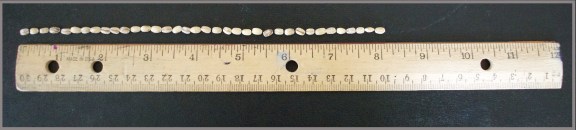
 

36 husked barley corns equals 8 inches.
(People either used unhusked barley, or they had smaller feet.)


Once you have a foot, you can leap to yard to mile, cover any distance you like, and begin to measure the “way” we started down at the beginning of this post.


When you speak of the “Twelve Ways to Cut Cheese,” you must move equidistantly from point to point, and in this case you should move quite far. You must use your feet to move, and sadly there are only a few places in the world you can still do that.


In the United Kingdom in 1824, the Imperial unit of measurement stuck its foot in the door, evicted the English unit of measurement, and became the standard throughout the Commonwealth and beyond. America has not been able to let go of England’s Imperial foot since then. We know all about the French and their fancy-pants metric system; we’ve seen their advertisements on the home shopping network and listened to their sales pitch. We’ve even bought a few signs from them and put them up on some of our highways for people who measure in French, but Americans have  put their foot down when it comes to becoming just another meter-made country.


So now you understand what I’m talking about when I say that “way” comes in two different lengths: Imperial and metric. For those who find this difficult to follow, here’s the short version:


  1. If a “way” is a road or path you travel by foot,
  2. And the Imperial system is the only one that allows you to use feet,
  3. Then, only those who use the Imperial system can go down that road and write about the “Twelve Way’s to Avoid Spelling Errors.”
  4.  Since one foot equals 0.3048 meters, people who use the metric system should write the “3.6 Ways to Avoid Spelling Erors.”


(Note to new readers: If you have any questions, or find fault with my logic, please feel free to contact any of the people who comment on my blog. I’m sure they would be happy to help you out. They know where the exits are.)

Old married couples: Sitting quietly without speaking

Standard


You’ve heard the stories about old married couples. How they grow to look alike. And how they can sit quietly without speaking, enjoying the silence together.


Well, the first one is true. Old married couples look the same because all old people look alike. You may be taller, shorter, rounder, or skinnier than your spouse; and you may dye your hair, exercise, eat right, and use expensive creams, but sooner or later both of you will have to put on a wrinkled coat of skin, large ears, and a droopy nose, so you are properly dressed for the party called old age.


Of course, you can attend the party wearing a mask created by a plastic surgeon. But you can only wear it for a while before you need a new one. Keep doing that and eventually your mouth will be stretched so close to your ears that you can hear yourself drool. Did I mention drool? Well, lots of people at the party do. Not the mentioning, the drooling.


About that second idea: I believe half of it. Old couples often sit quietly without speaking, but not because they are enjoying the silence together. Something else is going on, something called “mamihlapinatapai.” (Note to reader: Impress your friends by casually using this word in a conversation. I’ve developed an easy pronunciation guide to help you in your impressiveness. Repeat after me: mommy – la piñata – pie.)


In the Yaphan language of Tierra del Fuego, it means “two people looking at each other without speaking, each hoping that the other will offer to do something which both parties desire but neither is willing to do.”


When old couples sit together in silence, both are hoping the other person will do what needs to be done, like washing the dishes, taking out the trash, buying more Depends, or remembering the names of the children. They may look as if they are resting in their love, but both of them are secretly willing the other to action: one silently repeats in his mind, “Make some dinner, make some dinner,” while the other one says over and over in her mind, “Fix us something to eat, fix us something to eat.” If they been together long enough, they’ll sense what the other person is trying to communicate, especially if they have their glasses on and can see what time it is. Then after one asks, “Are you thinking what I’m thinking?” the other one will nod, wipe the drool from the corner of her mouth, and order Chinese.


(Photo:  Library of Congress, Prints & Photographs Division, FSA-OWI Collection, [reproduction number, e.g., LC-USF35-1326])