
Dick and Jane: Shakespeare and O’Connor
Standard
Just 97 miles away
Standard
The magnetic pole drew Shackleton, called Ernest by friends and family. He had a vision of standing in the frozen south, looking north toward England. He faced the cold and vowed that he would reach “the end of the axis upon which this great round ball turns.”

On the first day of the year 1908, mid-summer in his upside world, Shackleton and the crew of the Nimrod sailed toward the bottom of the world. After 29 days, they could sail no more. The ice embraced the ship, and the cold plotted through the fall and winter to kill them, but they survived, waiting in the long darkness for the sun to rise again. When October turned spring, Shackleton and three others set out for zero longitude.

Like most of us, he almost reached his dream, just 97 miles short. That’s 156 kilometers for those who dream in other places.
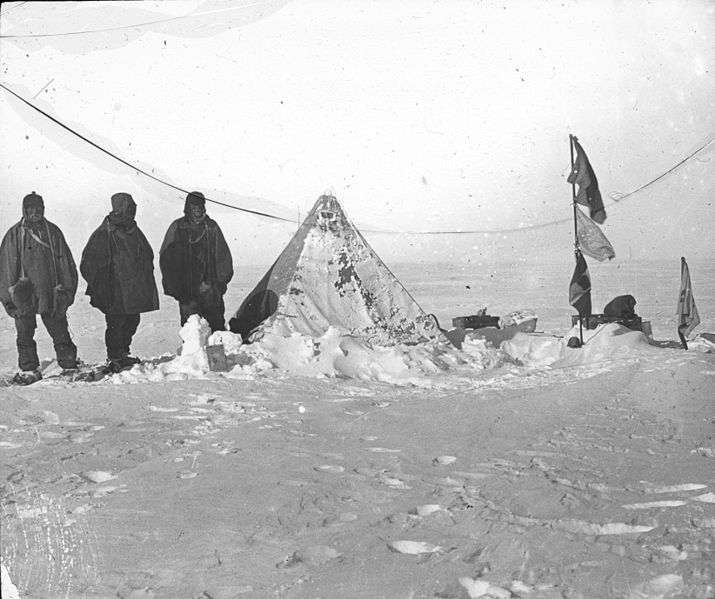
Our dreams draw us, and in spite of hunger, frost-bitten feet, and the blinding white of despair, we slog on, so often turned back just miles from the place where we had hoped to plant our flags.
Dick and Jane: Bulwer-Lytton and Hemingway
Standard

Look, Jane, look.
See the dark.
I cannot see the dark, Dick.
I see the storm.
I see the night.
I see the dark and stormy night.
Run, Spot, run!
Run in the rain, Spot.
Funny Spot.
See the torrents.
See the rain.
The rain falls in torrents.
Look, Dick, look.
See the wind.
The wind is violent.
See the big word.
See the big wind.
Look! Puff can fly.
Bye, Puff, bye.
See the man.
The man is old.
The man can fish.
He is in a boat.
I can spell boat.
See me spell.
S-K-I-F-F.
Where is Spot?
Where is Puff?
Where is Dick?
Where is Jane?
They are not in the boat.
The man is alone.
The boat is in the water.
See the boat float.
The man can count.
He can count the days.
He counts to 84.
Look at the fish!
Look! Look!
Where are the fish?
Ha, ha.
I made you look.
There are no fish.
The man has no fish.
Cavort
StandardCavort: to prance; to frisk; to caper about
Since the OED (Oxford English Dictionary) is not sure where the word “cavort” comes from, it throws up its mighty dictionary hands and declares that the etymology is uncertain.
Other sources are not so sure of that uncertainty. The Slang Dictionary suggests that it comes from cavolta, Lingua Franca for “prancing on horseback.” (If your poem about John Travolta has been languishing in a drawer somewhere for lack of a proper rhyme, let it languish no more. According to me, cavolta rhymes perfectly with Travolta, who is best known for prancing on dance floors.)
Other than its rhyming potential, why should we give any credence to the suggestion by The Slang Dictionary? Aren’t slang words, words without a high school education? And does this have anything to do with rabbits?
Those are all good questions. Let’s start with the first. The original publication of The Slang Dictionary appeared in 1891 and was aptly named Slang and Its Analogues Past and Present: A Dictionary, Historical and Comparative, of the Heterodox Speech of all Classes of Society for More than Three Hundred Years. With Synonyms in English, French, German, Italian, etc. Any book with a title like that deserves our trust, so I’m happy to give it all of my credence, if necessary. (Seven volumes were published, and Volume II is free to read at Google Play. You can learn what “can’t see a hole in a ladder”1 and “to have no milk in the cocoa-nut”2 mean.) Its entry for “cavort” also offers other proposed etymologies, including curvet, French for a certain style of horse leaping, and the Spanish word cavar, which refers to the pawing of a horse. The OED reluctantly admits that “cavort” could be a corruption of curvet, but stresses that John Russell Bartlett, an American, said it, and you know how the Americans are and what they’ve done to the King’s English. Then, the OED curtly dismisses the idea that “cavort” is related to the Spanish by saying it “has nothing to recommend it. So there.” Those last two words aren’t really in the entry, but they are implied.
The second question about slang is complicated and deserves more discussion. For now, let’s just say that I think of slang as street poetry. The best and brightest slang words end up making an honest living in the mouths of most Americans, and many go on to make it big, appearing in poems, novels, and the mouths of politicians, educators, and commentators.
The answer to that last question is so important and of such a personal nature that it deserves quotes. “Yes, this has everything to do with rabbits.” And let me say thank you for asking, because I could have spent the entire day talking about words, when all I really wanted to do today was post a video of some of my yard bunnies cavorting outside my window.
You’ll have to wait a few seconds for the high jumps. Enjoy.
1highly intoxicated
2to be insane
(Note to reader: Any connection to any definitions on this blog to anyone who writes on this blog is tenuous, possibly serendipitous, and highly irregular.)
Yard bunny
Standard
I’m partial to polka dots, so I leave the dandelions alone. My next-door bunnies are partial to dandelion leaves, so I often see their polka-dot tails in my yard.
When I sit in my favorite chair, I can see the backyard through the large picture window. A chain-link fence encircles the yard, dividing it from the empty fields to the east and south. The uneven ground beneath the fence provides a portal for the bunnies to squeeze through and enjoy the green buffet that we provide.

An open door for bunnies.
Earlier this month, the weather warmed and my husband cut the grass: the first of the season. Mixed in with the cut grass were handfuls of rabbit fur that once lined a shallow depression in the ground: a former birthing center for rabbits. Now they live in the further field, near the neighbor’s lilac bush.
In the soft light of late afternoon, one or more bunnies slide under the fence to eat. Last week I spent thirty minutes in my chair with my binoculars watching a lone bunny in the yard.

The yard bunny as seen through my window.
He tiptoed near the fence looking for something good to eat, wearing earth’s own colors – raincloud gray, sandy brown, and sandpiper buff, all detailed in either onyx or snow. Seen through the binoculars, his fur bore a pattern like feathers, and when he raised his head, ears erect, turning this way and that, I half expected him to fly away.
He nibbled on some dandelion leaves and chewed so rapidly, it seemed a kind of mincing. Often he lifted his head and scanned the skies and yard. He read the trees and clouds with his large brown eyes and studied all its smells with his ever twitching nose. I have seen a hawk or two fly overhead on other days, and I suppose he has as well.
Satisfied that he was safe, he settled into himself, sinking into a mound of fur, his ears like tiny horns, and rested in his stillness. Sitting sphinxlike in the yard, I thought he looked magisterial, small in size but great in wisdom.
Then he flared his nose and let loose ripples of twitches that rolled over his body, as if he had held his giggles long enough and now must return to his bunny ways and leave wisdom for the owls.
After grazing a bit more, he sat up, fluttered his two front paws and licked them. He groomed himself as carefully as a young man on a first date, then froze, suddenly remembering that the world must be watched.

More of the bunny through the window.
I could have watched much longer, but he had other places to go. Turning back toward the fence, he showed me his improbable tail: a cotton ball glued on by a child’s hand. I waved goodbye and turned back toward my book.
Every evening I look for the rabbits, delighted that we share the world together. I know that dandelions and rabbits are often called pests, and perhaps they are, but they fill my heart with wonder. In my own way, I think the world bears watching.
Frequently Not Asked Questions: Two
Standard
Why is “Poetry” listed as one of the categories on your blog? Aren’t you a failed poet?
Thank you for asking.
First, please note that you should be asking only one question at a time. Did you realize you asked two?
Second, do you have a problem with me listing “Poetry” as a category?
Third, I really wish you would capitalize the word “failed.” I just so happen to write in the literary style of poetry known as Failed. Surely you have heard of the Baroque1 or Metaphysical poets, Imagist poets, Confessional poets, and Martian poets? I am part of that great tradition and subscribe to the tenets of Failed Poetry, so technically I should be referred to as a Failed poet.

Martian poet, Christopher Reid, looking good, but a bit spaced out. (On Wikipedia.)
Like all great poets, Failed poets have one long foot and one short foot. (By the way, the easiest way to determine if someone has an ability to write poetry is to ask to see their feet. Don’t be fooled if they are so-called “Long fellows.”) Those of us who are part of this movement favor mixed metaphors and imprecise language, with an occasional forced rhyme in tribute to early rhymers like Shakespeare and John Donne. To us, poetry is music and every poem a song to sing, so when we’re feeling metrical we write singsong verse. Otherwise, we just write down whatever we are thinking but without the punctuation. We love words and like how they look on paper or computer screens. Many of us like to spell our words correctly, but it’s not required.

John Done is now done with poetry. We miss him. Thank you Wikipedia for this portrait.
Fourth, I put that category on my blog because I believe in the U.S. Constitution. For a little over a year, I submitted my poetry to various journals. Although one online and one print journal accepted my work out of pity, the majority wrote back to express regret and sorrow. Apparently editors all over the nation were filled with sadness and grief after reading my poems. I felt guilty singling them out and making them bear the full burden of reading my poetry, so I chose to include some on this blog and make that pain available to anyone and everyone. It is the American way.
Fifth, please keep in mind that on this blog I use the word “Poetry” in its broadest sense: a bunch of words.
1 The Baroque movement never died. Most poets since the 1600s consider themselves Baroque; however, they now use the modern spelling “broke.”
Notes from the Lost and Found
Standard
Almost the 44th parallel
StandardLike most of you, I live on earth.
My house is almost equidistant from the Equator and the North Pole. Living in between those two extremes, you would think we would have perfect weather. We don’t.

Longitudinally, I am also almost equidistant between a French farm field in the southern département of Aveyron and a wave in the North Pacific Ocean not too far south of the Aleutian Islands.

Ninety degrees of separation eastward

Ninety degrees of separation westward
One of the advantages of living near the 44th parallel in the northern hemisphere is that if I want to go around the world, I can do it in less than 17,000 miles. People who live on the equator have to travel 25,000 miles, almost 8,000 more miles than me. Once you factor in the cost of gas, it’s clear that in spite of the cold weather, I can save a lot of money on around-the-world travel.
I’m not crazy about the way the earth is tilted. If it were perfectly straight, I would be walking around at a 45° angle, which is harder than you think. The tilt makes it even harder. I think that’s why I always feel a few degrees off. Thankfully, I can stand partway upright and keep my head up; I’ve never understood how those people below the equator can walk around all day with their heads pointed down.
I’ve gotten used to the way the earth spins around the sun and have grown fond of having regular days and night. I’m not crazy about how it revolves widdershins (the old word for “counterclockwise”) around the sun because that’s the direction that unloosens things. The only way to get it to spin sunwise (the old word for “clockwise,” not to be confused with Early Childspeak for “sunrise”) is to turn the world upside down and pretend that the bottom of outer space is the top. I never do that. I already get dizzy if I think too much about the earth rotating as it revolves around the sun and the solar system orbiting around the Milky Way.
The part that unnerves me the most about living on earth is the hanging-in-outer space part. I like to be inside when I talk about it, near something I can hold onto, just in case. Don’t laugh. The website New Scientist has an article, “Solar system’s planets could spin out of control,” which is just the kind of thing I should never read. You probably shouldn’t either, but if you insist, go here. Keep in mind you cannot read the entire article unless you register, but there’s enough to scare you. Also if you are looking for another scientific-minded individual to hold onto when the world spins out of control, New Scientist has its own dating service called New Scientist Connect where you can “Search thousands of discerning, intelligent people like you.” I suggest you hurry up.
Other than the dizziness and occasional terror about spinning out of control and hurtling through outer space with no place to go but out, I enjoy living on earth. I can’t imagine living anywhere else.
Happy Earth Day from just above the 44th parallel.

A close-up of the 44th parallel in Wisconsin.
Special thanks to Wikipedia and Google for the pictures.
Twelve summer fashion trends in 2012
Standard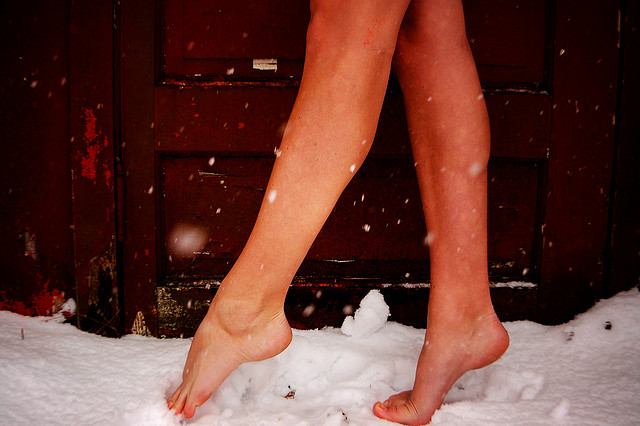
- Bare feet are fine for the winter, but this is the summer of the sole. Tiptoeing required in all seasons.
1. This summer look for shoes. On feet. Soles are trending now. All the glamorous women will be tiptoeing around this summer to protect their soles, so look for lots of bunions in pink and red. You may see a lot of heels and toes hanging out. Don’t be alarmed. That’s just fashion.
2. Cloth is “in” this year. You’ll see it on bodies everywhere. It is at a premium this summer, so expect to see less and less of it on more and more people who have less and less to hide on more and more of themselves.
3. Expect the unexpected but don’t act surprised. That is so gauche. Look for marks and designs on fabric and then don’t look for them because some cloth is just one color. Patterns will be repetitive this summer.
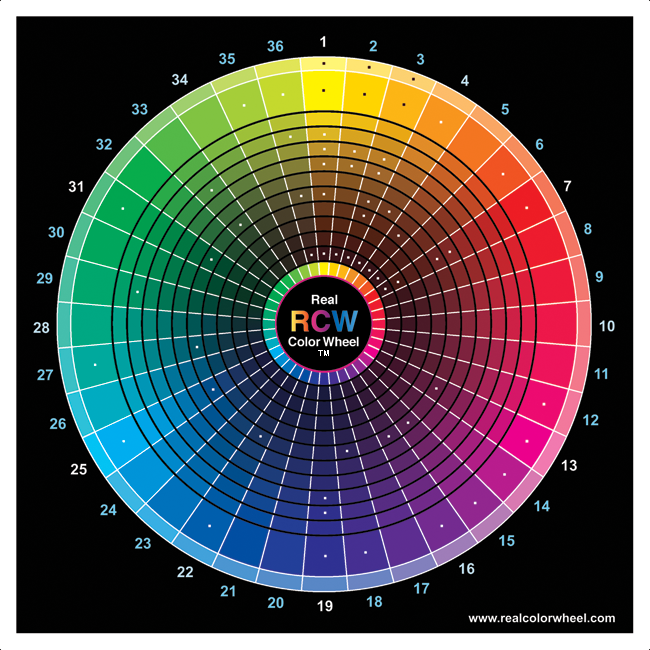
4. Colors will be everywhere. This summer’s popular colors all come in the visible spectrum. Don’t expect colors in the infrared spectrum. I haven’t seen a single designer using them.
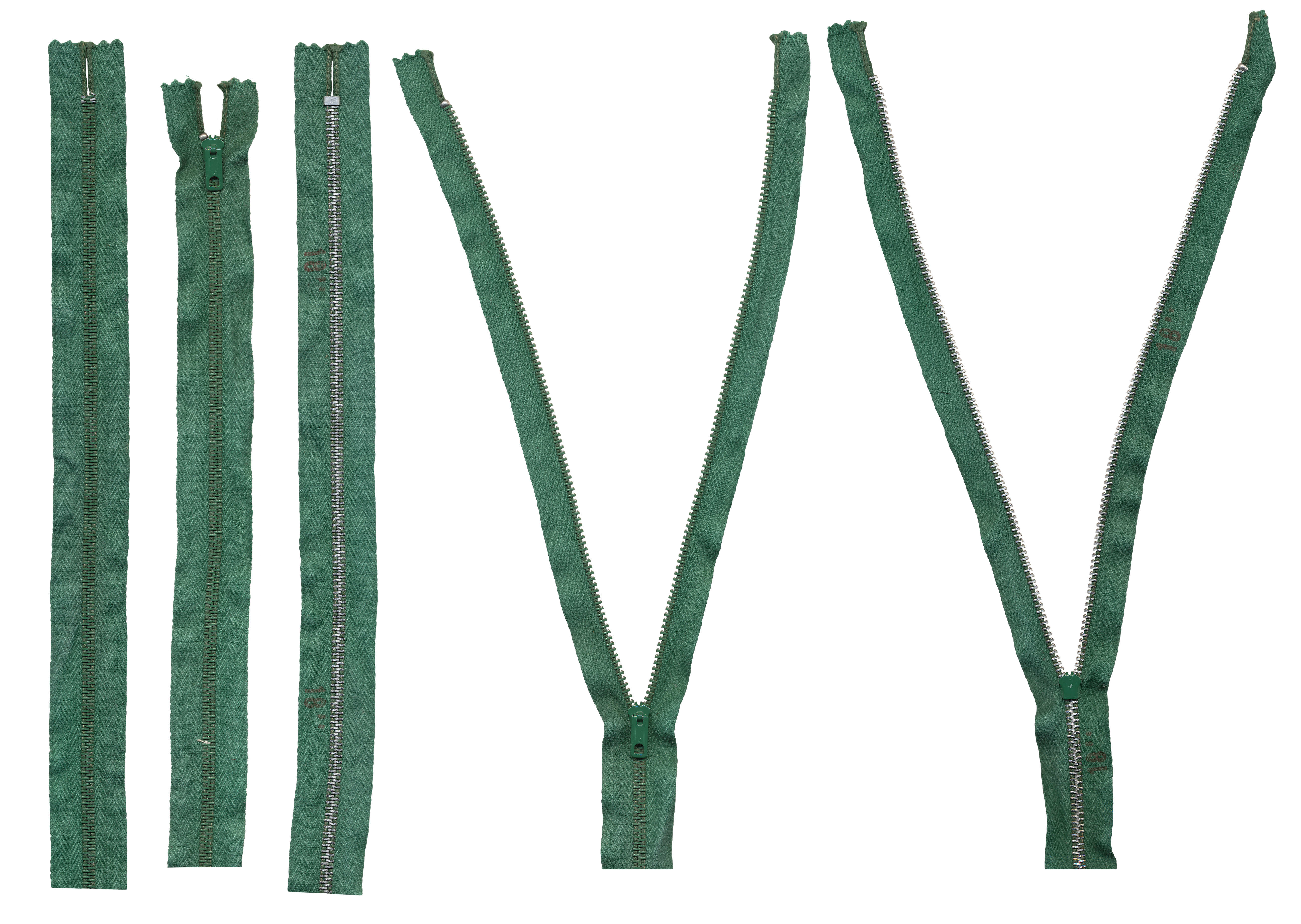
5. Zippers’ popularity will be up and down this summer. Other pieces of cloth will have loosely sewn on snaps and clasps. If you’re looking for buttons, check the ground: this year they will also be loosely sewn on.
6. Women will be wearing hair on their heads during the warmer months. Other than eyebrows, don’t expect to see much facial hair or nose hair. If you do, try not to mention it.
7. Another trend is shiny pieces of metal. Plenty of women will encircle body parts with them; other will push them through holes in their bodies. You’ll see lots of metal, and most of it is easy to spot – check fingers, ears, necks, and arms. Don’t look for it on other parts of the body. That is so illegal.
8. Cracks are all the rage this summer. Not to be outdone by men’s posterior “he-cracks,” women will sport “she-cracks” up front. They are hard not to spot.
9. Bags remain a useful accessory, especially if personal identification cards, a phone, nail files, headache medicine, matches, fingernail polish, a wallet, coupons, Kleenex, gum, used ticket stubs, paper clips, personal care products, unmailed letters, and melted chocolate candies are important to you. If you’re not sure what to do with a bag, try draping it on your shoulder or grasping it with your fingers. All the bouncy women who can’t leave home without their silicone are bagging it up this year and carrying it in their chest cavities. Expect to see more of these types of bags this summer.
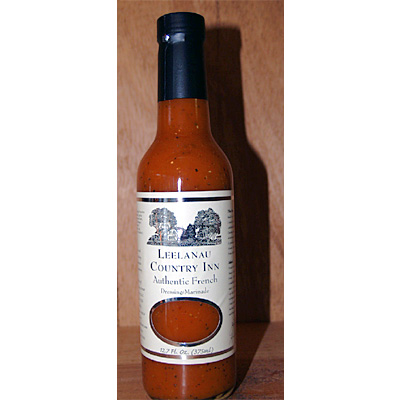
10. French dressing is especially popular this summer. Another name for it is haute (French for “hoity”) couture (French for “toity”). Women who love this kind of French dressing will be wearing le short, le tee-shirt, and le jean with le bracelet. Many are sporting fake faux pas (pronounced “fox paws”) on chains around their necks as a symbol of luck. Rabbit feet are so yesterday that only rabbits are wearing them this season.
11. For a cheeky look, women are wearing thongs. If you’re a risk-taker, you might try wearing a matching one as an eye-patch; they’re just about the right size.
12. Finally, don’t be surprised if everywhere you look, you see holes in fabric. Designers are showcasing two leg-holes this summer, and many are using the plural to describe them, much to the delight of the sophisticated but slightly irritated woman who teaches her ELL students that in English we say pants, capris and shorts, not a pant or a capri or a short. Look for more holes in the cloth women wear on their torsos. They open up a whole new range of movement for the busy woman who likes using her arms. Their ubiquity and they way they are showing up everywhere has caused at least one fashion maven to declare that armholes are the new black.

If you would like to know more about going barefoot in the snow, go here. If you think the question about zippers is open and shut, go here. If you like French dressing, go here.
 year-struck