Bonkers

Standard

After exhaustive research on the web, which is to say, several hours, I have been unable to find any reference to what my mother called bonking. Yes, I know it’s a euphemism for sex and that’s not what she meant. People, including me, use it to describe colliding into another object, something my head does when it goes in search of open cupboards. It was also used during World War I to refer to shelling with artillery fire.
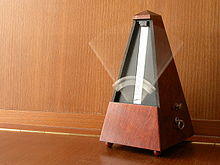
The manic metronome illustrates what mother meant by bonking. (Courtesy of Wikipedia)

But not a single reference to how my mother used it. When I was little, my favorite method of comforting myself was to rock my body back and forth, as if every chair, couch, or car backseat were a rocking chair. I would start with a gentle rocking motion, and slowly build up speed until I reached competition-level rocking. Thud, thud, thud, back and forth, like a manic metronome, I pounded out the rhythm of whatever music was playing in my head. This is what mother called bonking. I broke the springs in one of our couches because I could not sit on the couch to watch TV without bonking the entire time.

I also bonked across state lines. We used to drive from Texas to Arizona to visit my grandma, and I remember asking my mom once when we were going to get there. She said, “If you hadn’t been bonking so hard, we’d have already been there.” I guess the force of me bonking so hard in the backseat cancelled out the force of her foot on the gas pedal. One mile forward, half a mile backward.

Rocking is fairly common in babies. It soothes them. The rhythmic movement is calming, and most stop doing it around the age of three. I obviously needed a lot of self-soothing and comfort because I bonked passionately until I was at least eight years old.

I don’t remember anyone ever talking to me about it or trying to discover what compelled me to do it. My parents just accepted that I was a weird kid and that I’d probably grow out of. I did, kind of. I still love a rocking chair better than other kind of seating arrangement. And I still do some gentle rocking at times when I’m standing and waiting. And who doesn’t rock while listening to the blues?

Caption #1: Yearstricken rocks! Caption #2: Apple rocks! Caption #3: Yearstricken is off her rocker!

If I were a child now, I’d probably  have to see a shrink once a week, be on medication, have two or three psychological labels sewn to my psyche, and attend special classes for children who bonk.

Sometimes children have behaviors that require intervention, sometimes not. Sometimes kids are just weird. That, after all, is where all the weird adults come from.


This post was written from a rocking recliner.

Finish your book or people will starve in China

Standard

Reader response to stories without a resolution

Yesterday I told you that I forced myself to read through a book of short stories even though I hated most of them. After one or two disappointing stories, a reasonable adult would have closed the book and moved on.


That’s my problem. You have to be a reasonable adult.


Somewhere on the way to adulthood, I got lost. My body has stayed doggedly on the path and looks it. The me inside the body has been lollygagging around for years, sleeping under the stars, and taking as many detours as possible. Every time I see one of those billboards on the highway to Adulthood with the sophisticated grown-ups standing in front of their shiny homes or boats or cars, I feel compelled to paint big black mustaches on their smiling faces.


So I fail in the adult part. That leaves the reasonable part because it’s possible to be a reasonable non-adult. I fail there too, but it’s not my fault. I blame it on my mother. First, she’s not here to defend herself; and second, she made me clean my plate.


Beware of beans that accuse

When I was growing up, we had strict rules at the dinner table. You had to try a little of everything. Even if it made you gag. And you had

to eat everything on your plate. You all know why it was necessary: the starving people in China. They would not have food on the table if I did not eat the food on my table that made me gag. When I was little, this made perfect sense, but as I write about it now, the logic seems a little fuzzy. (Mom, if you are reading this blog in heaven, please contact me as soon as possible and explain.)


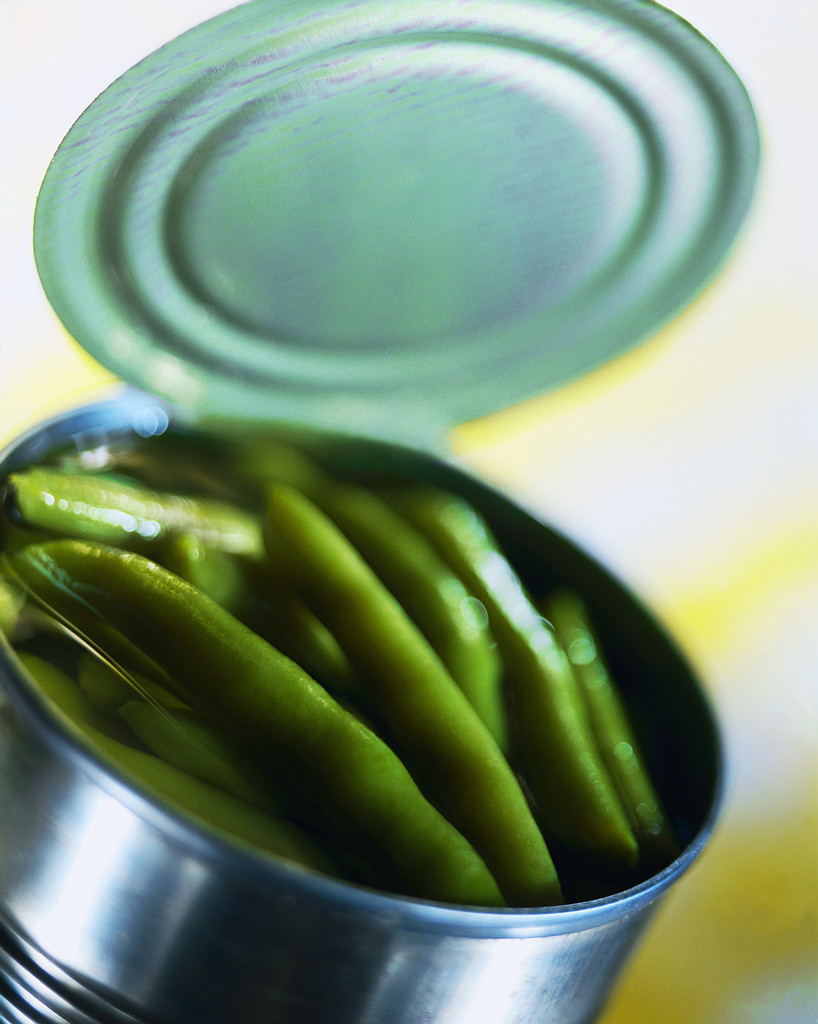
From an early age, I learned that if you have a serving of mushy green beans from a can (yuck!), do not try to roll some of them over the edge of the plate to hide under the rim of the plate. When you are required to lie say, “Thank you, I enjoyed my dinner; may I be excused?” you will have to take your plate into the kitchen. Then, each of the spurned green beans will rise up and say, “J’accuse.” (They are French green beans.)  Your callous little heart will be exposed, and everyone at the table will know that you really don’t give a whit about the starving Chinese.


Now do you understand how important it is to finish books you start? Books are like mind food. If it’s on your plate, you eat it. Even if it makes you gag. And you do it for the Chinese because that’s the kind of person you are – kind, compassionate, always putting others first.


So, thank you internet reader, for reading this blog and conquering your gag reflex. Every word you read puts food on the table of someone in China.

Mother’s Worth

Standard

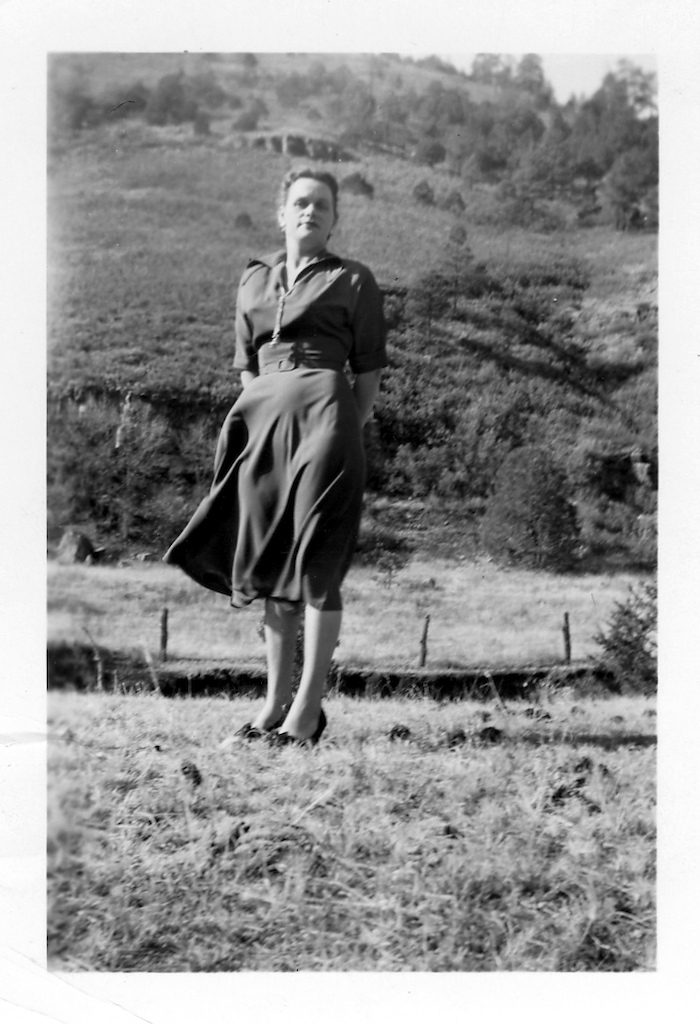
My mother smelled good.

Most of her life, she worked as a waitress and brought home the good smell of the kitchen with her. With her limited education, waiting tables was one of  the few jobs she could get. After she married my father, he started his own business as an electrical contractor and used the G.I. Bill to attend college at night. Mother’s paychecks weren’t much help, but her tips were. She made good money that way.

For a while she worked at a Mexican restaurant, and her uniform was a white blouse and a black taffeta skirt. When she would come home from work, the aroma of corn tortillas clung to her clothes. I remember hugging her around her legs when she was wearing that taffeta skirt. Those two hungers –food and love – intermingle in those memories, and I can’t eat enchiladas or tacos now without thinking of her.

Mother’s perfumes, though, are more important than the food smells, as far as my odor-evoked memories are concerned. One of her favorite scents was White Shoulders. It has always been one of my favorites, too, although it doesn’t smell the same on me as it did on her. The notes of the perfume play out differently based on each person’s body chemistry, but the melody is recognizable.

Mother’s signature scent was a perfume by Worth. It was called Je Reviens, but she always called it Worth. It launched in 1932 and was immensely popular during the 1940s.

She said that when she wore it, men would stop her on the street to ask her what perfume she was wearing. I’ve heard other women say they experienced the same thing, but I’ve always wondered about that.

In my mother’s case, one or two men may have stopped her just because of the perfume. Most, I think, just wanted to talk to the beautiful, curvaceous woman they saw walking down the street, and that fine smell gave them an excuse.

The original perfume became increasingly difficult to find over the years and was resurrected as Je Reviens Couture in 2004, the year my mother died. It has been reformulated, so it’s not the same. The original Je Reviens, like all perfumes made prior to World War II, used only natural ingredients.

Before mother died, she lived with my brother, so I spent time with him after her death. One evening he called me into his room. In his walk-in closet, he had a drawer of keepsakes, one of which was an empty bottle of Worth oil that mother had kept. He carefully opened it, we each took a whiff of the lingering scent, and then he closed it up again. I still remember that night of laughter and tears and the two of us, standing in a closet, taking hits off a perfume bottle, trying to resurrect mother from a bottle labeled Je Reviens, the French for “I will return.”


You always hurt the one you love

Standard

The Mills Brothers

Do you ever wonder what your brain is doing while you sleep? If you’re like me, you also  wonder what it’s doing while you’re awake.


This morning I woke up with two rhymes in my head. The first (thankfully) has only one stanza, the second has two.


Like the majority of  people who majored in English, I’m a failed poet. That doesn’t stop me from writing it, of course, but when I fail, I tend to fail in free verse. I’m not going to try to fix or clean up the rhymes that were in my head this morning, so if you have a weak stomach, I suggest you avert your eyes from the rhyme scene. It may be too gruesome for you. The first goes like this:


Have you seen how love ebbs and leaves the shore

Flowing out to sea, seen no more?

Have you felt the chill when love shuts the door

Quietly because it has other places it must go?


I’ve written some posts about my mother recently and have been thinking how she spent her whole life looking for love. She found it for a while, but then lost it when my father died in an accident.


One of her pet phrases was “You always hurt the one you love.” She would often say it in a teasing way to my sister or me, but I never paid much attention to it. I learned later that it was from a hit song The Mills Brothers sang in 1944. Mother would have been in her second marriage then, getting beat up on a regular basis. For her, perhaps, it was a hit song in more ways than one. Here are the lyrics:


You always hurt the one you love,

The one you shouldn’t hurt at all.

You always take the sweetest rose,

And crush it till the petals fall.

You always break the kindest heart,

With a hasty word you can’t recall.

So, if I broke your heart last night,

It’s because I love you most of all.


I attribute my morning’s first rhyming thought to mother and the elusiveness of love. But I mentioned there were two rhymes in my head this morning. Here’s the second one:


Little Billy Martin

liked to pick his nose.

He liked to poke, he liked to prod

Then wipe it on his clothes.


When friends saw Billy Martin

They always liked to shout.

Stop it Billy Martin

and take your finger out!


Don’t ask me where that one came from. I don’t have a clue.


In the desert looking for love and radioactivity

Standard

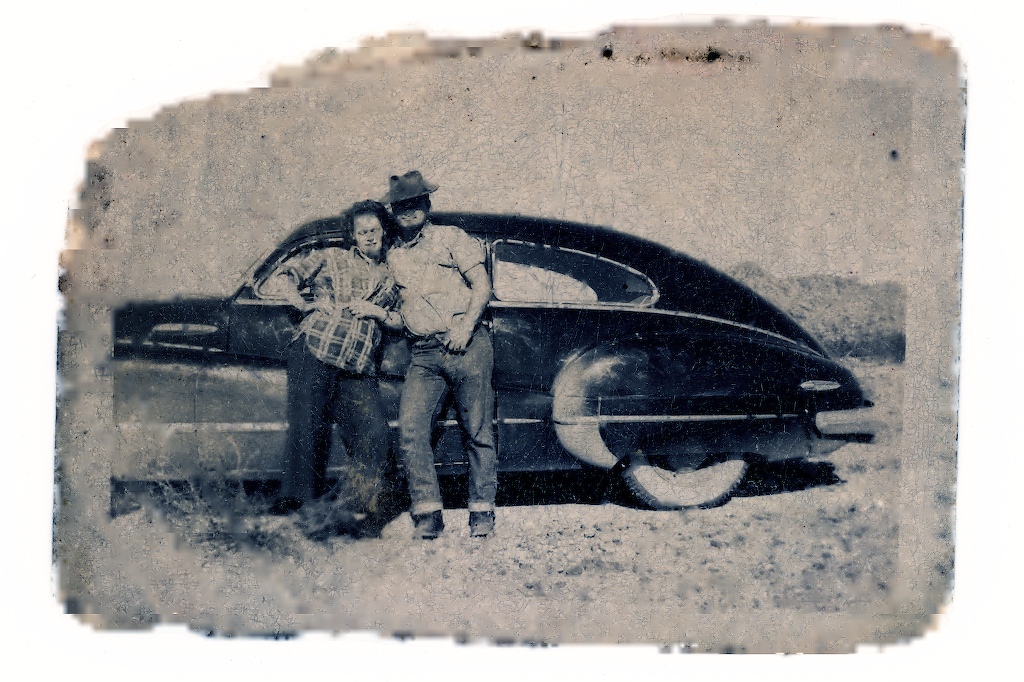
My mother and father met in Arizona in a little town out in the middle of the desert. Mother had the bad habit of marrying abusive men and had just fled her second marriage to come live with her mother. She arrived in desperate need of a dentist, having had several teeth removed, without any anesthesia, by her second husband’s fist. She left two children behind with their paternal grandmother and brought the two oldest with her, a boy and a girl from her first marriage. They traveled three days by bus from Alabama, with no money for food. Other passengers took pity on the children, who didn’t even have shoes, and shared some of their food. Her own mother didn’t recognize her when she got off the bus.


Once her teeth were fixed, mother started working as a waitress in a restaurant owned by her Aunt Vern. Mother’s mother, my grandmother, worked there as a cook. At first, mother and the two children stayed with Aunt Vern — a hard woman known to cheat her employees, even those who were relatives. After a few months, they were able to move into their own place. Neighbors and customers donated beds, a table, chairs, and a stove.


Early one evening, on the other side of sober, my father walked in. Originally from Texas, he was in Arizona for a job. As soon as he saw mother, he asked her out on a date. She told him to go home, sober up, and come back at 9 p.m. when she got off work. She never expected him to show up, but he did, and he had sobered up a bit. As they were leaving the restaurant, he said , “I want you to know that I’m not the marrying kind. I just want company, somebody to share a beer with and to dance with.”  She responded, “That’s fine with me.”


I guess the beer and the dance weren’t enough for either one. They married not long after they met.


The desert doesn’t seem like a very romantic place to find someone. Not many go in for moonlit walks among the cactus and rattlesnakes. But that’s where they found love. Later they moved back to the vast desert area of  west Texas, and one of their favorite things to do was to drive out into the desert with their geiger counter and go prospecting for uranium. In the early 1950s there was a uranium craze in the southwestern and western states fueled by the nuclear weapons program developed by the U.S. government. Prospectors armed with geiger counters searched the desert looking to strike it rich.


My parents never found any radioactivity, but I like to think they found what they were really looking for. There’s more than one  way to strike it rich.

Words can be tricky

Standard

In the summer of 2010, my brother invited me to visit him in Europe. Although I have lived and traveled in Asia, this was my first time to go there. I still have not found the right words to express how much I enjoyed that trip.

This past summer, he invited me back, and we are making plans for next year. You’re probably thinking I am fabulously wealthy, but I’m not. My brother covered most of the expenses for both trips. And no, I will not introduce you to him.

In Italy, we traveled to Tuscany and stayed in a hotel, a former villa, near Montepulciano. We each had our own room to enjoy the vineyards and olive groves that surround the villa.

By the time we arrived in Tuscany, we had already been to several Italian cities, walked through numerous museums, and seen countless signs in Italian. You can pick up a lot of Italian words if you pay attention.

The rooms were lovely, but one of the first things my brother noticed was something near the ceiling that looked like a camera. The ceiling was high, so he couldn’t inspect it. He turned the lights on and off, but the box didn’t change or light up.

Then he read the guest brochure on the nightstand. The first part was titled “In camera – In room”. He was miffed, so he immediately went down to the front desk and asked the clerk why there was a camera in the room.

The person at the front desk spoke English, but as my brother expressed his outrage about being videotaped in the privacy of his room, the clerk looked more and more perplexed. “No, sir, there are no cameras,” he insisted. Two other workers were at the front desk at the time, and they all nodded their heads.

My brother had the brochure with him and triumphantly pointed to the words. “See, it says right here that there is a camera in the room.”

When my brother came up to my room and told me what he had done, I laughed myself silly. “You knew?” he asked. While strolling through museums, we had seen the word “camera” countless times. It is the Italian word for “room.” Since we had seen it so often, I assumed that he knew too. Although the information in each section of the brochure was written in English (for the English-speaking guests, I’m sure) the titles over each part were in both languages. But my brother didn’t read all of it because as soon as he saw the words camera and room together, he had to protest.

This is one of my favorite memories of our time in Italy. And it’s a memory we share with the entire staff of that villa. I’m sure they have told the story as many times as we have. I know that the entire time we stayed there, the staff smiled at us more than any of the other guests.

The explanation the clerk gave my brother was that the little metal box that looked like a camera was part of the lighting system. My brother accepted that “In camera – In room” was merely a translation, but both nights, just in case, he threw a towel over that metal box before he went to sleep.

The road leading to the villa

The lavender-lined road

More lavender

The villa

The memory of rain

Standard

Dark comes early since we pushed back the tiny hands of time. One hour makes a difference.


The other evening in the early dark, I drove home on rain-lacquered roads. In town, going through a line of traffic signals, the road was a lake of clear water; the red, green, and white lights the fish shimmering and swimming across it.  I thought of my father because rain and I share childhood memories.


When I was growing up, my family went for a ride on rainy nights. Daddy drove and mother sat close beside him. My sister and I sat in the backseat in a cocoon of sounds: the steady swish of wipers trying to keep up with the rain, the shushing sound of tires on the wet roads, and the clicking of our turn signal winking at the other cars to let them know we were turning.


As a family, we watched the rain transform the known world, first with a bright shine, then with a glaze of gray, but always with beauty. In the car, we marveled at the gallery of sights. There was no time or need to tell each other everything we saw in that kaleidoscope of color and shadow – things moved by too quickly.


Above the rain’s murmuring, soft but clear, we heard our parents’  voices. They told stories about us, our relatives, and their own lives. My sister and I listened, awash in the intimacy the rain brought. We learned that our Aunt Ann had been not only a psychiatrist but also a pilot. The rain matched the  faint echo of crying we could hear in those stories about her. Much later we learned she had committed suicide.


They laughed and whispered too. Mother snuggling closer, daddy putting his arm around her. The two of us in the back, following as they took us farther down the road. My sister and I didn’t realize it at the time that we had already begun our own journeys, away from childhood, away from our parents. But on those rainy nights in the car, we were together going in the same direction.


Soon the talk, the dark, and the hum of wheels would lull us to sleep, and my sister and I would lean against our separate doors to dream of catching the brightly colored fish that swam across the rain spattered streets.


Later we would awake to the place of our belonging because, as sure as rain, the road always led us home.


(Picture is from: http://gossipaboutcars.com/)

Are you a dog or cat person?

Standard

My mother was a dog person who had a lifelong distrust of cats. Whenever the subject of cats came up, she would get a disgusted look on her face and tell us they could not be trusted. Then in the same solemn voice she used when she warned us not to talk to strangers, she would say, “The minute you turn your back on a cat, it will jump on the counter and lick the butter.”

Although we never left butter unattended on the counter or even knew anyone who did, this made perfect sense to us when we were young. I was always slightly horrified when we visited people who had cats and wondered what it was like to eat cat-licked butter on toast.

For most of the last decade of her life, mother lived with my brother. She had raised him right and he had two dogs, miniature Doberman Pinschers called Axle and Alexander. Mother was particularly fond of Axle, who followed her everywhere and was always sitting at her feet. She loved telling my brother that Axle loved her best.

The chair in the living room by the front window was mother’s favorite place to sit and read a book. Every day she would get up early, bring her book and a glass of milk and spend the morning reading. And Axle, her faithful companion, was always there at her feet.

One morning my brother was at the top of the stairs when mother set her book down to go to the bathroom. Axle stood up and watched her go. As soon as the bathroom door shut, he hopped on the ledge where she kept her glass of milk, stuck his snout in, and drank as much as he could. When he heard the toilet flush, he jumped down, licked his lips, and stood at attention, waiting for the one he loved best.

Butter? What butter?

When mother came out of the bathroom, my brother was laughing so hard it took him a few minutes to explain what Axle had done.

I don’t know if mother ever got over that betrayal. She never bragged again about how much Axle loved her. And along with the butter, she never left her milk unattended again.

How to play “Push Up”

Standard

About yesterday’s blog. Some people apparently never played “Push Up” as children.

Here’s how it works. You lie down in the grass, bend your knees, and then pull them toward your chest with the bottoms of your bare feet at an angle. After your playmate places her hiney on the soles of your feet, you give a push and propel her forward in a nice little arc.

One day, my sister, who is older and wiser, said that instead of propelling me forward, she was going to propel me upward. Who was I to disagree? She was the tall, photogenic one who was smart enough to skip a grade. I was the short, not-so photogenic one, who was smart enough to skip a rope. If she said it was up, then up it was.

But, of course, every up has its down.

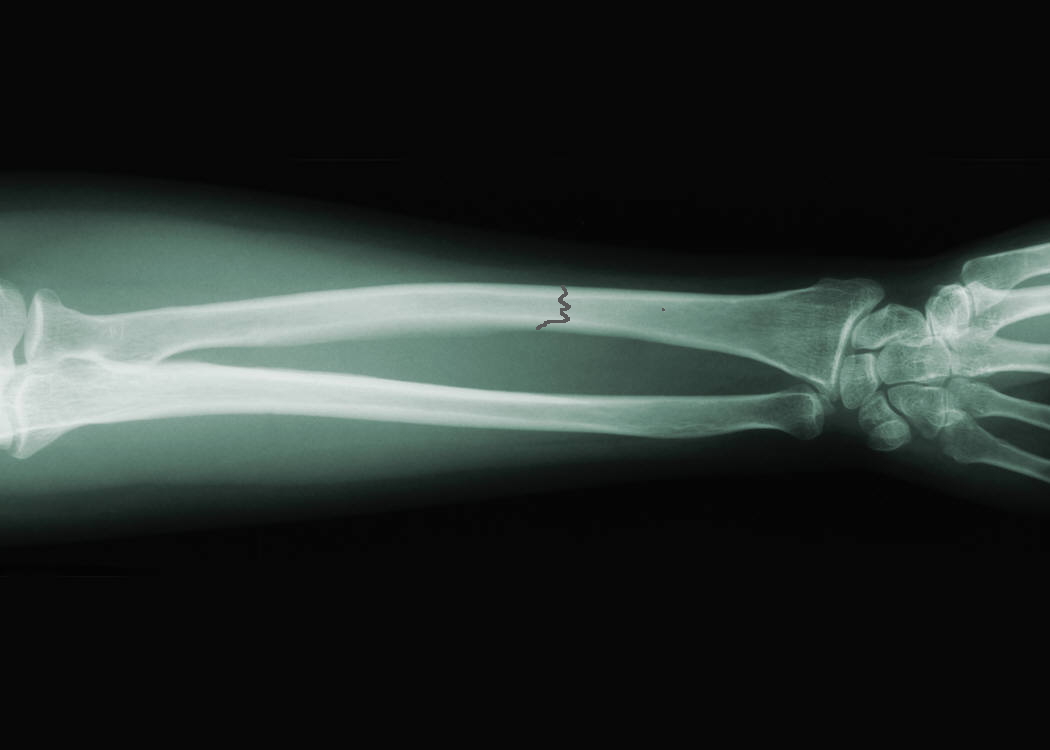
Which is how she broke my arm. Which is why I write with a limp to this day.

The leading cause of writer's limp

Potty Humor

Standard

In spite of the post title, this is a family-friendly blog. Of course, I’m not talking about my family; I’m talking about yours. Families where older sisters don’t break the arms of little sisters who trust those older sisters. In those families, when the older sister lies down in the grass, bends her legs, and then tells the little sister to sit on her feet, the older sister pushes the little one forward. In a nice arc. And the little sister lands on her feet. Can you imagine a family in which the older sister tells the little sister to sit and then pushes straight up so that the little sister, bless her gullible little heart, lands on her arm, and it, along with her tender little heart, gets broken? I thought not.

I can almost hear the click, click, click of someone’s fingers typing a not very nice comment below.

Be that as she will, I wish I worked for the company in the photo below.

Hiney Hiders: We've got something to hide! So do you.

Internet friend: So, what you do?

Yearstricken: I  hide hineys for a living.

Internet friend: Pardon me?

Yearstricken: (face flushed with pride) I work for Hiny Hiders, and we’ve got your back covered! We are your #1 and #2 go-to place if you need to hide your hiney. And we are quick: we do not stall around and make you wait. Would you sit down on this little white stool while I go get a business card? Stop, internet friend, where are you going? Not there!

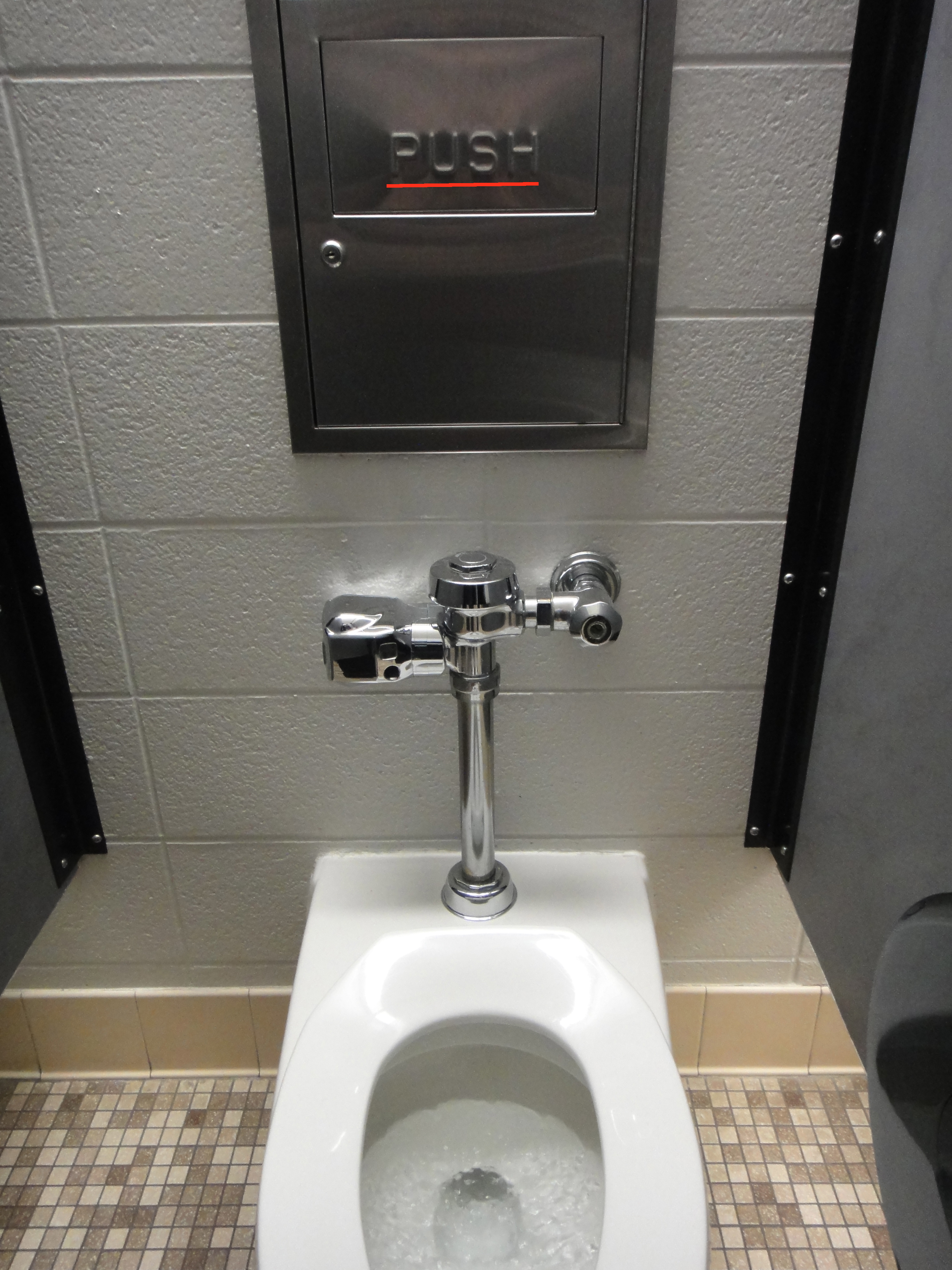
And finally, have you have ever wandered into a room and asked yourself, “What did I come in here for?” I do that all the time. Thankfully, whoever designed the bathrooms at my school put in this sign in case I get in the stall and forget what I came to do.

Helpful reminders: In case you forgot what you came into the room to do.

Please note: I realize this is a very low and somewhat crass level of humor, but my therapist says I shouldn’t worry about it since  I am still working through some very traumatic experiences I went through as a child with you-know-who.