Potato sorrows

Standard

I woke up after a troubled dream of Mr. Potato Head chasing me out of Ireland.  This is what comes of writing about potatoes in the morning and reading Frank Delaney’s Ireland at night.


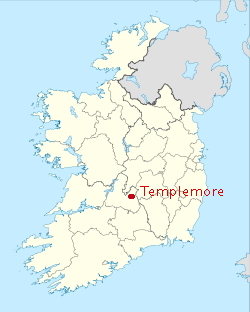
I spoke ill of potatoes yesterday, and now I feel the pangs of contrition. Potatoes helped make me. Not just my thighs, but all of me. My great-grandfather came from Templemore in North Tipperary, Ireland. I have no doubt he was raised on potatoes, the staple crop of Irish peasants.


Ideas are like the strings of a guitar. When you pluck a string, it vibrates and causes nearby objects to vibrate as well, something called forced vibration. When you pluck on an idea, it sends out vibrations to other ideas, and soon you have a whole group of other ideas humming along. When I plucked potatoes, my wart vibrated. Then I looked around the web and the two words vibrated  into Potato Wart, a serious fungal disease that potatoes fear. No wonder they get upset when we humans rub our warts on them. Our warts come from viruses, not fungi, but try telling that to a potato.


The fungus synchytrium endobioticum, which we call Potato Wart, caused the Irish Potato Famine that began in 1845. It led to at least one million deaths and the migration of at least another million Irish. My great-grandfather left Templemore some time after the famine, but his family would have lived through it. In the suitcase he carried across the sea, underneath his dreams of a better life, he would have carried clean but tattered memories of the potato blight, hunger, oppression, and poverty.


So I apologize to potatoes, we share the same history and we both worry about warts. Putting “worry” and “wart” in close proximity sends out another vibration, which makes me think of worrywarts. One day I will pluck that string, but not today.


I woke up with the pangs of contrition, and though we usually associate that with the idea of sorrow over wrongdoing, its first and literal meaning was to rub things against each other: the way my mother rubbed that potato against the palm of my hand. In the most literal sense, that rubbing of the Irish potato against the palm of the somewhat Irish little girl was an act of contrition. Both had roots in Ireland, shared a history of loss, and had a fear of warts. Today, I was reminded of the Irish saying, “Only two things in this world are too serious to be jested on, potatoes and matrimony.” So, in a second act of contrition, I think I need to apologize to the humble tuber.


Since I’m only part Irish, I only need to follow part of the admonition. I will refrain from jesting about potatoes, at least until after St. Patrick’s Day, but after thirtysome years of marriage, there is no way I can refrain from joking about matrimony.


Drawings from: http://adminstaff.vassar.edu/sttaylor/FAMINE

Potato grudges

Standard

When I was young I had a wart on my palm. Mother cut a potato in half, rubbed the wart, put the two halves of the potato back together with toothpicks, and threw it away. If you never see the potato again, she said, your wart will disappear.


I don’t think I’ll ever forget the look in that potato’s eyes as my mother stabbed it with those picks and then casually dropped it in the trash. I imagine it carried its grudge all the way to the city dump. Buried under garbage, it sprouted revenge. After writing its story in pollen, the potato wrapped it in some small white flowers, pushed the little envelops up through the trash, and waited for a passing bumblebee to stop and carry its tale of woe into the world. In this way, I believe it could spread its hard feeling.


My wart disappeared, but for decades now I have looked into the eyes of potatoes wondering if they recognize me, fearing they are related to that spurned spud. I suspect it was Thanksgiving 2010 when it happened. I pulled out a bag of potatoes and placed it on the counter. Then I busied myself at the sink, clearing out a spot so I could peel the potatoes. No one else was in the kitchen, but I had that odd feeling that someone was staring at me. I whirled around: nothing but that bag of potatoes. So I whirled the other way and picked up a small paring knife. Then I whirled back to face the bag. Protruding from the mesh was a small sprout like a pale white finger, pointing at me, accusing me. Dizzy from my whirling, I reached over and broke off the finger. That was my mistake. Now I couldn’t tell which potato was angry with me.


I couldn’t throw all of them out, so I took them out of the bag. Lined up next to the sink in their starched brown jackets, they all looked the same. As I washed them, I tried to appear calm and avert my eyes. Each one stared at me with a blank look that unsettled me because it reminded me of my husband, sitting in the living room on the couch, watching football. Was he part potato? He was getting lumpier with age. My mind reeled as my thoughts whirled; then I reminded myself that I had lived with him wart-free for thirty years; he couldn’t be related to that potato of long ago. That calmed me down. After I peeled the potatoes, I boiled them in hopes of softening them toward me. But I was so worked up by then that I mashed them in a frenzy before the meal.


Soon after that, I got a wart on my palm again. I don’t remember where on my palm the wart was when I was a young girl, but my imagination has been insisting all morning that this wart is in the very same place.


I’ve tried salicylic acid and vinegar-soaked cotton, and considered duct tape. Even though I fear revenge, using a potato appeals to me. My online research has revealed that many people use potatoes for wart removal, so maybe my story about how that childhood potato passed on its grudge is all nonsense. More likely all potatoes carry a grudge. That’s what comes from being so thin-skinned.


A word walks into a writer’s brain

Standard


A word walks into a writer’s brain looking for a job. The writer takes the resume and looks it over.


You have an impressive work history. I see that you worked with Chaucer and have worked for every writer that uses the English language since then. Do you work in every genre?


The word blushes and nods.


Okay, let’s look at role in syntax. You’re an indefinite pronoun. That’s an exclusive club that no new words are going to get into anytime soon. You also do a lot of work as an adjective, but don’t seem to mind working as an adverb now and then.


The word shifts in its chair, unused to drawing attention to itself. It gazes out the window.


The writer looks up from the resume and peers over her reading glasses. The word looks good for its age, she thinks, yet it’s nothing special to look at. She’s familiar with it and has never given it much thought, but now that she sees its resume she’s impressed. She lays the paper on her desk.


How do you see yourself? What are your strengths and weaknesses?


The word detests questions like this and feels its resume should speak for itself. Writers can be such snobs when it comes to words, it thinks, but these interviews are necessary. We need each other; writers can’t express their thoughts without words, and words die if they aren’t employed.


The word adjusts its glasses and sits up in the chair. “Let me start with my greatest weakness. If I am used too much, the writing becomes vague and imprecise. I do my best work if I’m used sparingly. But, of course, I don’t really have a choice.”  The word wonders if this sounds like blame shifting, so it tries to think of another weakness. “I am plain-spoken and try not to draw attention to myself, so I suppose, a few people might consider that a weakness. I’ve never been on anyone’s favorite word list.”


“My greatest strength is my versatility. As you can see from my resume, I can work alone as a pronoun, adjective, or adverb, but I also work well with others. When I started my career, I spent hundreds of years modifying and hyphenating words that I later collaborated with to form single words. I also enjoy supporting other words as a suffix to create new adjectives. In that role I have worked with adverbs, nouns, and other adjectives.”


The writer stretched out her hand and grasped the word’s hand.


Can you start tomorrow?


“Yes,” the word said.


Okay, be at this blog tomorrow morning and we’ll begin.


Froggery bloggery

Standard

If a froggery is gathering of frogs, a bloggery must be a gathering of blogs. Or, for my purposes, a gathering of bloggers, who sit around the WordPress pond croaking. Not the kind of croaking that leads to funerals, although some days, because of the posting, the reading, the commenting, the researching, and  the revising, followed by more of the same, the exhausted blogger may feel close to death.


Headline: Death by Blog. Today in Podunk, Wisconsin, a husband discovered his wife’s dead body in their home office, sitting at her desk and staring at her computer with her fingers still on the keyboard. Mrs. Mortimer had been there for three days before her husband realized she was dead. “We often went days without speaking,” he said, “because she spent all day writing, reading, and commenting on blogs.” It’s the fourth case of death by blog this week. Experts attribute the deaths to blogged arteries, leading to permanent brain freeze.

Okay, back to frogs and blogs. After extensive research, which may translate to over a hundred minutes, I have discovered some amazing similarities between frogs and bloggers, which I think you will find ribbiting. I know I did.

But first, you must understand that the crucial difference between frogs and toads is all in your head. Popular culture put the idea there, along with thousands and thousands of images of J*st*n B**b*r, he who must be asterisked. In spite of their differences, frogs and toads belong to the same order, Anura; they just have different last names. Some have more warts than others, but so do some of your family members.

At last we are on the same taxonomic page, so here are the similarities:


  • A frog’s skin hangs loosely on its body. Compare that with the slack-jawed look of bloggers who sit in front of a computer screen for hours and days. Then, if you dare, stand in front of a mirror with just your froggy skin on. Anything looking loose? I thought so.


  • Frogs are nocturnal creatures. Think how many people blog at night. When you wake up, are there new blogs to read and new comments to answer? Again, I thought so.


  • Frogs wear camouflage to help them sleep during the day. Many bloggers have so-called jobs during the day, but most of them just look awake. They are half asleep because they stayed up too late blogging. Also, they have special eyelids that make them look like they are engaging in a conversation with you while they are mentally composing blogs or comments for other blogs.


  • Some frogs produce psychoactive skin secretions that make you hallucinate. You know which blogs I’m talking about.


  • Frogs return by the thousands to breed at the body of water they call home. Every day close to 500,000 bloggers gather at the WordPress pond, post close to 850,000 new posts and almost one million comments. Just today, as of 6:30 a.m., that adds up to 182, 325, 317 words. That’s a lot of spawn.


  • A frog is an amphibian, which means “two lives.” Before you become a blogger you were a person with a life, once you become a blogger you lost that life and now live in the blog pond. And you look different, with looser skin.


  • Frogs appear in stories as harmless, unsightly, and clumsy creatures. However, they often hide some talent or their frogginess is merely a disguise. In the blog pond, reading a blog is like kissing a frog and being magically transformed. Sometimes. The other times, it’s like kissing a frog. With warts.

Happy Leap Day! I know it’s tomorrow, but I have been pondering this for a while and wanted to get a jump on all the celebrations and well-wishing. And, although I have toad you this before, thanks for reading.


All photos courtesy of http://www.theinformationarchives.com/frogs/


My feelings about sentimentality

Standard

Words are like celebrities. Some of them keep their signature style over the centuries; others turn into parodies of themselves. Public opinion is part of the reason. Words that socialize with people in power often become so popular that everyone knows and remembers their names. They use their connections to stay current. Other words go out of style because they only want to talk about the past.


Word handlers – writers, journalists, poets, and essayists – play a part as well. Too much promotion and people can grow sick of a word. Ask the word to perform in ways it’s not suited for and people will look for a different word, one that has honed that skill. Once the handlers start sending a word out on assignments just to make quick money, a word can grow jaded and start to say whatever the highest bidder offers, even if it is the opposite or near opposite its original meaning. Take a word like silly. Back in the 1200s, it meant “pious” or “blessed.” A century later, a silly person was “weak” or “pitiable.” By the 1570s, only fools and the feeble-minded were called silly.


Trace the root of “sentimental” back to the Latin sentire and you find the meaning “to feel.” The words “sense” and “sentient” come from the same Latin parentage. The first usage of the adjective “sentimental” in the 18th century referred to something characterized by feeling or sentiment. However, after the word began modifying ideas and novels filled with excessive emotions, people began to use it to mean too much emotion or sentiment. Hanging out with “maudlin” and “mawkish” ruined its reputation. Now its name is splashed across every dictionary tabloid in the land, so no one will ever believe it when it says, “But that’s not who I really am.”


Fortunately, even words with a bad reputation have cousins or other relatives that will stick up for them. Words are notorious breeders and there’s hardly one who doesn’t have at least one good apple in its thesaural barrel.


For some reason (call me tender-hearted), I started feeling sorry for “sentimental.” A few bad choices in life and suddenly you’re a pejorative. So I  looked up some of its first cousins and they introduced me to even more cousins who introduced to me some well-known, likable words that no one would be ashamed to be seen with in public. See the chart below.


Sentimental and its relatives


If you have time and would like to see how words come in and out of fashion, go to the Google Ngram Viewer and type in words. Please don’t go there is you have work to do. I didn’t, so I tried avuncular, of or about an uncle, and discovered that its growing popularity was unstoppable until just a few years ago.  However, verdant, green or covered in green growth, has started to fade, mowed down by the whims of fashion.


Enjoy.

Sentimental swoons

Standard

Sentimentality is one of the nicest pejoratives you’ll ever meet. Maude, as I call her, cries easily, regularly rams into icebergs of emotions that sink her unsinkable optimism, sending her to the bottom of the ocean, but not before she can remember her happy childhood when every flower smelled of heaven and housed a butterfly, and house-trained robins fluttered above her head, leading her safely home where she lived happily ever after. She always manages to escape or resurrect from her watery grave and dry off her emotions, just in time to plan her next voyage across the sentimental seas. She calls every sailing vessel the Titanic, closes her eyes or changes the channel when the bad parts of life come on, and always thinks in pink. Even her sunglasses are rose-colored.


The Titanic (photo from Google)


However, Maude wasn’t always a pejorative. She was the darling of philosophy and literature in the 18th century; she looked more attractive when she was younger. During much of the Age of Enlightenment, Sentiment had to eat in the kitchen, while Reason sat at the formal dining table entertaining scientists, philosophers, and writers. After a while, Sentiment got tired of eating the leftovers and seduced the master of the house. When she sat down at the formal table and poured her wine, the conversation turned to discussions about subjectivity, introspection and her role in developing a moral sense. Sharing the table was one thing, but now Reason, long used to hunting alone, had to take Sentiment with him when he went out looking for moral truth. Reason always fancied himself the better shot.


Not-so-stern-looking Laurence Sterne, author of The Sentimental Journey, a sentimental novel. (Photo from Wikipedia)


Maude appeared in many of the novels of that era, using her beauty and brilliance to appeal to the reader’s emotions. After loosening the reader’s hand from the grip of cold logic and reason, she grabbed it and took the reader with her as she supped with sorrow, fought off lascivious brigands, and succumbed to both love and terror by swooning. Carried across the stormy seas of emotion, battered and bruised, now aloft on the crest of a wave, now almost drowning in its trough, the reader arrived at port, armed with a moral compass to find his or her way safely home. It was the only way Maude knew to teach the reader how to live nobly and morally. Ever the heroine, she drowned or died in story after story, the consequence of being too good for this world. She always showed up for work again the next day, ready to teach someone else.


Modern and post-modern readers who have grown up eating irony-fortified cereal for breakfast usually feel seasick after riding the high waves of sentimental novels from that period. Maude’s excesses led inevitably to parody and ridicule. She moved out of her manor, where she had entertained well-bred friends with refined sensibilities, and bought a house in town, next to the used bookstore. You have probably seen her shopping at Wal-Mart; the prices make her swoon.


People who write capital L literature want nothing to do with Maude. If she appears in your story or poem or essay, critics will label your writing sentimental, and they will use a sneering font on the label. As you know, labels written in sneering fonts are almost impossible to remove, so you can forget your dream of obscure fame in literary journals. Oh sure, there’s always the New York Times best-seller list, but do you really want to end up like Nicholas Sparks?


It’s probably too late to try to clear Maude’s name, no matter how much we may like her. I’ve noticed that she often uses her first and middle name these days: Maude Lynn*. She was never one to show restraint, any more than I do when it comes to puns. She chose a life of excess; that’s why a lot of people won’t make eye contact with her. I think she will always be popular, maybe not with the big L people, but with people who don’t capitalize their literature. I feel a certain amount of sympathy toward her, but I don’t like it when she glosses over the hard truths or pretends they aren’t there. I don’t like it when she takes the shortcut to happiness, to avoid the winos, addicts, and broken people who hang out at the bus station downtown.


I would like to live in a world with fewer problems; a world where every broken person is fixed. But as much as I would like to get to happiness faster, today I am not going to try to get there with Maude. I am going to go downtown and take the bus instead.


(*Note to reader: Gratuitous puns found on this blog are the result of an almost imaginary medical condition. Try not to judge.)

She reveals her restraint

Standard

By fifth grade, my humor was tall for its age. It was goofy and awkward and made my friends laugh. My two best friends, both nerdy, called me Professor Car-Car.


In sixth grade, almost everyone else’s humor started filling out and looking more grown up. Mine stayed skinny, scrawny, and flat chested. By year’s end, it was shorter than most.


In high school, I was ashamed of my humor. Everyone knew it had stopped growing in the fifth grade, loved dumb jokes, laughed hysterically at slapstick, and snorted through its nose at jokes about gas. Most people my age preferred jokes about sex, but my humor and I secretly preferred Knock-Knock jokes and puns.


There’s no cure for fifth-grade humor; it never grows up. I’ve tried literary supplements but I end up making fun of them. After hours of imbibing ironic artsy films full of sardonic laughter, I create parodies in my mind to mock them. These often involve banana peels.


Contrary to what you might think, I have tried to train my humor to sit quietly through meetings and not make up funny stories in my head about the people talking. However, my humor can only sit still so long. Fifth-graders have a lot of energy and can’t be stuck in a chair all day.


Yesterday I wrote about my husband’s colonoscopy and titled the post Let’s get this party started. In an act of heroic restraint, I did not use my first choice: Let’s get this party farted. I should get some credit for that.


Also, I refrained from writing an entire post about Doctor Payne and his daring space probe. He lands on Uranus in search of his nemesis, Paul Upps, a parasitic creature who attaches himself to other living beings and sucks the life out of them. Doctor Payne heard that Paul Upps was hiding out in a dark tunnel deep in the heart of Uranus. In the end, Doctor Payne finds Paul Upps and removes him. However, that’s just the pilot story. Paul Upps is not so easily destroyed. He takes on other forms and shows up other places, so Doctor Payne can have a satisfying career seemingly killing off Paul Upps each week, only to find the evil creature has re-emerged somewhere else next week. I haven’t decided yet who should play Doctor Payne, but I’m open to suggestions.


I’ve given my humor free rein in my brain, where it has room to run around in all that empty space. The letter “g” has corrupted free rein, so now we are seeing people given free reign. Free rein means my humor is sitting on the buckboard of my mind letting the horses run wild. Free reign means the little potentate is sitting a throne, dictating what I say. So untrue. I keep my humor in check, and I think it’s important that you know that I’m doing my best to keep it from racing around the interblogs, kicking up dust and  making a nuisance of itself.


You’re welcome.


For the love of Gordon

Standard

Proverbs prefer Twitter to blogs. They don’t have time to sit around drinking high-priced coffee at Starbucks like Essays who have the leisure to write hundreds or thousands of words about topics like “The Top Ten Ways to Avoid Unnecessary Risk.” Proverbs are words with common sense; they tweet, “Don’t poke the bear,” and then head for work. Most of them have blue-collar jobs and drink their coffee out of thermos flasks they fill at home.

On the weekends though, they will go out to celebrate a birthday or anniversary or maybe attend the wedding they thought would never happen because Gordon believes that the key to a happy marriage is a long engagement. Fewer years of marriage, he always says. Now that Gordon is seventy, Georgetta has convinced him to make his vows. So for the love of Gordon, a Proverb will pull out its good suit and new, red tie and show up at the wedding looking like an Aphorism, which is just an upper class Proverb, not to be confused with a Maxim, which is a Proverb with manners.

Hold on, I hear you saying, I beg to differ. First, no need to beg: differ away. I like to differ myself. Just remember, in a police line-up, most eyewitnesses have a very difficult time picking out the word perp.

“So, Mrs. McGillicuddy, can you identify the one you saw writing graffiti on the storefront?”

Mrs. McGillicutty twists her wedding ring. She just got married to Gordon a week ago and realizes she has just spelled her name wrong. She wonders if the police officer will notice. Then she takes off her glasses, wipes the lenses, and looks back at the officer. “Are you sure they can’t see me?”

Absolutely, says the officer, who waves at the line-up to prove his point. Mrs. McGillicuddy (who remembers this time to use double-d instead of double-t) doesn’t see two of the suspects wave back.

No matter how much time she spends looking at the Proverb, the Aphorism, the Maxim, the Saying, the Adage, the Saw, the Axiom, the Dictum, and the twins, Apothegm and Apophthegm, she can’t make a clear identification. The officer has no choice; he releases the words. They head to the nearest bar, and utter short, witty words and phrases in an effort to pick up hot-looking Quotes or Euphemisms in tight clothing.

I like proverbs, aphorisms, maxims, and all the rest. Half the time I can’t tell the difference between them, except for the twins. We Americans like the more acidic Apothegm, while the British prefer the one with the higher pH level, Apophthegm. Beyond that, they look pretty much like the rest of their relatives.

Now that I have consciously revealed my ignorance versus my normal unwitting way of revealing it, I would like to share some aphorisms with commentary.

  • A little knowledge is a dangerous thing, as you know if you read this blog.
  • Better to remain silent and be thought a fool than to speak and remove all doubt. If you have any doubts about me, keep reading this blog.
  • Count your blessings. If you’re like me, you’ll need a calculator.
  • Don’t count your chickens before they hatch because counting your blessings is enough math for one day.
  • “East is east, and west is west” can be read backwards and still make sense.
  • Familiarity breeds contempt and lots of babies.
  • Good and quickly seldom meet. I’ve tested this on my blog and it’s true.
  • Half a loaf is better than none, but it’s still a lot of carbohydrates at one meal.
  • If home is where the heart is, my home is in my chest cavity.
  • Ignorance is bliss. This explains my inexplicable happiness.
  • Let the chips fall where they may. We’ll vacuum after the game.
  • Money talks – to everyone but me.

Enjoy your day.

How much is that doggie in the window?

Standard

One of the chief delights of blogging is discovering writers, cooks, painters, photographers, teachers, and poets who delight and instruct you. One blogger who does just that is RAB at You Knew What I Meant. A multi-talented woman who also teaches college-level writing and literature, RAB draws from her collection of bloopers written by her students and comments about them on her blog. She ranges from serious and thoughtful to wry and funny. I learn something from her every day. If you go there, you will too, and you will not be disappointed.


Today I asked her to write something for my blog. Enjoy!

RAB and her younger sister: a little older but probably no wiser.

That parents would think their kids are special comes as no surprise: it seems to be part of the job description. I was blessed with parents who encouraged and supported their children while still trying to help them keep their perspective on their own achievements. But that didn’t keep my sisters and me from deciding we were, more or less, Infant Phenomenons. My parents’ smiles at manifestations of that were, I’m sure, part pride and part enormous amusement. And sometimes they also had to draw on what seem in retrospect to have been infinite stores of patience.


Here’s my most vivid recollection of one of those instances.


My sister and I were quite taken with the television show Arthur Godfrey’s Talent Scouts. Reading about it now, I find it was the #2 television hit show during the 1950s. People would come on the show and perform; at the end of the program the audience would applaud, and the applause-o-meter would indicate the winning act. Kind of like American Idol, but without the hoopla or the nastiness.


I imagine that, in what has become the pattern of televised contests, at some point in every show somebody explained the procedures and rules; but I’m not sure that anybody ever explained where the acts had come from. Helen and I reasoned that since the show was called Arthur Godfrey’s Talent Scouts, the acts must have been found by a band of talent scouts, whatever that might mean, who brought their discoveries back to Arthur Godfrey so he could put them on his show. And Helen and I formed the ambition not only to be found and brought back, but also to win the prize.


When I was six and Helen was three (and my other sister was yet to be born), my parents decided to make the first of what would be three family car trips to Florida. That was before Route I-95: they planned to drive from New Jersey to Florida on Route 1, stopping for meals etc. but otherwise driving straight through the night, alternating the driving between them. My father stowed the family luggage in the back seat foot wells and then laid a crib mattress down, covering luggage and back seat. This made a luxuriously spacious bed-cum-recreational space for Helen and me, with room for coloring books, a few stuffed toys, Weenie the sacred blanket (shreds), and bedding. There is no more magically comforting experience, I think, for a child than lying drowsily in the back seat of the family car, looking up at the stars through the back window, and hearing Mommy and Daddy conversing softly and seemingly far away in the front seat over the hiss of the tires on the ribbon of paved road. The drive down had that kind of magical peace, even when we were awake and trying to be the first to see a car with a Delaware…and then Maryland…and then Virginia…license plate.


Once in Florida, we cavorted on beaches and visited relatives and met some nice people from Michigan who were staying in the motel unit next to ours. And at some point, for some reason, we developed the plan for being discovered by Arthur Godfrey. This plan must have made the return trip from Florida to New Jersey sheer hell for our parents.


How do Talent Scouts operate, after all? Well, I knew what Girl Scouts and Boy Scouts did, having read about them and aspiring to join GSA (for the uniform): they hiked around, especially in the woods. They looked at things. They collected things. I had also read about Indian Scouts, who traveled around looking for bent twigs and other important things along the trail. So Helen and I figured that Talent Scouts probably drove the roads of America looking for talent. We were too young to have much of an idea of what went on in night clubs and the like, so it didn’t occur to us that the Talent Scouts might be traveling to look at actual ACTS. Our notion was, they kept their eyes and ears open for Talent wherever it might be—someone singing in church, somebody doing cartwheels in her yard, somebody tap-dancing with friends at school or maybe on the sidewalk. What more likely place for the Talent Scouts to be driving, we thought, than Route ONE?


Our plan was to get discovered on the way home to New Jersey. And so we insisted on riding with the windows open as we sang our best number, “How Much Is That Doggie in the Window?” It was a pretty big hit at the time, and we fancied our rendition of it quite a bit, especially the “Arf! Arf!” part. No one in a passing car would be able to see Helen’s affecting gestures of desire as we peered through an imaginary pet-shop window, but our voices alone would surely cause any Scouts worth Arthur Godfrey’s imprimatur to shout over to Daddy and ask him to pull over and let them meet the Amazingly Talented Girls. Because it was impossible to know exactly where or when the Scouts would be driving by, we of course had to sing the song over and over. And over.


My parents made the drive from New Jersey to the Florida border in exactly twenty-four hours. I’m sure the drive home was faster.


I will love them forever for never once telling us the truth about Arthur Godfrey’s Talent Scouts, or asking us to call a halt to our naïve and lusty audition.


Grown-up tattling

Standard

My husband grew up in the Midwest, Land of a Thousand Kindnesses, and came from a family who speak kindly of one another. The first time I met his parents and five siblings, I was shocked. They reminded me of The Waltons, the popular TV family of the 1970s. At family gatherings when my husband’s family told stories about one another, everyone minded everyone else’s feelings, so at the end of their stories, you expected everyone to stand up for a group hug and one more family photo.


My family grew up in Texas, sometimes, but we moved now and then just to see if growing up somewhere else would make us any different. It didn’t. We were the people from Peyton Place no matter where we lived. The soap opera known as Peyton Place first aired in the mid-1960s, shocking some and entertaining others with its stories of divorce, infidelity, imprisonment, and revenge. Just like my family, except that our show ran every day, while Peyton Place only ran two or three episodes a week. At our family gatherings when we told stories, no one worried about anyone’s feelings, we told the most embarrassing stories about each other that we could remember and ended up rolling on the floor hooting and hollering, and sometimes snorting through our noses because none of us could believe the dumb things the others were capable of.


In my family teasing has always been a sign of affection, and our favorite way of teasing is to tell on one another. When you are a child, telling on someone means you are tattling: trying to win the favor of whoever is in charge, either to look good or avoid punishment. Our grown-up tattling is after the fact and has no other purpose than to point out the obvious: we be dumb now and again. And the more we tell the stories on one another, the kindlier we feel toward one another.


So when my husband met my family, he was shocked. It didn’t dissuade him from marrying me, however, because I made sure we were already married before he met them. (Note to reader: Contrary to what my family says, I’m not as dumb as I look and sound.)


If, in the telling of a story about a sibling, we see signs of embarrassment or hear attempts to explain or justify, that story will become a signature story, one we will tell again and again, every chance we get. Because that’s what love does.


My mother never took part in any of this teasing. Of the four siblings I grew up with, only two of us shared the same father. The other two had their own fathers, yet we all share the same sense of humor. Maybe mother was merely the carrier of the slightly off-kilter humor that manifested itself in her children.


Of course everything I have written up until now is just an excuse to tell on the two siblings that I know are still alive. One of these posts I will explain more about my known and unknown siblings. But until then, here’s me showing some love to my brother and sister.
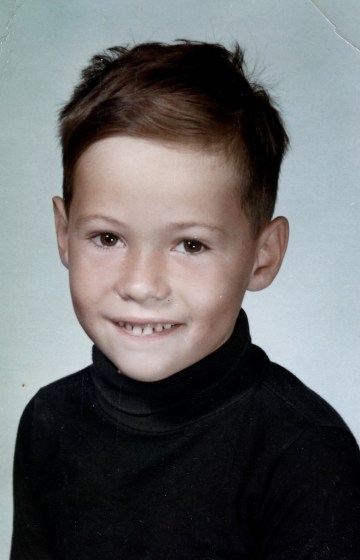
My brother in a littler time

Brother story

Until my brother came along ten years after me, I was the baby of the family. Mother indulged him not only because he was the youngest, but also because he was a boy, something I had been expected to be, but failed. When he was five years old, we lived in military housing in Fort Wainwright, Alaska. One day when he was shopping with mother at the commissary, he asked for some strawberry preserves. Mother tried to talk him out of it and told him he wouldn’t like it because it had chunks of fruit inside, but he insisted. The next day she put the preserves on his peanut butter sandwich, and after one bite, he knew mother was right: he didn’t like preserves. Mother insisted that he eat the sandwich, and then left him alone in the kitchen. He pulled the two pieces of bread apart, thinking he might be able to salvage the peanut butter side. It, too, was ruined. I’m sure that we had a garbage can in the kitchen, and I know that my brother had seen people throw things in the garbage, so it wasn’t as if he didn’t know how to dispose of the bread. He must have feared that mother would see the uneaten sandwich languishing in the trash, so he did what any reasonable person would do. He picked up the rug in front of the kitchen sink, placed one slice of the bread on the floor, and carefully covered it with the rug so that it was hidden. Then he took the other piece, opened the basement door, and flung it down the stairs. After all, who would think to look there? He doesn’t remember if mother found the first slice before or after she stepped on the rug; he can’t remember any consequences at all. Since he was the youngest, there probably weren’t consequences.

One of the few days the world left my sister's hair alone

Sister story

As a young girl and teenager, my sister suffered from Tourette’s of the Hair. Most nights she lathered her hair in Dippity-do, wrapped the strands in pink pokey, plastic rollers; large, bristly, netted curlers; or soft, spongy snap-ons in the belief that she could make her hair bend to her will. More often than not, it didn’t. Some nights the hair wriggled out of the curlers; other nights the curlers twisted the wrong way. When she commanded it to flip up, it flipped down. Or if she ordered it to swoosh that way, it drooped the other way. This made bad words come of her mouth. She developed two theories based on her hair. First, she believed the world had an interest in how her hair turned out each morning. Nice hair displeased the world; it was completely and utterly against her quest to be the best tressed at school, and, in fact, wanted her to go to school with failed hair. Second, she convinced herself that the answer to obedient hair resided in the bathroom counter. She hypothesized that by striking the counter hard enough and often enough with a comb, brush, or curling iron, her hair would suddenly flip or swoosh the right way. It took a number of years and a pile of broken hair appliances before she accepted the fact that the counter was merely an innocent bystander. She told me later with some regret that she passed this problem onto her daughter. She is still working on the problem of the world being against her.

In the interest of fairness, I should include a story about myself. Unfortunately, I have run out of space. Really. If I write any more I will bump into those little icons under this sentence.