A writing life

Standard

I’ve been writing all my life.


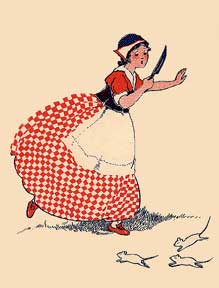
At first I merely drooled my poems on my mother’s shoulder. She never understood. I wrote on cloth day after day in words so rude my mother washed them all away. I scrawled runes on walls with crayons about my fear of farmer’s wives with knives and cradles that fall down, but none could parse my text.


My early days in school, I learned to wield a yellow pencil, its lead held every word I knew. My large block letters stayed between the lines, like banners on the page. The sky is big. The sky is blue. The clouds are white. I like the sky. I was Hemingway in pigtails.


Those middle years in school, I self-published a thousand reports, wrote memoirs every fall for teachers who pined for summers past, and critiqued more than a hundred books for free.


In high school, poems fell from my pen at an alarming rate. None survived the fall. They carried too much angst, unrequited love, and dark thoughts to land upon the page unscathed. I found poems and stories in a typewriter many years ago, then lost them when I moved away.


All the writing that I’ve done since, I’ve hidden in a drawer or filed away. My words have been a secret I whisper only to myself. I share them now because I’ve grown brave or old or maybe both.


I’ve been writing all my life.

Keeping memories

Standard

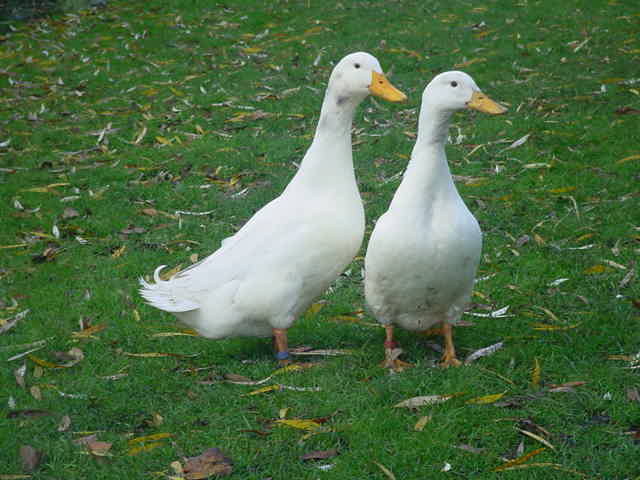
When I was five years old, we lived on Edith Street in El Paso, Texas. Most of the time when I walked out the door, I turned right. My best friend, Terry, lived in that direction and the road around that corner led to the convenience store where we bought candy bars, comic books, and the occasional cigarette. If I went bike riding or roller skating, I might turn left. Down the street in that direction, I would pass by two white ceramic ducks sitting in a neighbor’s yard.


The ducks sat there day after day watching me roll by until one day they got up and walked around. I remember it clear as day. It’s one of my special childhood memories that never happened. Yet the impossibility of it doesn’t stop me from remembering it.


Duck! Here comes the little dreamer.
Photo from http://www.poultryclubsa.co.za/wp-content/uploads/Duck-High-Flyer.jpg


I spent most of childhood outside; we all did back then. But on Saturday morning, we stayed inside to watch cartoons. I spent hours watching that naughty putty tat Sylvester stalk Tweety Bird, Betty Boop sing and dance, Woody Woodpecker stir up trouble, and the Road Runner escape from Wile E. Coyote. For years afterward, I had fond but vague memories of a character called Daffy Fuddlebug. Only when I dragged it into the daylight and showed it to my sister did I realize I had conflated three characters (Daffy Duck, Elmer Fudd and Bugs Bunny) into one.


Memories are the artifacts of the lives I have lived: the small child, the lost teenager, the young woman, the wife, the mother, the teacher, the dreamer. Like one civilization built atop another, each life was built upon the one before; and hidden in each layer, the memories, quite a few still intact, their dates carefully stamped on the bottom; others of uncertain date but recognizable; and many, many broken shards, some still sharp and dangerous, others soft-edged from being buried so long. I have built a museum of words and images where I keep these memories.


Sometimes I go there and wander through the quiet rooms, trying to understand the history of my life, believing it will help me live a better life today and in my future. I see that I have mistaken dreams for memories; those early ones often look alike to me. And I have mislabeled a few; the details and faces obscured by time. I leave them as they are; my misremembering is as much a part of me as my remembering. Memories are not facts; they are part of the story we tell ourselves. They may not be real in the way we define facts; but like all good stories, they are true. So I do my best to remember them; and try as I might, I cannot let go of my fond but vague memory of Daffy Fuddlebug.


The other f-word

Standard

This week I used the f-word in a conversation with my grandchild. Not the four-letter f-word; that one continues to grow weaker with each use in its tiresome march toward banality. I used the other one, the three-letter f-word, which according to my grandchild, isn’t nice.


We were poodles at the time, so we had to call our lunch “dog food.” One minute we were talking about how poodles enjoy eating worms, the grandchild’s take on our pesto pasta; and the next minute, we were discussing Santa Claus and pregnant women. If you have ever talked to a poodle, you understand that they have wide-ranging interests. When we talked about Santa, I said his belly was fat. That led to the “not nice” comment.


I agreed and said we shouldn’t call people fat. It’s fine for imaginary people, but real people come in all sizes. Some are big and some are small, I said. We shouldn’t call bigger people fat.


Satisfied that I had learned my lesson about calling people fat, the little poodle said, “We can tell big people, ‘You look fat, but you’re not fat.’”


Small children and poodles are literalists. They understand the denotation, literal meaning, of a word; but they can also understand the connotations, other words and emotions associated with a word. Fat in its literal meaning refers to the size of a person’s body; but it is stuffed with connotations. Fat is more often used as a pejorative, a sign of moral failure, and implies that a person is lazy, dull, or stupid.


We have many synonyms for fat: corpulent, obese, chubby, plump, thick-set, and pudgy, just to name a few. But “fat” appears in print earlier than all the rest. It comes from the Old English word fǽtt and shows up in writings around the late 9th century.


In every day speech, we favor words with Old English roots. According to the University of Texas website, half of the thousand most commonly used words in English come from Old English. That includes pronouns, prepositions, conjunctions and all those short, direct words like fast, good, wonder, water, and “word” itself. You can’t open your mouth without one of those ancient words strolling out.


Talking about fat is delicate business because the connotations keep getting in the way. We can use words like overweight, big, and heavy to talk about body size, but “fat” will still be there. Eliminating it from our bodies is possible; eliminating it from our lexicon is near impossible.


In the U.S., about one-third of our children have more stored fat than they need. At school and on the playground they hear the three-letter f-word all of the time. Name-calling causes a lot of emotional pain and suffering, so we need to teach children not to call other people fat. But having too much fat on a body causes a lot of physical pain and suffering, so we need to feed our children real food; then they will be healthy and won’t get called names.

Snacking with the grandchild
Photo by Tom and Pat Leeson, Vancouver, Washington, USA at ahttp://www.mnh.si.edu

My grandchild and I went to the zoo after lunch. By the time we got home, we were otters, hungry ones, so we munched on carrots and tangerines, and talked about the animals we had seen.


We feed our children both information and food. We can teach them to speak nicely about others, and we can teach them to eat good food. Both are necessary, and both are nice, that is to say, in good taste.

Twee

Standard

Words are like people. Some of them look alike because they come from the same parentage. Both “sanguine” and “sanguinary” are adjectives and were born from sanguis, Latin for blood. So, after learning that a sanguine person is cheerful or optimistic, you might run into the word “sanguinary” while reading a text, look at its ruddy face, and expect it to tell you a joke or recite an inspiring quote. Don’t be surprised if it pulls out a knife and threatens you. The only thing it’s cheerful about is bloodshed and cruelty.


Other words, like the nouns “desert” and “dessert” look so much alike, people can hardly tell the difference. If you look closely, you’ll see that “dessert” looks more curvaceous. It’s that extra “s” in the middle. They’re not related although both words have ancestors who came from the Latin. Other than that, the only similarity is that desert is a waste place, and dessert goes to a waist place.


The other day I ran into “twee” online. It was modifying a noun, music, and speaking in a colloquial accent telling everyone who would listen that the music was sickeningly sweet.  I’ve heard it say things like that before. It also has the remarkable ability to make bird sounds. You may have heard it imitate the wren by saying twee-twee-twee.


1916 cover (Wikipedia)


Twee in its original sense of sweet or dainty first appeared in print in the British magazine, Punch, around 1905. Someone heard a children pronouncing “sweet” as “tweet,” then took the word and dropped the “t.” It was the linguistic form of stealing candy from a baby. Now it disparages music and people by calling them mawkish or overly sentimental.


I like how the word sounds. Twee rhymes with glee and whee, words of enthusiasm and joy. I’ve heard birds chirp it, and I’ve had small children answer “Twee” when I asked their age. Elmer Fudd climbed twees looking for that wascally wabbit, Bugs Bunny. “Be vewy, vewy quiet, I’m hunting wabbits,” he used to say. Twee is a word that fits in your pocket, a small joke of a word, a word with punch.


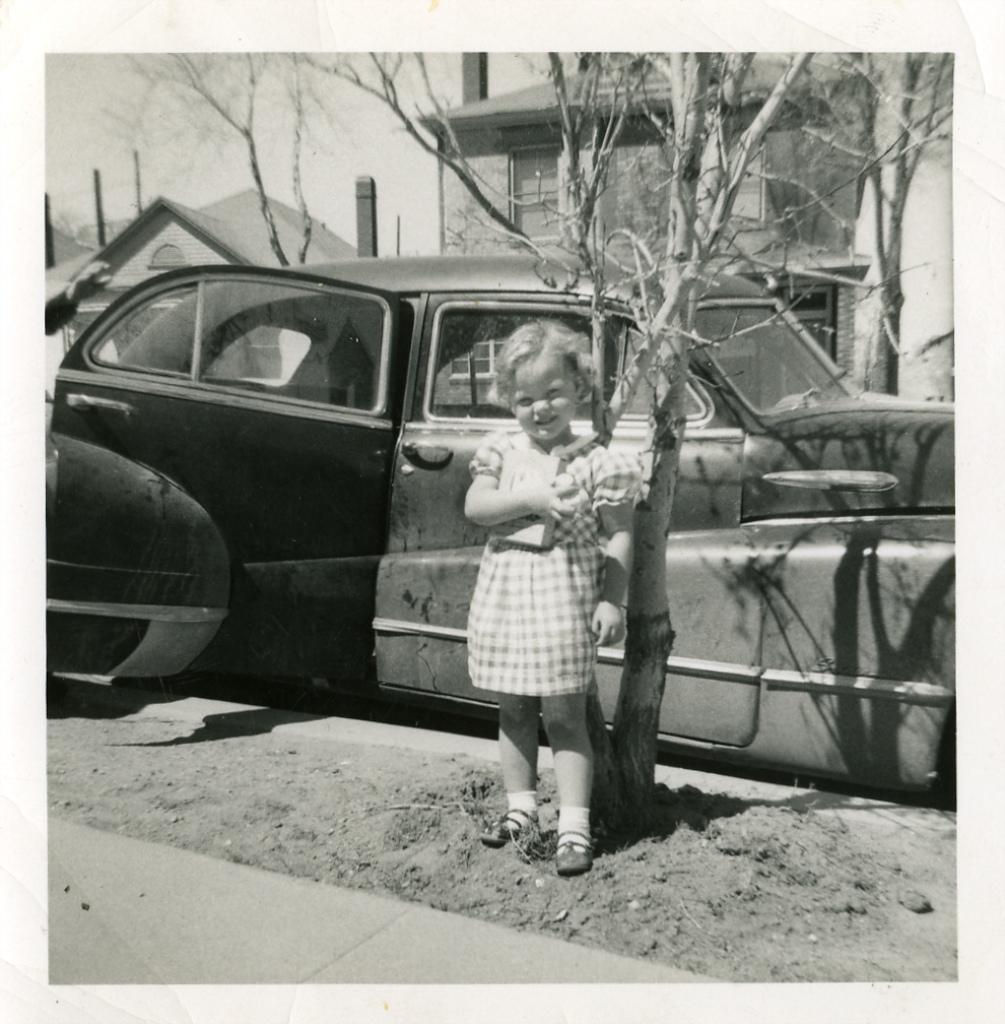
When sister was twee, she stood front of a twee. You can almost hear the birds singing, "Twee, twee, twee."


Even though the masters of irony and sophistication have forced twee to make disparaging remarks about other people, I won’t abandon it. That’s just its corrupted twin. Elmer Fudd and I know the real twee, and any word that is a friend of birds, Elmer, and three-year-olds is a friend of mine.


Portrait of Elmer J. Fudd courtesy of Wikipedia.


Green-eyed exiles

Standard

Once upon a time I was the size of a leprechaun and just as mischievous. I went to school with hundreds of children just like myself. On St. Patrick’s Day, you had to wear green or you would have to spend recess running away from little green-clad people intent on pinching you. Any other day of the year, you would be punished for tormenting one another that way, but on St. Patrick’s Day you could do so with abandonment.


My imagination didn’t respond to my inquiry about the source of St. Patrick’s Day pinching, so I had to search online. One source said it began in America in the early 1700s. Irish immigrants would have brought over the idea that green made you invisible to leprechauns, who apparently honored St. Patrick by pinching people. If you drink a few beers, it will start to make sense to you. Since America was under English rule during the early 1700s, I can imagine that the Irish enjoyed pinching their unsuspecting English neighbors.


I usually remembered to wear green on St. Patrick’s Day, but even if I forgot, I felt protected because I had green eyes. That was the only day of the year I was happy about my eye color.


Both of my parents had blue eyes, as did my older sister, K. Besides the fact that for a while I took my eye color as proof that I was adopted, my mother often quoted this little ditty:


Blue-eyed beauty does her mother’s duty,

Green-eyed greedy gut eats the whole world up.

Later I would discover that two of my mother’s secrets were green-eyed: her first two children. Connie, the oldest, was in familial exile, her name not to be mentioned at home. Clyde, her brother, was working on a record, a discography of petty crimes. Since I shared the same eye color as the exile and the criminal, I assumed I would grow up to be like one of them.


I gave up on a life of crime at an early age after my father called the police about my tampering with the U.S. mail. You can read about it here. Since the age of six, I’ve been more or less a law-abiding citizen. But I have been an exile all my life. My family never banished me, but all of my life I have wanted to belong to that blue-eyed world. And all of my life, I have felt outside of it.


So, today, in honor of St. Patrick, the exiles from Ireland, and all who are looking for their one true home, I want to share a music video by Karan Casey and John Doyle called Exiles Return.  I couldn’t find all of the lyrics, but the chorus goes like this:


And though we bid farewell in sorrow

We may meet again in distant lands

And drink our health in joy for parting

When the Exile will return again.


Happy St. Patrick’s Day!

Blogging away from home

Standard

I’m blogging away from home today and have packed up my words and taken them over to Bluebird Blvd. Courtenay invited me to spend the day there to do a guest post. You are welcome to join us. Just click here.


Courtenay keeps all her words at Bluebird Blvd and shares them with whoever stops by. You’ll like her words; some are serious, some are hilarious, some are poetic, and some stay with you all day. And she has photos that make your eyes happy. It’s hard not to stare, but she doesn’t mind. She’s kind that way. She provides music and videos, too. If you want to make like a vinyl record and get your groove on, you’ll have to check out some of her 5-Minute Dance Party videos. Some people get up and dance around the room when they listen to these videos, at least that’s what I heard, but I can’t tell you who told me.


I hope you enjoy your visit to Bluebird Blvd. today. Once you visit, you’ll want to go back everyday. That’s what I do.

More flounce

Standard

Flounces made of words. Dress is duct tape and pages from the telephone book. Source: The Jolis Paons Flounce Dress


Jenny saw snow for the first time a few months ago. She came to Wisconsin from Central America with a dozen other students to enter a two-year program for agricultural development.


The students have had one semester of intensive English; and now, in this second semester, they have a mixture of program classes and English classes. Jenny is in my reading class.


At the beginning of the semester, I asked each student to write personal goals for the class. Be specific, I told them. Don’t just say you want to improve your reading ability; tell me how many books you are going to read each month.


Most of the goals were specific, but a few general ones slipped by. My favorite came from Jenny. “I want more flounce in my English,” she wrote.


Jenny’s first language is Spanish, so when she wrote the word “flounce,” she was pronouncing it as if it were a Spanish word: flow-oon-say. Say that a few times and you’ll see that it is close to how speakers of American English pronounce “fluency.”


A flounce is a sassy ruffle that waves at everyone when it enters the room; it calls attention to the body part it encircles or adorns. A flounce lives to flutter and give fabric a way to flirt. You can live without flounces, but why would you want to?


Adding a flounce requires altering a plain design and sewing on twirls and winks of cloth. The word itself is an alteration of an earlier word “frounce,” which meant “wrinkle.” Word spellings and word meanings are often redesigned to fit the fashion of the day.


I write the way I dress: plain and simple. But sometimes I get dressed up, and then I like a little flounce. And sometimes, I want more flounce in my English. Now and then I like to add words that ruffle around an idea, to braid thoughts together just for show, to stitch in rows of phrases like colorful ribbons that delight the eye, and to hand-sew the  hem of the page, embellishing it with tiny scalloped jokes.


When Jenny turned in her goals, I had to correct “flounce” to “fluency,” but now I think that first goal was a good one. Correct pronunciation and syntax are important, but so is getting more flounce in your English.


Potato sorrows

Standard

I woke up after a troubled dream of Mr. Potato Head chasing me out of Ireland.  This is what comes of writing about potatoes in the morning and reading Frank Delaney’s Ireland at night.


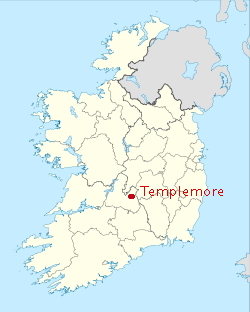
I spoke ill of potatoes yesterday, and now I feel the pangs of contrition. Potatoes helped make me. Not just my thighs, but all of me. My great-grandfather came from Templemore in North Tipperary, Ireland. I have no doubt he was raised on potatoes, the staple crop of Irish peasants.


Ideas are like the strings of a guitar. When you pluck a string, it vibrates and causes nearby objects to vibrate as well, something called forced vibration. When you pluck on an idea, it sends out vibrations to other ideas, and soon you have a whole group of other ideas humming along. When I plucked potatoes, my wart vibrated. Then I looked around the web and the two words vibrated  into Potato Wart, a serious fungal disease that potatoes fear. No wonder they get upset when we humans rub our warts on them. Our warts come from viruses, not fungi, but try telling that to a potato.


The fungus synchytrium endobioticum, which we call Potato Wart, caused the Irish Potato Famine that began in 1845. It led to at least one million deaths and the migration of at least another million Irish. My great-grandfather left Templemore some time after the famine, but his family would have lived through it. In the suitcase he carried across the sea, underneath his dreams of a better life, he would have carried clean but tattered memories of the potato blight, hunger, oppression, and poverty.


So I apologize to potatoes, we share the same history and we both worry about warts. Putting “worry” and “wart” in close proximity sends out another vibration, which makes me think of worrywarts. One day I will pluck that string, but not today.


I woke up with the pangs of contrition, and though we usually associate that with the idea of sorrow over wrongdoing, its first and literal meaning was to rub things against each other: the way my mother rubbed that potato against the palm of my hand. In the most literal sense, that rubbing of the Irish potato against the palm of the somewhat Irish little girl was an act of contrition. Both had roots in Ireland, shared a history of loss, and had a fear of warts. Today, I was reminded of the Irish saying, “Only two things in this world are too serious to be jested on, potatoes and matrimony.” So, in a second act of contrition, I think I need to apologize to the humble tuber.


Since I’m only part Irish, I only need to follow part of the admonition. I will refrain from jesting about potatoes, at least until after St. Patrick’s Day, but after thirtysome years of marriage, there is no way I can refrain from joking about matrimony.


Drawings from: http://adminstaff.vassar.edu/sttaylor/FAMINE

Potato grudges

Standard

When I was young I had a wart on my palm. Mother cut a potato in half, rubbed the wart, put the two halves of the potato back together with toothpicks, and threw it away. If you never see the potato again, she said, your wart will disappear.


I don’t think I’ll ever forget the look in that potato’s eyes as my mother stabbed it with those picks and then casually dropped it in the trash. I imagine it carried its grudge all the way to the city dump. Buried under garbage, it sprouted revenge. After writing its story in pollen, the potato wrapped it in some small white flowers, pushed the little envelops up through the trash, and waited for a passing bumblebee to stop and carry its tale of woe into the world. In this way, I believe it could spread its hard feeling.


My wart disappeared, but for decades now I have looked into the eyes of potatoes wondering if they recognize me, fearing they are related to that spurned spud. I suspect it was Thanksgiving 2010 when it happened. I pulled out a bag of potatoes and placed it on the counter. Then I busied myself at the sink, clearing out a spot so I could peel the potatoes. No one else was in the kitchen, but I had that odd feeling that someone was staring at me. I whirled around: nothing but that bag of potatoes. So I whirled the other way and picked up a small paring knife. Then I whirled back to face the bag. Protruding from the mesh was a small sprout like a pale white finger, pointing at me, accusing me. Dizzy from my whirling, I reached over and broke off the finger. That was my mistake. Now I couldn’t tell which potato was angry with me.


I couldn’t throw all of them out, so I took them out of the bag. Lined up next to the sink in their starched brown jackets, they all looked the same. As I washed them, I tried to appear calm and avert my eyes. Each one stared at me with a blank look that unsettled me because it reminded me of my husband, sitting in the living room on the couch, watching football. Was he part potato? He was getting lumpier with age. My mind reeled as my thoughts whirled; then I reminded myself that I had lived with him wart-free for thirty years; he couldn’t be related to that potato of long ago. That calmed me down. After I peeled the potatoes, I boiled them in hopes of softening them toward me. But I was so worked up by then that I mashed them in a frenzy before the meal.


Soon after that, I got a wart on my palm again. I don’t remember where on my palm the wart was when I was a young girl, but my imagination has been insisting all morning that this wart is in the very same place.


I’ve tried salicylic acid and vinegar-soaked cotton, and considered duct tape. Even though I fear revenge, using a potato appeals to me. My online research has revealed that many people use potatoes for wart removal, so maybe my story about how that childhood potato passed on its grudge is all nonsense. More likely all potatoes carry a grudge. That’s what comes from being so thin-skinned.


Remembering dreams

Standard

My dreams are back, those stories I tell myself at night. I don’t believe the stories ever left, but for most of the last four or five years, I have woken up with no remembrance of my dreams.


For years I wrote down my dreams in the back of my journals. My day-time thoughts began on the first page, my night-time thoughts began on the last page, and each moved toward the other, claiming pages until the book was full.  It seemed fitting that my dreams were hidden in the back, behind my more lucid thoughts.


On Tuesday night I dreamt about a good friend in Japan. I still carry some of the joy of seeing her again, if only in my brief dream. My emotions don’t seem too concerned with the fact that I didn’t actually meet her face to face. It must be like this when a mind is in decline. People are forgotten, the world grows strange, but the emotions are remembered, as familiar in this singular reality as they were in the shared reality of the former life.


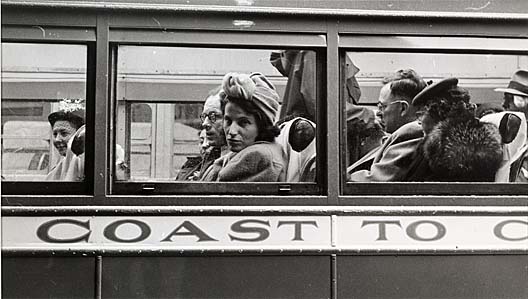
Before the world spun me old, I lived as a young woman. That was decades ago. I remember dreaming that I was old and was riding a bus through an unfamiliar city. I sat next to a window and watched the world go by. When the bus stopped at a light, I saw a good friend standing on the street, still her young self. When our eyes met, we both smiled and, for a long moment, I couldn’t tell who I was or whose dream it was. Was I an old woman dreaming about her as a young woman, or was she a young woman dreaming about me as an old woman? When the bus stopped, the doors opened and I got off in the room of morning light where I lived life.


For the last three nights, I have remembered the stories I told myself in dreams. I stopped journaling three years ago when I lost my words. Writing this blog has helped me find them again. Maybe that’s why my dreams came back.

◊ ◊ ◊ ◊ ◊ ◊ ◊ ◊ ◊ ◊ ◊ ◊ ◊ ◊ ◊ ◊ ◊

Photo courtesy of Smithsonian American Art Museum, Museum purchase made possible by Mrs. Alexander Hamilton Rice and Linda Adair Miller <http://americanart.si.edu/collections/search/artwork/?id=32331&gt;