On the rails in Ireland

Standard

Riding a train is like looking at the 10,000 pictures your Aunt Ethel took of her trip to Des Moines. There are so many of them. And half of them are blurry. “And this is another building,” she says a tiny bit too loudly because she notices your head nodding and your eyes closing. “As you can see, I’m crazy about street lights, sidewalks, and pigeons, so I took pictures of every single one of them.”


Seeing Ireland by train is like that but only in the sense that you see a lot of the same things. What you see keeps you wide awake: hill after hill of rolling green, intense rain-drenched green; sheep moving across the fields like small fallen clouds; wind-sculpted rocks and boulders; castles and ancient ruins who stand guarding the past, grey, grim-faced, and fearless; flowers as wild as any you have ever seen; and fields of horses.


If you’re from Ireland, or have been in Ireland, or know anything about Ireland, you know that horses play an important part in Irish history and culture. I, on the other hand, did not know that.  You would think that someone with a great-grandfather from Ireland would know a wee bit more about the Emerald Isle. The explanation: one part of me is Irish; the other part is pure ignorance.


Heuston Station in Dublin


On our first day, we traveled from Dublin’s Heuston train station to Cork in the south. We passed nearby Templemore in  County Tipperary where my ancestor came from, or at least emigrated from. He landed in St. Louis, Missouri, set up a grocer’s shop, and eventually produced a grandfather for me.


At Cork we un-trained ourselves into a bus, which un-Corked us and took us to Blarney village to visit Blarney castle, home of the famous Stone. (Note to readers who are aging Boomers: Blarney, not Keith Richards.) We climbed the narrow spiral staircase up the castle ruins, gripping the thick rope hanging down from the top for balance. Up top, we walked around the parapet, as well as looked down at the ground through the large rectangular openings that run parallel to the walkway. The only thing protecting me and my camera from falling through were some widely spaced metal rods, which are maybe two feet below the top of the openings. I rarely worry about dropping my purse or camera until I get near gaping holes 90 feet above ground; then suddenly I have to wrestle with my valuables to keep them in my arms. Had I taken a picture of the gaps, I’m convinced my camera would have leaped from my hands to the earth below. (One of us clearly needs counseling. I think it’s my camera, but we both fear exposure, lack focus, and have days when we see the world with our lens cap on.)


Blarney Castle


Two men had to help me kiss the stone: a photographer who stood on my right, carefully blocking the view so no one else could get a shot, and a man on my left who sat in the ledge next to the gaping hole where the Blarney stone lies (possibly in more ways than one). To kiss the stone, I had to lie on my back atop a plastic liner. Obviously, at least to everyone who is not me, I shouldn’t have worn white pants. The kind man who had my back placed what I prayed were his very strong arms around my upper body and helped me scoot forward to grab the two metal rods running parallel to the wall. Finally, I lowered my head down, mercifully unable to see the now wire-thin rods protecting me from Mother Earth who beckoned me with a voice full of gravity. After one quick kiss, a peck really, I was pulled back up and gently pushed away so the next tourist could contribute to the Irish tourist industry. Since the official photographer stood in the only good spot for picture-taking, my only chance to get photographic evidence of the event was to buy the official picture. I did. However, when my brother kissed the stone, I held my camera over the shoulder of the back man, pointed it in the general direction, and got a fairly decent shot of him just before his lips made contact. It was a good thing I did, too, because in the official photos, my brother’s arm is blocking his face.


My brother prepares to kiss the stone.
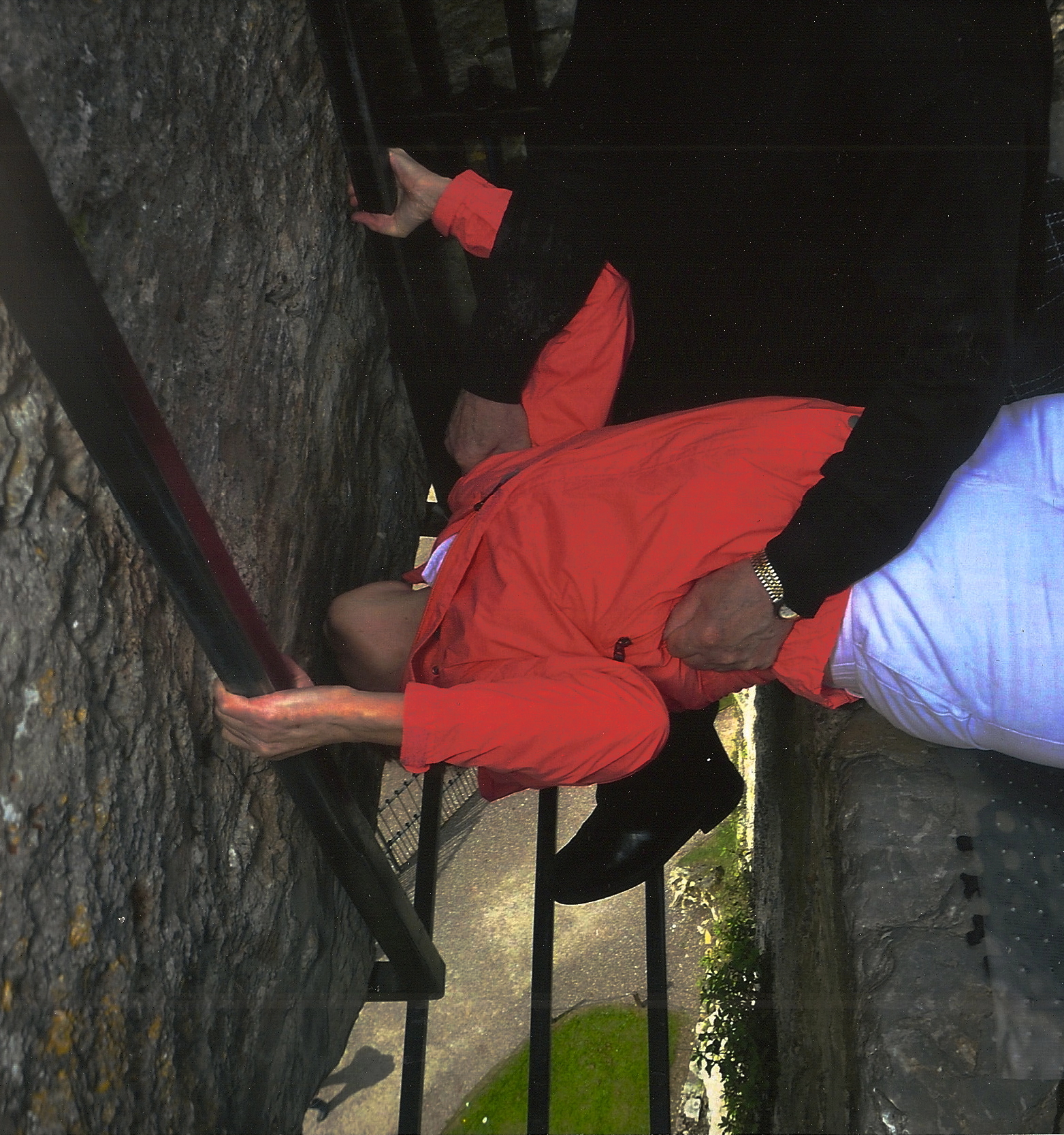
I’ve never been so grateful for big hips. There’s no way they could fit through those rods.


Now that I have kissed the stone, I have been granted “a cajoling tongue and the art of flattery or of telling lies with unblushing effrontery.” Don’t say you weren’t warned.


From Blarney village, we took the bus to Cobh with a short stop to see Saint Colman’s Cathedral and a longer stop at the Cobh Heritage Centre.


At Blarney Castle, you are tricked into thinking one kiss will turn you into a trickster, convinced by tricksters far trickier than you. But you walk away feeling good. Your heart feels lighter, and you don’t mind that your pocketbook does too. At the Cobh Heritage Centre, that light heart of yours gets broken.


Cobh (called Queenstown until Ireland became the Irish Free State in 1922) was the last port people on the unsinkable Titanic ever saw, and the first port survivors of the Lusitania saw after being torpedoed by a German submarine.


Inside the Cobh Heritage Centre: a million goodbyes.


Even more sobering is the exhibition on the Great Famine and Irish Emigration. In the six years of the potato famine (1845-1851) one and a half million Irish left their homes to build new lives abroad. From then until 1950, about six million people left, almost half sailed from Cobh. The pictures, videos, written accounts, and artifacts, all drawn deep from that well of sorrow called Irish history, tell a story that stays with a person. At least a person like me.


Read even a part of Irish history and you understand why William Butler Yeats said, “An Irishman has an abiding sense of tragedy which sustains him through temporary periods of joy.”


I practically slid out of bed every morning in our Killarney hotel.

This slideshow requires JavaScript.


Next installment: Rings, cliffs, and fairy trees

Vacation: Racing to disappointment

Standard

Imagine the weather as a blog. Day after day the weather posts something new, rearranging the clouds, sending winds first this way, then that; then one day it needs a break, and reblogs an earlier post. That’s what Dublin’s weather did the Sunday we were there. Instead of posting a summery June day, it reposted a day from March, an especially cold and rainy day that barely made it to double digits on the Celsius scale.


It turned out to be the perfect weather for me.


The night before our one day in Dublin, I had looked over the brochure for the Hop-on Hop-off bus and selected bus stop number 3 as my must hop-off must-see place to go. I was going to see the Book of Kells at Trinity College. No matter what.


Life, of course, has a way of showing us what’s what. And sometimes “what” matters. Our “what” turned out to be Formula One: Bavaria City Racing. To accommodate and showcase F1 cars and other means of transportation that go zoom, the police cordoned off half the streets of Dublin for the small crowd of 100,000 people expected to attend.


We waited until almost lunch to leave the hotel, and I dressed as warmly as possible with my I’m-pretty-sure-I-won’t-need-anything-too-heavy-because-it’s-summer-and-I-mean-how-cold-could-it-possibly-get clothing that I had carefully packed several hours before I left on vacation. Four layers later, I stepped outside and began the long, slow process of freezing to death.


We took the tram downtown and waited in the cold for the bus. For a while I stood inside a telephone booth, but then we discovered we were waiting in the wrong place. Once we found the bus stop (the one without a phone booth), we made sure we were first in line. That way we could choose the best seats. Because brilliance runs in my family, both my brother and I thought it would be a good idea to sit on the top of the tour bus under the little roof. The one that doesn’t cover the entire top half. The one that lets cold wind blow down your neck and find your skin beneath the four layers of summer material. Surely, it would be heated. And we could see so much better. In a better world, a warmer world, a not-so-rainy world, it would have been a good idea. We thought we would have to scramble to get the front seats at the top, but oddly no one else went up top.


But no matter, in just two stops from this first one, we would hop off and see the Book of Kells. Except we didn’t because we couldn’t. The bus had to go a different route and visit places out of order because the race cars needed the streets. So we sat in the cold, waiting to hear the driver announce stop number three, which was difficult to hear over the chattering of our teeth.


We passed interesting stop after interesting stop and stayed put. Finally, when we stopped at Number 13, Guinness Storehouse, we got off. Just to warm up. Really. No, really. And we were hungry. So there.


Inside the Guinness Storehouse: Water + hops+ barley + yeast = beer


We spent a couple of hours exploring the seven-story building, learning the history of Guinness, and walking through a mock-up of the brewing process and cooperage (beer barrel building). We took the glass elevator up to the top floor, the Gravity Bar,with its circular wall of windows that provide a panoramic view of Dublin, weather permitting. The weather did some intermittent permitting, but no one seemed to mind. Everyone there was enjoying a pint of Guinness, which is included in the price of admission.


At the Gravity Bar


Hey, bartender, there’s a girl in my Guinness!


When my brother and I de-bused at the Guinness Storehouse, we discovered that the lower level of the bus had a surfeit of heat. While we had suffered up top, all the other tourists basked in the warm and cozy seats below us. To understand why we didn’t just move to the lower level right away would require more explanation than I can give you in just one blog post. Let me just say that one of the defining characteristics of my family is a determination and hardiness that looks vaguely like stupidity in a tuxedo.


From that point, we rode in the lower part of the bus, waiting for number 3 to be announced. It never was because that part of the route belonged to Formula One for the day: it’s route ran right in front of bus stop number three. By the time we realized this, we were headed back to O’Connell Street where we started. We were too tired and hungry to go through the tour again, so we walked over to the Spire of Dublin, officially called the Monument of Light. Our bus driver pointed it out on the tour and called it The Stiletto in the Ghetto. Dubliners have a few other colorful nicknames, which you can search for on the web. The Spire stands almost 400 feet, and everyone on the web says it’s the tallest sculpture in the world, so I believe it. You should, too. (It cost somewhere between four to five million euros, approximately €40,000 per shiny, pointy foot.)


Normally, after any kind of disappointment such as not seeing the Book of Kells, I pull out my small dark cloud and place it over the center of my head, halo-like. But that day in Dublin, I decided not to do that. Why waste my time walking under a small dark cloud when I could walk under the big dark cloud over Dublin. It seemed friendly somehow, as if the entire city shared my disappointment, and I felt strangely cheered. Then again, maybe I felt strangely cheered by the Guinness.


Next installment: On the rails

The cult of vacation

Standard

Our first two weeks in Europe as we traipsed through Budapest, Paris, and London, we scheduled our own days, lingering and loitering with abandon. We squandered mornings, wandered through museums as long as we liked, and generally stayed out of reach of the clock’s little hands. When we locked the door of the London apartment, we left that life behind.


At London’s Euston Station, we abandoned our lackadaisical ways, forsook lingering and loitering, and took the vow of obedience that joining a tour requires.


Becoming a tour-ist is like joining a cult. You must agree to obey the rules (“Carry these papers with you at all times and don’t lose your tickets.”), be on time (“Or we may have to leave without you.”), eat when you are told to eat (“You have one hour.”), drink when you are told to drink (“Is this koolaid?”), and cheerfully donate all of your money to the group (“We take Visa, Mastercard, or your firstborn.”)


Goodbye, London. Hello, Holyhead.


The cult we chose was Railtours Ireland. As far as cults go (and this one goes all over Ireland and back), they’re a good one. A yellow-vested representative met us at Euston station in London, handed us the information packet and tickets, and remained with us until the train left the station for Holyhead in North Wales. We saw beautiful scenery along the way, so I took a picture of a red sign. Sadly, our train did not stop at Llanfairpwilgwyngyllgogerychwyrndrobwillantysiliogogogoch Station, one of the longest place names in the world: Welsh for “St. Mary’s Church in the hollow of the white hazel near the rapid whirlpool and the church of St. Tysilio with a red cave.” (Amaze your friends by learning to pronounce it.) More sadly, the place name is not authentic Welsh, but a ploy to draw tourists to the place. And most sadly of all, this station really has nothing to do with my trip to Europe but does support my contention that the Internet should be called the worldwide warren because once you enter in, you find yourself heading down rabbit trail after rabbit trail.


At Holyhead we boarded the Ulysses (Largest ferry in the world!), reportedly decorated according to James Joyce’s book of the same name. If you’re like me, and I’m sorry if you are, you’re thinking, “What a novel idea.”  We got on the ferry with what seemed like thousands of English tourists eager to celebrate the Queen’s Diamond Jubilee by going to Dublin, where it wasn’t celebrated.


When the ferry docked in Dublin Port, we followed the crowds down six or seven floors where the cars were parked. It took us that many floors to realize (1) we could not exit that way, and (2) we didn’t have a car. Going up the down staircase does little to foster good will and gives American tourists a bad name, so we excused ourselves saying, “Sorry, we’re from Canada.” (Note to Canadian readers: Just kidding! We excused ourselves with an accent and said we were British. Note to British readers: Sorry.)


I practiced sleeping here for two nights in Dublin.


Another yellow-vested tour guide kindly met us when we de-shipped and took us to our hotel. After settling in, we noticed it was past time for our repast, so we put on warmer clothing, activated our push-button umbrellas, and took the tram downtown in search of a restaurant. We discovered 101 Talbot and had the best appetizer ever: an organic hen’s egg with broccoli and some kind of wonderful lick-worthy sauce, that made me rue my slavish obedience to the rules of polite behavior. Some plates were meant to be licked. Both of our entrees included potatoes cooked in duck fat, which for some reason creates a picture in my head of Robin yelling at Batman as an oily criminal lobs lard bombs, “Duck! Fat!”


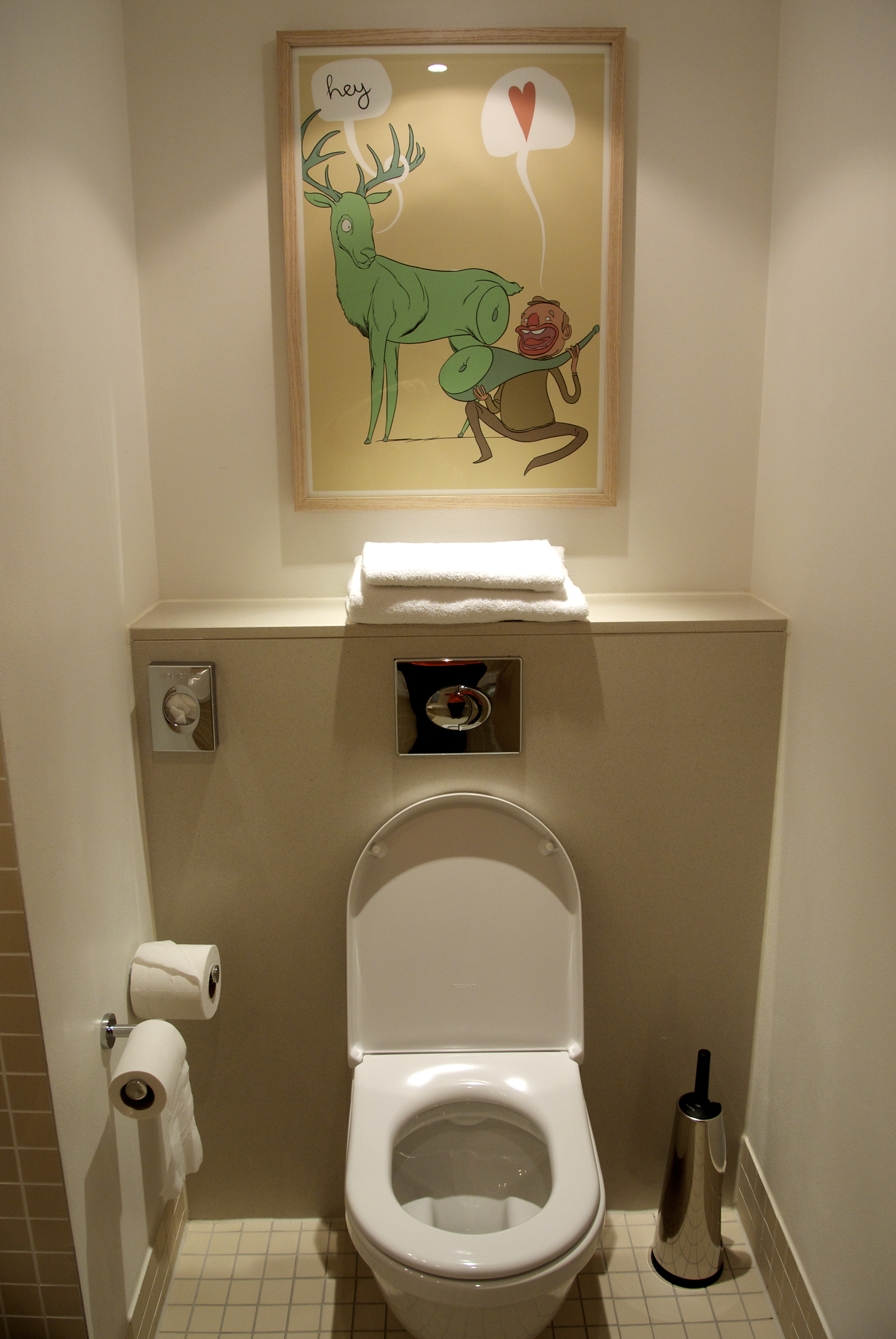
My bathroom in the hotel. The picture? I don’t know either. Was it meant to be endearing?
The source of my strange dreams that first night?


Our official rail tour would not begin until Monday. We arrived in Dublin on a Saturday, which left us Sunday to see some of Dublin. The tour package included a pass for the Hop On, Hop Off bus, so before I went to bed I read through the brochure and selected the one stop where we had to hop off.  No matter what.


Next installment: I discover what’s what

In which the Queen ignores us

Standard

What the heck is opprobrium?


On our vacation, we had a hard time distinguishing between breakfast and lunch. Other than the difference in spelling, they seemed a lot alike. We spent all our mornings trying to tell where one ended and the other began. So on our fourth full day in London, we waited until we knew for sure that lunch was over before we headed out. Destination: Windsor Castle. Tickets: purchased months in advance. Cameras: all batteries charged, correct settings optional.


By the time we got off at Windsor & Eton Central station, we had worked up an appetite from the exhausting hour-long train ride, so we stopped at a café for a drink and a morsel. All was well, too well, too idyllic, too perfect. Something was missing, something like an emergency, something like leaving the tickets to the castle on the table in the apartment.
 

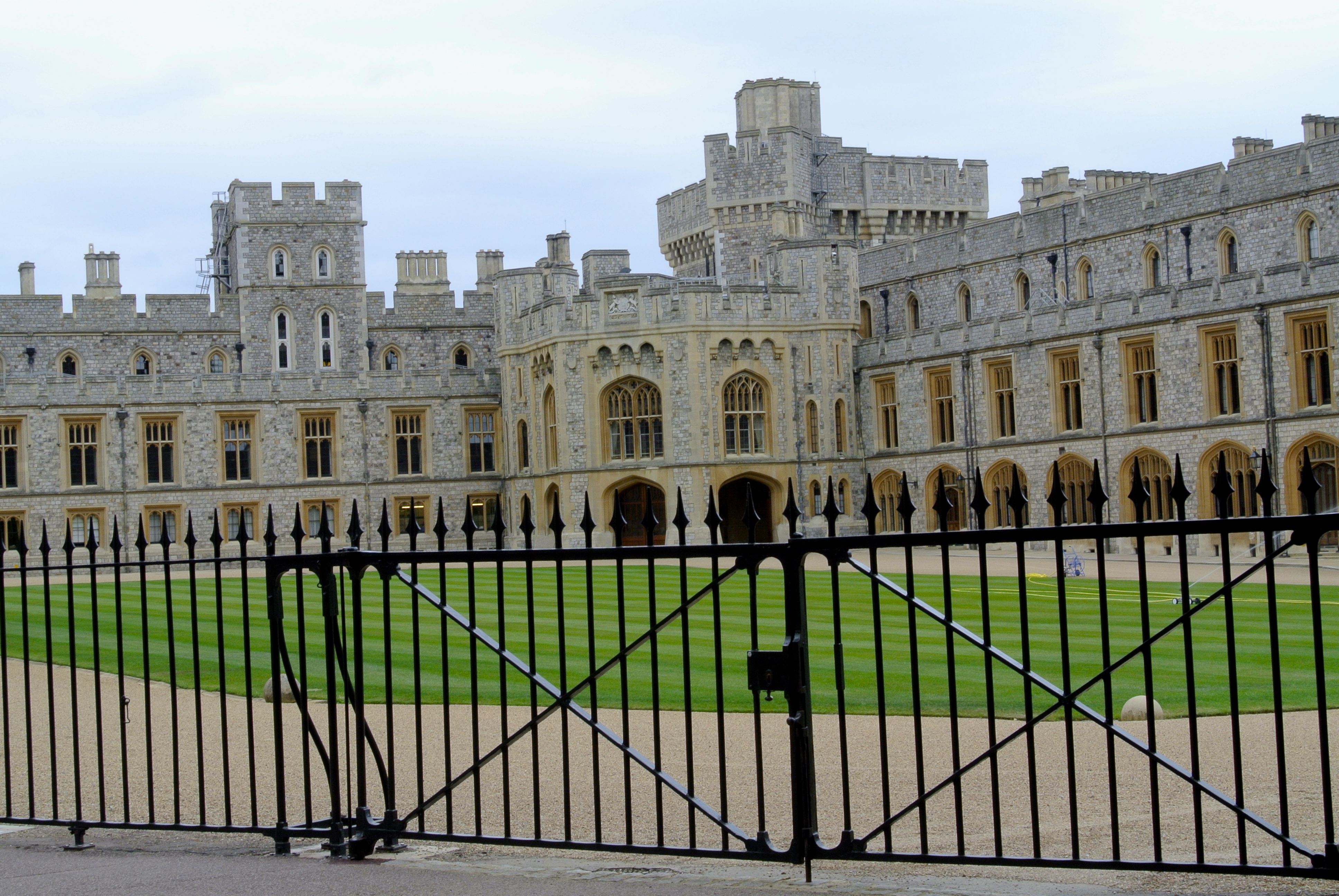
What Windsor Castle would look like from the village if there were no sky.


As we walked to the castle from the café, I castigated myself, flogged myself with all my past failures, declared myself unfit for vacationing, and prepared my pocketbook to pay the entrance fee – again. Apparently ordering them once online was not enough for me. Unable to reach abject despair and a sense of worthlessness by myself, I begged my brother, daughter, and granddaughter to heap opprobrium on me. They refused, partly I believe because they had no idea what it was.


While I was standing in line at the castle entrance huddled beneath my personal small dark cloud, my more rational daughter flagged a worker and told her our dilemma. She directed us to the counter where a young woman smiled about the forgotten tickets, said it happened all of the time, and swiftly found my information in the computer. Already paid. My pocketbook rejoiced; I took back all my flogs, uncastigated myself, and proceeded to have a jolly good time.


Visitors are not allowed to take pictures inside the castle, at least with cameras, but I took pictures inside of my head of Queen Mary’s dolls’ house, along with the paintings, tapestries, armor, and woodwork in the areas of the castle open to the public. One current exhibition showcased sixty photos of the Queen representing her sixty years as monarch. Go to the royal collection here to see them.  As striking as the architecture and furnishings were, I was struck by the thousands of gleaming weapons displayed on the walls. Not literally struck, of course. But in room after room, swords and guns formed herringbone designs up and down the walls, and spears and halberds were crisscrossed into patterns that looked as if they were created to be decorations. The beauty and craftsmanship of the weapons adorning the castle almost made me forget they were instruments of war and death. A hundred years from now I wonder if we will have disarmed nuclear missiles artfully arranged in the gardens of government buildings, with groups of tourists strolling by snapping pictures of them. Unfortunately, I can’t offer any inside pictures of Windsor castle and few are available online, but it you want to see virtual tours of three of the rooms, go to the official website of the royal residences. Equally unfortunate, I can offer pictures of the outside, and I have made them available online.


When I initially booked the tickets, I had no idea the Queen would be in residence that day. Normally she stays at Windsor on weekends; we visited on a Thursday. Perhaps she was resting up before her Diamond Jubilee the following week. On hearing that the Queen was at Windsor, the grandchild felt confident that she would invite us in or at least come out to say hello when we stood outside the gate in front of her apartments and waved. She must not have seen us. We left feeling just a tiny bit dejected.


The Queen was in one of these rooms not looking at us as we waved.


However, on our walk through the village later, we discovered Hotel Chocolate. Their free samples consoled us, and to prepare for any future dejection, we purchased more consolation, along with a bottle of port, just in case we got lost at sea. Our motto: any port in a storm.  (Note to readers: Hotel Chocolate does not use slave labor cocoa.)


Even though the grandchild interacted with PIGEONS! throughout the day, enjoyed the train rides, and partook of the chocolate consolation, that night the little one suffered a bout of homesickness. Two weeks is a long adventure for a five-year-old.

First we were four; then we were two


We scheduled the last full day in London for shopping, even though none of us planned to buy much. My brother headed out to some camera shops, while my daughter, grandchild, and I took the Tube to Oxford Street. It may surprise you to learn that after walking around an hour or so, we stopped for a small repast.


When we met up with my brother, my daughter decided to go with him because the grandchild and I wanted to ride on a double-decker bus. We rode down the street, got off many blocks later, then got on the Tube and went back to Oxford Circus station, so we could once again ride in the top in the front seats all the way back to Notting Hill station. On the way back to the apartment we bought a meat pasty and a chicken pie for dinner.


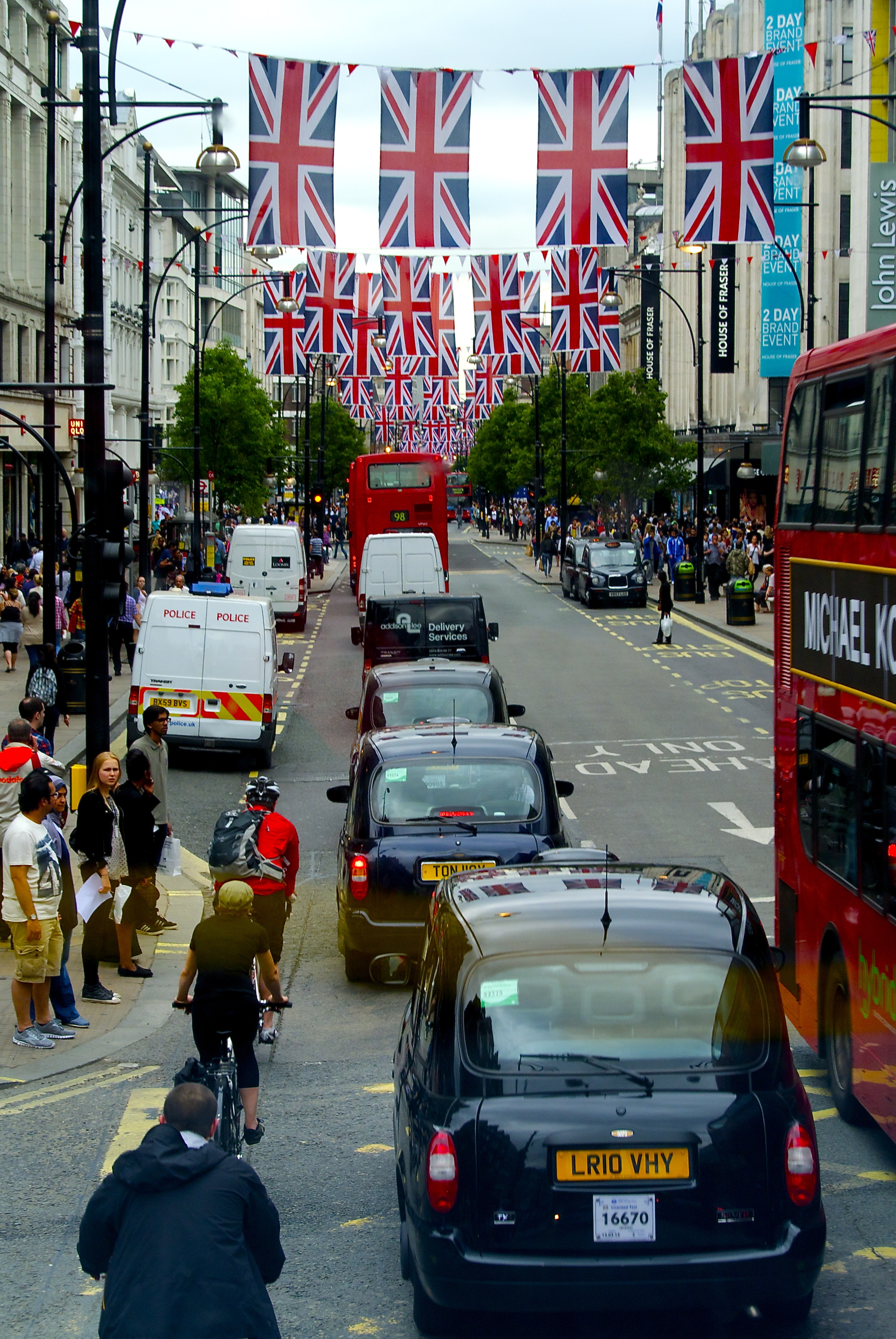
Oxford Street seen through the glare of the window from the top of double-decker bus.


That night, for the first time on vacation, we went to bed early because we needed to be up at 4:30 a.m. I set my phone alarm but I needn’t have worried. At 3:30 someone full of cheer and beer walked down the street behind the apartment singing at the top of his lungs.


At 5 a.m. my brother and I said goodbye to my daughter and grandchild; then two hours later, our ride came to take us to Euston Station. The train carried us across the British countryside to Holyhead on the west coast where a ferry waited to take us to Dublin, Ireland.


This slideshow requires JavaScript.

Next Installment: From the land of Eng to the land of Ire

In which we dilly and dally, then lolly and gag

Standard

On our third night in London, the middle toe of my left foot found the leg of the chair in the middle of the night. I was looking for the key to open the window and dragged the reluctant toe out of bed with me. It found the chair before I found the key.


We would have dilly-dallied and lollygagged around all morning even if my toe wasn’t complaining about the chair, but relaxing at the apartment helped it calm down a bit.


Imagine yourself as just a speck in London’s Eye


After lunch we slid down the Tube to the Eye of London, Europe’s largest Ferris wheel. It’s much higher in feet than meters (443 feet to only 135 meters), so if you’re afraid of heights, I suggest you use the metric system. One rotation takes about 30 minutes and the wheel doesn’t stop to let you board; you must jump on one of the 32 clear capsules as it slowly rolls by. We enjoyed the view and took lots of pictures. My brother, daughter, and I all pointed to the clock tower of the Palace of Westminster and exclaimed to the grandchild, “Look! There’s Big Ben.” Later we learned that it wasn’t. Technically, Big Ben is not the clock or the clock tower but the bell of the clock. It’s true that Big Ben-ness is now associated with the clock and tower, but I bet if you’re British it gets your knickers in a knot to hear the tourists exclaim to small children, “Look! There’s Big Ben.”
 

Look! There’s not Big Ben! It’s Big Ben’s clock tower!


After getting out of London’s Eye, we went to the 4-D London Eye movie, which is included in the price of the Eye ticket. Decked out in our 3-D glasses, we not only spent almost four minutes soaring over London town, seeing fireworks explode within arms reach, and watching seagulls fly by our faces, but we also felt the wind and mist of London all around us. When the precipitation first started, my brother thought someone had brought a water pistol into the theater.


From there, we walked over to Westminster Abbey. The grandchild took one of the children’s treasure hunt papers, and my daughter and I took turns finding the important historical information in the Abbey. We didn’t finish the treasure hunt, but the grandchild still received a large piece of chocolate wrapped up like a gold coin.


Watching the child eat chocolate reminded us that we needed some sweet morsel as well. We found a French bakery with scones and macarons. Perfect with tea.


The advertisement for the French bakery, BB Bakery County Hall.


Although the sky got drippy, we walked along the Thames after that, avoiding pointing out too many things to the grandchild, since we so often were mistaken. We took the last river tour down the Thames, and that’s when I didn’t take a picture of the real London Bridge.


My toe didn’t complain much during the day, but that night it looked like it was still carrying a grudge because it was all puffy and red like maybe it had been crying. It avoided the chair after that.


This slideshow requires JavaScript.


Next installment: Two days and a wake-up until we say “Ta-ta” to London

Our London vacation goes down the Tube

Standard

Day One: London Bridge falls down (in the privacy of our own minds)

Our room for living in the London apartment

Every apartment needs some place to keep the scones.

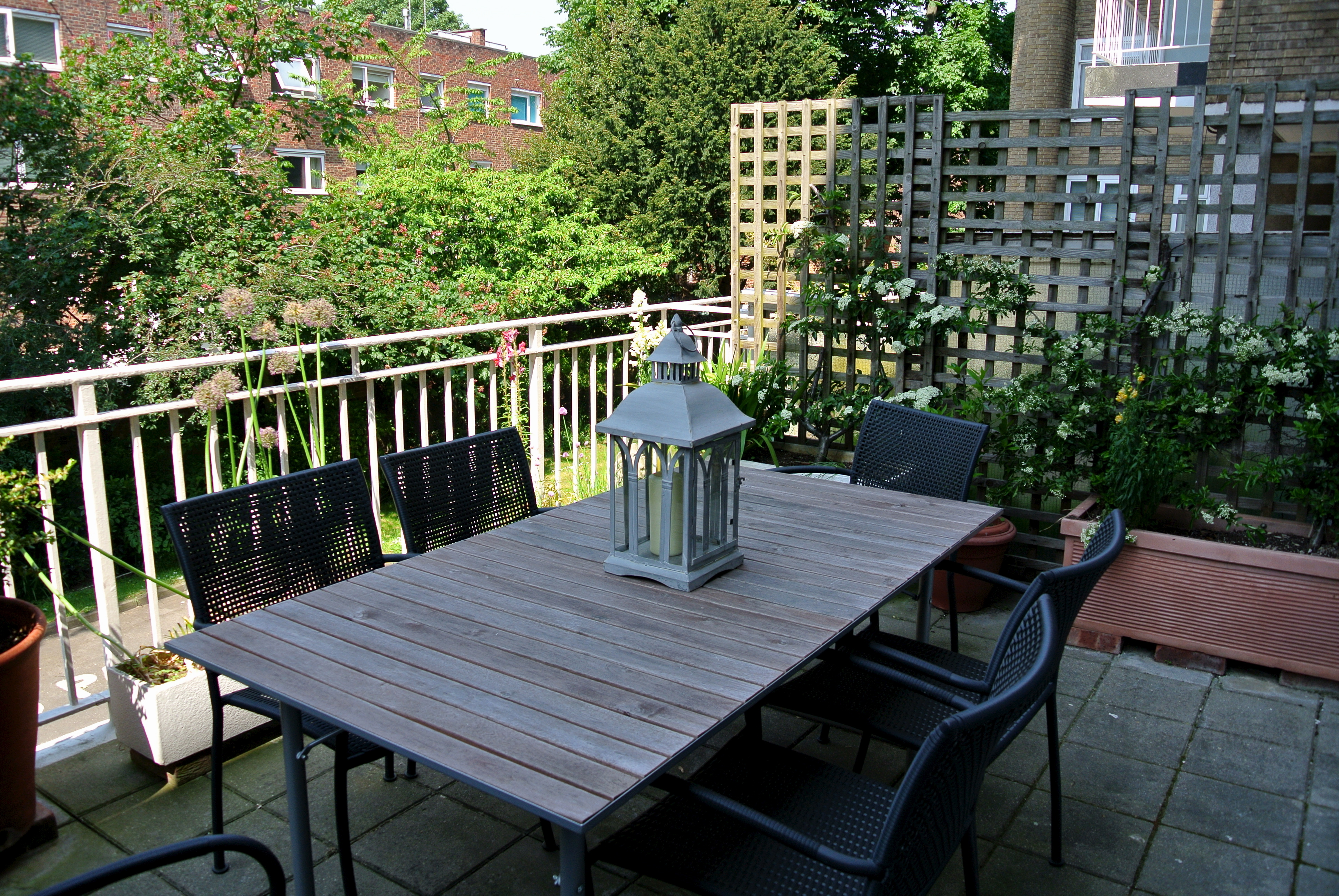
For outside relaxing, eating, and surreptitiously spying on the neighbors.


Our first morning in London, we woke up in a lovely apartment in Holland Park in west London. After a late breakfast on the terrace, we walked above ground to under the ground. Londoners called their rapid transit system the Tube. In a better world it would have gotten the name from travelers who were pushed out the door of a crowded train during rush hour and felt the way toothpaste feels when it is squeezed out of the tube. Alas and alack, the hole story is that the Tube merely refers to the tunnels the trains travel throughout the town.


Our vacation is going to head down the Tube any minute now.


We arrived at the Tower of London and went on one of the guided tours led by a man wearing a Beefeater uniform. Most of the time I understood what the tour guide was saying, but my daughter said she needed to focus on his face and see his gestures to follow.  At one point, after she attended to the grandchild and turned back, she lost her concentration and told me all she could hear was “blaah, blaah, blaah” (British English for “blah, blah, blah”).


We spent hours exploring the buildings, walking through the exhibitions, and viewing the crown jewels. The ancient castle, built not long after the Norman conquest in 1066, so near the financial center of the city contrasts with  the modern London skyscrapers, the Gherkin (30 St Mary Axe), a tubular building that looks like a spiffy rocket ship taking offices where no office has ever gone before; and the Shard, a glass pyramid 72 stories high that will soon allow people from all over the world to look down on London.


Beefeater guard guarding what Beefeaters guard


From the Tower we tally hoed over to what we all told the grandchild was London Bridge, except it wasn’t. Go ahead and laugh: we all thought that Tower Bridge was London Bridge. We based it on the fact that it is a bridge and it is in London. Later, on our river tour, we saw the real London Bridge, a modern concrete and steel bridge in industrial strength gray that replaced the original falling-down one. I didn’t even take a picture.


A bridge. In London. But not London Bridge. (Tower Bridge)


Day Two: Gawk and Stalk

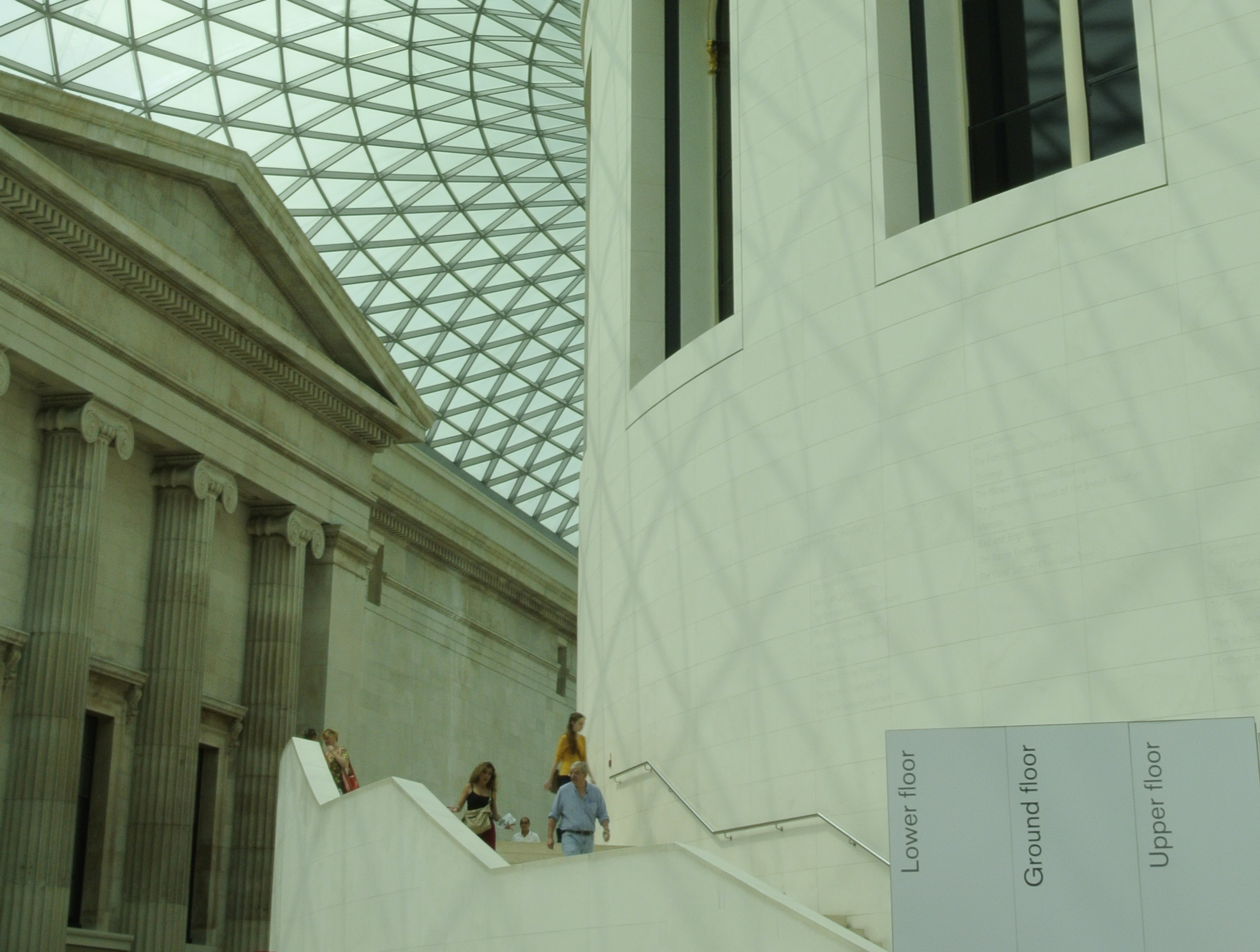
Inside the British Museum: Let the gawking begin!


After relaxing away the morning, we spent the afternoon in the British Museum admiring their gawk-worthy exhibitions. Although the grandchild did well in our museum visits, we tried to include opportunities to run and play, so in the early evening we went to the Kensington Gardens to the Diana Memorial Playground. When we got to the entrance, however, the child didn’t want to go in. Oh sure, there’s a pirate ship inside, swings, slides, climbing equipment, and sand; but, at the gate, near the concession stand, one can stalk PIGEONS! Since by that time in our journey we were well-trained and prepared, we carried dry bread and rolls to feed them.


Stalking the PIGEONS!


For about an hour, the child followed after the pigeons and coaxed them into coming within arm’s reach. Over and over the small hand would reach forward; the pigeons would draw near, and then…fly just out of arm’s reach until more crumbs were offered. Whoever said that small children have a short attention span has never been around small children and pigeons.


The child as bird whisperer


Eventually we coaxed the child into the gates of the playground with small bribes and promises of treats, much as the child had done with the pigeons. We got no further than the pirate ship sailing in its sea of sand.


After an hour of pirating, our bellies, unaccustomed to such long neglect, finally insisted that we go back to the apartment and make pesto pasta. We didn’t hear another word from them until the following morning when they reminded us that we were in the land of scones.


This slideshow requires JavaScript.


Next installment: Finally we have some emergencies

The vacation chronicles: An interlude

Standard

Paris to London.

From le pout to the stiff upper lip.

From chic to cheeky.


Paris and London are separated by 500 kilometers and bookloads of history. Like all of the countries in Europe, France and England have so much history they can’t put all of it in museums. They leave it out in the streets. Everywhere you go, and even the places you don’t, there is some piece of history sitting out in the elements, usually covered in pigeons or pigeon paint.


France and Britain both sprung from those mathematically-inclined Germanic tribes, who traveled around dividing Europe into one kingdom after another. The Franks settled the area now called France. (If you couldn’t help yourself and made cheap puns every chance you got, you might say it took a lot of Gaul to do that. If you were incorrigible, you might even say they built their kingdom with Gaul stones.)

Although the Franks were warriors and conquerors, as early as the 5th century, Saint Sidonius Appolinaris described them this way:

Their faces are shaven all round, and instead of beards they have thin moustaches, which they run through with a comb. Close fitting garments confine the tall limbs of the men, they are drawn up high so as to expose the knees, and a broad belt supports their narrow middle.


Even then, fashion mattered. Now, of course, the Parisians walk around in that insouciant way they have; the men smelling of debonair, and all the women looking like current or former ballerinas, wearing their casual sweaters and ballet slippers, with their red pouty lips licking Berthillon ice cream with aplomb (probably French for ‘tongue’).


Two hours away, Britain was overrun by Anglos, the hyphenated ones who put the ‘ax’ in Saxon and every head that got in their way. Fierce. Serious. Stoic. In 1066 the Normans (Frank and Viking mix) made the trip across the channel, axed the Anglo-Saxons and taught them multi-syllable words.  Eventually the Normans assimilated and declared themselves English, so one wonders who conquered whom. The rest of the Franks stayed home, elected a King and realized they couldn’t be bothered with conquering and ruling the world; they had wine to drink, chocolate to eat, bread to butter, cheese to cut, followed by perfume, lots of it, and fashion to flaunt. Now they are the home of haute couture, haute cuisine, and haute dogs (poodles). Being haute is what makes them so cool.

Paris is for lovers; London is for raincoats.


I don’t mean to imply that one is better than the other. I would be happy to live in either place. Everywhere you looked in Paris, you saw lovers, and we really did need raincoats and umbrellas in London. But let’s be frank, or if you’re like me, let’s not be Frank because we aren’t. France, Paris in particular, represents culture and refinement. For an American like me, going to England/Britain/Great Britain/the United Kingdom/God Save the Queen! is like going home except that you don’t live there anymore and strange people are living in your house now. And they speak with an accent.


Sign of the Thames
(We were in London the week before the Queen’s Jubilee and saw this on the riverboat ride down the Thames.)


But how can you not love a country that puts bonnets on their cars and eats scones with clotted cream? No wonder the British almost conquered the world. After eating scones almost every day I was there, I began to doubt I would have been on the side of the American colonists during the Revolutionary War. (All that fuss over taxation without representation and look at us now: taxed while our representatives represent themselves, or if you were lucky enough to be born a corporation, representation without taxation.)


Scones: spend a pound, gain a pound


And now that I mentioned eating all of those scones, I know you are dying to ask: Did you gain a lot of pounds in England? Yes, I gained a lot at the train station when we first arrived, and it pained me to see them melt away so quickly. Unlike in America, in England, having a lot of pounds is a good thing.


Next installment: We travel in a Tube

(Note to readers: I may have omitted a few details in the history of France and England. I won’t tell if you won’t.)

Eiffel Tower to London Tower

Standard

I often hear people talk about those strange late hours of the night like 10 p.m. and 11 p.m., but normally I wouldn’t recognize them if they hit me over the head with a sackful of starlight. In Paris, however, I grew acquainted with them and even supped with them. So it wasn’t really my fault that I slept in every morning. Even the grandchild did, that creature of early morning, who we walked into exhaustion every single day.


On our Saturday in Paris, we breakfasted and lunched at the apartment and then walked to the Louvre. Visiting the Louvre in an afternoon and evening is like visiting the Pacific Ocean in an afternoon and evening: you only see a small part of it. But, oh the part of the sea you see.


We chose the Denon Hall of the Louvre and walked along the Daru Hall admiring the sculptures. Then up ahead without a head stood Winged Victory. From there we winged our way in search of Mona Lisa.


My biggest surprise and greatest delight at the Louvre was my grandchild’s interest in the paintings. While my daughter pushed through the crowds to see Mona Lisa, the grandchild stood in fascination before Mantegna’s St. Sebastian and asked me to explain why he had so many arrows in him, and did it hurt. Although we took a good look at the world’s most famous smile, the child didn’t ask many questions about her. However, we spent a lot of time looking at and talking about The Wedding Feast at Cana by Veronese. After that, it was, “Look, Grandma. What’s that? Oh, what is he doing? Why is she sad? Oh, look, look at that one. Tell me about that one.” Art-gawking with a five-year-old has to be one of life’s richest treasures.


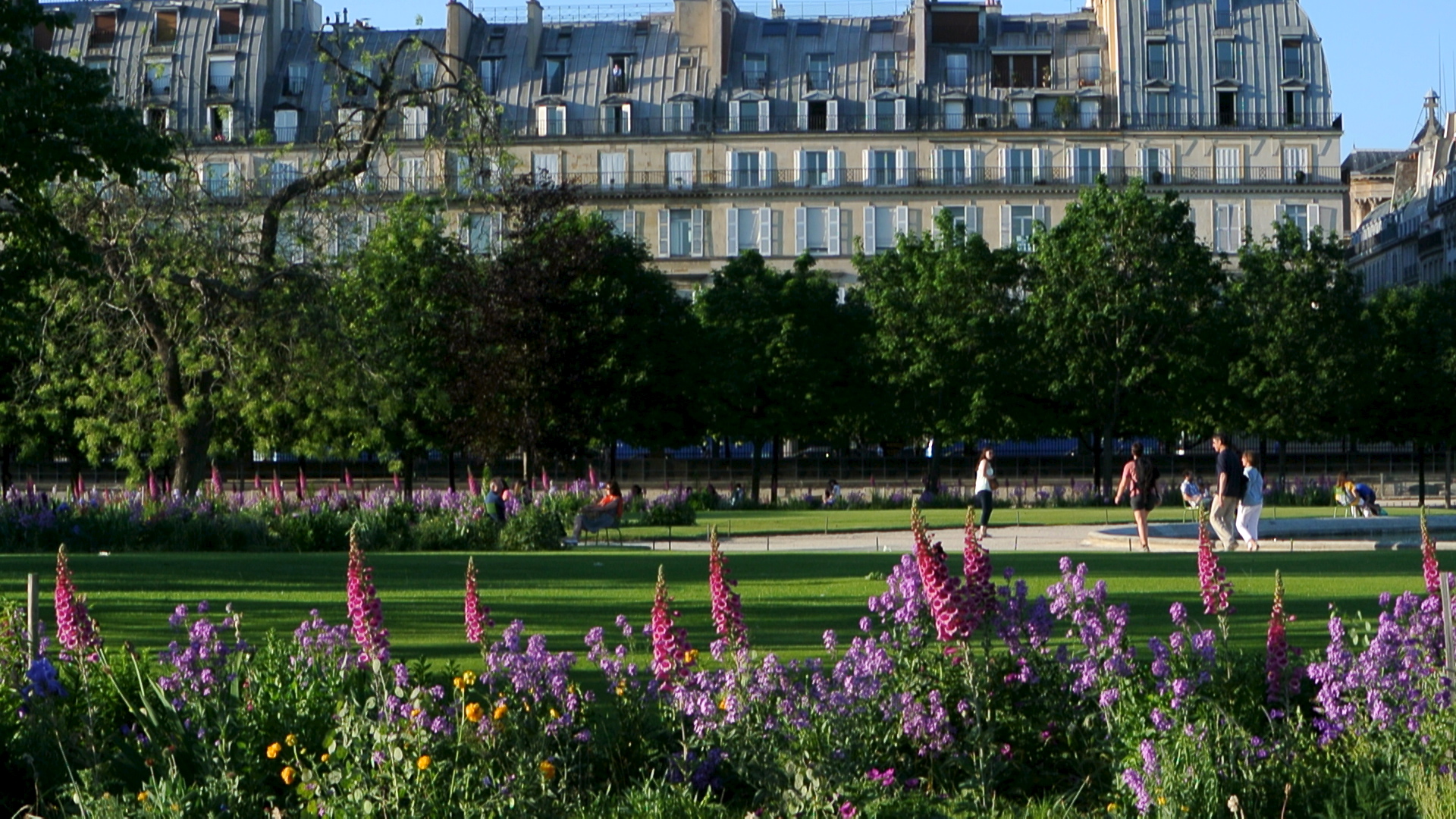
Tuileries Garden between the Louvre and Place de la Concorde


Later we rested at the fountains outside the Louvre to watch the flocks of visitors and PIGEONS! In the cool of the evening we walked through the Tuileries Garden, and then step by winding step up to the top of the Arc de Triomphe to see the city and watch the Eiffel Tower light show at dusk.


Arc de Triomphe with silver croissant moon


Our late night dinner back at the apartment included champagne, part of our welcome package. At bedtime, we said our last “Good night” in Paris.


Sunday we ate a late breakfast and went over to the Bastille area to the open market. As if I hadn’t had enough tomato, mozzarella, and basil already, I ordered some for lunch. We did some shopping, ate our last Berthillon ice cream down by the Seine and went back to the apartment to pack up for our train ride to London.


Berthillon ice cream, I will carry memories of you forever (Five seconds on the lips, forever on the hips)


Then we remembered that we had forgotten to have an emergency on our last day. We checked our train tickets, our luggage, and the apartment. Nothing was amiss and we seemed doomed to an adrenaline-free goodbye. My ever resourceful brother sensed my disappointment, and thirty minutes before our ride to the train station was due, decided to check the luggage requirements for Eurostar. Voila! The beautiful cutlery he had bought that afternoon was not allowed on board: no pokey knives with slicey, dicey edges. We called the shop where he bought them (thankfully just a block and a half away) and asked it they could ship the knives. Yes, but they were closing in ten minutes. My daughter grabbed the cutlery and ran to the shop. We locked up the apartment, dragged the suitcases down the winding stairs, and voila again. The grandchild slipped and slid partway down the spiral steps, while I had two heart attacks, lost my mind three times, and cried.  Other than some bruises, the child was fine. My daughter returned and we congratulated one another on averting not one but two possible disasters while we awaited our ride.


Thirty minutes after the appointed time, no driver appeared. My brother called the company. “Was it today, monsieur? I thought you said tomorrow.” At this point, how shall we say, le pulling of le hair began and someone began speaking French, as in “Excuse my French.” Here at last was the true emergency; the other two were what the French call amusebouches, the bite-sized tidbits that keep your mouth amused while you wait for the entree.


On the narrow streets of Ile Saint Louis on a warm Sunday afternoon in May, traffic moves slowly and the few taxis one sees are too small for three adults, one child, and six pieces of luggage. Eurostar trains do not wait. Le panic set in.


The street outside of our window (Rue Le Regrattier)

The corner where our taxi appeared


And then…tout de suite, we heard the sweet toot of an empty taxi van. We waved; he waved back. We did not ask him how or why he was nosing his way down the one-way Rue Saint-Louis en l’Île, but we gave him a nice tip. He got us to Gare du Nord station with little time to spare. We hurried to the immigration line, dragging our luggage behind us, where we managed to get into the slowest line possible. We barely made the train.


Au revoir Rue Le Regrattier


About two hours later, after a nice meal on the train and several games of iPad Yahtzee, we arrived at Saint Pancras station in London, where we were picked up and taken to our flat. By midnight, we were also flat. We are so prone to doing that in the presence of beds.


Next installment: The child discovers that London Bridge is not falling down

Paris: The photography class makes me shutter

Standard


On the morning of my second full day in Paris in the purple velvet head-boarded bed on the second floor of the three-floor flat at the top of the 60 wooden spiral steps behind the red door on the Rue Le Regrattier, I opened my eyes.


“Am I really in Paris?” I asked myself. “Oui, oui,” I answered, which reminded me I needed to go to the bathroom.


Unlike the previous morning in which we ate our way through breakfast to lunch in one sitting, we needed to be in Montmartre by 9 a.m. By planning ahead the previous night, we were able to wait until the very last minute and barely make it.


Our teacher, Elena, met us at the Anvers station and took us to the carousel near the Basilica de Sacre-Couer. We forgot to bring a camera for the grandchild, so we took turns attending to the child, marveling at PIGEONS!, and paying attention to Elena in between shouts of “Feather!” “Bird!” “Roly-poly!” “Ant!” “Guess what?!”


For my sake, Elena went over the basics of shutter speed, aperture, focal length, and perspective. My brother and daughter know all about that: he has some of his photos hanging on the walls of a multinational corporation in Houston; she took photography classes in high school. Like any good Texan, I was bred to shoot and ask questions later, so I needed to practice asking questions before shooting.


Probably the most important camera technique I learned was how to hold a ladybug in one hand and take pictures with the other. (Someone had to hold the bug while the child had a chocolate gelato.)


We spent the morning trekking through Montmartre admiring the works of outdoor artists at the Place du Tertre, the cobblestone streets with their colorful shops, and the Moulin de la Galette (a windmill converted into a restaurant) on Rue Lepic, the street on which Van Gogh once lived. If you are in Paris and have a van, go. You won’t rue it.


(If you are a new reader, I’m sorry; I get my word thrills anyway I can. If you are not a new reader, try not to rue so.)


After the photo shoot, we took the metro back to Ile Saint Louis, stopping at the local boulangerie for bread, croissants, and macarons. In that imaginative way we all had, we made sandwiches on good bread, sliced tomatoes with mozzarella and basil drizzled with olive oil, and then a little oil and balsamic dipping sauce for the batard. (Note: no letters were harmed or eliminated in any word of that last sentence.) Just as some people can’t get enough of a certain song and end up playing it over and over until their brains explode, we could not get enough of the various breads and ate them over and over until our thighs and derrieres exploded.


After lunch. the beds kindly offered naps, so we each took one.


We spent the evening leisurely exploring the island, walking over to Notre Dame to watch the street performers, and sitting along the Seine for several minutes at a time until the ducks or swans moved, in which case we needed to relocate to get as close as possible. When you are five years old, this is de rigueur (French for “hard to do when you are sixty years old”).


Two years ago I visited Paris with my brother and we spent every moment visiting sites and seeing as much of the city as we could. I loved it. This time, we visited less and lived more. I think I loved that even more. More than all the glitter and shine of Versailles, I will remember waving to the passengers on a boat gliding down the Seine on a soft summer night and seeing the delight in my grandchild’s smile as they waved back; and watching the wink of lights on the water as the sky darkened, and the lights along the river brightened.


This slideshow requires JavaScript.


Next installment: As the French say (or should): A whale of a good time always has a fin

Paris: Hurry, potter, and the bedchamber of secrets

Standard

In which we potter, then hurry


Most people don’t know this, but gravity is much stronger in Paris than in Wisconsin, so we found it hard to get out of bed in the mornings. When we did, we pottered around, drinking coffee, applying lots of butter to help the croissants and bread slide down our throats, and doing more brazen staring out of our windows into the apartments across the way and down at the passersby in the streets.


On the first morning at half past a bag of croissants, we noticed it was almost time for lunch, so we cleaned up the breakfast dishes and prepared more food. Time had that elastic quality, seemingly stretching out before us forever when suddenly it snapped back and we realized that unless we immediately grabbed our things and carefully rushed down the 60 stairs, twirling ourselves silly, we would miss our appointment at the Eiffel Tower.


We get an eyeful of Paris


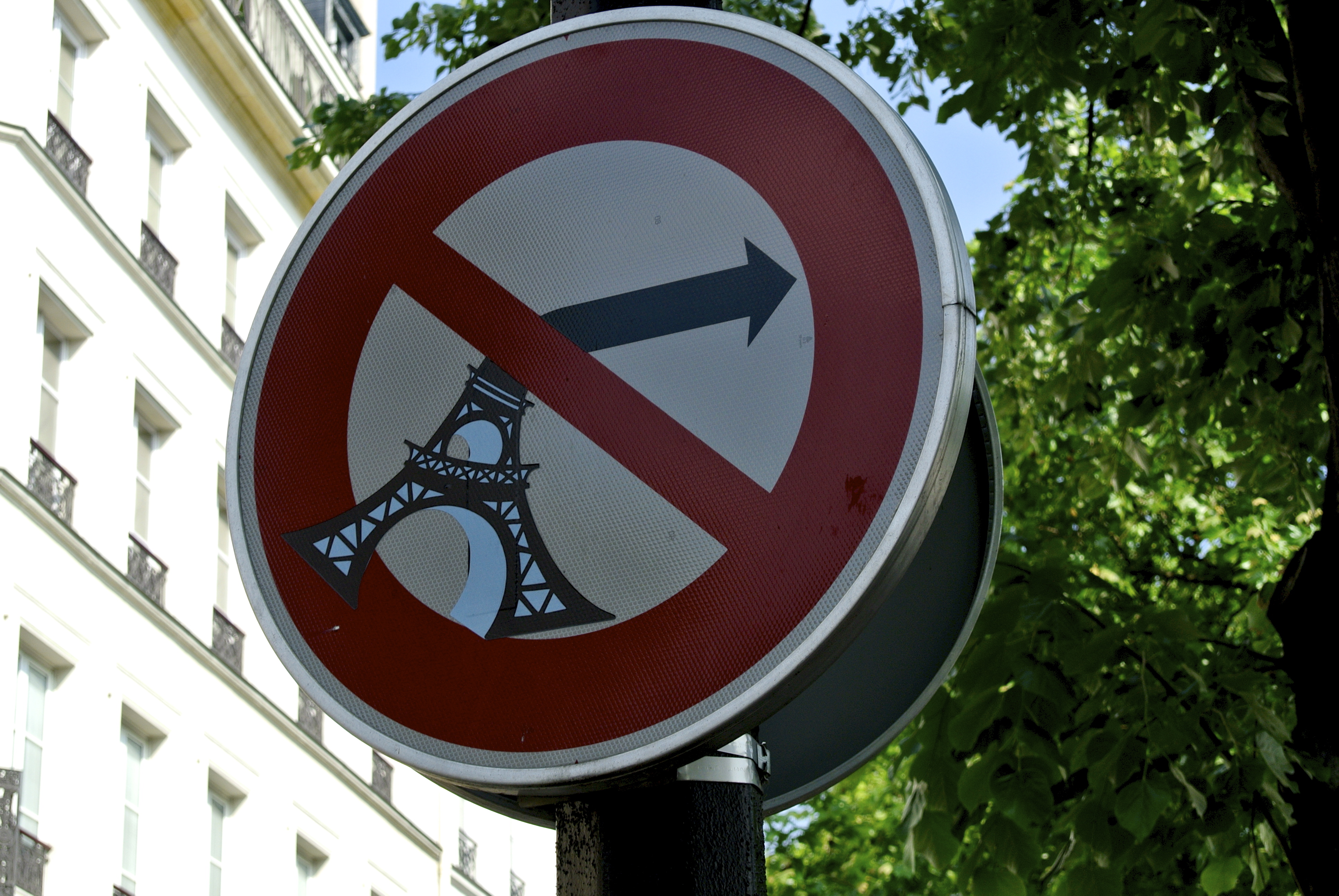
I don’t think this is the right way.


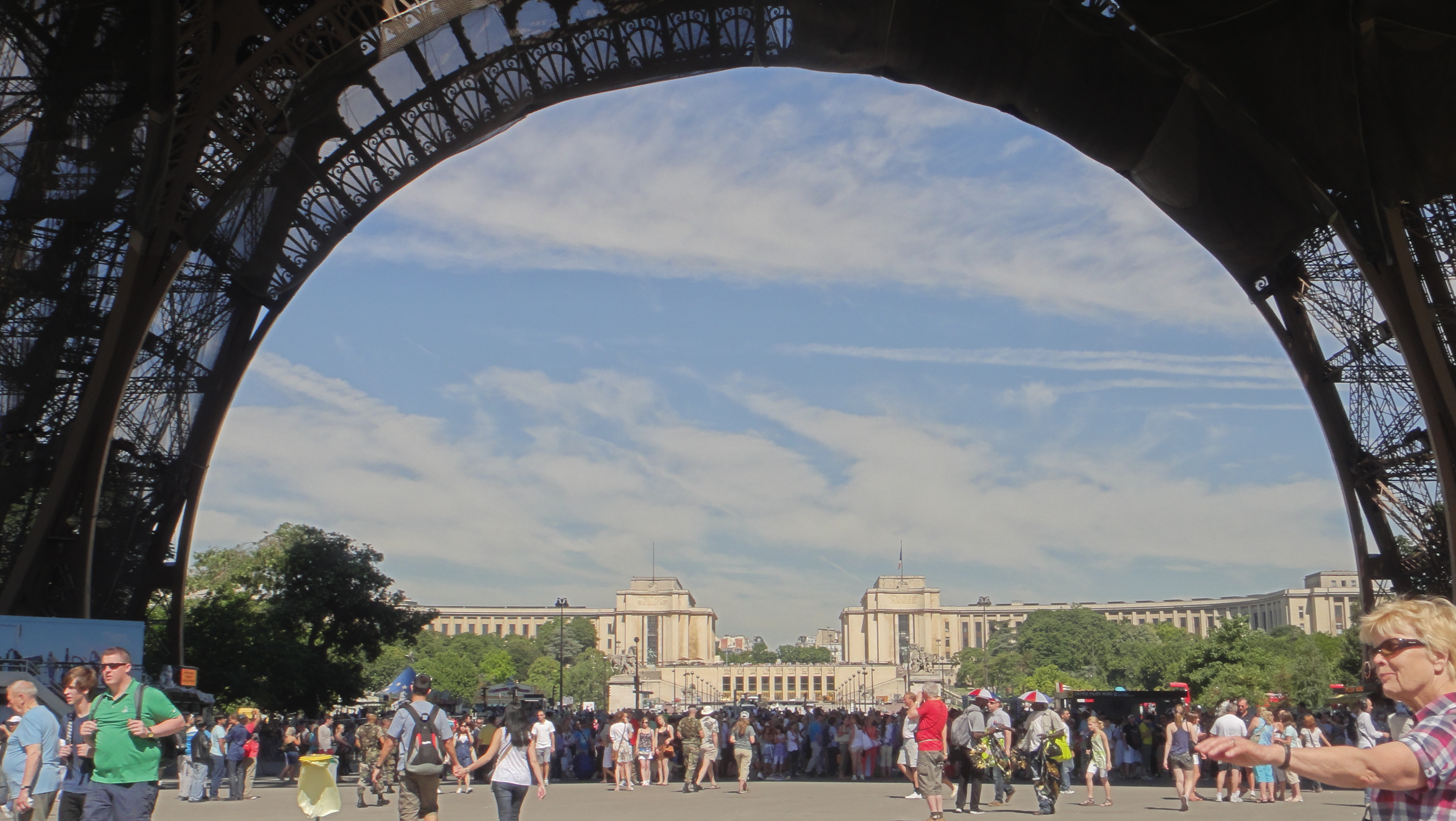
Under the Eiffel Tower


Our reservations to ascend to the top of the Eiffel Tower were for 1:30 p.m. and we managed to allow ourselves enough time to ascend from the nearest subway station at approximately 1:30 p.m. We needed another 10 minutes to get to the tower. One person in our party wore one of those Parisian pouts, sure that we would miss our opportunity, but we hurried forward, arriving just in time to stand under the hot sun for a good 30 minutes. That is the value of having reservations.


Between the apartment and the Eiffel Tower, the grandchild’s feet decided to grow and the shoes that had been fine up until that point, suddenly began to produce blisters and loud complaints. Band-aids helped for a while, but every time the child spoke they fell off.  Just kidding; we minions carried the child aloft in our arms.


As our elevator angled its way up to the top deck, both my daughter and grandchild grew quiet. Anything high is low on my daughter’s list of fun things to do, but she forced herself to walk to the edge, lean on the railing, and take pictures. My grandchild grasped my neck and refused to look. I slowly moved toward the railing and began commenting on how tiny the cars and motorcycles looked. When I said that the people looked like the ants in my grandchild’s ant farm, interest replaced fear, and soon we were laughing and enjoying ourselves. When we spotted a soccer field, the shoeless one stared for a while and then said, “Guess what? I see Alex and Grant. They play soccer.” I casually mentioned that they lived in Wisconsin, not Paris. With infinite patience, my grandchild explained that sometimes they played in Wisconsin, and sometimes they played in Paris. Who knew?


After our eyeful of Paris, we carried the child to the nearest shoe store, a very posh little store with posh little shoes for posh little feet for people who have the posh to pay. To protect the shoes, I bought $15 socks (the cheapest they had), and the child found a pair of sandals, which my brother purchased. Once the incredibly expanding feet were accommodated, we all felt 35 pounds lighter. Literally.


We were five kilometers from the Pompidou Museum, but we decided to walk, stopping at a café along the way for some refreshment. We arrived at the museum late in the day and wandered around. The grandchild liked the video installations, and the two of us spent 20 minutes watching a black and white film narrated in Spanish and English that consisted of wooden trains carrying the names of political movements and ideologies on top of them. We sat on the floor in a small room, the child enraptured by the monochrome trains that sometimes climbed the wall, sometimes dumped all of the letters, or rode across the ceiling, all narrated in a monotone voice. I have no remembrance of what was said, but the only way I could get my grandchild to leave the room was to say how important it was to let mom and uncle know about this fascinating film. Thankfully, five-year-olds have short short-term memories; after sharing the exciting news with mom and uncle, we discovered other inexplicable art and then the outside fountain frequented by pigeons, or as my grandchild says, PIGEONS!


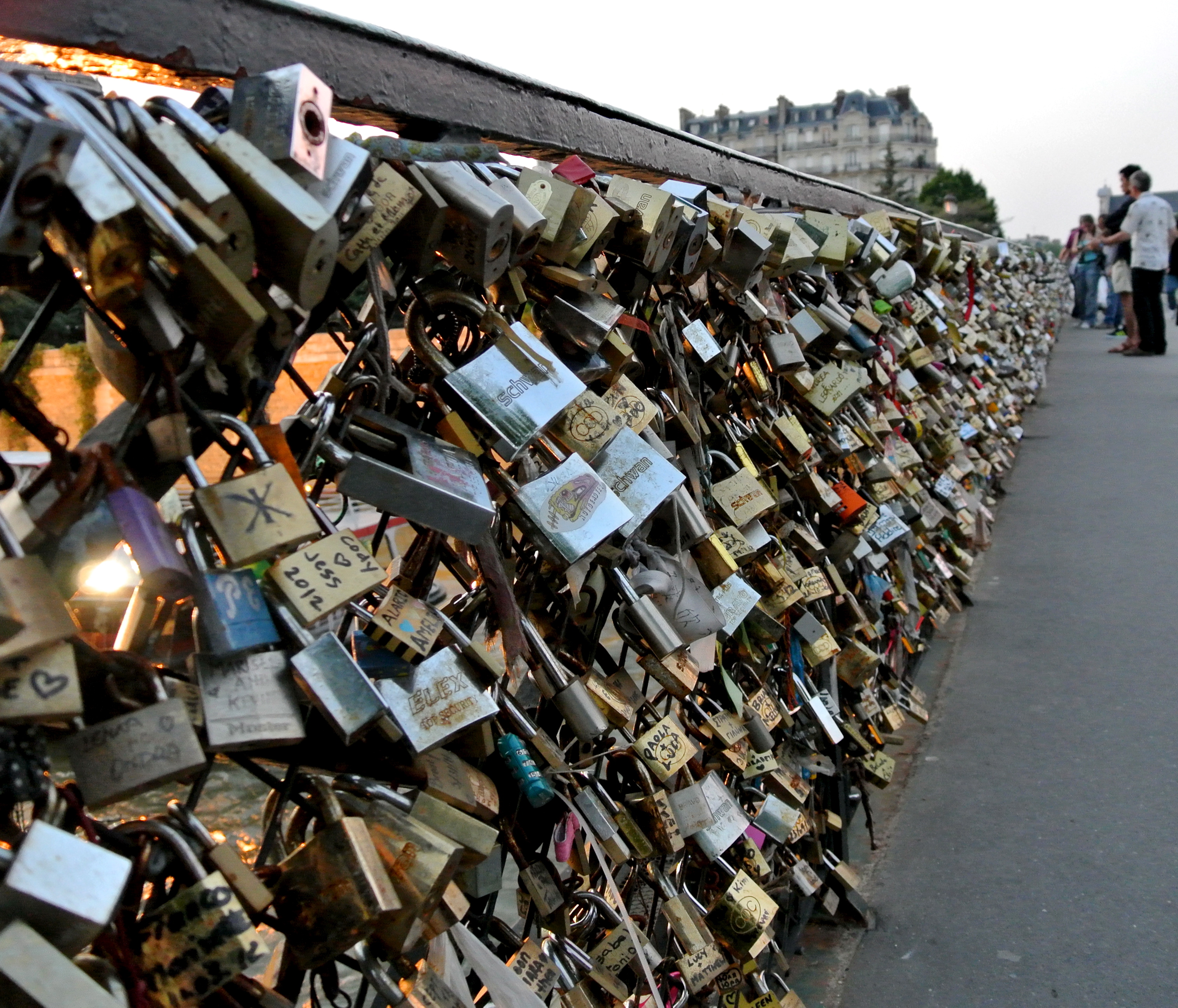
Love locks on the Pont de l’Archevêché: one of the key places in Paris to practice picking locks.


A view of the Seine River. If you fall in, they say you will go in Seine.


Around 9:00 p.m., we strolled back to Ile Saint Louis, stopping at Norte Dame to watch the street performers and admire the sky. We lingered on Pont Marie, our closest bridge, to wave at the boats sailing by, so we didn’t return to the apartment until 10:30. I don’t remember exactly what we ate, but I know it included bread, cheese, tomatoes, fruit and wine because every time we shopped that’s what we bought.


The Bedchamber of Secrets


After showering, I heard noises in my bedroom. My pillow sat propped up on the headboard and said it had some secrets to tell me. It could only whisper, so I had to put my ear up to it to hear: it was something about Montmarte and a photography class the next morning. I didn’t feel the full gravity of it all until the following morning.


This slideshow requires JavaScript.


Next installment: Photography classes make me shutter


NOTE TO READERS:  Yes, I broke the law of parallelism in the title. Yes, I did it for cheap thrills. You can try to get even with me, but I doubt our paths will ever cross.