Six or maybe seven reasons you should have an imaginary cat

Standard

My imaginary cat is hiding behind the sofa. You can probably see it better if you close your eyes.


Imaginary cats (Non litterus boxis catus, also known as Felix silvesteris imaginarius catus) make excellent pets. You may prefer the term “companion” if you eschew “pet” as a patently humancentric, exploitive term based merely on bipedalism, world domination, and the ability to operate a can opener. Find out why you should have one, or two, probably at least two of them.


1. Imaginary cats are easy to feed. As you have no doubt guessed, they feed on your imagination.


2. Imaginary cats are completely believable. Put out a litter box and food dish; then tell people your  cat is shy and always hides when other people show up.


3. Imaginary cats provide you with hairballs. Due to their hairier-than-thou nature, cats, even imaginary ones, produce hairballs. Few things are more satisfying than placing one or two in the envelope along with your tax payment to the IRS.


4. Imaginary cats make your posts popular. If you want to claw your way to the top of internet posts, you must include cat pictures. Where do you get the pictures? Use your imagination. Take pictures of your couch and say the cat is hiding underneath it. Or use the cat pictures hiding inside your computer. Go to your search engine and type in images:cats and make sure you select “labeled for reuse.” (WARNING CLAUSE: Do not view cat images until you finish this post; otherwise, you will not finish this post.)


5. Imaginary cats offer an endless source of excuses. If you fail to post on your blog, do your homework, or write a work report, you can say your cat ate your mouse; when your family has a get-together that you don’t want to go to, you can say the cat is sick; and you can get time off from work nine times because your cat died.


6. Imaginary cats provide you with companionship. Instead of just typing back and forth with your imaginary friends online, you can talk out loud to your imaginary cat, and unlike your imaginary friends, your imaginary cat truly appreciates all of your catty remarks.


 BONUS REASON!! 7. Just today, on this blog, you can get not one, but two imaginary cats for the low, low price of $9.99. But hold your horses (cats don’t like them), I will also throw in five free hairballs, a forever litter box, a food dish, and a slightly scratched vinyl record featuring 22 minutes of hissing sounds, which sound very much like an angry cat. For an additional $5.00, I can send you an 8-track instead. Hurry, this offer won’t last long because someone is bound to complain about sending imaginary cats through the world-wide litter box. Then all my imaginary cats will end up as spam.


Kittens


None of my cats would come out for a picture, but they look exactly like these kittens photographed at www.christianholmer.com

Entering the past

Standard


Deep summer. I raise my hand to shield my eyes and smell orange blossoms. Traces of sunscreen streak my arms.  I stand in a swimming pool, waiting, watching the sunlight shatter again and again on the surface of the water. I can’t say for sure what I’m waiting for.


My hair turned green from the chlorine one summer long ago. Day after day I dipped below the surface, swimming through the hours, under the freckling sun. I counted swimming as bathing. I think about that summer and the things I can’t remember but want to. I rummage through my memories looking, find a page torn from a book, a faded photograph of someone I vaguely remember, but no name is written on the back. My past is the long chain of days I drag behind me.


A child stands on the edge of the pool, jumps, and splashes near me. I remember diving off the high dive when I was only six or seven. Into the deep. Unafraid.


A woman calls to the child to get out of the pool. I remember mother warning me that my lips were blue, and I needed to warm myself on the hot cement.  I turn and look behind me, but nothing is there.  The past is here, not behind.


I look at my feet; my legs below the surface disconnected to the part of my body above the water. I touch the boundary, the water’s skin freckled with light that divides air and water; the light bends, and nothing below looks the same again. What if time isn’t measured in length, but in depth? Perhaps I have stepped into the pool of time, and as I walk deeper into the future, more and more of me is in the past below. Eventually, the past will completely swallow me up.


I stand, staring at my legs, displaced by light. I cannot align them with my body, but I can feel them. I let them carry me deeper.


Someone calls my name. I close my eyes, take a deep breath, and dive into the cool water, heading for the other side.


Writing by foot

Standard


Few people realize that the word “way” comes in two different lengths. Articles like “Twelve Ways to Iron Cheese” or “Twelve Original but Disturbing Ways to Use Your Neti Pot” or “Twelve Ways to Remove Cheese from Your Neti Pot” proliferate on the web. Most people see no problem with this. I do.


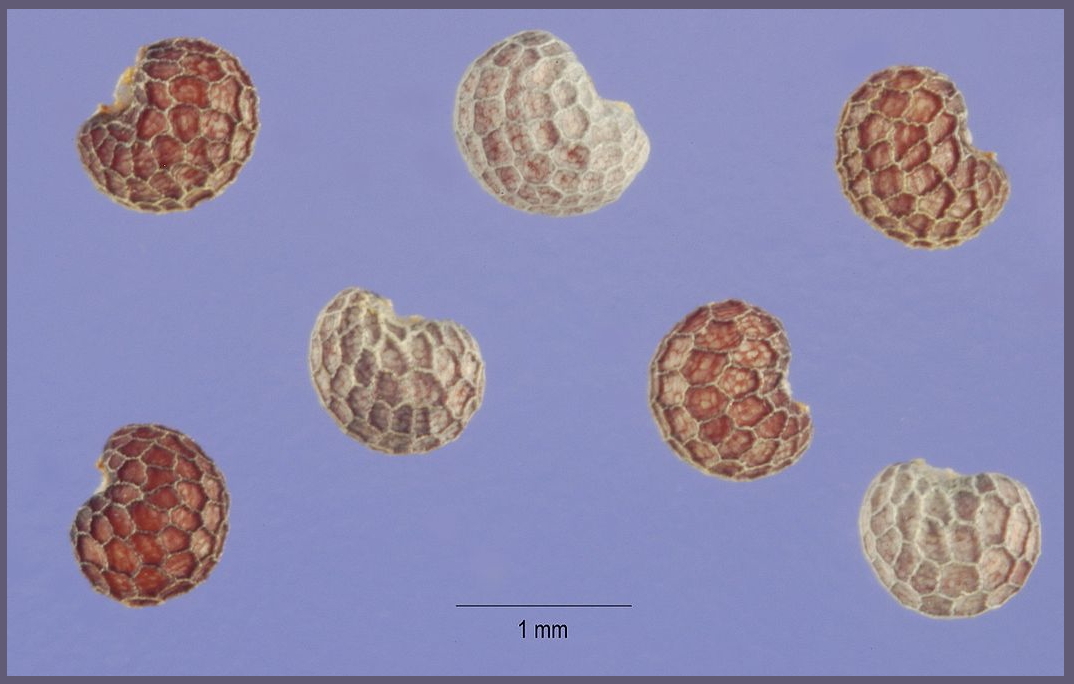
The word “way” comes from Old English and means “road” or “path,” and when you travel on a road or path, you must use a system of measurement to determine the distance covered. Back in the day when the thirteen British colonies were not yet the thirteen American states, our former overlords introduced English units as the American system of measurement.  Both the British and the Americans measured by the length of the poppy seed, which was one fourth of a barleycorn. When they laid three barleycorn end to end, they had the equivalent of twelve poppy seeds, or one inch. Providing the wind wasn’t blowing, they could lay down 36 barleycorn (144 poppy seeds) and create a foot. They only needed to do that one more time to have two feet, which is all anybody needs to head down a road or path.


Poppy seeds (Steve Hurst @ USDA-NRCS PLANTS )


Of course, the British didn’t invent the foot. In the first century, when people finally started counting the years up instead of down, someone brought a Roman foot to Britain. Where the foot came from is anyone’s guess, so let me guess. Prior to the Romans, there doesn’t seem to have been a standard measurement for the foot. They must have realized how handy it would be to know exactly how far it was to the next village they planned to pillage. Counting footsteps would vary based on the size of the solider’s foot, so they needed a standard. And where else to find un unneeded foot than the battlefield. I haven’t yet discovered any record of how the foot was preserved, but that doesn’t prevent me from promoting my theory. At any rate, this foot was used for years and years, until the Anglo-Saxons brought over the North German foot, no doubt another war trophy from some unlucky foot soldier. In the 13th century, the foot became the accepted unit of measurement. Where did that foot come from? No one knows. At least not yet.  I’m working on it.


36 husked barley corns equals 8 inches.
(People either used unhusked barley, or they had smaller feet.)


Once you have a foot, you can leap to yard to mile, cover any distance you like, and begin to measure the “way” we started down at the beginning of this post.


When you speak of the “Twelve Ways to Cut Cheese,” you must move equidistantly from point to point, and in this case you should move quite far. You must use your feet to move, and sadly there are only a few places in the world you can still do that.


In the United Kingdom in 1824, the Imperial unit of measurement stuck its foot in the door, evicted the English unit of measurement, and became the standard throughout the Commonwealth and beyond. America has not been able to let go of England’s Imperial foot since then. We know all about the French and their fancy-pants metric system; we’ve seen their advertisements on the home shopping network and listened to their sales pitch. We’ve even bought a few signs from them and put them up on some of our highways for people who measure in French, but Americans have  put their foot down when it comes to becoming just another meter-made country.


So now you understand what I’m talking about when I say that “way” comes in two different lengths: Imperial and metric. For those who find this difficult to follow, here’s the short version:


  1. If a “way” is a road or path you travel by foot,
  2. And the Imperial system is the only one that allows you to use feet,
  3. Then, only those who use the Imperial system can go down that road and write about the “Twelve Way’s to Avoid Spelling Errors.”
  4.  Since one foot equals 0.3048 meters, people who use the metric system should write the “3.6 Ways to Avoid Spelling Erors.”


(Note to new readers: If you have any questions, or find fault with my logic, please feel free to contact any of the people who comment on my blog. I’m sure they would be happy to help you out. They know where the exits are.)

New shoes can change your life

Standard


Women of a certain age can stop walking on tiptoes, trying to avoid the shards of all those mirrors thrown at them.


In their sensible shoes, they can walk on eggshells, crush them to a fine powder, and tell the world the bare-faced truth.


They can finally learn to please their own soles.


Women of a certain age are certain about this: new shoes can change your life.


I know, for I have walked a mile or more in my mother’s shoes, and my feet ache. So now, I’ll walk a while in my father’s shoes.


It’s okay.


I’m of a certain age.


( Tiptoes from here.)

Old married couples: Sitting quietly without speaking

Standard


You’ve heard the stories about old married couples. How they grow to look alike. And how they can sit quietly without speaking, enjoying the silence together.


Well, the first one is true. Old married couples look the same because all old people look alike. You may be taller, shorter, rounder, or skinnier than your spouse; and you may dye your hair, exercise, eat right, and use expensive creams, but sooner or later both of you will have to put on a wrinkled coat of skin, large ears, and a droopy nose, so you are properly dressed for the party called old age.


Of course, you can attend the party wearing a mask created by a plastic surgeon. But you can only wear it for a while before you need a new one. Keep doing that and eventually your mouth will be stretched so close to your ears that you can hear yourself drool. Did I mention drool? Well, lots of people at the party do. Not the mentioning, the drooling.


About that second idea: I believe half of it. Old couples often sit quietly without speaking, but not because they are enjoying the silence together. Something else is going on, something called “mamihlapinatapai.” (Note to reader: Impress your friends by casually using this word in a conversation. I’ve developed an easy pronunciation guide to help you in your impressiveness. Repeat after me: mommy – la piñata – pie.)


In the Yaphan language of Tierra del Fuego, it means “two people looking at each other without speaking, each hoping that the other will offer to do something which both parties desire but neither is willing to do.”


When old couples sit together in silence, both are hoping the other person will do what needs to be done, like washing the dishes, taking out the trash, buying more Depends, or remembering the names of the children. They may look as if they are resting in their love, but both of them are secretly willing the other to action: one silently repeats in his mind, “Make some dinner, make some dinner,” while the other one says over and over in her mind, “Fix us something to eat, fix us something to eat.” If they been together long enough, they’ll sense what the other person is trying to communicate, especially if they have their glasses on and can see what time it is. Then after one asks, “Are you thinking what I’m thinking?” the other one will nod, wipe the drool from the corner of her mouth, and order Chinese.


(Photo:  Library of Congress, Prints & Photographs Division, FSA-OWI Collection, [reproduction number, e.g., LC-USF35-1326])

The book will find you

Standard

If a book is an idea, caught and caged in paper and ink, a library is a zoo of every captured thought you can imagine, and some you can’t.


No one knows how long thoughts and ideas roamed around in human heads before someone decided to capture them in on clay tablets 5,000 years ago. Facts proved easy to catch, as did moral instructions, recipes, and divinations; and the earliest still survive on clay, stones, boards, bones, turtle shells, and papyrus rolls. (You can go to this book history timeline to see the ones discovered so far.) Inevitably, people corralled these ideas into collections called libraries.


If a book is a tree you climb to hide among the leaves and listen, a library is a forest full of sound.


From the earliest times, people in power (rulers, rich people, and religious and scholastic organizations) had private groves of books. When the earliest public libraries opened, money and power served as library cards.


The vast forests of books that we would recognize as free public libraries were not planted until the 19th century.


If a book is made of the hours of a writer’s life, a library is a clock shop where you can borrow time.


You walk into a library to kill time. You stroll through the stacks and the title of a book strikes you; then, you look at its face and the small hands grab you. If you are quiet you will hear the soft tick-tock of the words. When it’s time, the book finds you, and if it’s a good book, you have the time of your life reading it.


If a book is a ship that carries you to a place as strange and familiar as home, a library is harbor on an endless sea.


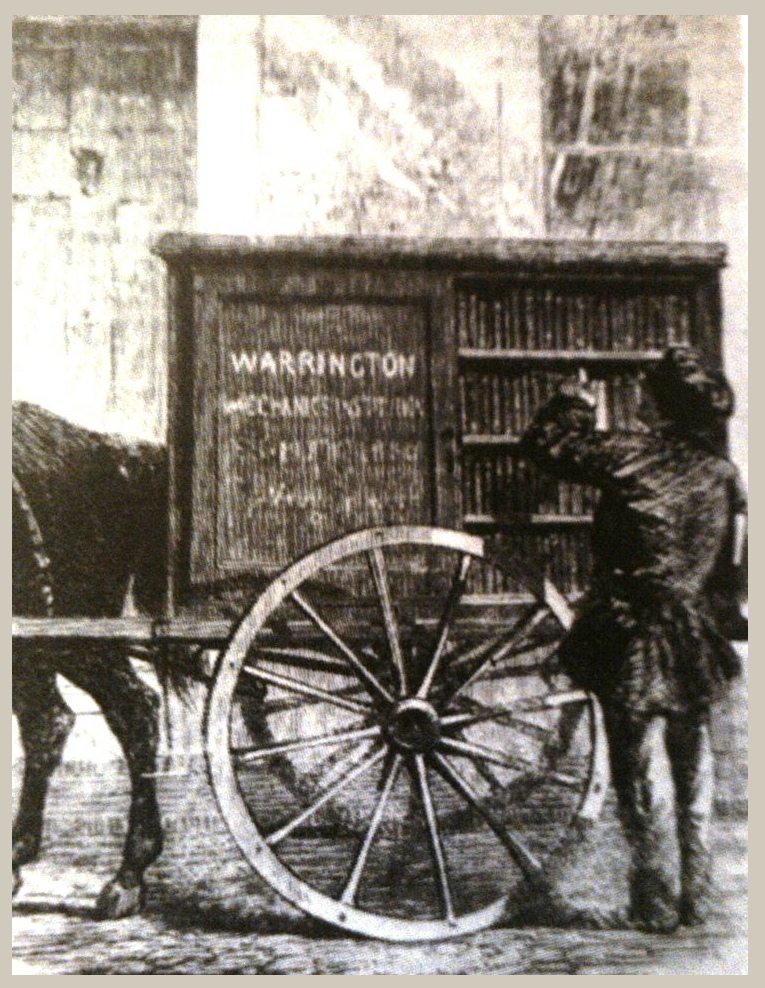
To sail away on a book, you need to find a port. Or the port needs to find you: drawn by a donkey cart, carried on the back of a camel, or hauled in that familiar bus known as the bookmobile.


Books will find you!
(picture courtesy Wikimedia Commons)


My city library provides me with endless choices for travel on that endless sea of ideas and stories. I always thought it was the only port in town.


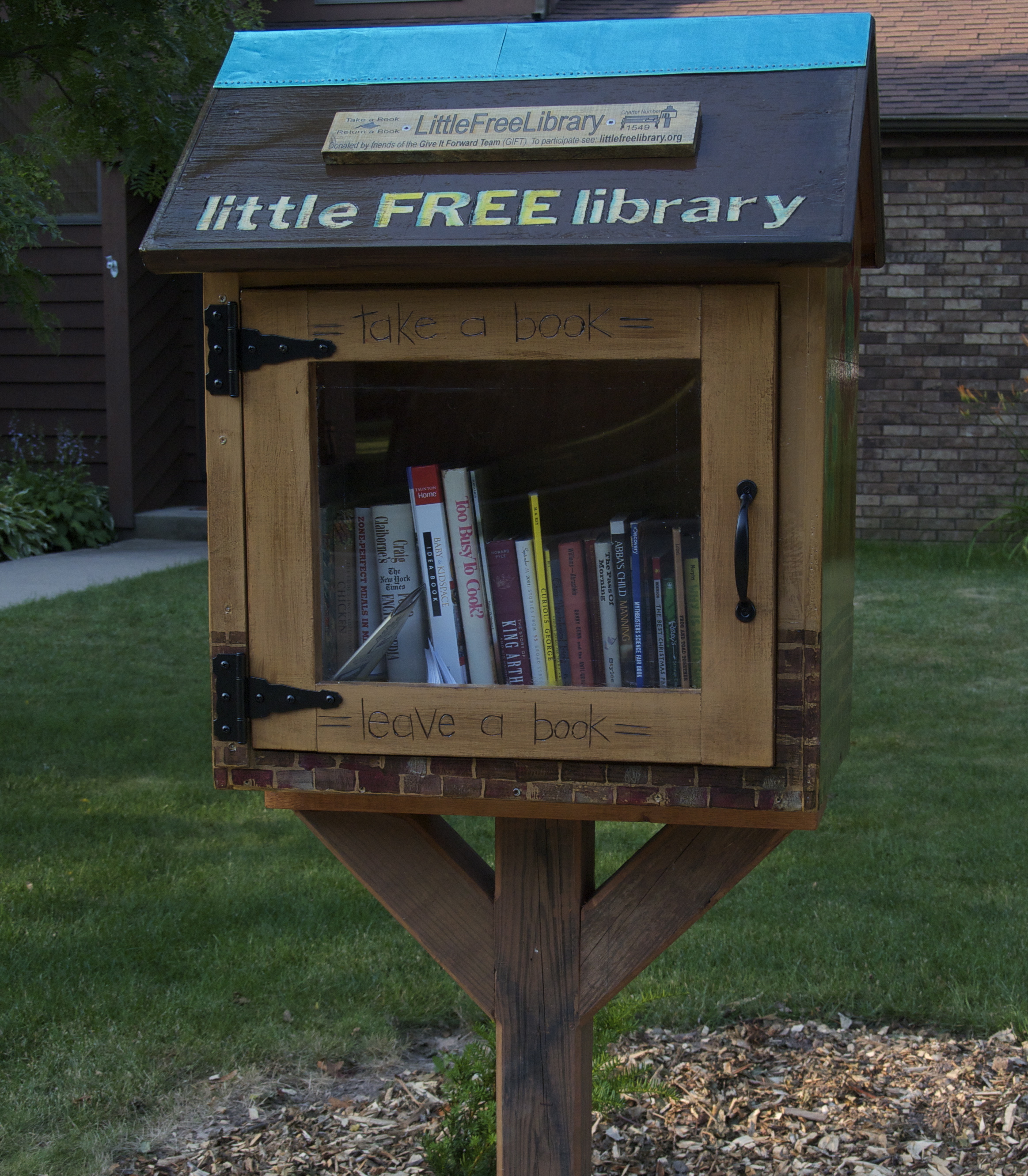
Three weeks ago, I found a small boat landing just four blocks from my house, called The Little Free Library. More of a book exchange than a lending library, it offers one more place to get carried away by books. The Little Free Library website provides an interactive map, so you can see if there is one near you. Or maybe you want to put one in your yard. Finding this free box of books prompted me to write about books and libraries. It reminded me how books have changed me, taught me, delighted me, and brought me joy.


The Little Free Library near my house

Today if you go to the library, don’t hold back; let the book find you.

How books find people: An introduction

Standard


The Perambulating Library (UK, 1858, Wikimedia Commons)


The book finds you.


In the library, you enter the sea of books; your eyes swim across the stacks, nibbling at the titles. Or the book lures your hand to the shelf to read some pages. Then, the book, the one that is hungry for you, catches you like a fish and reels you in. You may not even feel the hook. Using some sweet bait of words, the book snags your heart or mind and pulls you through its pages into a world or place so new, so old, so strange, so familiar, you can hardly breathe. And when you are thrown back into the world, you are not afraid. You come back to the places the books wait, angling for you.


You don’t find the book; the book finds you.


A book is looking for you; go to the library and let it find you.


Next: How books find people: Libraries

The end is near!

Standard


Like a couple of old but still valuable coins, my brother and I were collected from our Killarney hotel at 7 a.m. by a man in a van. He drove us to Limerick to meet up with the tour bus. Someone else got the seats in the first row, so we sat on the left in the second row. I know the hung-over man in the front seat appreciated having such a nice view to sleep through on most of the tour. We contented ourselves with seeing what was left.


The Up and Down Castle


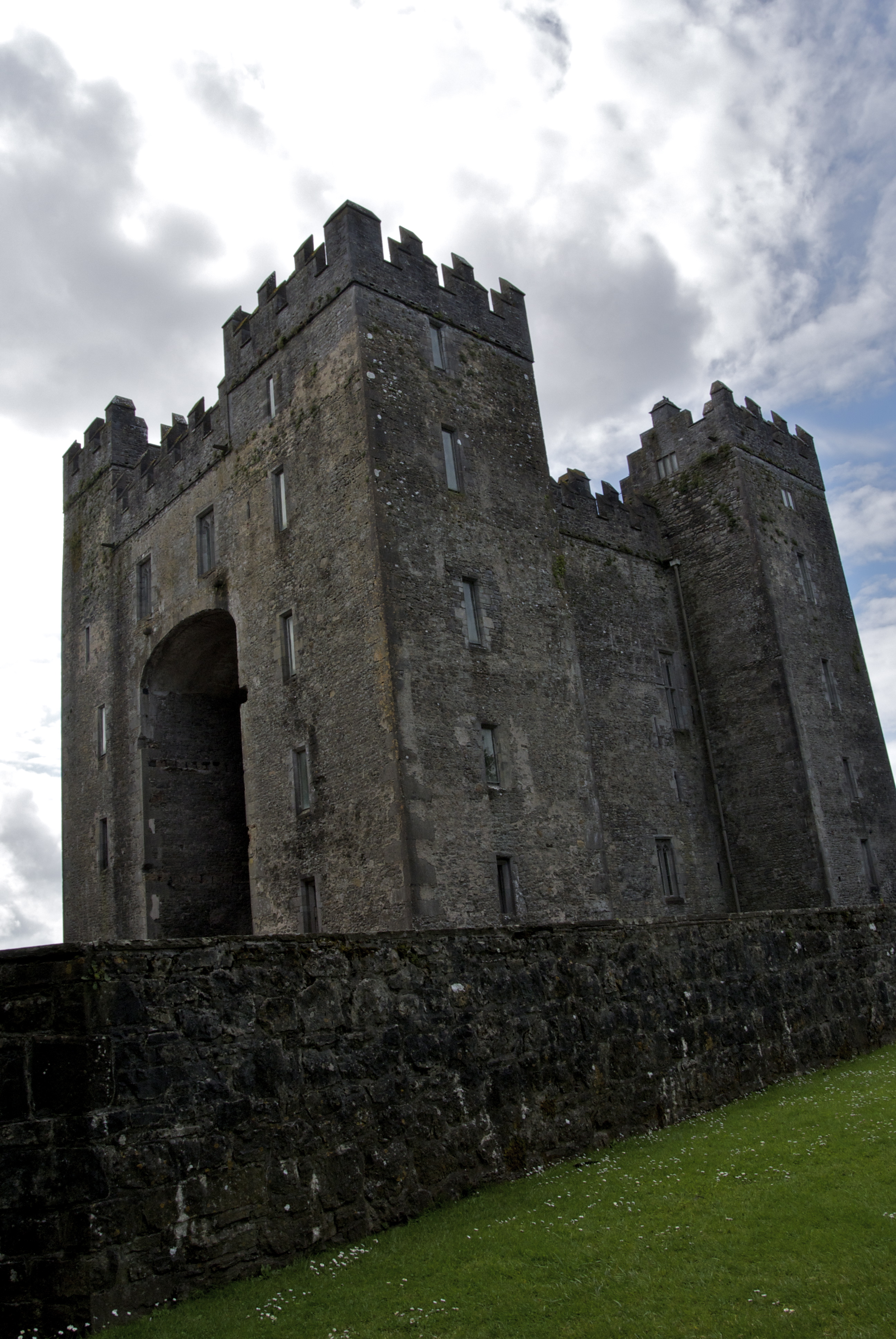
Bunratty Castle has experienced a number of ups and downs since 1270 when Robert De Muscegros built the first fortress near the Ratty River. Literal ups and downs. After being raised, razed, and ruined (history’s three R’s) for almost 700 years, Standish Robert Gage Prendergast Vereker took on the daunting task of  shortening his name to  7th Viscount Gort. He then restored and refurbished the castle (in 1954) so tourists would have some interesting places to leave their money when visiting Clare County. It worked. Tourists visit Clare County, they leave their money there, and they find it interesting.
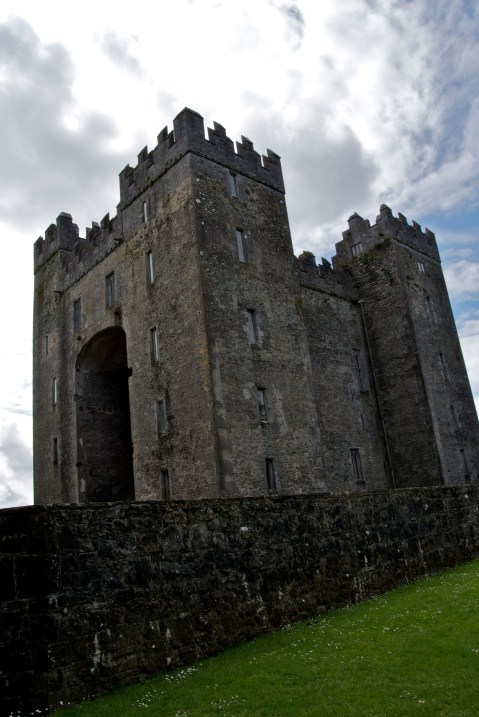
 

Bunratty Castle

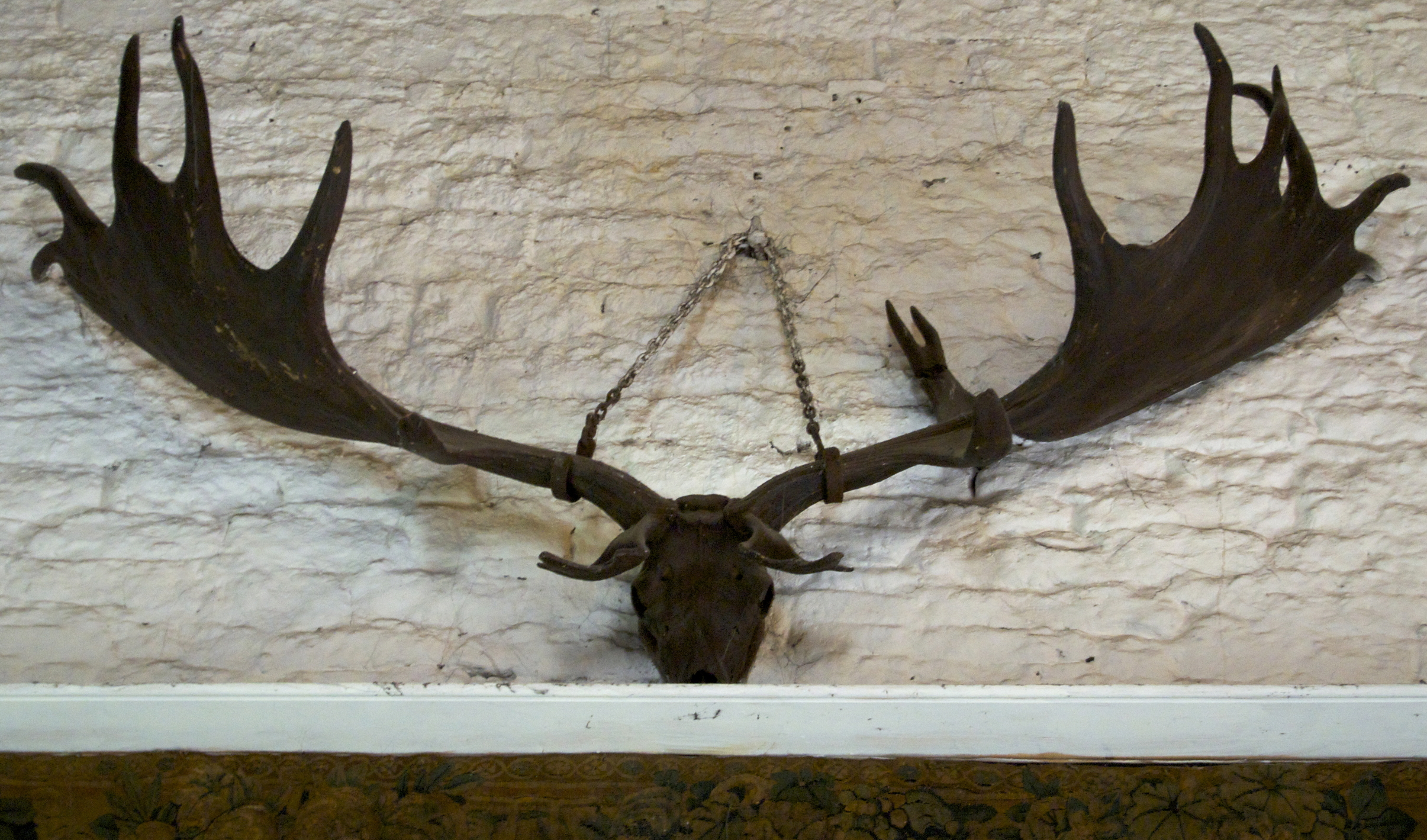
Giant deer antlers in Bunratty Castle


As was, is, and ever will be my wont, I gawked a lot. Viscount Gort furnished the castle with medieval furniture and tapestries, and visitors are free to roam about and try to remember to take some pictures. Tapestries from the 15th century and antlers of giant deer decorate the walls of the Great Hall. Giant deer with antlers up to 24 feet wide once roamed the Irish countryside. Thankfully, some of them died in bogs, those Irish scrapbooks of early history. The folks who run Bunratty Castle not only let you photograph whatever you want, but they also have a website that shows the Bunratty collection. How’s that for Irish hospitality?
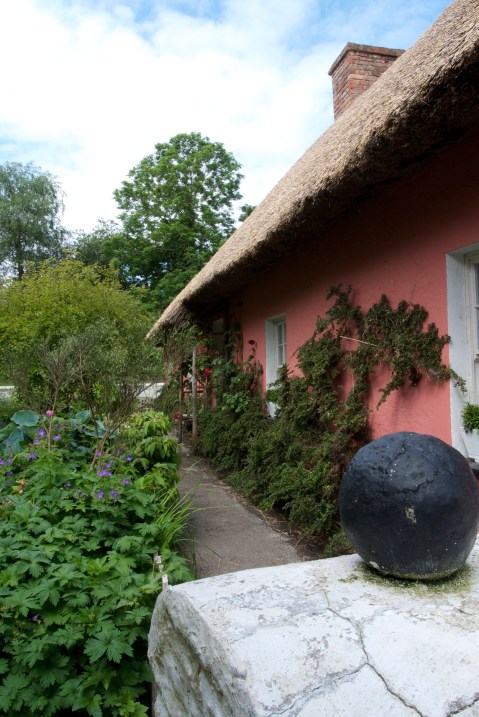
 

Thatched-roofed house in Bunratty Folk Village


After visiting the castle we wandered through the folk village on the castle grounds. We didn’t have enough time to see all of the grounds because we needed to head to our next stop.


I never found out what this door was alarmed about. I wasn’t alarmed even once at the Bunratty Folk Village.


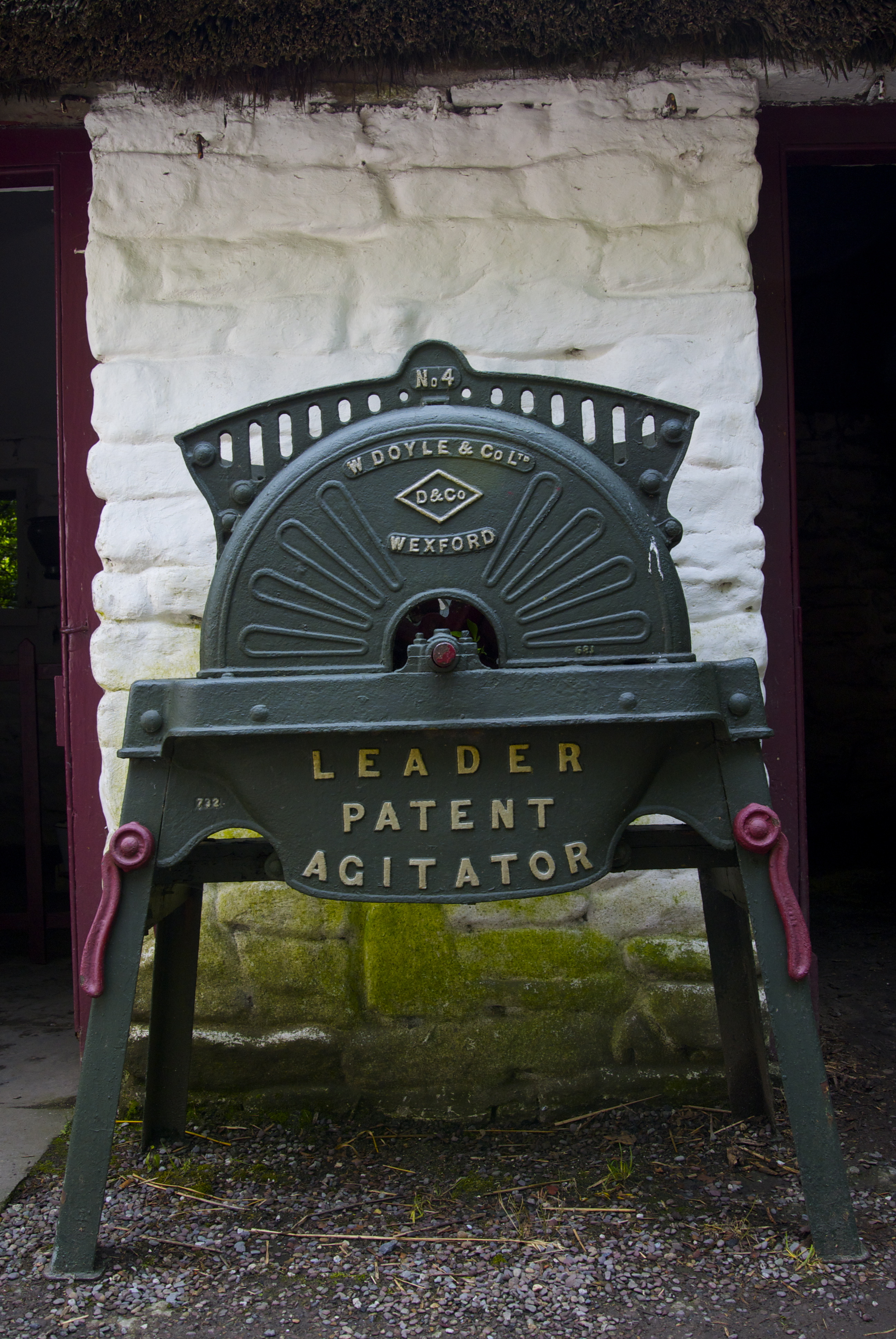
I saw this Irish agitator at Bunratty Castle.

I can resist anything but temptation.”


We stopped in Doolin for lunch at O’Connor’s Pub and stumbled into a chocolate shop nearby called The Chocolate Shop Doolin, makers of Wilde Irish chocolates. I don’t remember much after that. I know money exchanged hands and I was holding a label that said 70% dark chocolate. I remember, too, that the chocolate was organic fair-trade. (As you probably guessed, the chocolate was named in honor of Oscar Wilde who made the famous statement about temptation.)


The Cliffs of Moher


On our last day, the weather turned warm and sunny, mostly. To the southwest, some kind of cloud convention was going on, but they hung around the horizon and didn’t head our way. The bus driver said the tour group on the previous saw little of the Cliffs because of the fog.


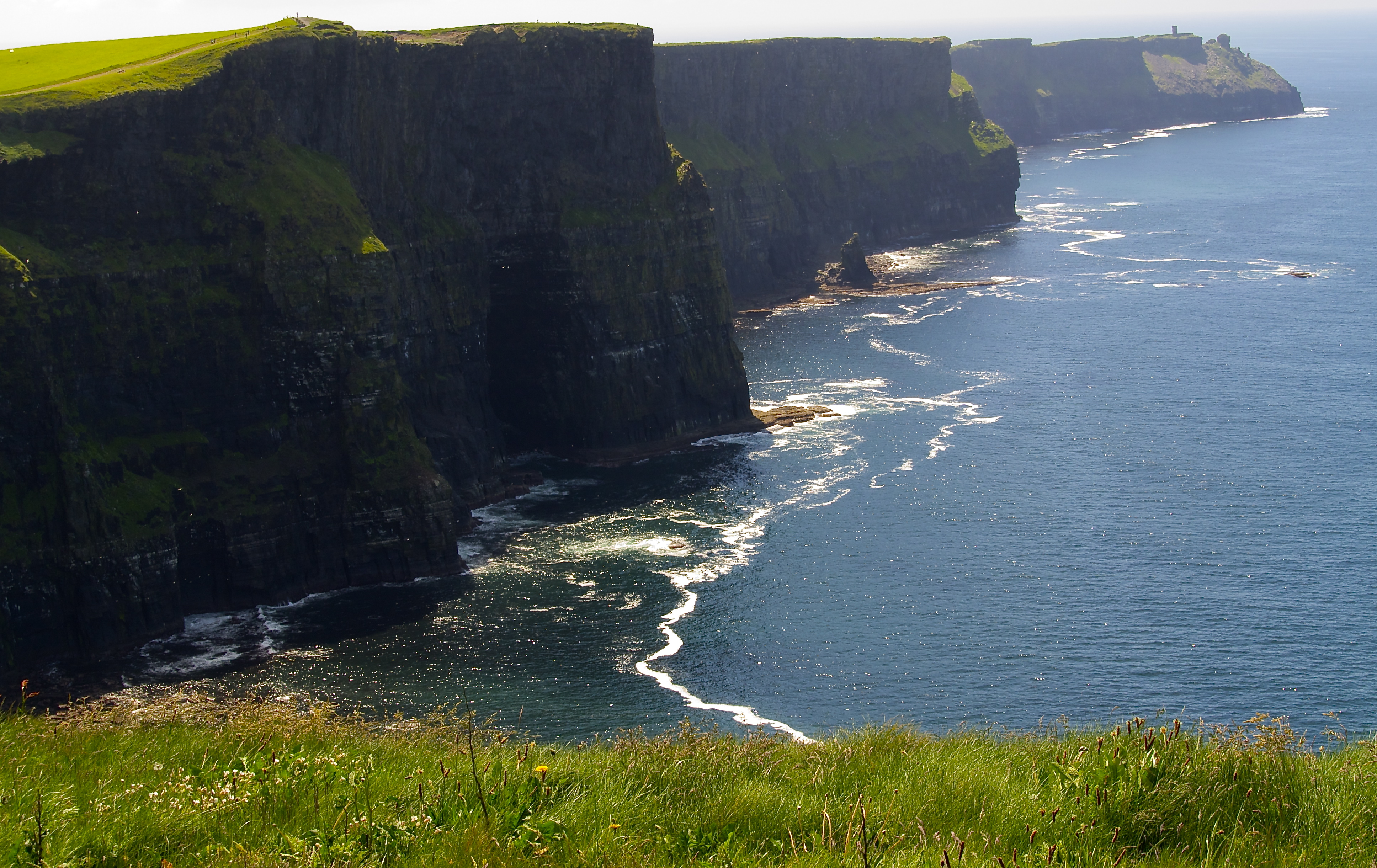
When we un-bused, everyone un-sweatered themselves, and headed lemming-like toward the cliffs.  In spite of the grand weather, I managed to take quite a few bad pictures, but also captured some with a ridiculously blue sky and sea.
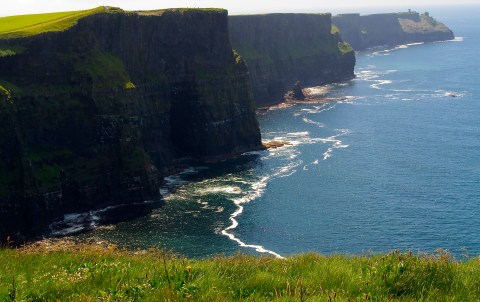
 

Cliffs of Moher facing the cloud convention

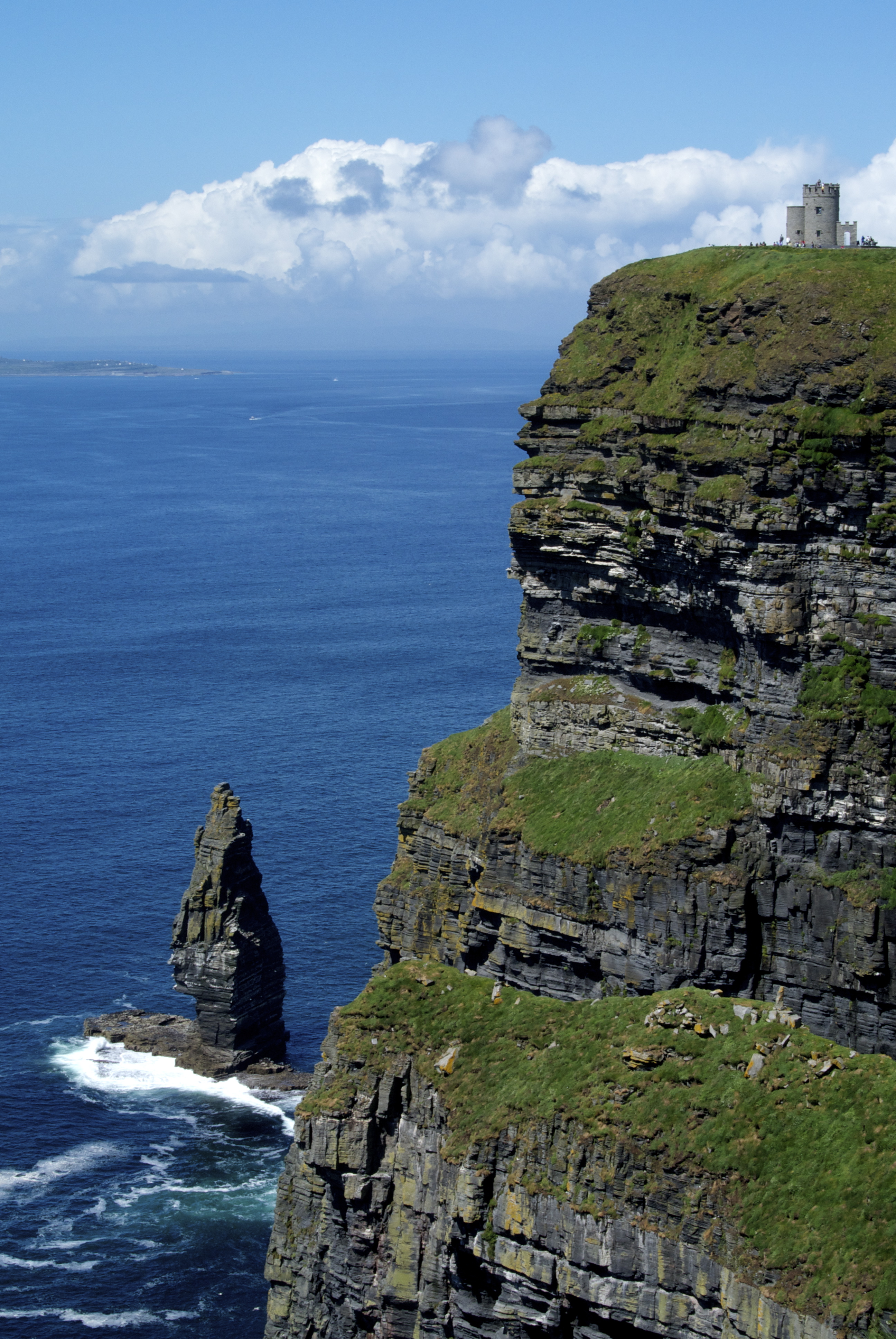
O’Brien’s Tower on right is the highest point on the Cliffs of Moher


Part of the cliffs were cordoned off to make sure the tourists go over to that part. We made sure to do so ourselves. I made both my camera and purse hold my hand but managed to lose my coral windbreaker, which I had slung over my purse because it was a one-shirt day.  Thankfully the windbreaker didn’t jump over the Cliffs; it just jumped down on a walkway to get a closer look. Before we left, I checked the lost and found, and someone had turned it in.


Let’s Rock!


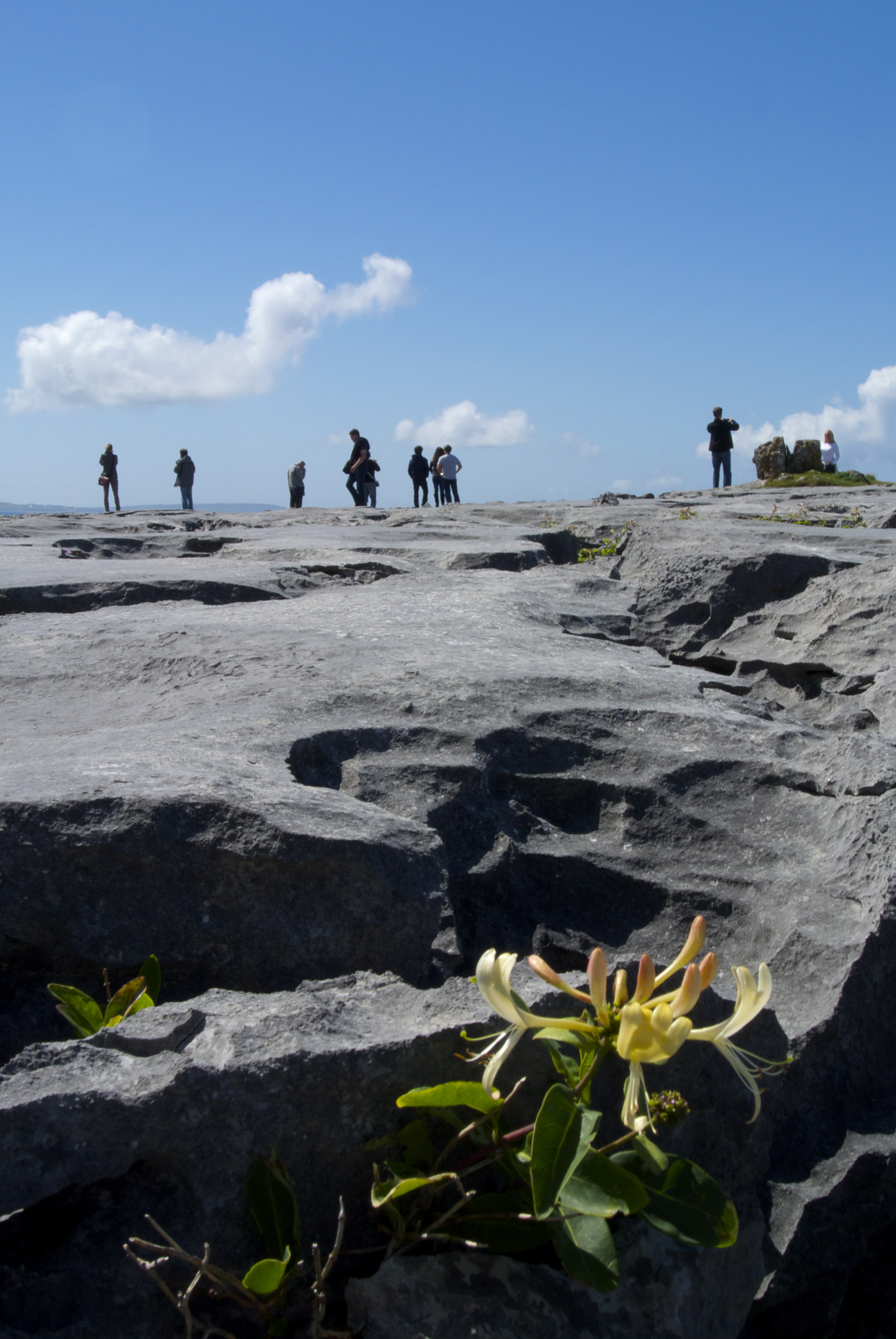
As we headed for Galway to catch our train back to Dublin, we stopped at The Burren, which means “rocky place” in Gaelic. Geologists, scientific Rock Stars, call the limestone landscape ‘karst’: a rocky place full of fissures, cracks, caves, and sinkholes, which sounds remarkably like my brain. Unlike politicians, you can’t find much dirt in the limestone bedrock, yet it hosts over 700 species of plants, both those that grow in arctic and alpine areas of the world and those more typically found in the Mediterranean.
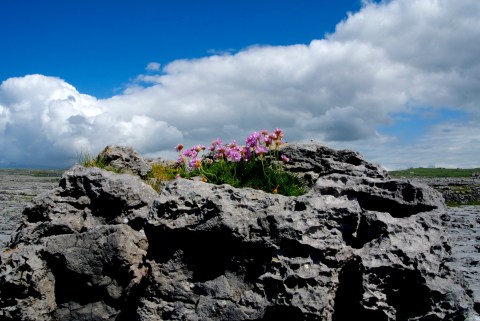
 

The Burren

Fairy tree


As our bus hurtled forward to Galway on the motorway,  the driver pointed out a fairy tree on our left. He even slowed down a bit and explained that the controversy over moving the fairy tree had delayed the building of the roadway for ten years. In the end, the tree won, the non-fairies rerouted the roadway, and the Irish moved on to other controversies. Since I was sitting on the left, I had a clear shot of the tree, which I didn’t get. I’m still mastering the skills of photography: digging in my bag for the camera, turning on the camera, looking through the viewfinder, seeing total blackness, removing the lens cap, looking through the viewfinder again, and trying to remember how to adjust the f/stop, shutter, aperture, and speed dial. If you want to see the tree of controversy, you have to visit someone else’s blog, someone like Paz, who obviously has mastered that tricky speed dial on his camera.


Back to Dublin


In Galway, my windbreaker, tried of being slung over my purse, left me again, seeking solace in the arms of a stranger. If you happen to be Galway and see someone wearing a coral windbreaker, say hi for me, and tell it I’m sorry.


Thankfully we picked up something to eat on the train because when we got to our downtown Dublin hotel, it was after 9 p.m., and we couldn’t find a place to eat.


Farewell to charms


Like a bowl of Lucky Charms slurped down by an adult who should know better, our time in Ireland was swallowed up by the calendar.  My brother left Dublin the next morning to return to Budapest, and I retraced my route via ferry and train back to London to a hotel near Heathrow. The following day I flew back to the States and stepped off the plane into the waiting arms of the TSA, and finally my husband.


This slideshow requires JavaScript.

(Note to any reader who is still here and did not stop reading, even though I went on and on, post after post, about my vacation until you were ready to scream because you were sick of it; and the only way you could calm down was to eat lots of chocolate, or drink wine or Guinness, or all three at once; and then you were really sick: I almost promise I won’t write about it again.)

Bogged down in Ireland? For peat’s sake, why?

Standard


A tour bus has 4½ seats suitable for touring, and one of those belongs to the driver. That leaves 3½ seats for the tourists to scramble for. All of them are in the front row. From there you get an unobstructed view of the world coming toward you with its hands full of treasures. The half seat is the one in the front row directly behind the driver. You can still see quite a bit, just not directly ahead because directly ahead you see a head. All the seats that follow provide you with half a tour. If you do right-sided touring, you see the world right, but you can’t see what’s left. Conversely, if all you see is left, you don’t see things right.


Tuesday morning we ate an early breakfast in our Killarney hotel, filling up on butter-slathered scones, and  then hurried over to the tour bus stop to make sure we got the front seats. Our route: the Ring of Kerry, a 105-mile drive around the Iveragh Peninsula. Our direction: clockwise, the direction all tour buses take because buses can’t pass one another on the one-and-a-half-bus-wide roads.


Glenbeigh and the Kerry Bog Village Museum


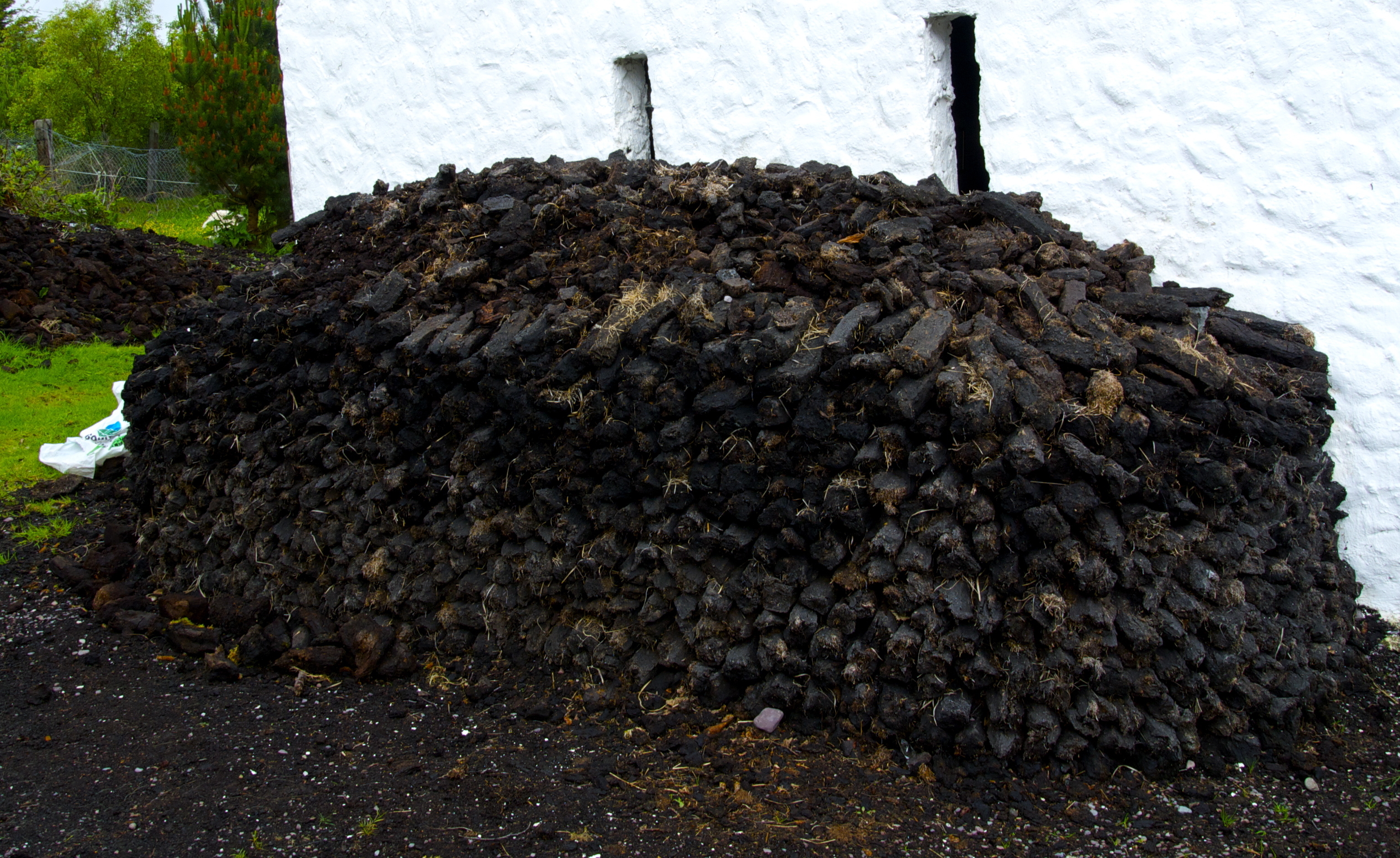
Ireland has more bogs than just about any other country in Europe. Bogs are burial grounds for vegetation. Green things die, rain falls, oxygen chokes, drains plug, decay happens, decomposition doesn’t, and peat forms. Re-peat each century and you have yourself a bog. If you want to preserve a body, bury it in a bog. Of course, it helps if you bury it a few centuries ago. (Read about the amazing preservation properties of bogs and a recent find in an Irish bog at National Geographic online.)


Did turf-cutters get bogged down sometimes by having to repeat the same job all the time?


Close up of peat “bog logs”


But back to the Bog Village Museum in Glenbeigh. It consists of a small village founded by a turf-cutter (peat gatherer), Jeremiah Mulvihill. The six furnished buildings depict life in the early 1800s.


On route to our next stop, the driver gave us the option to stop at a sheep-herding exhibition. “The best five euros you’ll spend in Ireland,” he said. I raised my hand ”yes,” confident that all the others behind me would do the same. After all, each of us paid hundreds if not thousands of euros to travel to Ireland, and this was only five euros. A few pushy ones barked out “no,” and the rest, sheep-like, agreed, so we didn’t stop. I still snarl every time I think about it.


Along the way


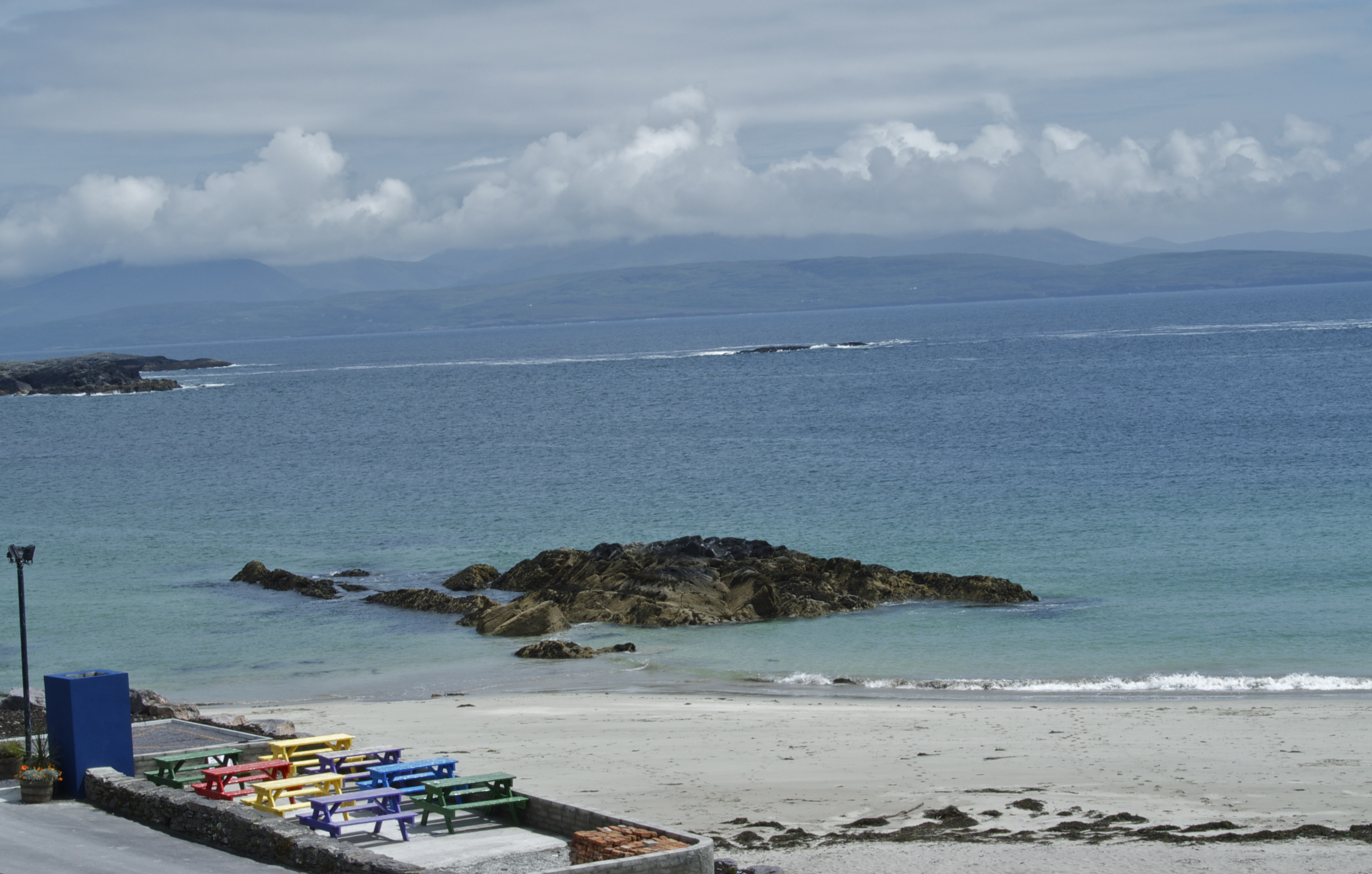
The Atlantic Ocean crashes onto the beaches all along the western coast we traveled, and the MacGillycuddy Reeks (“black stacks” mountains) stand in the middle of the peninsula to watch. Carrantuohill mountain sees the most because it’s the tallest (about 3400 feet) in all of Ireland. I struggled to keep the views from taking away my breath, but lost.

Coastline on the Iveragh Peninsula


We returned to Killarney via Moll’s Gap named for Moll Kissame (a great last name for an Italian: What’s your name? Kiss-a-me), who ran a pub and quenched the thirst of travellers in the early 1800s. She also put the shine in the moon, if you get my drift, with her homemade, unauthorized whiskey. She definitely left a gap when she died. A tourist shop now stands in place of her pub.


Mind the Gap; Moll did.


Ladies View

We stopped once more before returning to Killarney at Ladies View, a scenic spot providing a panoramic view of the Killarney Lakes. Apparently it remained nameless until 1861 when Queen Victoria, then sovereign of all of Ireland, visited the lakes with her ladies-in-waiting.

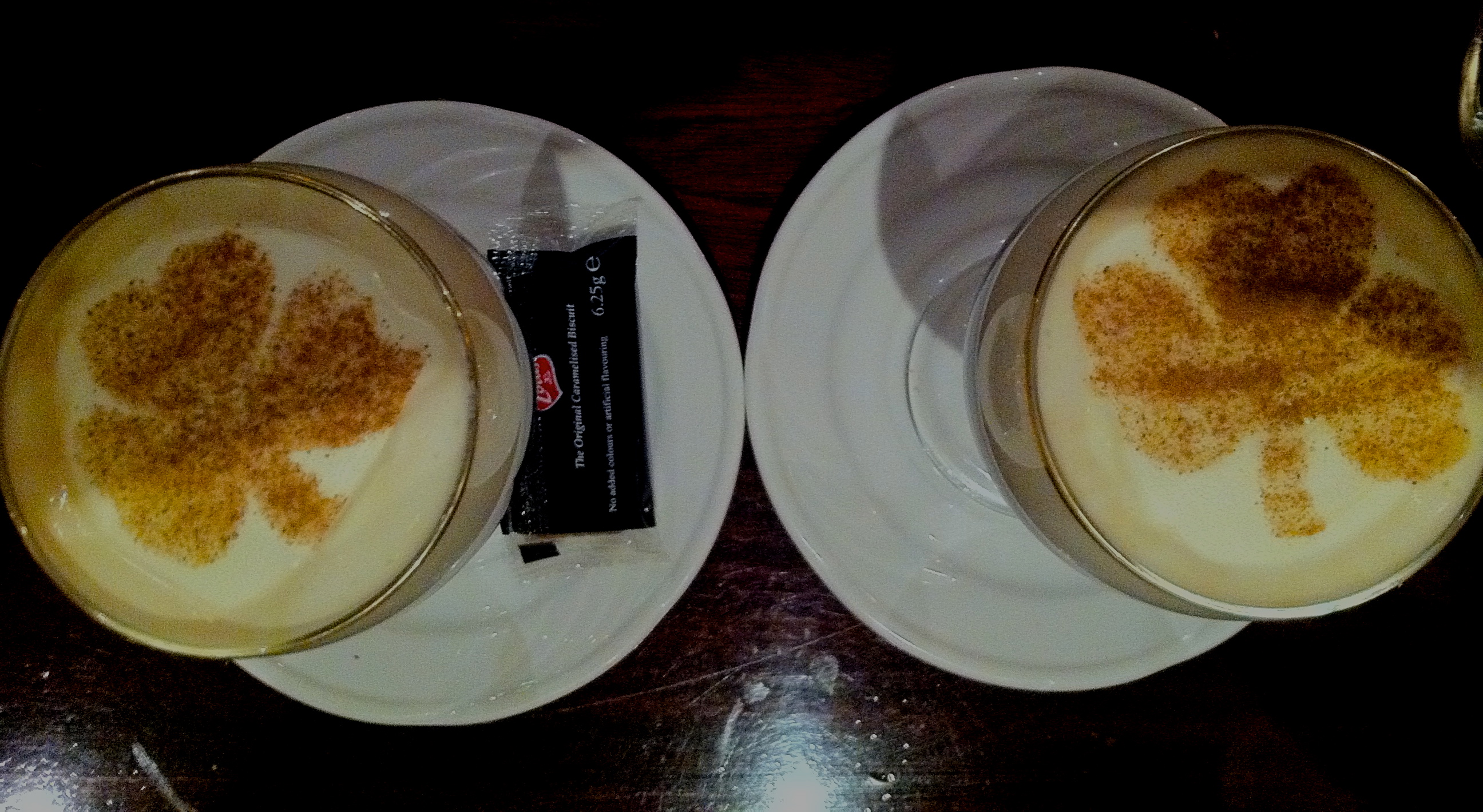
Irish coffee picture courtesy of my iPhone


We didn’t find any four-leaved clover on the tour, but we found shamrocks in some Irish coffee. I drifted off that night under moonshine, wondering if Moll served that kind of coffee to her customers.


This slideshow requires JavaScript.

Next installment: The end is near!