Twee

Standard

Words are like people. Some of them look alike because they come from the same parentage. Both “sanguine” and “sanguinary” are adjectives and were born from sanguis, Latin for blood. So, after learning that a sanguine person is cheerful or optimistic, you might run into the word “sanguinary” while reading a text, look at its ruddy face, and expect it to tell you a joke or recite an inspiring quote. Don’t be surprised if it pulls out a knife and threatens you. The only thing it’s cheerful about is bloodshed and cruelty.


Other words, like the nouns “desert” and “dessert” look so much alike, people can hardly tell the difference. If you look closely, you’ll see that “dessert” looks more curvaceous. It’s that extra “s” in the middle. They’re not related although both words have ancestors who came from the Latin. Other than that, the only similarity is that desert is a waste place, and dessert goes to a waist place.


The other day I ran into “twee” online. It was modifying a noun, music, and speaking in a colloquial accent telling everyone who would listen that the music was sickeningly sweet.  I’ve heard it say things like that before. It also has the remarkable ability to make bird sounds. You may have heard it imitate the wren by saying twee-twee-twee.


1916 cover (Wikipedia)


Twee in its original sense of sweet or dainty first appeared in print in the British magazine, Punch, around 1905. Someone heard a children pronouncing “sweet” as “tweet,” then took the word and dropped the “t.” It was the linguistic form of stealing candy from a baby. Now it disparages music and people by calling them mawkish or overly sentimental.


I like how the word sounds. Twee rhymes with glee and whee, words of enthusiasm and joy. I’ve heard birds chirp it, and I’ve had small children answer “Twee” when I asked their age. Elmer Fudd climbed twees looking for that wascally wabbit, Bugs Bunny. “Be vewy, vewy quiet, I’m hunting wabbits,” he used to say. Twee is a word that fits in your pocket, a small joke of a word, a word with punch.
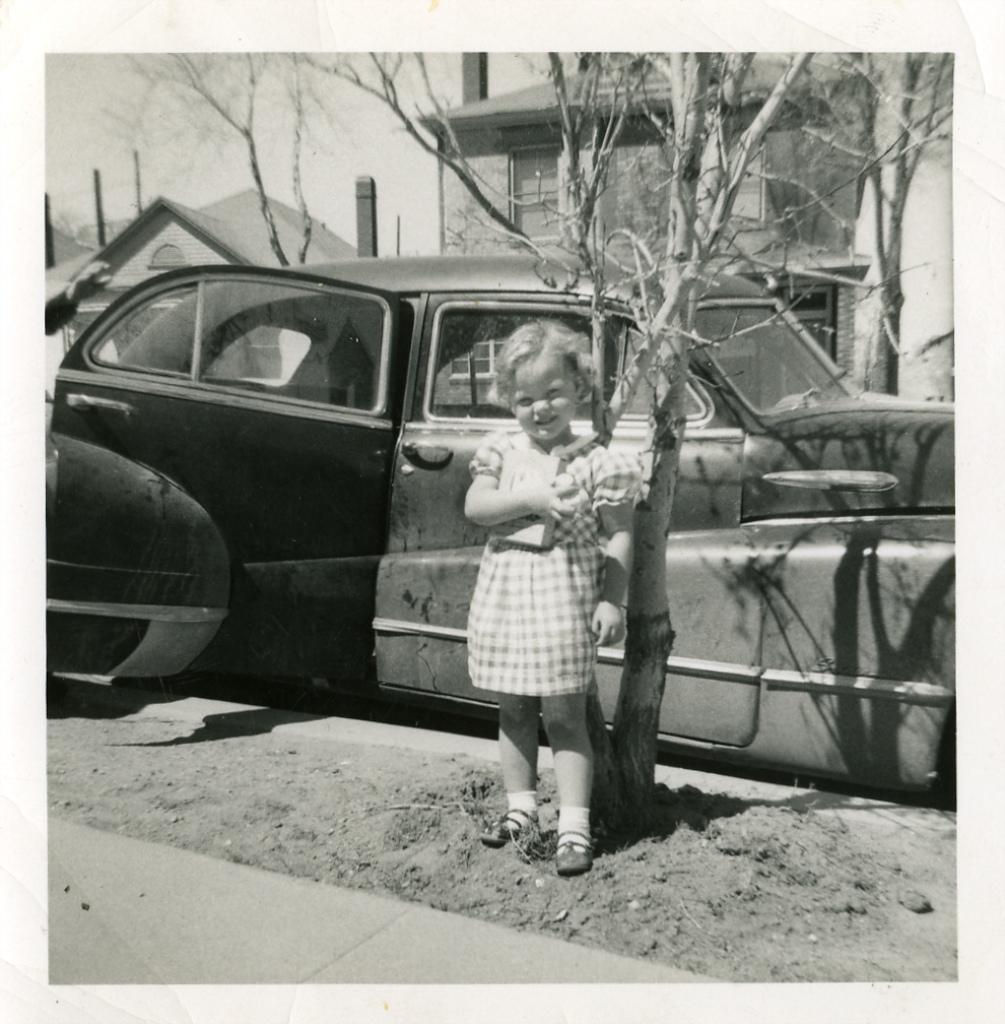
 

When sister was twee, she stood front of a twee. You can almost hear the birds singing, "Twee, twee, twee."


Even though the masters of irony and sophistication have forced twee to make disparaging remarks about other people, I won’t abandon it. That’s just its corrupted twin. Elmer Fudd and I know the real twee, and any word that is a friend of birds, Elmer, and three-year-olds is a friend of mine.


Portrait of Elmer J. Fudd courtesy of Wikipedia.


Green-eyed exiles

Standard

Once upon a time I was the size of a leprechaun and just as mischievous. I went to school with hundreds of children just like myself. On St. Patrick’s Day, you had to wear green or you would have to spend recess running away from little green-clad people intent on pinching you. Any other day of the year, you would be punished for tormenting one another that way, but on St. Patrick’s Day you could do so with abandonment.


My imagination didn’t respond to my inquiry about the source of St. Patrick’s Day pinching, so I had to search online. One source said it began in America in the early 1700s. Irish immigrants would have brought over the idea that green made you invisible to leprechauns, who apparently honored St. Patrick by pinching people. If you drink a few beers, it will start to make sense to you. Since America was under English rule during the early 1700s, I can imagine that the Irish enjoyed pinching their unsuspecting English neighbors.


I usually remembered to wear green on St. Patrick’s Day, but even if I forgot, I felt protected because I had green eyes. That was the only day of the year I was happy about my eye color.


Both of my parents had blue eyes, as did my older sister, K. Besides the fact that for a while I took my eye color as proof that I was adopted, my mother often quoted this little ditty:


Blue-eyed beauty does her mother’s duty,

Green-eyed greedy gut eats the whole world up.

Later I would discover that two of my mother’s secrets were green-eyed: her first two children. Connie, the oldest, was in familial exile, her name not to be mentioned at home. Clyde, her brother, was working on a record, a discography of petty crimes. Since I shared the same eye color as the exile and the criminal, I assumed I would grow up to be like one of them.


I gave up on a life of crime at an early age after my father called the police about my tampering with the U.S. mail. You can read about it here. Since the age of six, I’ve been more or less a law-abiding citizen. But I have been an exile all my life. My family never banished me, but all of my life I have wanted to belong to that blue-eyed world. And all of my life, I have felt outside of it.


So, today, in honor of St. Patrick, the exiles from Ireland, and all who are looking for their one true home, I want to share a music video by Karan Casey and John Doyle called Exiles Return.  I couldn’t find all of the lyrics, but the chorus goes like this:


And though we bid farewell in sorrow

We may meet again in distant lands

And drink our health in joy for parting

When the Exile will return again.


Happy St. Patrick’s Day!

Blogging away from home

Standard

I’m blogging away from home today and have packed up my words and taken them over to Bluebird Blvd. Courtenay invited me to spend the day there to do a guest post. You are welcome to join us. Just click here.


Courtenay keeps all her words at Bluebird Blvd and shares them with whoever stops by. You’ll like her words; some are serious, some are hilarious, some are poetic, and some stay with you all day. And she has photos that make your eyes happy. It’s hard not to stare, but she doesn’t mind. She’s kind that way. She provides music and videos, too. If you want to make like a vinyl record and get your groove on, you’ll have to check out some of her 5-Minute Dance Party videos. Some people get up and dance around the room when they listen to these videos, at least that’s what I heard, but I can’t tell you who told me.


I hope you enjoy your visit to Bluebird Blvd. today. Once you visit, you’ll want to go back everyday. That’s what I do.

More flounce

Standard

Flounces made of words. Dress is duct tape and pages from the telephone book. Source: The Jolis Paons Flounce Dress


Jenny saw snow for the first time a few months ago. She came to Wisconsin from Central America with a dozen other students to enter a two-year program for agricultural development.


The students have had one semester of intensive English; and now, in this second semester, they have a mixture of program classes and English classes. Jenny is in my reading class.


At the beginning of the semester, I asked each student to write personal goals for the class. Be specific, I told them. Don’t just say you want to improve your reading ability; tell me how many books you are going to read each month.


Most of the goals were specific, but a few general ones slipped by. My favorite came from Jenny. “I want more flounce in my English,” she wrote.


Jenny’s first language is Spanish, so when she wrote the word “flounce,” she was pronouncing it as if it were a Spanish word: flow-oon-say. Say that a few times and you’ll see that it is close to how speakers of American English pronounce “fluency.”


A flounce is a sassy ruffle that waves at everyone when it enters the room; it calls attention to the body part it encircles or adorns. A flounce lives to flutter and give fabric a way to flirt. You can live without flounces, but why would you want to?


Adding a flounce requires altering a plain design and sewing on twirls and winks of cloth. The word itself is an alteration of an earlier word “frounce,” which meant “wrinkle.” Word spellings and word meanings are often redesigned to fit the fashion of the day.


I write the way I dress: plain and simple. But sometimes I get dressed up, and then I like a little flounce. And sometimes, I want more flounce in my English. Now and then I like to add words that ruffle around an idea, to braid thoughts together just for show, to stitch in rows of phrases like colorful ribbons that delight the eye, and to hand-sew the  hem of the page, embellishing it with tiny scalloped jokes.


When Jenny turned in her goals, I had to correct “flounce” to “fluency,” but now I think that first goal was a good one. Correct pronunciation and syntax are important, but so is getting more flounce in your English.


Potato sorrows

Standard

I woke up after a troubled dream of Mr. Potato Head chasing me out of Ireland.  This is what comes of writing about potatoes in the morning and reading Frank Delaney’s Ireland at night.


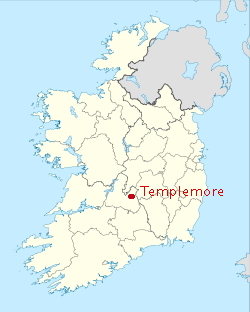
I spoke ill of potatoes yesterday, and now I feel the pangs of contrition. Potatoes helped make me. Not just my thighs, but all of me. My great-grandfather came from Templemore in North Tipperary, Ireland. I have no doubt he was raised on potatoes, the staple crop of Irish peasants.


Ideas are like the strings of a guitar. When you pluck a string, it vibrates and causes nearby objects to vibrate as well, something called forced vibration. When you pluck on an idea, it sends out vibrations to other ideas, and soon you have a whole group of other ideas humming along. When I plucked potatoes, my wart vibrated. Then I looked around the web and the two words vibrated  into Potato Wart, a serious fungal disease that potatoes fear. No wonder they get upset when we humans rub our warts on them. Our warts come from viruses, not fungi, but try telling that to a potato.


The fungus synchytrium endobioticum, which we call Potato Wart, caused the Irish Potato Famine that began in 1845. It led to at least one million deaths and the migration of at least another million Irish. My great-grandfather left Templemore some time after the famine, but his family would have lived through it. In the suitcase he carried across the sea, underneath his dreams of a better life, he would have carried clean but tattered memories of the potato blight, hunger, oppression, and poverty.


So I apologize to potatoes, we share the same history and we both worry about warts. Putting “worry” and “wart” in close proximity sends out another vibration, which makes me think of worrywarts. One day I will pluck that string, but not today.


I woke up with the pangs of contrition, and though we usually associate that with the idea of sorrow over wrongdoing, its first and literal meaning was to rub things against each other: the way my mother rubbed that potato against the palm of my hand. In the most literal sense, that rubbing of the Irish potato against the palm of the somewhat Irish little girl was an act of contrition. Both had roots in Ireland, shared a history of loss, and had a fear of warts. Today, I was reminded of the Irish saying, “Only two things in this world are too serious to be jested on, potatoes and matrimony.” So, in a second act of contrition, I think I need to apologize to the humble tuber.


Since I’m only part Irish, I only need to follow part of the admonition. I will refrain from jesting about potatoes, at least until after St. Patrick’s Day, but after thirtysome years of marriage, there is no way I can refrain from joking about matrimony.


Drawings from: http://adminstaff.vassar.edu/sttaylor/FAMINE

Potato grudges

Standard

When I was young I had a wart on my palm. Mother cut a potato in half, rubbed the wart, put the two halves of the potato back together with toothpicks, and threw it away. If you never see the potato again, she said, your wart will disappear.


I don’t think I’ll ever forget the look in that potato’s eyes as my mother stabbed it with those picks and then casually dropped it in the trash. I imagine it carried its grudge all the way to the city dump. Buried under garbage, it sprouted revenge. After writing its story in pollen, the potato wrapped it in some small white flowers, pushed the little envelops up through the trash, and waited for a passing bumblebee to stop and carry its tale of woe into the world. In this way, I believe it could spread its hard feeling.


My wart disappeared, but for decades now I have looked into the eyes of potatoes wondering if they recognize me, fearing they are related to that spurned spud. I suspect it was Thanksgiving 2010 when it happened. I pulled out a bag of potatoes and placed it on the counter. Then I busied myself at the sink, clearing out a spot so I could peel the potatoes. No one else was in the kitchen, but I had that odd feeling that someone was staring at me. I whirled around: nothing but that bag of potatoes. So I whirled the other way and picked up a small paring knife. Then I whirled back to face the bag. Protruding from the mesh was a small sprout like a pale white finger, pointing at me, accusing me. Dizzy from my whirling, I reached over and broke off the finger. That was my mistake. Now I couldn’t tell which potato was angry with me.


I couldn’t throw all of them out, so I took them out of the bag. Lined up next to the sink in their starched brown jackets, they all looked the same. As I washed them, I tried to appear calm and avert my eyes. Each one stared at me with a blank look that unsettled me because it reminded me of my husband, sitting in the living room on the couch, watching football. Was he part potato? He was getting lumpier with age. My mind reeled as my thoughts whirled; then I reminded myself that I had lived with him wart-free for thirty years; he couldn’t be related to that potato of long ago. That calmed me down. After I peeled the potatoes, I boiled them in hopes of softening them toward me. But I was so worked up by then that I mashed them in a frenzy before the meal.


Soon after that, I got a wart on my palm again. I don’t remember where on my palm the wart was when I was a young girl, but my imagination has been insisting all morning that this wart is in the very same place.


I’ve tried salicylic acid and vinegar-soaked cotton, and considered duct tape. Even though I fear revenge, using a potato appeals to me. My online research has revealed that many people use potatoes for wart removal, so maybe my story about how that childhood potato passed on its grudge is all nonsense. More likely all potatoes carry a grudge. That’s what comes from being so thin-skinned.


Remembering dreams

Standard

My dreams are back, those stories I tell myself at night. I don’t believe the stories ever left, but for most of the last four or five years, I have woken up with no remembrance of my dreams.


For years I wrote down my dreams in the back of my journals. My day-time thoughts began on the first page, my night-time thoughts began on the last page, and each moved toward the other, claiming pages until the book was full.  It seemed fitting that my dreams were hidden in the back, behind my more lucid thoughts.


On Tuesday night I dreamt about a good friend in Japan. I still carry some of the joy of seeing her again, if only in my brief dream. My emotions don’t seem too concerned with the fact that I didn’t actually meet her face to face. It must be like this when a mind is in decline. People are forgotten, the world grows strange, but the emotions are remembered, as familiar in this singular reality as they were in the shared reality of the former life.


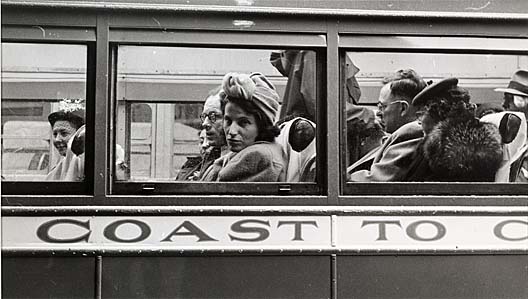
Before the world spun me old, I lived as a young woman. That was decades ago. I remember dreaming that I was old and was riding a bus through an unfamiliar city. I sat next to a window and watched the world go by. When the bus stopped at a light, I saw a good friend standing on the street, still her young self. When our eyes met, we both smiled and, for a long moment, I couldn’t tell who I was or whose dream it was. Was I an old woman dreaming about her as a young woman, or was she a young woman dreaming about me as an old woman? When the bus stopped, the doors opened and I got off in the room of morning light where I lived life.


For the last three nights, I have remembered the stories I told myself in dreams. I stopped journaling three years ago when I lost my words. Writing this blog has helped me find them again. Maybe that’s why my dreams came back.

◊ ◊ ◊ ◊ ◊ ◊ ◊ ◊ ◊ ◊ ◊ ◊ ◊ ◊ ◊ ◊ ◊

Photo courtesy of Smithsonian American Art Museum, Museum purchase made possible by Mrs. Alexander Hamilton Rice and Linda Adair Miller <http://americanart.si.edu/collections/search/artwork/?id=32331&gt;

Thank you for coming

Standard

Every Wednesday evening, Jack and Mary walk into the classroom together. They greet the other students and then sit down at one of the round tables to study. They share a book because textbooks are expensive. When we read about the U.S. Civil War, a student from Somalia tells of her escape from that civil war. She has no hope of union for her country. Two more students speak up; they also fled their homelands because of political turmoil.


Not Jack and Mary. Our country is a good place to live, they tell me. They grew up on an island in Southeast Asia. Jack reads a short story he wrote about the clear ocean water he swam in as a child and the sea cucumbers the villagers gathered from the sea. Mary reads a story about her family’s cows. When she was young, she tended them. She would pick a cow, climb atop it, and spend the afternoon playing her flute or reading a book while the cows fed on sweet grass.


We talk about slavery and freedom. The topic veers when a student from Central America tells us how her government punishes those who speak against it or who dare to protest. Everyone agrees that we should be free to speak our mind, even if we disagree with the government. Mary breaks in and says, We have freedom in my country; it’s a good place.


Both Jack and Mary try to hide their homesickness when they talk about their island home. We came here for our son, they say. Many of the students I teach come to America for their children. They have simple dreams for their sons and daughters: safety, education, and jobs. Jack and Mary are no different. They want their son to get an education and a job, to be a productive member of society. This son, their only child, was born with mental disabilities.


Jack and Mary must be in their mid to late fifties now; Mary bore her son late. Neither one has enough English yet to do anything other than menial jobs. English sounds don’t fit well in Jack’s mouth, so he tries to reshape them into the familiar sounds of his childhood. When he asks me what Emancipation Proclamation means, it takes a minute before I understand what he is saying.


After class last week we talked about the opportunities available for their son. I mentioned the local packaging company that trains and hires people with disabilities. That’s what we want for our son, Jack said. Mary nodded. Our son wants to work, she said. They see his limitations, but they also see his possibilities. All three of them want to contribute, to be part of their new homeland.


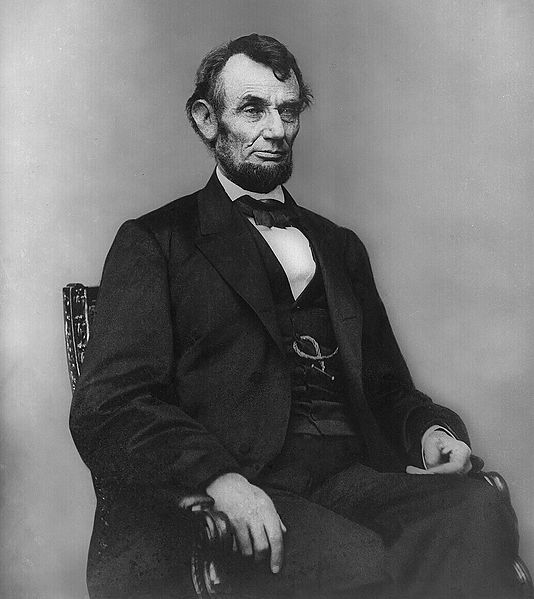
Jack and Mary have another two years before they are eligible to apply for citizenship, but they want to be ready, so they come each week to the citizenship class. We talk about Abraham Lincoln, the 16th president, and practice saying ‘Emancipation Proclamation.”


Last night we talked about more recent history: the Great Depression, the two World Wars, and Martin Luther King, Jr. Mary takes careful notes and asks a lot of questions. She wants to get it right. Jack and Mary listen carefully to the mottled stories of victory, failure, glory, shame, courage, and hope that we call U.S. history, and that they are learning to call, our history.


The citizenship class ends at 8 p.m. My day started with a class at 8:30 a.m., so I’m tired. Jack and Mary are the last to leave. They thank me for the class, and I thank them for coming. I mean it both ways: coming to class and coming to America. I don’t explain it; I just smile and say goodnight. I watch them walk down the hall, heads together, talking, just the way you would expect old lovers to do. I imagine them talking of all the possibilities.


Beware of acronyms

Standard


Someday I plan to tell a story of loss, accusation, denial, and the TSA, but not yet. I have been warned by my paranoia to be careful here. I hesitate to spell out TSA as Transportation Security Administration because, for all I know, they flag every mention of their name on the Internet. (Hi, Mr. TSA! You are doing a great job. No need to read further.)


Unfortunately, the acronym mentioned above already has my name and address because I made a formal complaint about an incident in New Orleans. I’m sure that had no connection to being singled out on my last trip through Chicago and made to stand in one of those see-through booths waiting for an agent who never came. I was not far from the conveyor belt where my purse and valuables waited for me, but half of the time my view was blocked by other passengers grabbing things from trays and walking away. I got a good ten-minute workout, bending right and left, standing on tiptoes, straining my neck to peer around people and moving from one corner of my glass booth to the other to make sure the passengers weren’t walking away with my things. Finally an agent walked over to me and said I could go. Maybe being forced to stay in a glass cage is their equivalent of time-out for whiners.


(Note to reader: Sometimes I am stupider than I look. I plan to travel this summer, but now I wonder if I will make it back home. If not, I have really enjoyed getting to know you.)


But that is not what I want to write about today.


Apparently the DHHS, the Department of Health and Human Services, resents the power of the TSA to open your luggage and remove items deemed unsafe or possibly too valuable for you. (You don’t really need that iPad.) The department’s Division of Childhood Development and Early Education, DCDEE, mandates all pre-kindergarten programs serve food that meets guidelines determined by the United States Department of Agriculture, USDA. And now, they have the power to open your child’s lunchbox or breakfast box and decide what is safe for the child to eat.

This concerns me for two reasons. First, if you put all those acronyms together, you come up with DHHSDCDEEUSDA. That hardly trips off the tongue the way TSA (Takes Stuff Away) does. It is ugly, gross, and hideous, or what I like to call UGH. Second, the USDA considers chicken nuggets and batter-coated French fries with ketchup healthy food. These are the foods our children receive at day-care centers and schools because we must take into consideration their taste preferences. Never mind offering good food to children and allowing them to develop a taste for fresh food. Give them what they want: processed food with lots of fat and sugar. And if you must serve vegetables, drown them in cheese sauce, mix them in a casserole using canned soup full of excess sodium and additives, or serve huge dollops of dressing to dip those carrot sticks in.


Can you tell this is a rant?


Last week, my daughter received a note from my grandchild’s day-care warning parents not to send any breakfast food such as donuts or pop-tarts. Only healthy breakfast foods are allowed. The following day, my daughter joined her child for lunch. You can imagine her delight at what was served: hotdogs in white buns, oven-baked French fries, canned tangerines, and lots and lots of ketchup. Nutritious, no?  Everything a growing child needs, assuming you consider any of that healthy food and you consider ketchup a vegetable.


Now, excuse me while I bite down very hard on a carrot.


When trees come back

Standard


Trees believe in reincarnation. After they die, they lumber back into our lives as boards, books, and toothpicks.


Trees spend their lives holding out their hands to birds, calling them to perch or rest. In their second lives, trees come back as chairs, inviting us to sit down, offering an arm to grip, attending to our conversations without remark, and sharing in our silences. At night, we nest in tree-made beds, hatching dreams like eggs.


In their first lives, trees provide banquets for the birds: beetles, ants, and caterpillars. When they return as tables, we flock to them and find the food and wine that fill the house with love and laughter. And we keep their perfect splinters in a jar to pick our teeth.


Some trees become the bones of houses, use their strength to keep the roof over the heads of all who have forgotten them. Others are the doors of daily life, sliding, slamming, creaking, opening, shutting us in and out. They make a place of quiet for one and provide the lock that opens love for two. So many secrets hinge on them.


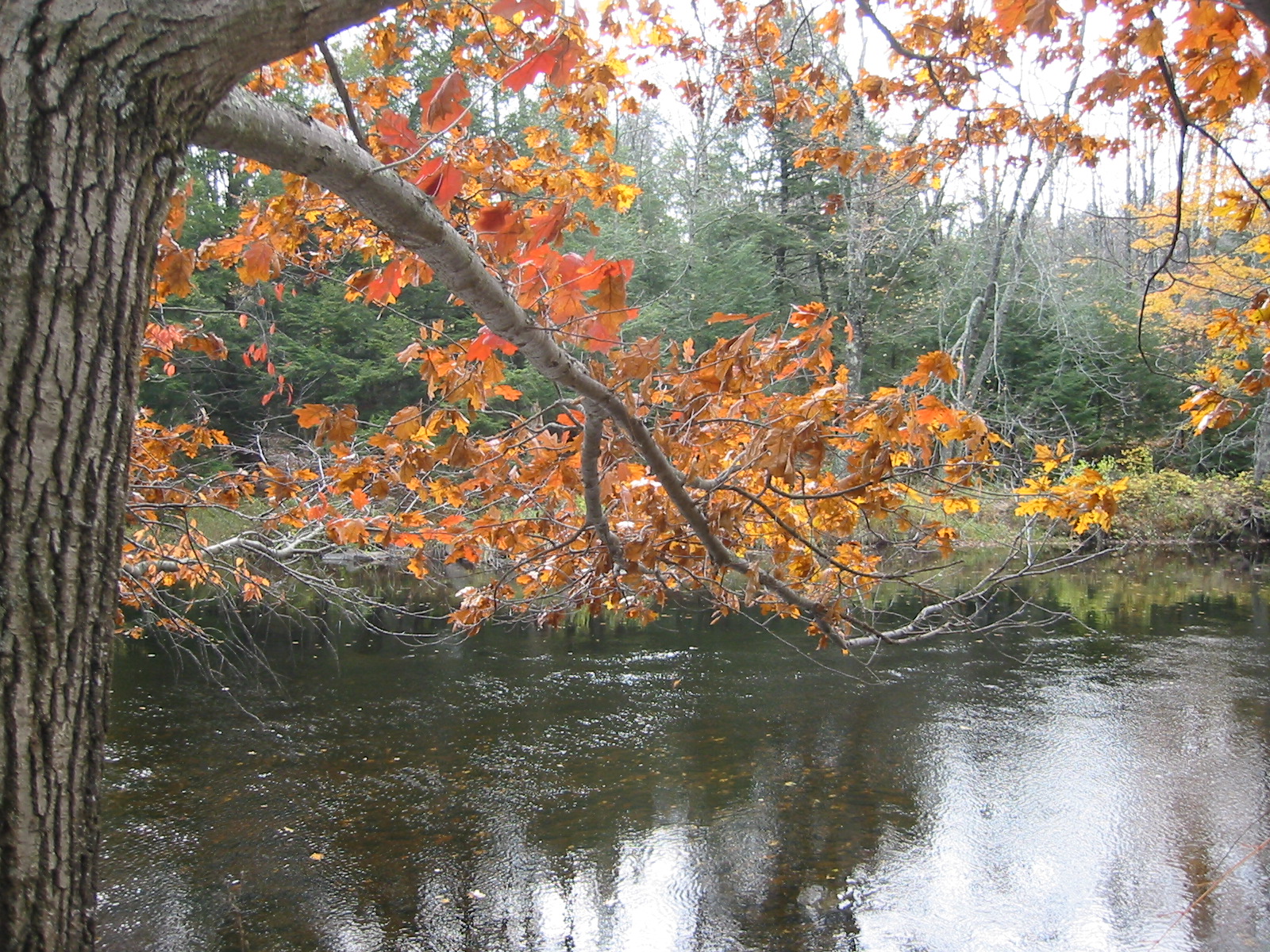
Trees write the world’s story on their leaves. In fall they send the pages down, though few will stoop to read them. They tell the tale every year as if it were the first time. Coming back as books, they do the same, waiting on the shelves, leaves and leaves of stories falling into minds who stop to read them. And every telling new.

Trees who spend their lives trying to catch clouds come back as poles to hold the wires words squeeze through. A hundred years ago or more, people spoke with patterned sound, tapping news of wars, births, deaths, and regrets, like birds tapping on the bark of trees.


When taps and codes were not enough and people phoned their voices, the wires sang and hummed with promises and lies, rang with jokes, the murmured shame, or disconnected lovers; a goodbye click, the end of every story.


These unleaved trees with straightened arms, stand without a whisper, yet call out to the birds, who return, like acrobats with wings, to balance on their wires. In that other life, when poles were trees, they learned the art of listening from crows complaining of the rain and winds whispering of angry clouds to come.


Fewer voices travel on the wires now, but these poled trees do not complain. They shoulder power to brightens our lives as they once carried the luster of sun on their shimmering leaves.


When trees return a second time, they hold us, shelter us, offer us a place to lay our heads, bear the words that tell our stories, give us room to live, shut out the world of noise, and listen, always listen. When trees come back, they yield to our sharpness and our desire to measure and control. In the quiet, when we leave the room, they dream of rain, wind, and bird song; each tear falling softly as a feather on snow, lost by a winter bird in flight.