One order of ordinary, hold the extra

Standard

I like a perfectly shaped tree all dressed up for Christmas, wrapped in lights and spangles, gold star atop its head, pretending to be indifferent to all of the gifts strewn at its feet. A tree like that gets my attention; it probably gets your attention, too. When you’re the only tree in the room, you shine in an extraordinary way.


I like Christmas trees; I even admire them. But the trees I love don’t stand around in people’s living rooms doing their best to call attention to themselves. The trees I love live in groves and glades and forests. You can hardly tell one from another. They are ordinary trees, living and dying where they were planted but so full of beauty that if you took the time to learn the history of what they have seen and known and endured, your heart would break with either joy or sorrow, or more likely, both.


Ordinary trees sparkle sunlight across our paths; spend their lives scattering their strength to raise up new generations of trees; nurture winged delight; throw out shadows like carpets, inviting us to stop and rest awhile; whisper truth to those with ears to hear; take our breath away and then give it back. They do this every day, whether anyone notices or not.



Popular American culture values the extraordinary, at least that’s the message I hear. Ordinary is not good enough. You must be smarter, more beautiful, or more athletic than everyone else. You must write better, or be funnier, or take better pictures than other people. If you don’t, you won’t stand out, you won’t be somebody, people won’t know your name or be able to pick you out from a crowd. You will have to wander through life without the only prefix that matters, “extra.” Maybe because extra is rare, everybody wants it. People feel compelled to express their superiority, to trumpet their accomplishments, and to tell people over and over how extraordinary they are, thinking that by saying it often enough, the prefix will magically attach to their ordinary selves.


I appreciate and admire extraordinary people. I listen to their music, enjoy their art, read their books and poems, and enjoy the benefits of their research and inventions. I’ve even known a few I would call extraordinary, but maybe because I am an ordinary person, I like ordinary people best. If I were a tree, no one would choose me to be the centerpiece in a room of celebration. I look like a thousand other trees and even if you walked by me everyday, I doubt you would remember me or be able to pick me out. I am the small, asymmetric tree with the missing branches, standing over there in the northeast corner of the grove.


Twice in the last month, I have touched on this issue with two people who blog. A while back, I  nominated ShimonZ of thehumanpicture for an award. He thanked me but asked to be excused from posting the award on his blog. With his permission, I am including some of what he wrote in response:


Thank you very much for nominating me…I have been nominated for a few awards, and I have tried as best I could to extricate myself without offending those who wished to be nice to me. I don’t want any prizes. I come from a different culture, in which people don’t walk around with medals on their chest, and it is usually an embarrassment to one of us, to get a prize or an award. For me, it is my reward that you read my blog from time to time, and respond here and there.


I like those words. Behind that simplicity, I believe there is a willingness to embrace being ordinary.


Then on the blog The Heartbreak of Invention, I read patricamj’s essay “Why Psychotherapy Doesn’t Work for You” and when I commented I said I thought she must be a good therapist because she seems like an ordinary person. As soon as I wrote that, I realized I needed to qualify it, so I added that I meant it as high praise. I did and I still do.


The world is full of ordinary things and ordinary people, and I am one of them. I read books and stories by famous writers who knock my socks off.  Some of them are extraordinary people. But I am also left sockless by some of the ordinary people who write blogs: people like ShimonZ and patriciamj. They scatter patterns of light that brighten my day; offer shade if I need some rest; delight me with words that soar and sing; blind me with beauty, then teach me to see; whisper truth; take my breath away, and then give it back with laughter. And they do it every day, whether anyone notices or not.


That’s what ordinary people do.

The memory collector

Standard

My small self

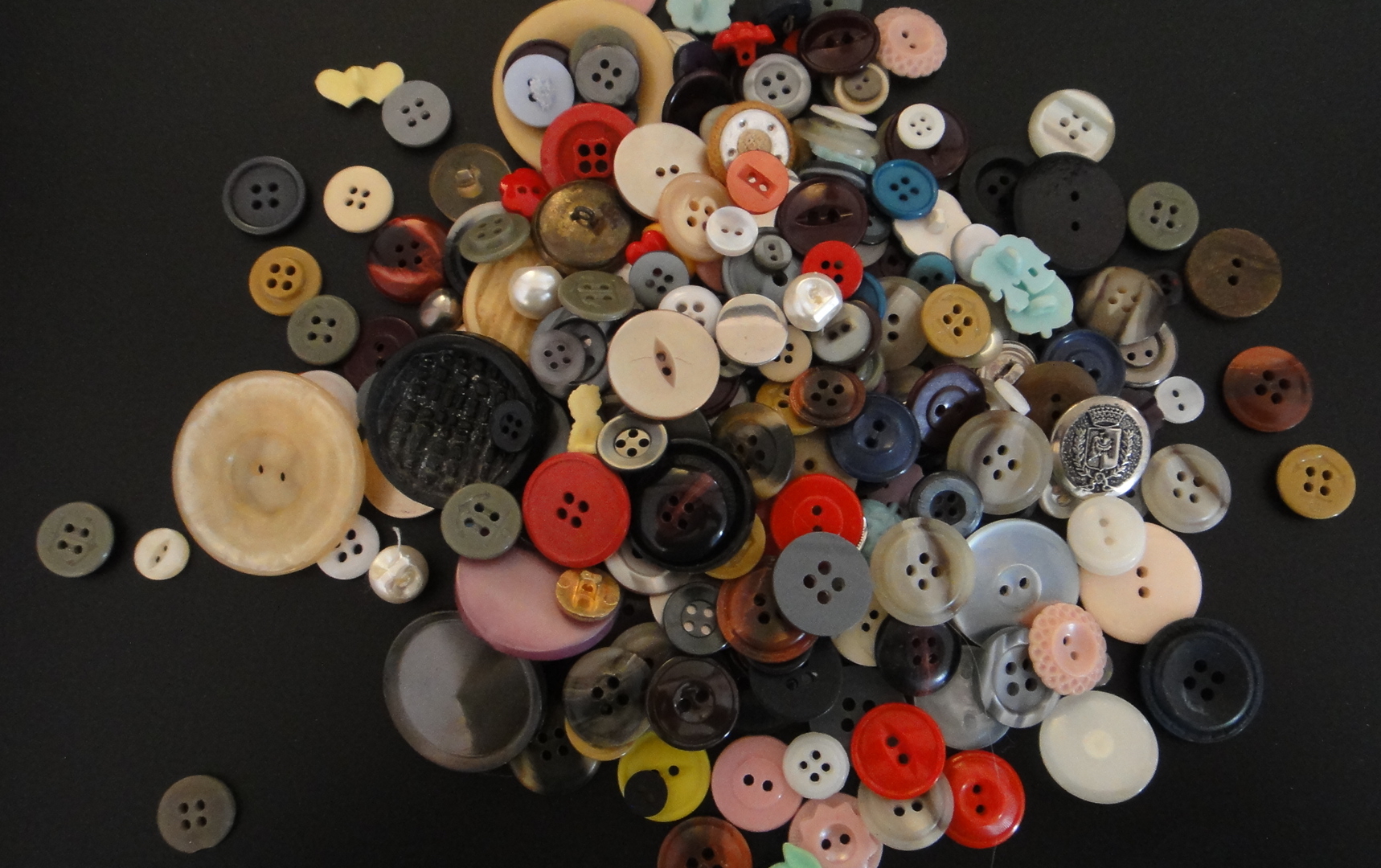
When I was small, I collected things I found: shiny objects, buttons, leaves, and feathers, especially feathers. I often dreamt I could fly and feathers seemed like a promise of that dream. Finding something of beauty felt like an accomplishment. My reward for paying attention. Somewhere on the road to adolescence, I lost every one of those treasures.


In my teens, I kept a drawer filled with notes, jewelry, stray buttons, foreign coins passed on from relatives, ticket stubs, a lock with a forgotten combination, and pictures of my friends and the boy I loved my freshman and sophomore year. One scrap of paper I saved until I was in my mid-twenties. The library in my high school sent out notes to students who had delinquent books. The notes were short and to the point; they had the student’s name on one line and the name of the book on another line, nothing else. I don’t remember if I was assigned to read Dostoevsky’s Crime and Punishment or if I chose it on my own, but I loved it and wanted to read more of his work. I kept that second book too long because one day in class the teacher handed me a note from the library. All that was written on it was my name and below that, The Idiot. I kept the note for years, my private joke with the universe.


I think objects might want to be found. Maybe a button works for months to untie the strings that bind it to a shirt, and when it leaps out into the unknown, it is looking for adventure. I want to see more of the world, it says; I’ve been manhandled enough, put in my place for too long. Imagine the pleasure it feels when a child or an adult picks it up, admires it, and carries it home as a treasure. At least, that’s how I would feel if I were a button.


My crown

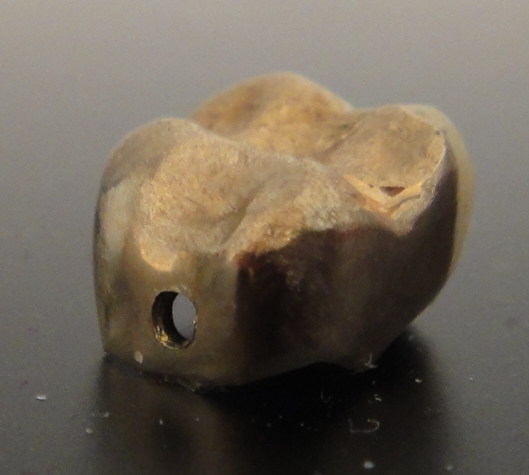
I still have a box of small findings and remembrances, including a gold crown that was fitted for one of my molars but never put on. I could tell a great story about that, but unfortunately, I don’t remember much about it. My mother wore it on her charm bracelet for years and it has come back to me. Last summer I bought a wooden art box for my grandchild and filled it with some of the things I cannot throw away.


Over the years I have tried collecting things of value, but I can’t sustain my interest. In Japan, I started a collection of the holders used to rest chopsticks on, called “hashioki,” but I grew tired trying to find a place to display them and gave most of them away. I use two of them for brush rests when I do Japanese calligraphy.


For a long time, I collected dreams, and for safekeeping, I put them in my heart. When I was alone, I would take them out, whisper promises I thought I could keep, believing that some day every one of them would grow wings and fly. I never thought I could lose them, but I did. And now I know why: my heart is a pocket full of holes.


When mother knew love


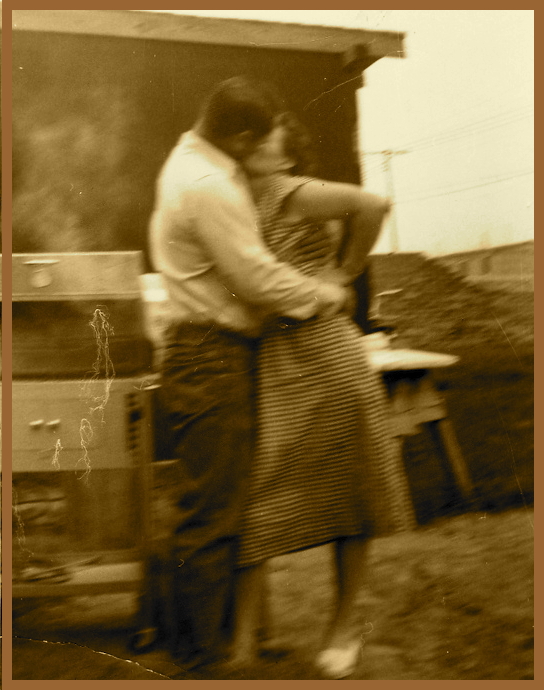
Memories are the only thing I am interested in collecting now. These stories, like the flightless feathers I loved as child, or like the fallen petals that when crushed still give off the faint aroma of the rose, or like the empty shell left by a cicada who grew away from her old self but left a part behind for me to hold and remember, these stories are the only treasures I have.

Warning: someone may be monkeying with you

Standard

A while back I wrote about a quotation on my post-post-publication page by Truman Capote, “That’s not writing at all, that’s typing.” He said that about Jack Kerouac’s book On the Road, and he meant it as a slur.

Apparently this quote has appeared on other blogger’s pages as well, one of many randomly generated quotations about writing. So, it wasn’t meant personally.

However, no slight, real or imagined, is too small for me to take notice of, worry about, mope about, or whine about. It’s what I do.

And then, I had an epiphany, which sounds like a medical procedure, but isn’t. (I’ll tell you, Gertie, I don’t know why I waited so long to have that epiphany. I can see so much better now. It didn’t hurt a bit.)

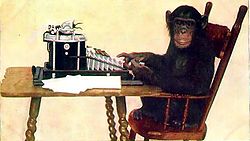
Yearstricken hitting random keys for her blog (picture courtesy of Wikipedia)

Without knowing it, Capote was rephrasing the Infinite Monkey Theorem, which states that “a monkey hitting keys at random on a typewriter keyboard for an infinite amount of time will almost surely type a given text, such as the complete works of William Shakespeare.”

When I read that, I suddenly knew what light through yonder window breaks. And it isn’t Juliet, Romeo. It is the light from the computer screen of the Infinite Monkey. Let me break it down for you:

  • I hit keys at random on my computer every day.
  • I spend an infinite amount of time hitting those keys.
  • I like bananas.

Forsooth, I may have to change the name of my blog to Infinite Monkey. And you might, too, although it would be confusing if we all used that name. My point is that there are probably millions of us hitting random keys all day long.

According to my imagination, it’s highly probable that WordPress is run by a bunch of scientists who are testing out the Infinite Monkey Theorem. It’s not for nothing that your year-end statistics were brought to you by monkeys, right?

After you get over your alarm, I hope this encourages you. The next time someone reads some of your stuff and says, “Well, it ain’t Shakespeare,” you can answer, “Not yet, friend, not yet, but one of these days.”

The tall dark stranger

Standard

Elmer (mother’s father), Ketz (her first husband), Clyde (her first son)

Mother was a monogamist four times. At least, I think she was. Pregnant at 15, she had her first child at 16. Before she gave birth to Connie, her first little green-eyed girl, she married the child’s father. Ketz was older than her and had charmed her with his good looks. It’s unclear if he was really her husband. Another wife lived somewhere in his past, and he may or may not have been legally divorced from her. Two years later, mother’s second child, Clyde, was born; a green-eyed boy with curly hair, who looked like his daddy.

Whether the first marriage was monogamy or bigamy, it didn’t last long. Ketz never wanted to put his hard-earned money into the hands of landlords and utility companies; he preferred investing in gambling and other women. Mother had nothing to give the bill collectors, so she left Ketz and moved back in with her mother.

Connie, the oldest girl, and Clyde, the oldest son

One year after  Clyde was born, Germany invaded Poland and World War II officially started. That year, 1939, President Roosevelt proclaimed U.S. neutrality, but just in case, he also asked for a $1.3 million defense budget.

The build up of the armed forces, along with increased federal spending, helped pull the U.S. out of the Great Depression, but unemployment was still high in the area of Pennsylvania mother lived in. So, she left the two children with her mother and went to New York to find work. Finally free from feeding, diapering, and caring for two small children, she went wild, dancing and drinking every night, and waking up on one particular morning with a tattoo of her name on her shoulder.

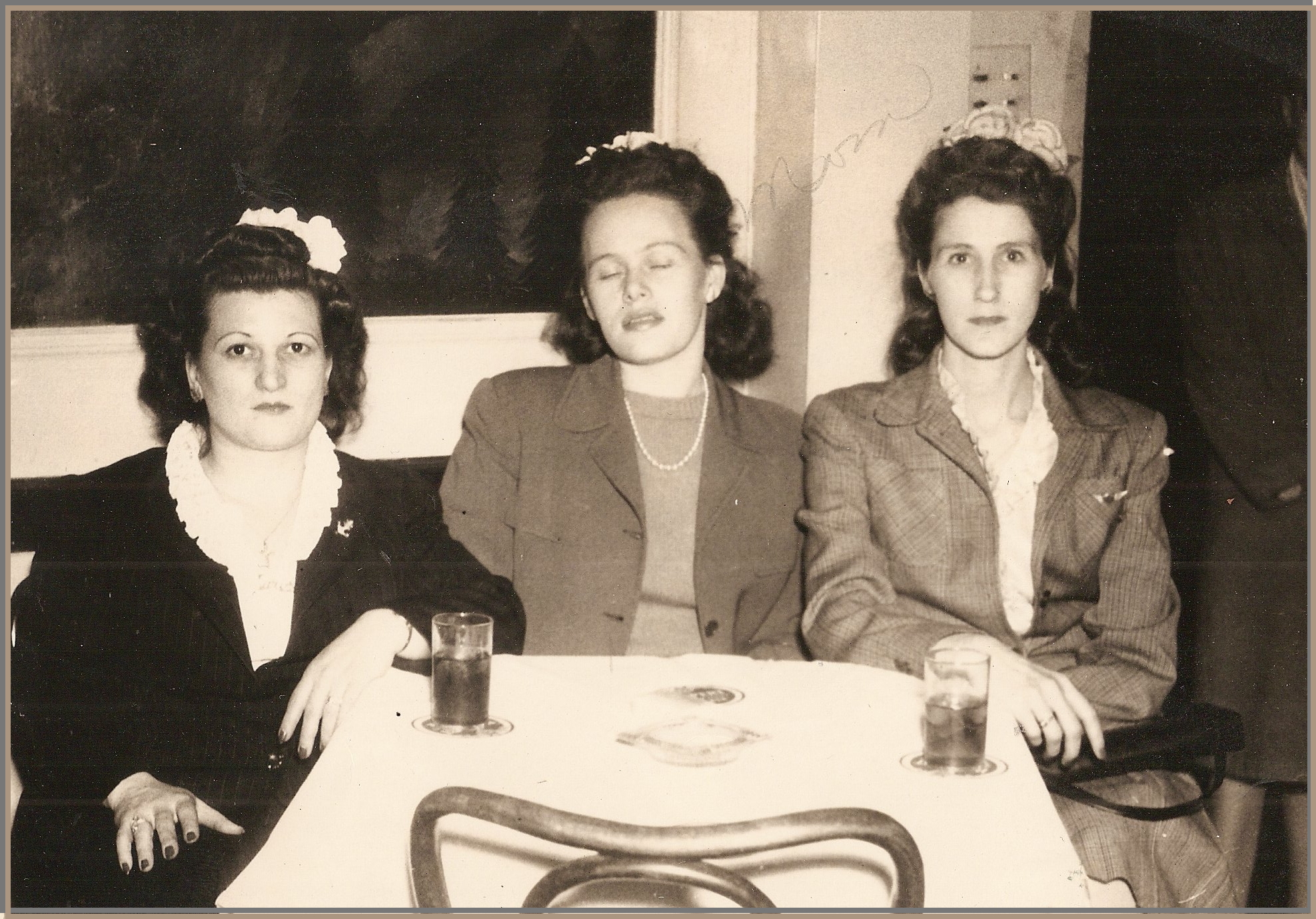
Mother (in the middle) at a nightclub in New York

One of the nights she went out drinking and dancing, she met Grady, a handsome officer in the Merchant Marines. They did more than just drink and dance together, and she got pregnant with her third child. Right about that time, Japan dropped its bombs on Pearl Harbor and the U.S. officially declared war. Grady shipped out, telling mother he didn’t know when he would be back. Late in her pregnancy when she could no longer work, her friends took her in. Her father, Elmer, died right after she gave birth to James, so she returned once more to her mother’s house, with another baby.

Jobs were hard to find in Barnesboro, so she left the three children with her mother and went to Chester to find a waitressing job. World War II brought manufacturing and ship building jobs to Chester, which sits on the Delaware River across from southwestern New Jersey. Once she found a job and got an apartment, her mother and the three children joined her. Not long after that, Grady showed up again and they decided to get married.

Mother’s darkest days were just ahead of her, but of course, she didn’t know that. You never do. The future, a tall dark stranger with good looks and an easy laugh, holds out his hand and you take it. In some stories he carries you off into the sunset and you live happily ever after. In other stories, he takes you home, beats the life out of you, and then leaves you out on the street with five children. And that’s exactly what mother’s future did.

Crossing the frontier of childhood

Standard

Our nearest neighbor, The Golden Gate Bridge

The party started at Shakey’s. All of the other girls had already passed over the border from twelve to thirteen; we were celebrating my crossing. The twelfth year had been all uphill; my childhood treasures abandoned one by one as I slogged upward. The changes in my body made the climb harder, but I believed that if I reached the marker “Thirteen,” I would arrive in a place closer to freedom, a place closer to where dreams lived.


After the birthday pizza party, the girls came to my house for a slumber party. We lived in military housing on Fort Baker, a small Army base sitting across from San Francisco in Marin County. Our nearest neighbor, the Golden Gate Bridge, bore the scrawl of our names on its pillars. My stepfather, an Army Captain, defended us from the communists by working in the Nike missile program. We lived in one of the large duplexes up on the hill above the parade grounds.


Mother met Ralph within months of my daddy’s death. My father may have been the love of her life, but he was gone, and she needed a man. Her need, so much more than a want, compelled her to go in search of someone to marry her and take care of her. She searched in all the wrong places, but she found her man.

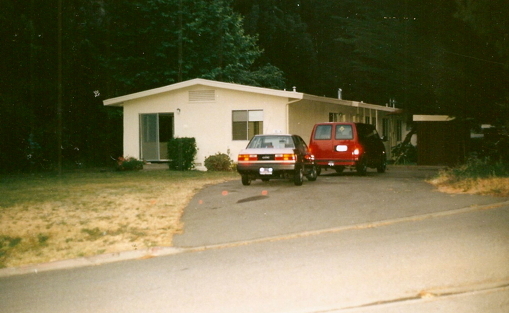
Our house on Fort Baker (photo taken over 20 years later)

Mother met Ralph at a bar; he was seven years younger and a first lieutenant in the Army. She was out dancing and drinking, doing her best to stop being a widow. She succeeded; less than six months after they met, they married. At that time we lived in El Paso, and Ralph was stationed at Fort Bliss.


After they got married, the dancing stopped, but not the drinking. Mother had married an alcoholic before, so you would think that she could recognize the signs. She didn’t, or maybe she didn’t care. She had someone to share her bed and her expenses; she wasn’t alone anymore.


The night of my thirteenth birthday party, Ralph went to Happy Hour. He always stayed longer than an hour, and it never made him happy. He came home late, while my friends and I were in my bedroom, laughing, whispering about boys, and eating snacks.


Ralph never liked my sister and me, and the older we got, the less he liked us. Particularly me. He talked ugly when he was drunk, so I was used to being called a bitch and a little whore, but I never thought he’d call my friends that. He did. Then he told them to get out of his house. Now.


I can’t remember much of the chaos that followed. I think my mom took the girls home. One or two lived in Sausalito; two of them lived in Marin City. I do remember that Ralph passed out in the bedroom he shared with my mother.


Sometime after midnight, my mom packed suitcases for all of us. Then we got in the car to drive to Texas to my oldest sister’s home. Mother took all the cash in the house, including a piggy bank made from an empty soap container that belonged to my three-year-old brother. Afraid that Ralph might hear the car engine, she put it in gear and let it roll down the driveway before starting it.


My sister welcomed the four of us into her small three-bedroom house, already full with the five of them.  Ralph sobered up and pled with mother over the phone until she agreed to go back. It will never happen again, he promised. Whatever he felt for mother or for us never looked like love to me, but maybe it was. Or maybe he needed a wife and a family to get promoted. He had his reasons, and she believed him or pretended to. I told her I wouldn’t go. My oldest sister invited me to stay; she understood why I couldn’t go back. She had lived the same story; in fact, all of mother’s children did or would. My daddy had been her stepfather, and he had never liked her; so she ran away at 17, got married, and had her first baby when I was two years old.


I spent a year away from home and loved living with my sister, her husband, and three children. I never noticed the cracks in the foundation of her home, but that year the walls still stood and they sheltered me. Within a couple of years, the walls crumbled; my sister fled, abandoning her children.


During that year, I had time to heal some of the wounds and forget some of the ugliness. In the middle of my freshman year at Irvin High School in El Paso, Ralph got orders for Alaska. My mom wanted me to come with them, and I agreed.


They came from California to Texas to get me, and in January of 1965, we drove up the ALCAN Highway to Fort Wainwright in Fairbanks, Alaska. It looked like a new beginning, a new chapter in our lives, but it wasn’t. That first chapter wasn’t over yet.


It’s a simple story, with more pain than some, but less than others. Standing on the peak of thirteen, my childhood looked to be a million miles away, the pathway back, long forgotten. On that first summit of my teenaged years, I thought I would be able to see the world, or least find a clearly marked path that would lead me to my dreams. I didn’t know what they were yet, but was sure I would recognize them once I saw them. No one told me it would be so hard. I had two choices: keep climbing or go through the dark valley. I chose the dark valley.


Bad neighbors

Standard

Don't worry about me and my broken heart

On WordPress, all bloggers are equal, but some are more equal than others. WP shows its monkey love to the ones that are more equal like susanwritesprecise and kiwsparks. They get emails and videos (with fireworks!) about the stats on their blogs.


For those who are mere typists like me, nothing. That’s okay, really; I’m used to it. Don’t worry about me and my broken heart. I’ll just sit here and share my bananas with my insecurities. (Did you hear that monkeys? I have bananas.)


I don’t remember when my insecurities moved into my childhood neighborhood; it seems like they always lived next door. They beat me up a lot when I was younger, so I learned to avoid walking in front of their house on the way to school. When you’re bullied, you learn to take shortcuts and leave your dreams at home. You avoid your friends because you hate getting beat up in front of them or having your dreams fished out of your pockets and ridiculed. Friends can cheer you on, but they can’t fight for you: you have to fight for yourself.


Although I have moved numerous times in my life, my insecurities always find me and manage to buy the house next door. I’ve learned to ignore them most of the time and pretend I don’t hear what they say. People in my life have loved and supported me, so  I’ve lived a good life.But I have kept most of my dreams hidden away. You probably know that one of those dreams is about writing.


Walking around with your heart or dream on your sleeve is risky business. Since I started blogging, my insecurities have noticed. Last month, they  joined the YMCA and have taken up weightlifting. A couple of them even got skull and crossbones tattoos. You would not want to meet them in a dark alley.


They read my blog, and when I see them on the street, they make snide comments about the things I write. I confess that I have a couple of rogue fingers that seem to have no connection to my brain. I type things on my blog or in the comment boxes of unsuspecting bloggers and then press enter, publish, or reply, sometimes without really proofreading. On my own blog, I can edit, but once I post a comment on someone else’s blog, it’s like toothpaste – once you squeeze it out, you can’t get it back in the tube.


I have at least two and half things to say about this. One, if I got toothpaste on your blog, I’m sorry. Two, I plan to continue typing until it turns into writing. And last, I am only half kidding about my insecurities.


I don’t know who your neighbors are, but I imagine there’s someone on your block that makes your life difficult. Keep writing, or typing, or taking photos; keep sharing your dreams. Just a couple of houses down, some of your neighbors are sitting on the front porch waiting to welcome you in.


Happy New Year!

Sunday morning storytime

Standard

Michaela is the girl I would have been if I had been born in a fictional family. We are a lot alike. The main difference is that I have real memories and real pictures of my childhood. She doesn’t. All she has are stories. Linda Sue, who is smart and pretty, is her sister. Here is one of Michaela’s stories that she asked me to write down.

I’ve always been the early bird of the family. One of the chief advantages of that is being able to eat my cereal in peace and put just as much sugar on top of it as I please. Linda Sue, on the other hand, always sleeps in if she can.

In Sunday School, they taught us that a woman’s hair is her crowning glory. Apparently there were no crowns left when it came my turn; all I got was straight, brown hair. Linda Sue got the crown — long, wavy blond hair like the angels have. To keep it from getting tangled and matted while she slept, she always braided it before going to bed.

The first time I cut her hair for her was early on a Saturday morning. Although I didn’t know it at the time, I couldn’t have picked a better day. Mother had to spend most of the day helping grandma pack up boxes because she was going to move into an apartment. She left before Linda Sue woke up and didn’t get home until after supper. My stepdad, Mr. Frank, never paid much attention to either one of us. All he cared about was my bratty little brother, who is his son.

I don’t know where I got the idea to cut her hair. I surprise myself sometimes with my ideas. When I crept into the bedroom, Linda Sue was sleeping with her mouth open as if she were surprised too. Each of her braids had a good inch and a half of hair below the rubber bands, so I held each one gently, cut off the bottom part, and put about an inch of her glory in my pocket. Doing both braids only took a few minutes; the hardest part was trying not to laugh. Mother was gone and everyone else was still asleep, so I ate breakfast alone. After adding extra sugar on my cereal for good luck, I finished up by drinking the milk out of the bowl. Then I went to the empty lot on the block behind our house and threw the hair out for the birds to use in building nests for their baby birds.  That was something that Linda Sue had read in a book, and for about a week, she would take the hair out of her hairbrush and throw it outside on the lawn, like a princess throwing her gold to the peasants.

On Saturdays, Linda Sue didn’t usually undo her braids until evening when we took our baths. When Mother got home, she ran the bath water for us, but we bathed ourselves. Back then, Mother washed my hair, but Linda Sue did her own. Mother never noticed anything until she started combing out my sister’s wet hair.

Two years ago, Linda Sue cut her bangs by herself and did a terrible job.  Mother told her to never, ever touch her own hair again with a pair of scissors, or else. In the midst of combing Linda Sue’s hair, Mother stopped and said, “Linda Sue Branson, have you been cutting your hair?”

“No, mommy,” she replied truthfully. No one believed her, including me.

“Well, somebody’s cut it; it’s all jagged at the bottom.  I told you about this Linda Sue; you are not to cut your own hair.”  Mother was starting to squint, which meant trouble. Use of your full name while squinting put a capital “T” on that trouble. It would always start with a list of grievances we had caused her. I was hoping she didn’t get going in that direction because her list of grievances against me were much longer, and I didn’t want to be dragged into this, even though I had done it.

Linda Sue, who cried easily, started whimpering, “But mommy, I didn’t cut my hair.”

“Linda Sue, if you didn’t cut your hair, then somebody else did.  And if somebody else did, then you would’ve known it.”

You had to admire that kind of  reasoning. That left me off the hook in her mind, but not in Linda Sue’s. Mother sent me for the haircutting scissors, which sent Linda Sue into a real sobbing fit. She hated to have her hair cut. She had read Rapunzel and wanted hair that went all the way down to the floor.  I came back trying to look duly chastened from witnessing the evil deed committed by my sister. I, at least, had learned the lesson: never cut your own hair.

She wailed and managed to sob out, “Michaela did it, I know she did.”

Mother, who had already decided that Linda Sue did it, was fed up with her whining and said, “Stop it, Linda Sue. I don’t want to hear another word about it. You will not be able to play after school for a week.”

For once I was the good sister, and I hoped that Linda Sue had learned her lesson. She hadn’t, because three weeks later, I did it again.

For some reason, a wall had gone up between Linda Sue and me.  Whenever we were alone she would say, “I hate you.”  She wouldn’t walk to school with me anymore or even let me step into her room. In Sunday School the following week, I was so glad the story was about how Jesus was falsely accused.  When the teacher asked if anyone knew what it felt like to be misunderstood and unjustly accused, I raised my hand and looked over at Linda Sue.  She just sat there glaring at me.

The second time I cut her hair, I did it in just the same way. I was in the middle of my second bowl of sugary cereal when my little brother woke everybody up.  He had peed the bed and was crying, which woke mother up.  She wasn’t too happy with him and was never very happy in the morning before her coffee.  She decided that if she had to get up early on a Saturday morning when she should have been allowed to sleep in, then everyone else should get up, too.  She proceeded to bang the linen closet door, yell at my brother to get his wet things off, and talk as if he were hard of hearing. Then Mr. Frank woke up. He must have thought that even the neighbors were hard of hearing.  Within just a few minutes, everyone on the block must have  known that neither of them enjoyed getting up early on their day off.  Mr. Frank helped David with his bath.

The first thing mother said to me when she came into the kitchen and saw the sugar bowl next to the box of frosted cereal was, “Michaela, I’ve told you a million times that you don’t need sugar on that kind of cereal. Throw that away right this minute.”

It’s no use arguing with mother in these cases. All the starving children in China couldn’t change her mind.  So I dumped it out and tried to quietly sneak out of the kitchen while she clanged around making her coffee.

“Get right back here, young lady, and wipe that table off.  There’s sugar everywhere, and I’m sick of it.”

It was a wonder mother hadn’t died yet of all the things that made her sick, but in order to prevent the early death of either of us, I meekly came back to wipe it off.

“Michaela, come here. What’s that in your pocket?”

I couldn’t believe that mother could see through my clothing.  I had fooled her too many times sneaking things out in my pockets.  All I could think of was that maybe Linda Sue’s crowning glory was now glowing and shining around my pocket just like the halos around all those angels in the picture Bible. But it wasn’t the hair she saw. It was the scissors.

“Come here, I said.  What are you doing with those scissors?”

I knew exactly what to say. Mother had told us not to tear the inner liner of the cereal box with our hands. It always tore straight down, and the cereal would come out in a burst of oats or corn or wheat spilling onto the table and into the cardboard box.  “And what is the good of that?” mother would holler. “It’s good for nothing, but the roaches, that’s what!”  Use scissors, she told us, and cut straight across so the cereal pours out like God intended. I might have convinced her that I had the scissors for that purpose if Linda Sue, the accuser, had not come into the kitchen just then.

I don’t know what it is about angry parents. Once they get fired up, their five senses are enhanced and suddenly they smell, feel, hear, and see every little thing. Mother stood there a moment looking hard and close at Linda Sue, and her eyebrows started to pull in together like she had a stitch in her forehead.

“May I go outside now, mother,” I asked in my most simpering voice.  I even used “may I” instead of “can I,” which my mother insisted was bad grammar.  But even good grammar couldn’t save me.

“No,” she said with her eyes in narrow slits.  Then to Linda Sue, “Come here and let me see your hair.”  Maybe I had taken a little too much this time because her braids did look a lot shorter. Linda Sue grabbed them, and she could tell right away that some of her glory had departed. There was a lot of yelling, and after the scissors were retrieved from my pocket, my charitable offering for the poor little birds was also discovered.

The spanking was worth it, though, because Linda Sue had to have her hair cut again to make it even.  That was all I have ever wanted anyway, to make things even.

Every story needs to end

Standard

I recently read a collection of short stories and hated almost every minute of it. If they were so bad, you ask, why didn’t I just close the book and move on? That’s a question for a different post. So, I finished the collection with my hate in tact because most of the stories didn’t have a resolution.


Many things drive me wild, but lack of resolution in a story drives me wilder. What is it with these writers? They get to the next to the last paragraph or the next-to-the-next last one and stop. The reader (me) is left thinking – oops, maybe they accidentally printed the draft or ran out of ink. But no, it’s supposed to be that way – very cool and artsy. There is no end to the story.


Author, why do you feel compelled to leave me hanging? Do all these unanswered questions and possibilities reflect some kind of existential angst based on your philosophical underpinnings? Author, unpin thyself from this philosophy.


I just want an ending to the story all right already. Step by step (often through misplaced cow pies) the writer brings the reader (me again) up to what I think is the last door opening into a room where I will come face to face with the Resolution, who always looks taller in person. (Of course, I have to stop and clean off my shoes because of those cow pies.) Mr. or Ms. Author opens the door slightly, and then says, go down that hallway and pick another door. And every one of those doors says “Exit.” When I turn around, the author is gone. Wait, I call out, come back! Sometimes I call very loudly, which disturbs my husband.


Stories have beginnings, middles, and ends. Remember all those cartoons we watched as kids? When the action was done, two little words appeared: The end. We learned that a story – always the same one, Sylvester the Cat or Wily Coyote being creamed, diced, or sliced in any number of satisfying ways – began, something happened, and then ended satisfactorily for Tweety Bird and the Road Runner and gloriously unsatisfactorily for the bullies.


Haven’t any of these writers read any fairy tales? How about Shakespeare?  Good guys don’t always win, but somebody does, or it’s a draw and it’s clear. When you get to the end of the story you know it. You may not like it, or may wish it were different, but you know it is the end.


That’s all, folks.


Bloggers Anonymous

Standard

This is where I stand up and say, “Hi, my name’s yearstricken and I blog. It started in October of this year. The blog, not the writing and the drawing. That’s been going on for years. A lot of it (most?) done in secret. For years I’d make late night walks to the curb to put “stuff” in the recycling container. I didn’t want anyone to see the amount of paper I’d written or drawn on or question me about the amount of time I’d spent scribbling.


I have used up more paper than I care to admit. I’m saddened to think of all the trees that had to give their lives to satisfy my needs. As restitution, I have put most of my writing on my computer. The drawings require paper, but I erase a lot, which is a form of recycling. It’s been a while since my husband has innocently picked up a piece of paper thinking it was a harmless grocery list only to find he was face to face with a poem in free verse. That was awkward and unsettling for both of us.


My poor family has had to endure a number of painful and uncomfortable moments when I have either thrust a piece of paper into one of their hands or cornered one of them by saying, ‘Would you like to hear what I wrote?’ It’s the equivalent of being accosted by a dirt-encrusted wino who puts his arm around you and asks for some spare change. Except the wino lives with you and is called mother or wife. That’s me, folks.


But that’s not the end of my ability to unsettle. Earlier this year, I started sending out my words to a select group of strangers, called editors. You have no idea the amount of sorrow and regret I caused them. Response after response came in saying, ‘We’re sorry…we regret to inform…’ Talk about guilt.


So I started blogging. My family is visibly relieved. Editors throughout the United States are sleeping better. And I discovered that blogging is an acceptable form of begging for spare change, or in blogese, asking if someone would like to hear what I wrote.”


The world of blog is full of creative, kind, funny, brilliant, and generous people. And kind, I mentioned that, right? One of these shiny beings who creates ten beautiful things before breakfast every day (or so it seems) nominated me for an award. Her name is kathryningrid. She lives over on kiwsparks street. She has regular parties there, and if you go, she will encourage you to dance, sing, paint, make pictures, and build castles out of words. Thank you, kathryningrid.


I am supposed to share seven things about myself you don’t know.

  • I have never owned a house.
  • I deliberately shoplifted once when I was a teenager: a tube of Coppertone. This year I had to have cryosurgery on two small patches on my face because of too much sun exposure when I was young. See, crime never pays. Back then, Coppertone didn’t protect your skin.
  • A few years later, I accidentally shoplifted a tube of lipstick. I was at a drugstore looking at makeup sets and was wearing a wraparound skirt with large pockets. When I got home, I found the lipstick in one of the pockets. It must have fallen in when I was picking up the sets. It was bright red, not my color. I didn’t know how to explain it to the store clerk, so I threw it away.
  • I love music from the likes of the Carter Family and their album Gold Watch And Chain: Their Complete Victor Recordings 1933-1934. My children prefer toothpicks in the eyeballs to this kind of music. Oddly “toothpicks in the eyeballs” is not the name of an actual band.
  • I am not particularly musical but during a very difficult time in my life, I wrote two blues songs.
  • I find it difficult to talk about myself. Writing is different. It’s more like what you do in a confessional: talk about yourself with the hopes that whoever is eavesdropping will forgive you and love you anyway.
  • The first time I took a blood test, I passed with an A-. Not bad, huh?

One of the rules of the award is to nominate others. Three of these websites I was going to pick had just been nominated, so I didn’t include them. Once I have time to work more on my website, I will make a blog roll like I see on the real bloggers’ sites.

  • k8edid – funny and nobody makes buttons like this woman
  • corpora – an applied linguistics researcher who plays with words
  • Boomerrantz – funny boomer ranter who now goes by her real name
  • kvenna ráð – bring oxygen, she may take your breath away

A Word is Born

Standard

I love the little book The Elements of Style for two reasons. First, it offers great writing advice, that I have often been tempted to put into practice. But more importantly, the author’s name is Strunk. If I had not been blinded by the kindness, faithfulness, funniness, and handsomeness of my husband, I would have married someone with a more interesting last name, something like Strunk.  Teacher Strunk has such a nice sound, although if you say it very fast several times, it begins to sound like teacher’s drunk.

Ancestry.com says the name comes from Germany, the place that also gave us Colonel Klink. Another name I wish was mine.  The Germans are also responsible for the pattern of vowel change in some of our irregular verbs like drink, drank, drunk and shrink, shrank, shrunk. But whatever happened  to the trio of  think, thank, thunk? Down in Texas we thank about things like that, and when we notice that we don’t think anymore, we say, who woulda thunk it?

But back to that tantalizing name, Strunk. Why has no one coupled the content of the book with the author’s name and coined a verb to describe the act of revising and perfecting a composition?

(strink – /strɪŋk/ verb, strank (past tense), strunk (past participle) — to apply the principles of The Elements of Style to a manuscript or composition)

Yearstricken: (passing the essay back to the student) You need to strink this.

Student: But teacher, I strank it last night.

Yearstricken: (growing more alliterative by the moment) Strink harder! Only the student who has strunk sufficiently succeeds and scores an A.

Thunk! The sound of me coining a word.