Whispers of Jimmy and Darla: part 3

Standard

When mother whispered her secrets to me as a child or spoke them aloud when I was grown, she told the stories plain. This is path I went down, she said, and after that, I went this way. She never flinched or offered excuses; I never heard her say it wasn’t her fault. And she never cried when she told the stories.


She recited her secrets like confessions. Her penance: the bitter truth on her tongue.Tears would have only diluted the bitterness, would have made it seem as if she had had no choice. She knew better.


Mother chose to return to Alabama: a one-way trip down a dead-end road.


Grady found work in Mobile and paid the rent on a three-room house for several months before he decided he would rather spend his money elsewhere. Mother worked as a waitress and brought some money in but not enough for rent and food. Then, she got pregnant again. Grady spent his evenings in bars, drinking and chasing women. Some nights he would bring one of his girlfriends home, shake mother awake, and demand she make them something to eat. If she didn’t move fast enough, he would hit her. While she could still work, Grady demanded she turn over her tips to him. The one time she held money back, he found out and knocked out several of her teeth.


The landlord kicked them out of the house after Grady refused to pay any more rent, so they moved into one of the old barracks on Blakely Island, built during World War II for the war workers who had flooded into Mobile. Mother had the baby in late October at a charity hospital, out in the hall because the delivery room was for patients who could pay. Women on charity had to earn food by folding clothes or carrying trays, but mother had lacked food and care during most of the pregnancy, so she was too weak to do the chores.


Grady never came to the hospital; he denied the child was his. Only Connie, the oldest child, came. At twelve, she was still young enough to go trick-or-treating, and she brought her bag of Halloween treats to give to mother.


Mother had no clothes for the baby, other than part of old sheet one of the hospital workers gave her. Mother swaddled the baby and with Connie walked back to the barracks. Grady was gone. He found work on a ship and sailed away, leaving the other children on their own. He left no money or forwarding address.


Homeless and penniless, mother and the children slept in a park. Mother didn’t have enough nourishment to make any milk for the baby, so she sought help from the Red Cross and the Salvation Army. They offered to take the boys, Clyde and Jimmy, to a shelter. No facilities for women were available.


The baby cried constantly and when her cries became weaker, mother took the children and walked the streets asking passersby to take the baby so she wouldn’t die.


Most people looked the other way, averting their eyes from the disheveled woman, missing half her teeth and begging on the street with her five children. Finally, a man with paper-white skin, silvery hair and pale eyes stopped. He was nicely dressed and said his wife would be happy to feed and care for the child but only if they could adopt her.


None of us know what lies at the end of the paths we choose. When mother said yes to Grady and returned to the place she had once escaped, she couldn’t have known that this stranger would be waiting for her when her narrow path suddenly disappeared into a trackless wilderness. Mother was hopelessly lost, and the well-dressed man pointed in the only way forward.


He took mother to a stranger’s house where she and the children stayed until the papers could be signed. Once that child, the one she named Jeannine, was safe, mother called my grandmother in New Mexico and asked once more if she could come home.


Grandmother sent what she could, enough bus money to get Mother, Connie, and Clyde out of Mobile. But not Jimmy and Darla. Mother took them to Grady’s mother, their grandmother, and left them there until she could get settled and send for them.


She never did.


Mother chose other roads, each one leading her farther and farther away from Jimmy and Darla and from what might have been. (You can go here to read about what happened after she left Mobile that second time.) One of those roads led to my daddy and finally to me.


After my daddy died, my mother, sister Kathy, and I flew to Mobile to visit Jimmy and Darla. I was eight years old, and I remember the plane ride because I threw up. I don’t have a single memory of the time in Alabama, but I know I was there because my older sister said I was. I could try to fill in the blank spaces, but I won’t; I’ve learned to live with my gap-toothed memories.


Connie and her family drove to Mobile to meet us. We returned in her car – two adults and six children. All I remember from that 1200-mile trip is the policeman who pulled Connie over for going 100 mph. He looked at the children piled up in the back, told her she needed to slow down, and walked away without giving her a ticket.


Darla returned to Texas with us and stayed a few weeks. She traveled with mother, Kathy, and me to Disneyland, a trip financed by daddy’s insurance money. When Darla went back to Alabama, she never wrote, or if she did, I never knew of it.


When I was small, I kept mother’s secrets the best I could. I learned to listen at the telling, hold my tongue, and let the hard words fall without asking any questions. She bared her secrets, each one like a bruise that would not heal, and I could not touch them, for fear of causing her more pain.


I carried mother’s secrets in my heart for years, told them to myself at night, hearing her voice speaking the words, crying the tears she never could. The sharp edges have grown smooth; time and telling have worn away the layers of secrecy, revealing the veins and patterns of the stories. I carry them still, small stones of remembrance, gathered from the roads my mother walked once upon a time.

Whispers of Jimmy and Darla: part 2

Standard

Mother holding a puppy next to her sister, Peg.


Before Darla’s birth, mother had been unable to contribute any money to Aunt Peg’s household, so after the birth, mother joined grandmother cleaning offices at night. Both women handed over their paychecks to help with expenses and pitched in to cook and to care for the now seven children. But neither the house nor Aunt Peg’s marriage was built to handle that many people. Aunt Peg’s husband endured it as long as he could. Then he asked them to leave.


Grandmother wrote her sister, Vern, who lived in Ann Arbor, Michigan to ask if she had room for six more people. Vern and her husband, Ray, had never had children of their own, but they welcomed the four children and two women into their home. Vern helped mother and grandmother get jobs serving tables in a supper club.


Mother never lacked for tips. She knew how to smile at a man and wear clothes that showed off her curves, while being friendly and attentive to any women who happened to be at the table. Eventually she was making enough in tips that grandmother didn’t have to work and could stay home to care for the children. Mother rented a small house from the owner of the supper club so the six of them could move into their own place.


It wasn’t easy, but it could have worked. It didn’t though, because Grady had mother’s number.


Grady, the new man, the changed man, the man of promises, the man who was now going to be a good husband and father, called her up and sweet-talked mother into letting him come up to Michigan to live with them.


This part of the story is full of maybes. Maybe she believed him. Maybe she forgot he had denied fathering Jimmy, had drunk what little money they had when they lived in Alabama, and had beat her up. Maybe she was tired of trying to make it on her own. Maybe she needed a man, and any man was better than no man.


So when the past knocked on her door, mother mistook it for the future and welcomed it in.


Grady found work right away, and mother thought her financial struggles were over. They weren’t. Payday after payday, less and less of Grady’s money made it home. He never contributed much in the way of cash, but he did contribute in another way. He got mother pregnant again.


Michigan never suited Grady. From the beginning, he wanted to move back to Alabama to be near his family. As bad as the previous time there had been, mother considered it. But when she found out she was pregnant, she knew she couldn’t, especially if they had five children to take care of. Someone need to work, and not just work, but bring home a paycheck. On her next day off, after Grady left for work, she asked her mother to take the children to a movie.


Mother never considered trying to find a doctor to help her with this “female problem.” She knew about birth and its dangers; had watched her mother, acting as a midwife, deliver babies; and had given birth to Darla by herself. And she had learned what other desperate women did when they carried a fourth or fifth or sixth child that they couldn’t feed or provide for. She used a coat hanger dipped in alcohol and prayed she would survive.


After the movie, her mother found her, covered in blood and lying unconscious on the bathroom floor. Grandmother sent the children outside and called the doctor. He performed a D&C and told mother that if she ever did that again he would report her for breaking the law. Had she had serious complications or faced death, he would have had to report her in order to exonerate himself and make it clear that he did not perform the abortion.


Grady resented mother and grandmother for acting behind his back. Since he took to drink, his successes in life were few, and getting mother pregnant was one of them. He couldn’t believe she would do that to him. After the abortion, he pressed mother even harder to move to Mobile and insisted until she relented. Mother wanted her mother to come as well, but grandmother had heard and seen enough; she wanted nothing more to do with Grady. Vern and her husband had moved to New Mexico to open a restaurant, and when they offered grandmother a job, she packed her things and headed west.


Mother turned her face toward the South. Although she believed that going to Alabama the first time had been a mistake, she felt that things would be different this time. She was right. Before she left, she couldn’t imagine that anything could be worse than sleeping on someone’s dirty floor with four children and a drunk, abusive husband. Within a year, she couldn’t imagine anything better.


Next: Part 3

The memory-bearer

Standard


Time sustains you, holds you, owns you, finally kills you. You consume and transform time, wear it on your face, show it in your frowns, fears, and fancies. You eat time like bread or bitter herbs to grow muscle, tendon, tumor. Time savages the bones of soul and body, leaving you a cripple, hobbling toward your home of dust. Time lights a match to your anger, makes you laugh though no one else does, and brands you with memories that singe and sear your heart.


Time chooses you to be the memory-bearer, calls you back into the darkness of the past, and shines its constellations of memories as if you knew how to navigate by starlight. Without a guide, you memorize the past’s patterned skies: the pinprick stars that cast scant light and the blazing suns that illuminate every detail. You have long done the work of remembering; but now, remembering is not enough. You must turn and face the darkness behind you, forsake today’s light and trudge backward. You must wake the sleeping dogs and steal their bones.


Though time has left you stumble-footed, you must cross terrain that shifts its shape with every passing. You must walk alone, by faith not sight in a moon-forsaken land, unsure what you are looking for, dragging broken shards of time back into today, unwrapping the remnants of time saved in secrets, believing that if you can find enough pieces to patch together, you can be free of carrying someone else’s memories.


The compulsion to bear the memories and to write the stories you carry, like the belief that you are called by a voice only you hear, is a form of madness. Both writers and mystics live outside the city, less by choice than necessity, hearing voices beyond the walls in the wilderness, so near the dark woods.


I didn’t choose to be the memory-bearer for my mother. For over thirty years, we kept a distance measured in silence. The day the words came, they scorched my throat and burned my lips; but the saying hardened them like steel, strong enough to span the pain. In all times past that place, we walked together.


Mother, eight years dead, comes to me these days, wearing the face of morning, sits beside my bed, and whispers me awake to remind me of my task. I have grown weary with my own reluctance. I hear the voice and have long walked in that wilderness, but oh, I fear the dark woods.


Love comes in small change

Standard


Love comes in small change: pennies of please and thank you, nickels of you go first,


ten-cent hugs, quarters of talks over coffee, half-dollar words not said,


and some cents of forgiveness, always held back till the end of the day,


for the dirty socks forgotten on the floor and the toilet seat left gaping in the bathroom.


Lovers save the change of love, fill their pockets and their piggy banks,


to spend on love’s small extravagances.


Love is a lifetime of wealth, mostly made of small change.


Love is sockless

Standard

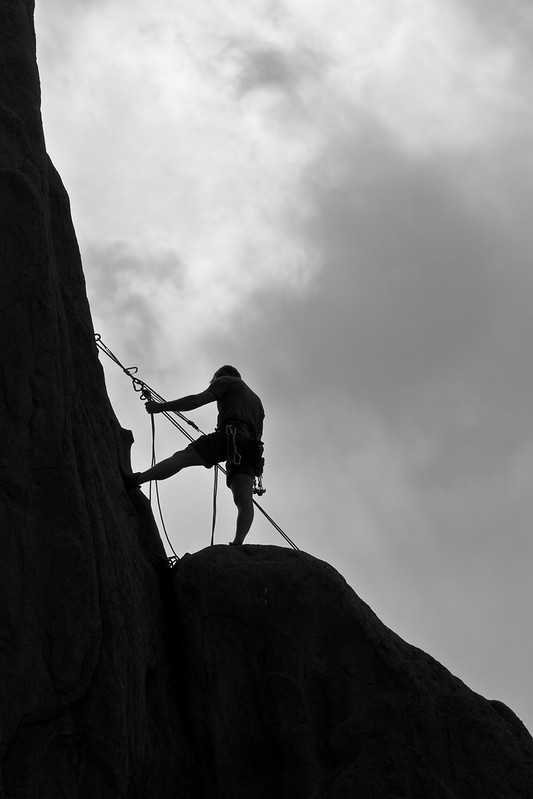
The Climber


Love is sockless and never wears shoes. The mountain is too hard to climb otherwise. The toes must grip the steep face of rock and hold on tightly to the sharp ledges.


Love never sees the summit. Its feet yield to the mountain’s hard wisdom: finding rest in sudden seams of green, where the heart grows fat, and climbing past pain to reach a fractured rock to  bind its wounds..


The first bleeding is the worst, always such a surprise to the new climber.


The calloused feet never forget the grass, the cool sweet beginnings of the long climb; and when the fall comes, as it must come at the end of every life, the memory of grass makes it all worthwhile.


Hunger

Standard


Pretend you are the golden child. Reach out your hand for the goblet; taste the love and pleasure that the chosen ones drink; lean back in your chair of velvet; dance to the harp of all the songs they wrote for you; and rest your head on the soft pillow of adulation to dream of the child you were, the one staring in the window at the banquet.


In your dream you will be cold; and though you pull your blanket around you, you will never find warmth. Hunger will be a crow in your belly with your heart in its beak.


The dream will last a lifetime. When you awake, pretend you are still the golden child you saw inside the window.


Entering the past

Standard


Deep summer. I raise my hand to shield my eyes and smell orange blossoms. Traces of sunscreen streak my arms.  I stand in a swimming pool, waiting, watching the sunlight shatter again and again on the surface of the water. I can’t say for sure what I’m waiting for.


My hair turned green from the chlorine one summer long ago. Day after day I dipped below the surface, swimming through the hours, under the freckling sun. I counted swimming as bathing. I think about that summer and the things I can’t remember but want to. I rummage through my memories looking, find a page torn from a book, a faded photograph of someone I vaguely remember, but no name is written on the back. My past is the long chain of days I drag behind me.


A child stands on the edge of the pool, jumps, and splashes near me. I remember diving off the high dive when I was only six or seven. Into the deep. Unafraid.


A woman calls to the child to get out of the pool. I remember mother warning me that my lips were blue, and I needed to warm myself on the hot cement.  I turn and look behind me, but nothing is there.  The past is here, not behind.


I look at my feet; my legs below the surface disconnected to the part of my body above the water. I touch the boundary, the water’s skin freckled with light that divides air and water; the light bends, and nothing below looks the same again. What if time isn’t measured in length, but in depth? Perhaps I have stepped into the pool of time, and as I walk deeper into the future, more and more of me is in the past below. Eventually, the past will completely swallow me up.


I stand, staring at my legs, displaced by light. I cannot align them with my body, but I can feel them. I let them carry me deeper.


Someone calls my name. I close my eyes, take a deep breath, and dive into the cool water, heading for the other side.


New shoes can change your life

Standard


Women of a certain age can stop walking on tiptoes, trying to avoid the shards of all those mirrors thrown at them.


In their sensible shoes, they can walk on eggshells, crush them to a fine powder, and tell the world the bare-faced truth.


They can finally learn to please their own soles.


Women of a certain age are certain about this: new shoes can change your life.


I know, for I have walked a mile or more in my mother’s shoes, and my feet ache. So now, I’ll walk a while in my father’s shoes.


It’s okay.


I’m of a certain age.


( Tiptoes from here.)

How books find people: An introduction

Standard


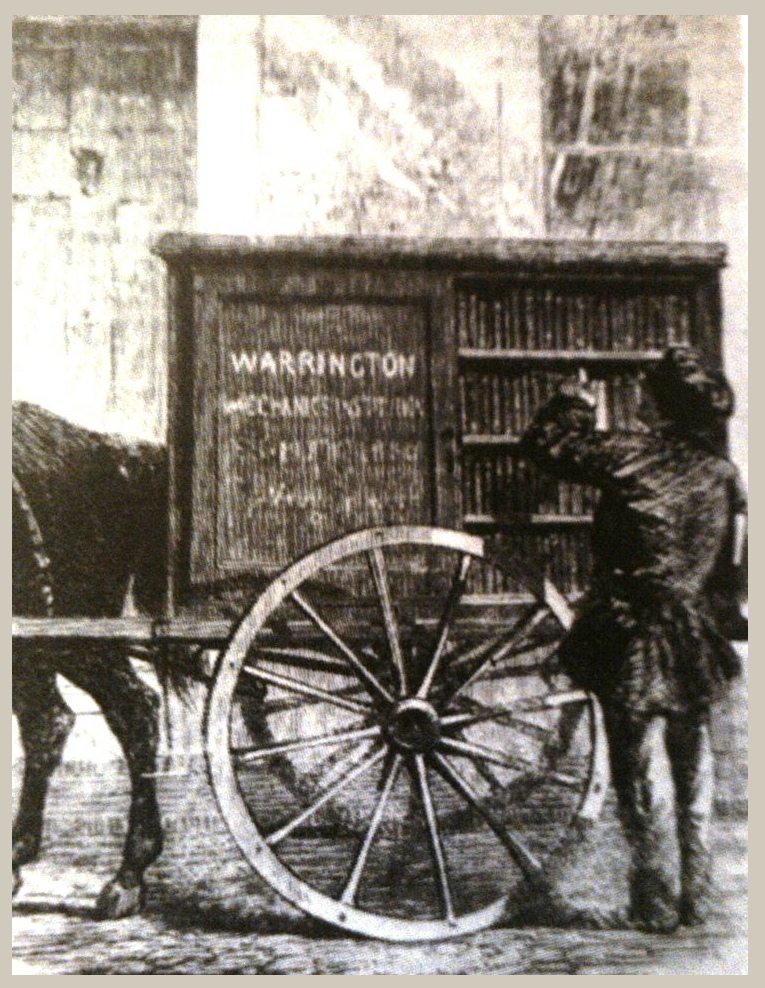
The Perambulating Library (UK, 1858, Wikimedia Commons)


The book finds you.


In the library, you enter the sea of books; your eyes swim across the stacks, nibbling at the titles. Or the book lures your hand to the shelf to read some pages. Then, the book, the one that is hungry for you, catches you like a fish and reels you in. You may not even feel the hook. Using some sweet bait of words, the book snags your heart or mind and pulls you through its pages into a world or place so new, so old, so strange, so familiar, you can hardly breathe. And when you are thrown back into the world, you are not afraid. You come back to the places the books wait, angling for you.


You don’t find the book; the book finds you.


A book is looking for you; go to the library and let it find you.


Next: How books find people: Libraries

If I’m not here, I’m there

Standard

At the end of the semester I received a large gift wrapped in calendar paper: three month’s worth of days. Each day is a gift certificate, good for 24 hours, to be used any way I choose.


I am taking three week’s worth of the certificates to Europe, where I will ramble around, stopping as often as possible to gape and wonder. I plan to use my eyes a lot. I’ll carry a camera and try to remember to use it. I placed a little sticky note on the camera: Your jaw is dropping again, please close it; the locals are staring.


The trip is a gift from my brother, large enough to include bringing one of my daughters and my grandchild. My life is full of unmerited favor and love, which explains why gratitude is splashing out of my eyes.


If you live in Europe, please look for me. I’ll be wearing still brown hair with newly added highlights, large-sized sunglasses, and a wide-brimmed hat. I’m the small woman rambling with her feet and her mouth.


I hope to send some postcards now and then, as well as read and comment on other people’s blogs. If not, I have days and days of summer left to do just that.


In the next three weeks, if I’m not here on my blog, it means I’m there.


Until we meet again here, thank you for your months of reading, commenting, and liking. I like you back.