When trees come back

Standard


Trees believe in reincarnation. After they die, they lumber back into our lives as boards, books, and toothpicks.


Trees spend their lives holding out their hands to birds, calling them to perch or rest. In their second lives, trees come back as chairs, inviting us to sit down, offering an arm to grip, attending to our conversations without remark, and sharing in our silences. At night, we nest in tree-made beds, hatching dreams like eggs.


In their first lives, trees provide banquets for the birds: beetles, ants, and caterpillars. When they return as tables, we flock to them and find the food and wine that fill the house with love and laughter. And we keep their perfect splinters in a jar to pick our teeth.


Some trees become the bones of houses, use their strength to keep the roof over the heads of all who have forgotten them. Others are the doors of daily life, sliding, slamming, creaking, opening, shutting us in and out. They make a place of quiet for one and provide the lock that opens love for two. So many secrets hinge on them.


Trees write the world’s story on their leaves. In fall they send the pages down, though few will stoop to read them. They tell the tale every year as if it were the first time. Coming back as books, they do the same, waiting on the shelves, leaves and leaves of stories falling into minds who stop to read them. And every telling new.

Trees who spend their lives trying to catch clouds come back as poles to hold the wires words squeeze through. A hundred years ago or more, people spoke with patterned sound, tapping news of wars, births, deaths, and regrets, like birds tapping on the bark of trees.


When taps and codes were not enough and people phoned their voices, the wires sang and hummed with promises and lies, rang with jokes, the murmured shame, or disconnected lovers; a goodbye click, the end of every story.


These unleaved trees with straightened arms, stand without a whisper, yet call out to the birds, who return, like acrobats with wings, to balance on their wires. In that other life, when poles were trees, they learned the art of listening from crows complaining of the rain and winds whispering of angry clouds to come.


Fewer voices travel on the wires now, but these poled trees do not complain. They shoulder power to brightens our lives as they once carried the luster of sun on their shimmering leaves.


When trees return a second time, they hold us, shelter us, offer us a place to lay our heads, bear the words that tell our stories, give us room to live, shut out the world of noise, and listen, always listen. When trees come back, they yield to our sharpness and our desire to measure and control. In the quiet, when we leave the room, they dream of rain, wind, and bird song; each tear falling softly as a feather on snow, lost by a winter bird in flight.


A word walks into a writer’s brain

Standard


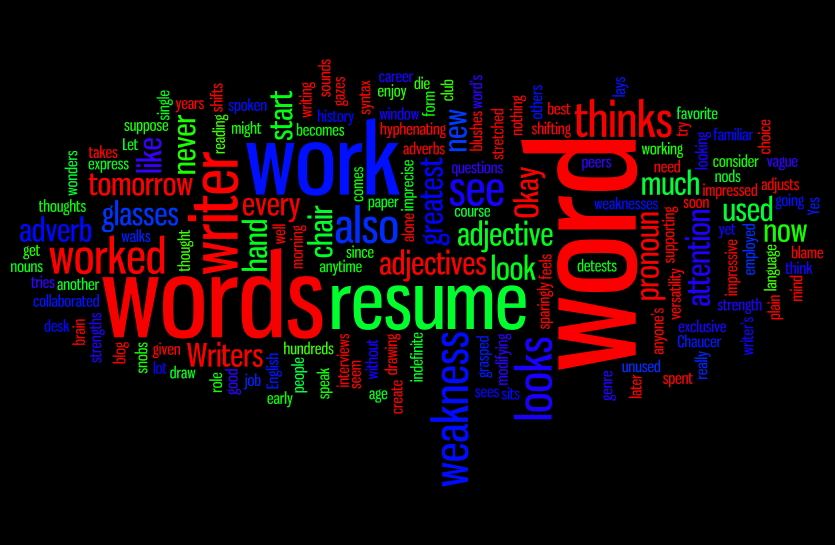
A word walks into a writer’s brain looking for a job. The writer takes the resume and looks it over.


You have an impressive work history. I see that you worked with Chaucer and have worked for every writer that uses the English language since then. Do you work in every genre?


The word blushes and nods.


Okay, let’s look at role in syntax. You’re an indefinite pronoun. That’s an exclusive club that no new words are going to get into anytime soon. You also do a lot of work as an adjective, but don’t seem to mind working as an adverb now and then.


The word shifts in its chair, unused to drawing attention to itself. It gazes out the window.


The writer looks up from the resume and peers over her reading glasses. The word looks good for its age, she thinks, yet it’s nothing special to look at. She’s familiar with it and has never given it much thought, but now that she sees its resume she’s impressed. She lays the paper on her desk.


How do you see yourself? What are your strengths and weaknesses?


The word detests questions like this and feels its resume should speak for itself. Writers can be such snobs when it comes to words, it thinks, but these interviews are necessary. We need each other; writers can’t express their thoughts without words, and words die if they aren’t employed.


The word adjusts its glasses and sits up in the chair. “Let me start with my greatest weakness. If I am used too much, the writing becomes vague and imprecise. I do my best work if I’m used sparingly. But, of course, I don’t really have a choice.”  The word wonders if this sounds like blame shifting, so it tries to think of another weakness. “I am plain-spoken and try not to draw attention to myself, so I suppose, a few people might consider that a weakness. I’ve never been on anyone’s favorite word list.”


“My greatest strength is my versatility. As you can see from my resume, I can work alone as a pronoun, adjective, or adverb, but I also work well with others. When I started my career, I spent hundreds of years modifying and hyphenating words that I later collaborated with to form single words. I also enjoy supporting other words as a suffix to create new adjectives. In that role I have worked with adverbs, nouns, and other adjectives.”


The writer stretched out her hand and grasped the word’s hand.


Can you start tomorrow?


“Yes,” the word said.


Okay, be at this blog tomorrow morning and we’ll begin.


A day to leap

Standard


I perch on windowsills for years, waiting to jump, believing I can fly. When I finally leap into the arms of the air, I land on my feet in another room, just like the one I left.


Staring out of windows, I have believed for years that the outside is a different world. The sky holds her arms out wide and tells me, “Jump. Don’t be afraid. I will catch you.” It takes me years of courage to push off from that windowsill. With my clumsy wings of hope and desire, I leap and land inside again.


I still believe in windows. And after I readjust my wings, I may take another leap.


Icarus by Keith Newstead at http://www.cabaret.co.uk/artists/keith-newstead/

Image of Icarus from http://blog.dugnorth.com/2008/05/flying-mechanical-icarus-automaton-at.html

Getting home from the last station

Standard

The wind swept out the flooded floor of the sky, drenching the world below. I watched the night through the windows as the train hurried through the falling water. When we pulled into Hamadayama Station, I felt relief and dismay. In ten minutes, I could be home. But I had to walk through the rain to get there.


Ten minutes in that insistent rain felt like a lifetime. The cold didn’t think much of my jacket, and my umbrella was built for a kinder world. I carried the taut cloth over my head to hide myself from the sky, believing I could. Then I started walking.


My feet drowned first and my pants clung to me like a shroud. The wind resented the umbrella, which kept my head dry as long as it could. Finally, it threw its hands up in despair and surrendered.


I yielded to the baptism of rain until I managed to half open the broken umbrella. I belonged to the rain now. On the dark streets, I saw a few others, struggling forward. We didn’t speak. Lost in our private thoughts, we were willing ourselves to a place of belonging. All I could think of was home, where I would be safe, where I would be warm.


Those last few steps were the hardest. They always are.


You cannot imagine my delight, grasping that cold doorknob, knowing the door would open into a world of warmth and light, with all of my loved ones waiting for me.


It rained with fury that cold November night in Tokyo.


Losing what you never had

Standard

I remember the first time I read the stories of the Greek gods, particularly Zeus and the birth of Athena. To most people, the idea of a full-grown daughter emerging from someone’s forehead sounds incredible, the stuff of dreams and mythology; however, it didn’t seem strange to me. Zeus reminded me of my mother who could open her mouth and speak fully grown siblings into existence.


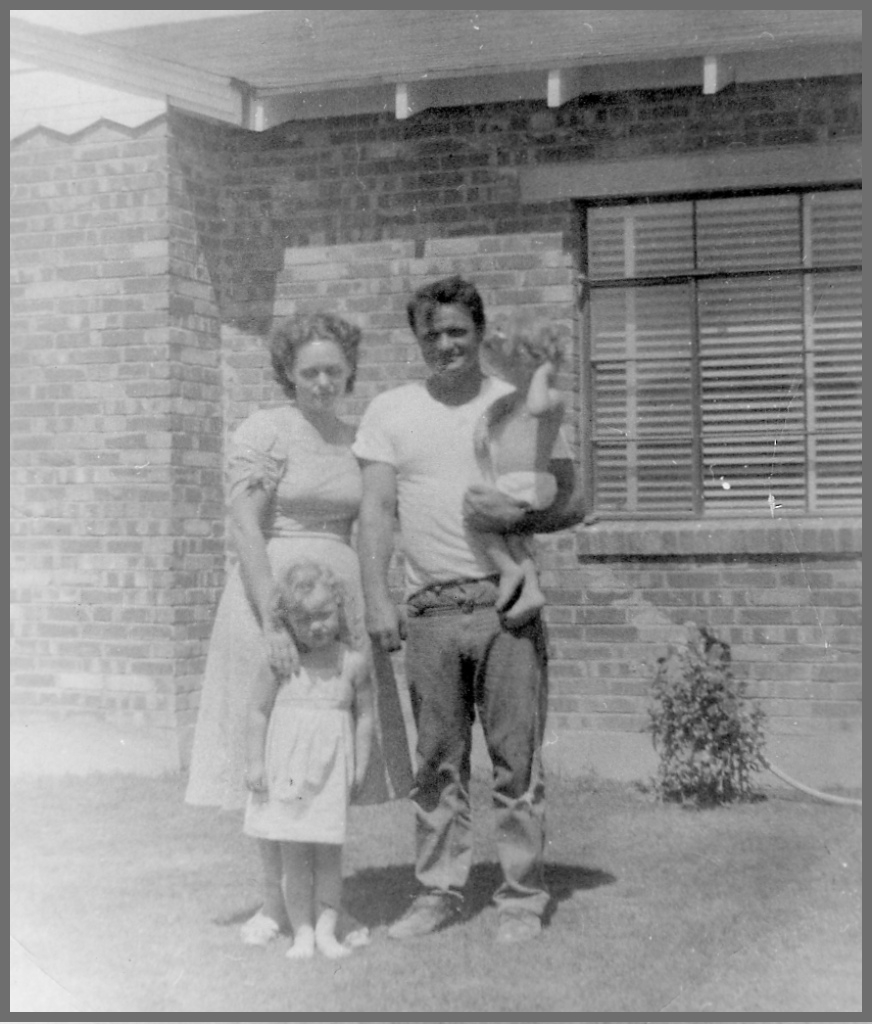
In the galaxy of our neighborhood, my family was one of the smaller solar systems.  Daddy blazed like the sun in the center, circled by mother, his reflecting moon, and his two small planets, my sister and me. Friends and relatives, like distant stars, were out there somewhere, but we lived primarily in a world of four.


Mother had been someone’s moon before; this was her third attempt at marriage. She had escaped the drunken rages, violent beatings, and evictions of her earlier life, and found a man who loved and provided for her. As this new man drew her forward and away from those events, her memory looked back and wrote them into a story she told, but no longer lived. Daddy treated her with kindness and love, but he wanted nothing to do with her past. That included her other children, the five she had before she met him.


When my daddy was alive, I moved between two parallel worlds. In one, I was the second daughter of a loving father and his faithful wife, living a typical middle-class life. We lived in a three-bedroom, one-bath brick house with elm trees in the front and a swing set in the back. In the parallel world, I was the fifth daughter of a father who was my oldest sister’s abusive stepfather. He married a woman, twice divorced, whose last known address in Alabama had been on White Trash Avenue. The point of intersection of these two worlds was my oldest sister, Connie.


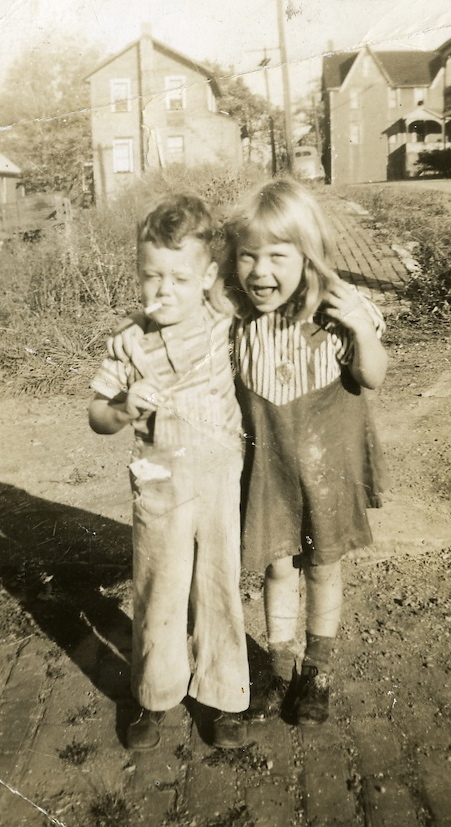
Clyde and Connie: mother's first two children

Connie was mother’s firstborn, dragged into mother’s three marriages and written into mother’s story of abusive men, poverty, and abandonment. She learned early to take care of herself. Funny, independent, and defiant, she left home at 17 to get married. I was two years old, too young to remember. My father, the love of mother’s life and the man ever kind to mother and his two children, once beat Connie with an electrical cord, a story I learned years and years after he died.


By age 23, Connie had three children. From as early as I can remember, we visited her and her children. I was their youngest aunt, just two years older than Connie’s first child. Mother forbade us to tell our daddy of our clandestine visits. Since Connie had been in my life from the beginning, she was a secret, but not a surprise.


Daddy wanted mother to himself. To please him, she locked her secrets up and never spoke of the past in front of him. But when he was not around, she shared those secrets with my sister and me. Her words carried us back into the past with her, and I began to understand that the story of my life didn’t begin with me. I had arrived in the middle of her story, the story she must tell. So, secret after secret, she told us her life. I doubt she had any idea how heavy those secrets were to the two little girls listening and wondering. But how can I blame her? Stories demand to be told and give us no rest until we give them voice.

Clyde as a young boy


I don’t remember how old I was when a brother, Clyde, sprung full-grown from mother’s mouth into my consciousness. Born two years after Connie, he was mother’s firstborn son from her first marriage. She never spoke much about him, but when she did, she prefaced the story by mentioning the car accident. When Clyde was around ten years old, a car hit him and threw him several yards, causing a head injury. “He was never the same after that,” she said, as if that explained everything that followed.


What followed was a life of petty theft and then more serious crimes, which led to at least one felony and internment in La Tuna prison in New Mexico.


Even before my daddy died, mother kept in touch with Clyde, sending him small gifts of money, trying to right some of the wrong he suffered by being left behind so many times. Daddy must have known that mother contacted Clyde. If he could have stopped her, I’m sure he would have. On the other hand, my grandmother could have been her go-between, passing the occasional letter back and forth, because she had been the one to raise Clyde most of his life.


Out of focus: how I remember Clyde

Clyde visited us a few times after my daddy’s death and during the time mother’s fourth husband was stationed in Korea on a remote tour. Out of nowhere, my oldest brother would knock on the door, looking as handsome and charming as his father, with the same dark, curly hair and green eyes. When Clyde left, things left with him: money, jewelry, silver dollars, and even a small revolver mother kept because there was no man in the house at the time.


In my senior year in high school, two men from the FBI came to our house looking for Clyde. Mother denied knowing his whereabouts, and I think she was telling the truth. Clyde drifted in and out of her life, much like she had done to him when he was small. He usually contacted mother when he was in need of money. To support himself, he took various jobs, often driving a truck.


Although I visited Clyde with my mom when he was in La Tuna prison, I don’t know or remember what his crime was, but I’m pretty sure it involved theft. After he left prison, mother lost touch with him. A few years before she died, she asked my younger brother to try to find Clyde. He searched online and discovered Clyde’s death certificate, and in the space marked “next of kin,” the word, unknown.


I can’t believe how little I knew or asked my mother about Clyde. When I was a child, part of my reluctance may have been fear. Mother had children from both of her previous husbands, and the children from those marriages were left behind as she moved on to new husbands. If it happened twice before, maybe it would happen again. She could leave me, find a new husband, and I would become just a secret she whispered in another little girl’s ear. “That’s her,” she would say, pointing at me standing in front of the brick house, “she had green eyes too.” The new girl would smile, snuggle closer, and soon forget about me, just as I forgot about Clyde and the others mother told me about. I would be left behind with the scenery, entrusted to my grandmother or some other relative willing to take me.


Or maybe I didn’t ask more questions because I chose to hide her secrets, my complicity an act of seeking her favor. Perhaps it was my way of saying: Keep me! Keep me! Abandonment was my greatest fear and after my daddy abruptly left through death’s door, mother was all I had.


Fear may explain my childhood disinterest, but I can’t explain why I didn’t try to find out more about Clyde when I was older. I felt mother’s reluctance to talk much about him. She only told the stories she could; the others stayed inside, breaking her heart. My demands to hear more may have awakened words that would have shattered her world or her sanity. Sometimes silence is the only way we can survive. I don’t really know why I never asked more questions.


We make choices in life. We walk down a road, afraid to turn back, driven forward until it’s impossible to find our way back even if we want to. Now, no one is left to answer my questions. Clyde became the book I never read, buried years ago.


Some stories never find a voice in this lifetime.


I wonder if those buried stories come back as ghosts to haunt us. Do they roam the earth seeking to be embodied in someone’s words, willing to take on new names, live in strange locations, just as long as their story can be told? Maybe Clyde’s story waits for me in a book: he has changed his name, moved to Montana, and now wears his blond hair short. Maybe he is sitting at a table in a small café, looking for me in the crowds and waiting to tell me what I seek to know.


I cried when my younger brother told me about Clyde’s death certificate. Next of kin: unknown. It breaks my heart that he died alone, like a motherless child. I want to tell his story but I don’t know how.


When proverbs were young

Standard


When you grow up in a city or town, you see the streets, houses, businesses, and other landmarks so often, that after a while, you hardly notice them. The commonplace bores you.


Languages are like cities. Throughout the day, your ears travel through streets lined with familiar phrases, idioms built of ancient brick, and housing tract after housing tract of clichés. Your ears can get as bored as your eyes.


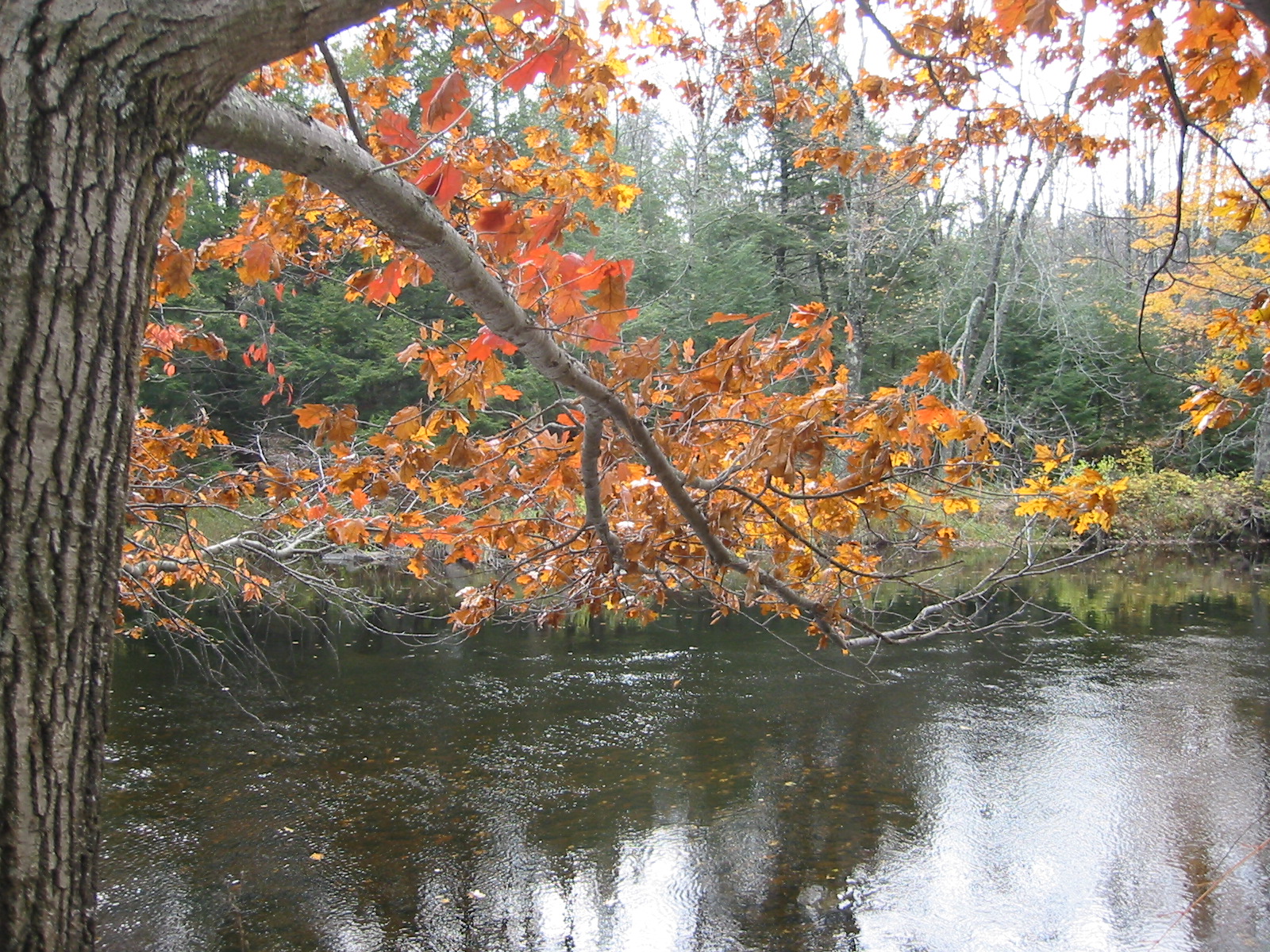
When you travel to another city or language, whether for a visit or to live there, nothing bores you. That maple tree looks no different from the trees at home, but here in this new setting, standing there in front of the yellow house, sheltering the red bench, it enchants you. As the late afternoon light shimmers on the leaves, you take picture after picture, hoping to capture its beauty.


And once your ears adjust to living in a new language, you find simple words and phrases, shortcuts that help you bypass paragraphs of thought and lead you straight to what you want to say. You find yourself wandering down a street in Japanese, feeling the wind blow softly, soyo soyo (そよそよ ) and you almost skip because now you know how to name the sound of a soft wind. Then when the wind dies and the noises cease, you hear the sound of silence, shiin (しいん) and begin to hear that silent sound everywhere. All of the new words delight you, and you are surprised to learn that some of the famous landmarks in this new city are considered clichés by the people who grew up in the language.


I have spent some time living in and traveling to other languages, and I teach English to students from other countries, so I know the delights of hearing words for the first time and falling in love with them.


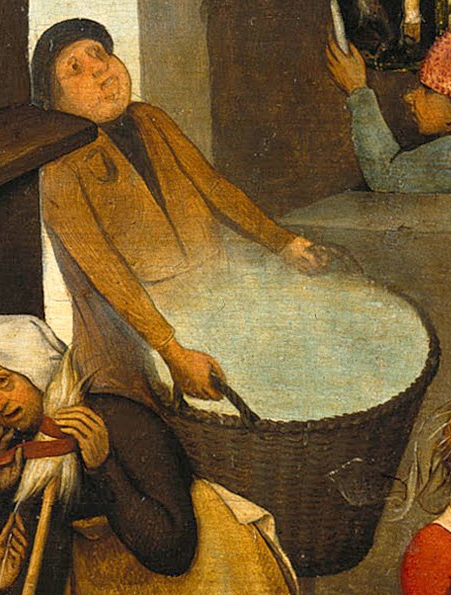
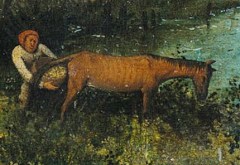
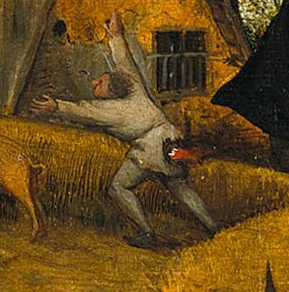
Yesterday while I was walking around the web looking at proverbs, I popped over to Wikipedia to look at their pages and found one about Pieter Bruegel the Elder’s painting Netherlandish Proverbs, also called The Blue Cloak or The Topsy-Turvy World. In 1559, Bruegal painted a village scene depicting over one hundred proverbs. Wikipedia kindly took snapshots of each scene with its corresponding proverb and meaning. One of the men is carrying daylight out in baskets, an apt image for wasting time, while another man stands behind a horse and discovers that, contrary to appearances, horse droppings are not figs. Finally, a man runs away after getting involved in a dangerous venture having learned his lesson: if your beginning includes eating fire, you will have sparks in your end.


I like to imagine that Bruegel painted the proverbs when they were still in high school, fresh-faced, funny, full of witty remarks, and sly insights. Go see for yourself and enjoy.

 Once you have learned the proverbs illustrated in the painting, watch this short animated version by artist, Martin Missfeldt.

Listening to your eyes

Standard

Sight seems simple enough. First, you open your eyes. If the room is dark, you go back to sleep. If not, the lenses in your eyes focus. If your eyes find this difficult to do, your nose offers to hold your external lenses because it, too, would like to get a better look at what is right in front of it. Photons of light, like tourists hurrying off the bus, rush into your eyes to see your retina. They crowd around the retina while the brain takes their pictures, and then they rush out, so the next crowd can come in. Some of the same ones visit every single day. Apparently they have nothing better to do, or perhaps the retina is worth seeing again and again.


The brain collects these photos from morning till night, ignoring the most familiar, studying the unfamiliar, and sorting them into piles of those it likes and those it doesn’t. But what is the point of taking pictures if you don’t have someone to share them with? So, the brain shares them with the heart and that complicates sight. Hearts may be born with 20/20 vision, but over time they can change. Life can scar the lens of the heart and pressure can change its ability to focus. An astigmatic heart can’t see clearly, and looking through the lens of expectations only makes it half-blind. Even with the corrective lenses of a friend, lover, or family member, some things remain distorted, blurry, or impossible to see.


If the heart insists loudly and persistently enough that its way of seeing things is true, the brain can start believing the heart instead of the eyes. And the heart is often right. The eyes need light to see; the heart sees in both the light and the dark and can feel truth even when she can’t see it.

But sometimes the heart isn’t right. You come to a crossroads and see a sign telling you where you are. The heart reads the unfamiliar script, not even sure how to pronounce it. Lost again, she says. One more sign of failure. Everyone, except me, knows where to belong. I will never find my way home now. The eyes, however, see the bright, bold letters, the flourishes around the words put there by some sign painter writing his heart in simple words for the weary traveller who would surely walk this way and need some direction. You are here. Just follow the sign. A place of rest lies up ahead. This road might be the one that leads you home.


This time the eyes are right. The heart must trust and follow.

I dream of flying

Standard

For as long as I have remembered, I have dreamt of flying. I stand under a blue sky with my arms lifted and then gently push off from the earth and fly, almost float, above my world.  Hope follows me out of these dreams, and I feel as if I share a secret with the sky.


When I was five or six, my father went on a trip and came home with a bracelet and necklace for me. I still have the set. Patterned after the silver and turquoise jewelry common among Native American tribes of the West, it is imitation jewelry, made for children. The necklace holds a rounded horseshoe-shaped piece in the middle, and my father told me that if I held that piece and made a wish, any wish, it would come true.


When you are a child, your nighttime dreams seem as real as your daytime life. I never thought that I was just dreaming about flying; I believed I was flying at night. In the morning, I landed back in this other world, held firmly in the arms of the jealous earth.

The day after I received the jewelry set from my father, I stood on the red brick planter in front of our porch, wearing the bracelet and necklace. One hand grasped the turquoise piece in the middle of the necklace, and the other held my nighttime dream, wrapped up in a daytime wish. I named my wish and saw myself soaring near the elm trees in the yard. Then I jumped.


The earth would not let go of me, and I landed on my feet, one hand still grasping the necklace, the other one empty. I watched my hope take wing and leave me, the sky indifferent to my longing. Children have their own sorrows and know the loss of dreams, sometimes before they have the words to tell you.


For many years, I kept a journal of my nighttime dreams, but for the last five years, my mind has chosen to forget. The other night I stood in a field and the sky called for me, like an old friend inviting me back. Featherless, I flew into that place of my childhood joy, the place of belonging. When I awoke, I could almost hear birds singing in the empty winter trees, a song familiar and forgotten, with a melody of hope.

I practice dying every night

Standard

My strength comes in the morning. The early hours wake me at sunrise, smelling of promise and first light. I listen to their bright voices and learn what it means to be born and how to unspool the day from the spinning earth. They carry bird songs in their pockets. Morning is the time for listening. I reach into my heart for crumbs of dreams I’ve carried, toss them at my feet, and wait for the words to land, to eat. Sometimes I hold a word with feathers in my hand and let the tears roll down. It is morning. My strength comes in the morning.


The day is for duty. Small hands point and I must follow. Time schools me, teaches me to climb, move, sit, walk, listen, speak, hurry, wait, and serve. I eat sunlight and grow wings. I cannot fly, but they lighten my load. Duty has a face I love, she never tires, and helps me when I climb. The hours are full of people; we follow time together. Sometimes I rest and wash my feet in their laughter. I give my strength to the day. The day is for duty.


The night is for dying. The words leave me and I watch them rise and go, swallowed by the sky. Sorrow, my sweet sister, whispers in my ear that the time of rest is near. Memories and desires take their leave, sail across the pool of thought till only ripples of their passage remain. I listen to the silence, wrap myself in quiet. The time of letting go has come. My heart steps softly into the dark. I close my eyes, my hands open, releasing every face, dream, and hope I gripped so long, yielding to that other world until I am gone. The night is for dying.


I practice dying every night.


Carried

Standard

Carried by my father.


I’ve been carried all my life, though at first I was too small to see. My father carried half of me in a small pouch, until he met my mother. I would have been forgotten, but mother came alongside of him with the other half, then placed me in the pocket she put all her children in.


So spare, so silent, she hardly knew I was there, listening, wondering, and waiting. All day she walked and rocked me. I slept as she moved through her day. When she lay down to rest, I woke. Day and night were both dark to me.


Before I knew the words, I heard voices muffle and murmur love, felt the soft bounce of laughter, and the sharp shake of tears. Hands spoke their joy and expectation, now patting, now prodding, now pushing against my feet as I pushed back. Too young for school and all alone, I tried to find the formula for X and Y that would please them. Outside they waited for a boy, inside I waited as a girl.


I tried my best to stay by staying small, but the pocket could not hold me. I knew I had to go. Thinking I should travel light, I even grew a smaller brain. How was I to know I would need a larger one when I got to that other place?


Leaving was the hardest; the passage, dark and narrow. Mother never had a smaller child or one so fearful to appear before the others. We struggled, both of us, until I was carried home.


Almost forgotten once, half here, half there, now here. Carried, always carried, by stories, time, and secrets.


I’ve been carried all my life. How about you?