Double exposure

Standard

Double exposure: two lives in one world

Mother loved to read historical romances. She would find them at the Goodwill for ten cents apiece and bring home a stack. On almost every cover, a handsome, rugged-looking man held a beautiful woman in his arms. Sometimes the man wore a Civil War uniform and held a woman in a billowing dress. Other times he wore a royal crown and cape while he embraced his queen. Ripped bodices were optional.The historcial context varied, but the story never did: the search for love ended in someone’s arms.


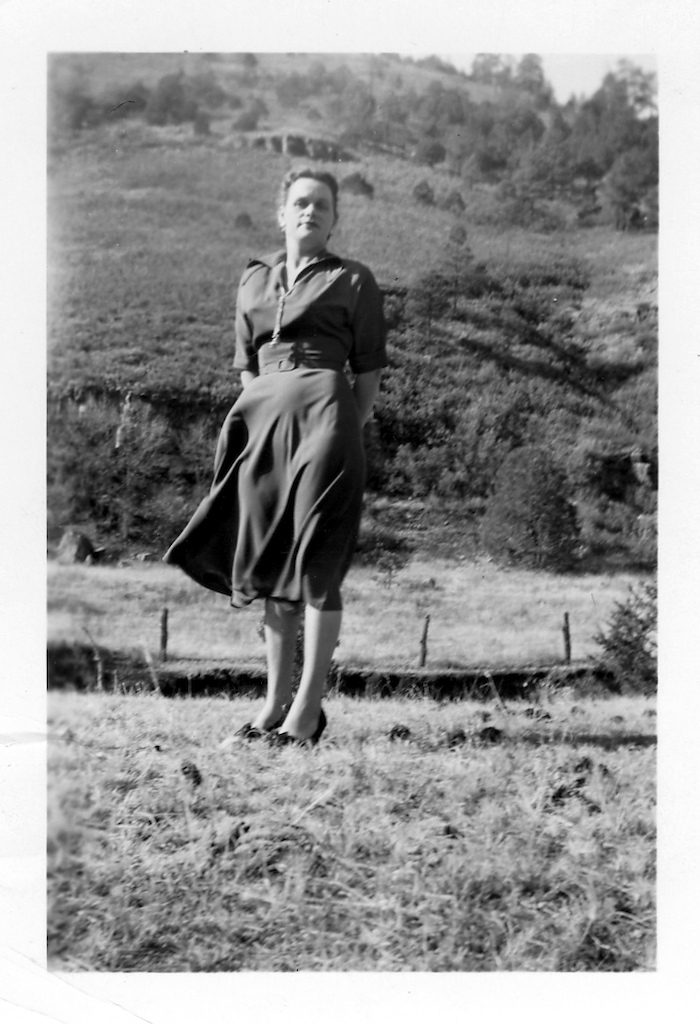
She often sat on the gray couch in the living room to read. One summer day, I sat on the arm of the couch by her while she drank her can of beer and read. It must have been a day like the one in this photo. She was wearing shorts and a sleeveless blouse. I could see the blue spider veins in her thighs as she stretched her legs out on the coffee table.


I started reading the last words of each sentence to amuse myself and wanted to say something to her about it, but I didn’t want to disturb her. So I would read some of the words, then wait and listen for the soft slur of her finger on the paper as she turned the pages. I looked at her profile, her beautiful nose, straight and softly rounded at the tip; her lashes thick with mascara; and her lips, parted as if ready to sip from either her beer or her book; and I wondered if she even knew I was there.


Immersed in her book, she had no idea that I was  reading the words with her. Her books, I thought,  must hold some secret, one that she needed to be reminded of over and over, one embrace after another.


For the first time that I remember, I understood that we were completely separate beings, sharing the same space, our thoughts known only to ourselves. She knew nothing about the things my sister and I whispered while we were in bed at night, the forbidden sugar that I put on my cereal before anyone else awoke, and my fear of losing people. These and thousands of other thoughts belonged only to me. As I leaned on her arm and felt her warm skin next to mine, I realized that she, too, must have whispered things in the night to my father and done things in secret that no one else knew of besides her. Inside her head another world existed, one that I knew nothing about, that I would probably never know anything about.


I felt like I had just awoken from a deep sleep in a strange room, not knowing exactly where I was. Everyone lived a hidden life, unknown to anyone else, and words were all that we had to find one another. We stumbled in the dark, calling out, searching for the other, reaching out, always reaching out. And sometimes, if only in books, we found solace in someone’s embrace.


My head felt light and I wondered if I would fall off the couch. I leaned over, kissed mother on her forehead, and went outside into the sunshine looking for an adventure before the end of my childhood summer.



Why I am not an arsonist

Standard

I struck up a friendship with Terry B.

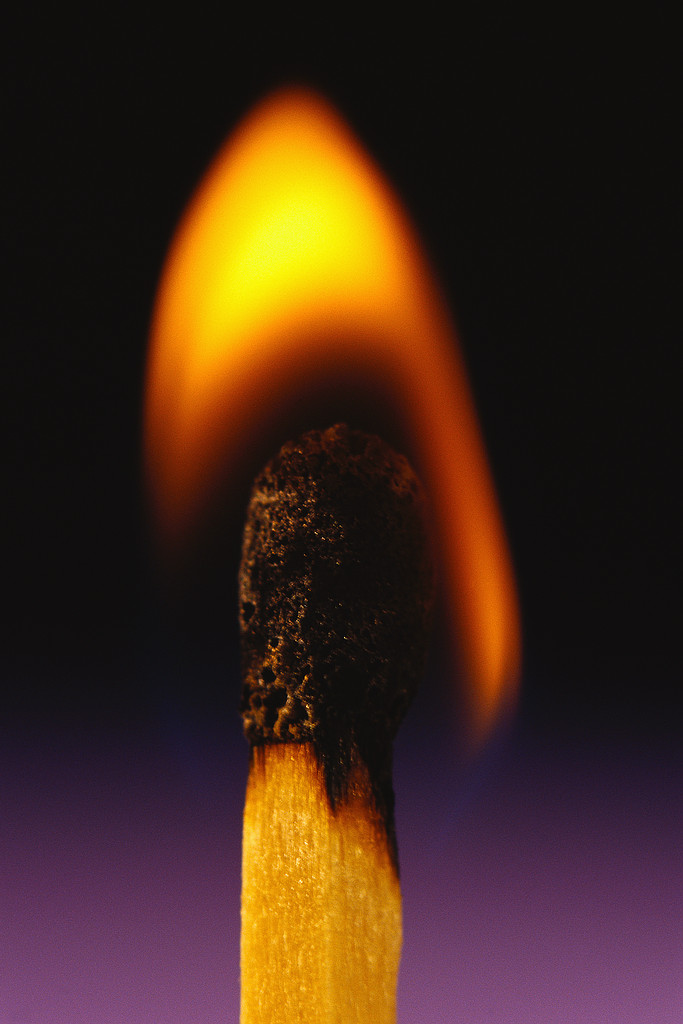
At seven, I realized  that arson would not be a good career choice. My best friend, Terry B., who shared my early fascination with trouble, introduced me to the delights of wooden matches. My parents didn’t smoke, and we didn’t have a gas stove, so I didn’t see many matches. The ones we used to light birthday candles were those flimsy paper ones that require a grownup type of skill to light. You had to pinch the paper stem between your thumb and middle finger, hold the match head down with your pointer, and then draw it across the striking surface. If you didn’t pull your pointer away quickly, you could burn yourself.


Wooden matches, however, are easy enough that even seven-year-olds can use them. Their small fingers can hold the end of the wooden stick, strike across the long strip on the side of the box, and create the wonder known as fire. One box provides hours of fun. Strike a match and watch it burn. Next, see how far down you can let it burn before you blow it out or drop it and step on it. Play chicken doing this. Put several matches together and light all of them from one match. And those are just a few possibilities.


But you can only watch so many matches burn before you yourself get burned out on it. The next step is to watch something else burn.


The street we lived on sat on the edge of the housing area, and the alleyway behind our house ran parallel to a drainage ditch. My sister and I took a shortcut to school through the ditch, and children often played there. Sitting in the dirt among the weeds was the perfect place to study the properties of combustion.


We began with the debris we found in the ditch, mostly paper trash. Then we moved on to dried leaves and small plants. El Paso has a dry climate so there was hardly ever water in the ditch. Any fires we started had to be small enough to stamp out with our feet or smother in dirt.


One afternoon, we experimented lighting up an entire bush. Like all of our ideas, it seemed reasonable at the time. The dry bush ignited another bush, and soon we had a small blaze that we could not control. In our eyes, it seemed we had set the whole world on fire. We threw a lot of dirt and sand at the bushes, which was very helpful in making us dirty, but not so helpful in extinguishing the fire. Had there been a wind, I would be telling an entirely different story. Something about my life at reform school.

Children, ditch those matches!


In those heart-stopping moments watching the disobedient fire, I imagined the fire spreading to our houses, leaving our neighborhood a pile of ashes. It’s a wonder that some all-powerful grownup (one who could see through windows) didn’t notice the smoke and call the fire department. Had that happened, I knew the consequences. I would not be seeing much of the Mickey Mouse Club and my bottom would be very sore.


The fire eventually burned itself out, and so did our desire to play with matches. We never misused them again. We just used them as they were intended to be used. For cigarettes.

The six-year-old criminal

Standard

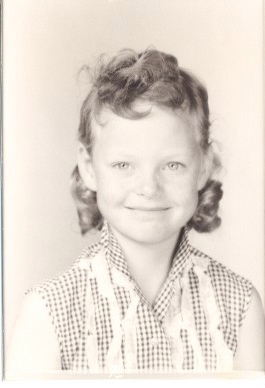
An early run-in with the law ruined my smile. I'm the sullen one on the right.

When I was a child, I had a knack for getting caught. It never held me back, though. Trouble interested me and punishment was the price I paid for pursuing it.


Terry B., who lived on the corner of our block, was my best friend because we shared this same interest. In the summer, we were just this side of feral, in the sense that we played outside from morning until just past dark almost every single day. During the day, we found food where we could; everyone’s screen door was unlocked and every mother had large jars of peanut butter and jelly to spread on white bread. And Kool-Aid. Always a pitcher of Kool-Aid.


Where I grew up, children were expected to play outside. My mother, like every other mother on the block, never posed “Why don’t you kids go outside and play” as a question. They meant it as a command, one that we were happy to obey. While they made coffee cake and wandered back and forth to each other’s house to drink coffee, smoke, play cards, or gossip, the kids had the whole wide outside world to themselves. Our moms had to holler us back for dinner, but as soon as that was done, we joined our tribes outside until the darkness came and one of our parents hollered us back for good.


In my sixth summer of freedom, Terry and I decided it would be fun to switch people’s mail. We knew all of the neighbors, knew which houses we could go in, and which to avoid. Our next-door neighbors, the Coles, were an older couple. We were fond of Grandma Cole and her delicious cookies, but we had to eat them on the porch. Her husband liked to hold little girls on his lap, and even though our mothers never spelled it out, we understood and stayed away from him.


One afternoon, after the mailman made his delivery, Terry and I went to several houses and took the mail. We couldn’t get everyone’s mail because many of the mailboxes were too high to reach. In spite of the inconvenience, which seemed a marked lack of consideration on the part of our neighbors, we mixed up the letters and re-delivered them. Then we were off to our next adventure. Probably something involving matches.


Not once did we consider that we were doing all of this in plain sight, that most mothers were at home with the curtains and the front door open. Terry and I lived in a world of our own choosing, and all those adults with their watching eyes weren’t a part of it. Once the sun went down, we returned to their world, but daylight belonged to us.


We had telephones back then, the kind that were tied to the wall. Neighbors called my mom and told her what we were doing. She called my daddy and he called the police.


Yes, the police.


They arrived at our house right around suppertime. I don’t know if my empty stomach led me back home or someone was hollering about dinner, all I remember is the police car in front of our house. My daddy walked out of the house to greet the officer, and then called me over and made me confess what I had done.


I don’t remember a single word of what was said that summer evening. I probably cried, and if I did, my daddy held me.


Daddy just wanted to teach me a lesson or two. He did. I never messed with people’s mail again. It took me longer to learn the other lesson: the same broad daylight that made it so easy for me to find trouble was what made it so easy for grownups to find troublemakers like me. We roamed the neighborhood creating kingdoms, fighting wars, lighting fires, and creating as much mayhem as we could get away with, but the grownups were there, invisible, ever-present, and, it seemed at the time, ever-seeing.


Fear of the dark

Standard

(K) The older, photogenic one

When my father died, I was eight and my sister (K) was ten. Mother’s world collapsed and she found it impossible to function. She stayed in bed under heavy medication for days, until our oldest sister (C) told her she would lose us to daddy’s relatives if she didn’t get up and start living again. Our oldest sister was 23 years old at the time and already a mother of three. We lived a complicated childhood, visiting our oldest sister and her children but hiding it from our father. He wanted nothing to do with mother’s past.

When mother got up out of her bed of despair, she couldn’t get any more medication from the doctor. So she self-medicated. And nothing dulled the pain better than booze.

Together with her best friend from work, mother began to “run the roads.” It’s what she called bar hopping. There’s something lop-sided about this story that no amount of explaining will set right. Mother said that daddy was the one she loved like no other, and yet within two months she was out most nights, drinking, dancing, and looking for love. I don’t try to explain it; I just tell the story as I know it.

During that era, I don’t think it was unusual to leave children our ages alone at home. But maybe at night it was. Mother needed somewhere to go, to find companionship, and to have a few drinks to help her forget. The bars all had a Happy Hour, and although she never found happiness there, at least the drinks were cheap. Rather than leave us at home, she would take us to a theater to let us watch the latest movie, often a horror movie. This provided me with lots of reasons to fear the dark.

Before the years struck me so hard

A few years ago, I was talking with my sister (K) and mentioned all the scary movies we saw when we were kids like The Blob,

The Tingler, The Fly, and House on Haunted Hill. I remember sitting the theater, my feet on the chair tucked under my dress, clutching my sister’s arm, thinking that if I held on tight enough the monster couldn’t get me.

She asked me if I remembered what happened after the movies on those nights mother dropped us off. I told her I didn’t have a single memory of what came before or after.

Have you ever heard someone tell a story about an event that you were part of but that you have absolutely no recollection of? What she told me stunned me.

More than once, after the movie or double feature was over, we waited out in front of the theater long past the last showing. One of those times, we were still there when the lights were shut off and the last person left the building. Then mother would show up smelling of whiskey, cigarette smoke, and sweet perfume. Beautiful, lonely, half-drunk, working hard to forget her pain, and doing such a good job that she forgot her girls out there in the dark, lonely and afraid.

For my sister the horror show started after we left the theater. She was too young to carry so much responsibility, but she had no choice. I clearly couldn’t take care of myself. I think the fear I felt during the long wait in the dark was too real, the sense of abandonment too raw to face, so I transferred it to the movies and thought they were the source of my terror. My sister was the brave one and faced the darkness for both of us. And for all these years, she has had to carry the memories alone. I cannot remember. And that’s one of the reasons I love her.

Much of my childhood I lived under water; the people and events blurred and distorted. Light is refracted when you are below water, so things are recognizable but they don’t line up. I’d come up for air now and then, then dive back under. Some of it I understand; some I don’t. I know one thing: I cannot watch horror movies. They make me afraid of the dark. I know, too, that love is strong and can carry the memories we cannot bear ourselves. But even love feels lonely sometimes.

What? You know I can’t hear you

Standard

What? You know I can't hear you

In the last few years of my mother’s life, it became clear that she needed a hearing aid. No matter what you said to her, she responded with “what?”


“Hi, mom. Your hair looks nice.” “What?”


“I lost my job, and I live under the freeway now.” “What?”


“The house is on fire!” “What?”


“I think Congress is doing a great job.” “What?”


It didn’t matter if you told the truth or lied and said you thought Congress was more than a group of self-serving bootlickers, mother’s response was always the same. She knew she wasn’t hearing well, yet she resisted getting a hearing aid. The people around her had to repeat everything several times. The echo made people want to pull out their hair.


After months of reasoning and piles of hair all over the house (others, not hers), she agreed to see an audiologist and get fitted for a hearing aid. She wore the device for several days, and then began leaving it in the dresser drawer. The dresser began to hear everything that was said and eavesdropped on several conversations that were none of its business, and mother again started punctuating every statement and question with “what?”


I was visiting my brother and her when this happened. He was at work, so it fell to me to take mother back to the audiologist. Mother explained that the device didn’t fit properly, so the doctor fiddled and adjusted and asked several questions to make sure that it was comfortable. She was very patient with mother and didn’t rush her. Mother said yes to every question about how well it fit and we left.


On the way home, we carried on a normal conversation. And we had several days of echo-free talk. Then late one afternoon, I went into the kitchen to make dinner. Mother went to her room for a book, came back into the living room, and sat on the couch to read. The house had an open concept floor plan, so we could see one another. The first time I shut the cupboard door, she said, “What?”  I laughed and said, “I didn’t say anything.” She looked puzzled, so I repeated it. She sighed, put her book down, and said, “You know I can’t hear you.” I walked over, told her I hadn’t said a thing, and that I had just shut the cabinet door. I asked her where her hearing aid was. Of course I knew. I also knew that the dresser could now hear everything we said, so I listened patiently as she explained that the hearing aid felt uncomfortable.


I went back to the kitchen. A few minutes later, I shut another cabinet door and she hollered, “What?” Again, I had to walk over to her and explain that I was not speaking to her. I assured her that if I had anything to say, I would walk over  to tell her. She actually called out, “What?” one other time during that meal preparation. I have never cooked so quietly in my life.


At the meal, my brother and I asked her why she didn’t tell the audiologist that it still didn’t feel right.  She looked at us, incredulous that we would even ask such a question, and said, “I didn’t want to bother her.”


We laugh about it now. You don’t bother folks you hardly know. Bothering is for the ones you love, the ones who love you back. And now I miss all the bother that mother was.


Bonkers

Standard

After exhaustive research on the web, which is to say, several hours, I have been unable to find any reference to what my mother called bonking. Yes, I know it’s a euphemism for sex and that’s not what she meant. People, including me, use it to describe colliding into another object, something my head does when it goes in search of open cupboards. It was also used during World War I to refer to shelling with artillery fire.

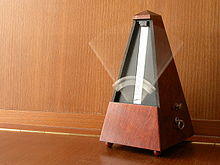
The manic metronome illustrates what mother meant by bonking. (Courtesy of Wikipedia)

But not a single reference to how my mother used it. When I was little, my favorite method of comforting myself was to rock my body back and forth, as if every chair, couch, or car backseat were a rocking chair. I would start with a gentle rocking motion, and slowly build up speed until I reached competition-level rocking. Thud, thud, thud, back and forth, like a manic metronome, I pounded out the rhythm of whatever music was playing in my head. This is what mother called bonking. I broke the springs in one of our couches because I could not sit on the couch to watch TV without bonking the entire time.

I also bonked across state lines. We used to drive from Texas to Arizona to visit my grandma, and I remember asking my mom once when we were going to get there. She said, “If you hadn’t been bonking so hard, we’d have already been there.” I guess the force of me bonking so hard in the backseat cancelled out the force of her foot on the gas pedal. One mile forward, half a mile backward.

Rocking is fairly common in babies. It soothes them. The rhythmic movement is calming, and most stop doing it around the age of three. I obviously needed a lot of self-soothing and comfort because I bonked passionately until I was at least eight years old.

I don’t remember anyone ever talking to me about it or trying to discover what compelled me to do it. My parents just accepted that I was a weird kid and that I’d probably grow out of. I did, kind of. I still love a rocking chair better than other kind of seating arrangement. And I still do some gentle rocking at times when I’m standing and waiting. And who doesn’t rock while listening to the blues?

Caption #1: Yearstricken rocks! Caption #2: Apple rocks! Caption #3: Yearstricken is off her rocker!

If I were a child now, I’d probably  have to see a shrink once a week, be on medication, have two or three psychological labels sewn to my psyche, and attend special classes for children who bonk.

Sometimes children have behaviors that require intervention, sometimes not. Sometimes kids are just weird. That, after all, is where all the weird adults come from.


This post was written from a rocking recliner.

Mother’s Worth

Standard

My mother smelled good.

Most of her life, she worked as a waitress and brought home the good smell of the kitchen with her. With her limited education, waiting tables was one of  the few jobs she could get. After she married my father, he started his own business as an electrical contractor and used the G.I. Bill to attend college at night. Mother’s paychecks weren’t much help, but her tips were. She made good money that way.

For a while she worked at a Mexican restaurant, and her uniform was a white blouse and a black taffeta skirt. When she would come home from work, the aroma of corn tortillas clung to her clothes. I remember hugging her around her legs when she was wearing that taffeta skirt. Those two hungers –food and love – intermingle in those memories, and I can’t eat enchiladas or tacos now without thinking of her.

Mother’s perfumes, though, are more important than the food smells, as far as my odor-evoked memories are concerned. One of her favorite scents was White Shoulders. It has always been one of my favorites, too, although it doesn’t smell the same on me as it did on her. The notes of the perfume play out differently based on each person’s body chemistry, but the melody is recognizable.

Mother’s signature scent was a perfume by Worth. It was called Je Reviens, but she always called it Worth. It launched in 1932 and was immensely popular during the 1940s.

She said that when she wore it, men would stop her on the street to ask her what perfume she was wearing. I’ve heard other women say they experienced the same thing, but I’ve always wondered about that.

In my mother’s case, one or two men may have stopped her just because of the perfume. Most, I think, just wanted to talk to the beautiful, curvaceous woman they saw walking down the street, and that fine smell gave them an excuse.

The original perfume became increasingly difficult to find over the years and was resurrected as Je Reviens Couture in 2004, the year my mother died. It has been reformulated, so it’s not the same. The original Je Reviens, like all perfumes made prior to World War II, used only natural ingredients.

Before mother died, she lived with my brother, so I spent time with him after her death. One evening he called me into his room. In his walk-in closet, he had a drawer of keepsakes, one of which was an empty bottle of Worth oil that mother had kept. He carefully opened it, we each took a whiff of the lingering scent, and then he closed it up again. I still remember that night of laughter and tears and the two of us, standing in a closet, taking hits off a perfume bottle, trying to resurrect mother from a bottle labeled Je Reviens, the French for “I will return.”


One chance, one opportunity

Standard

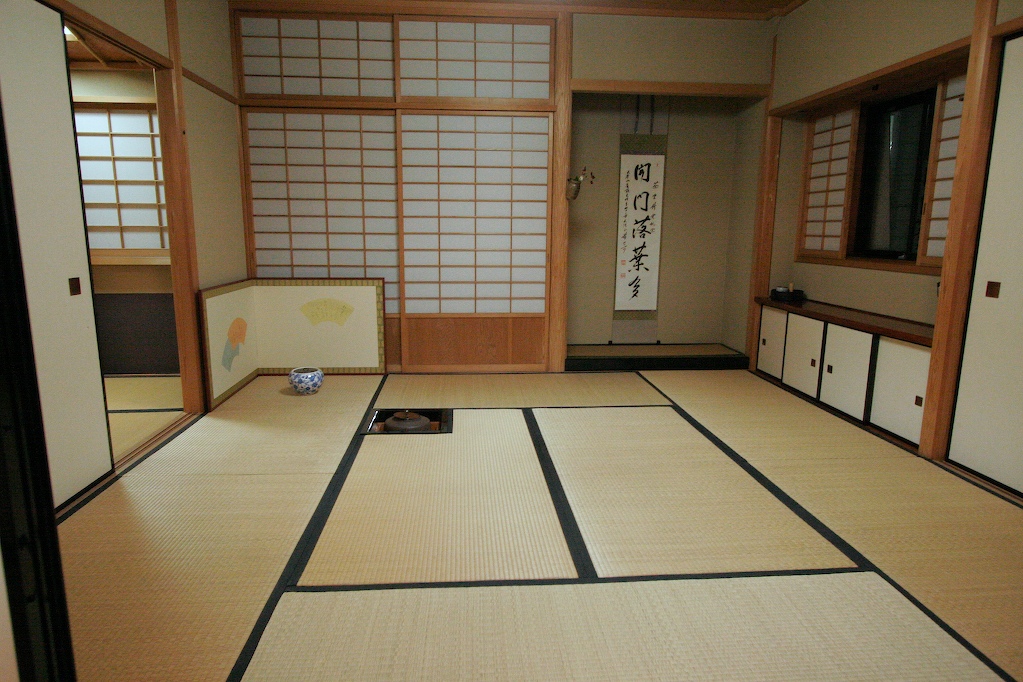
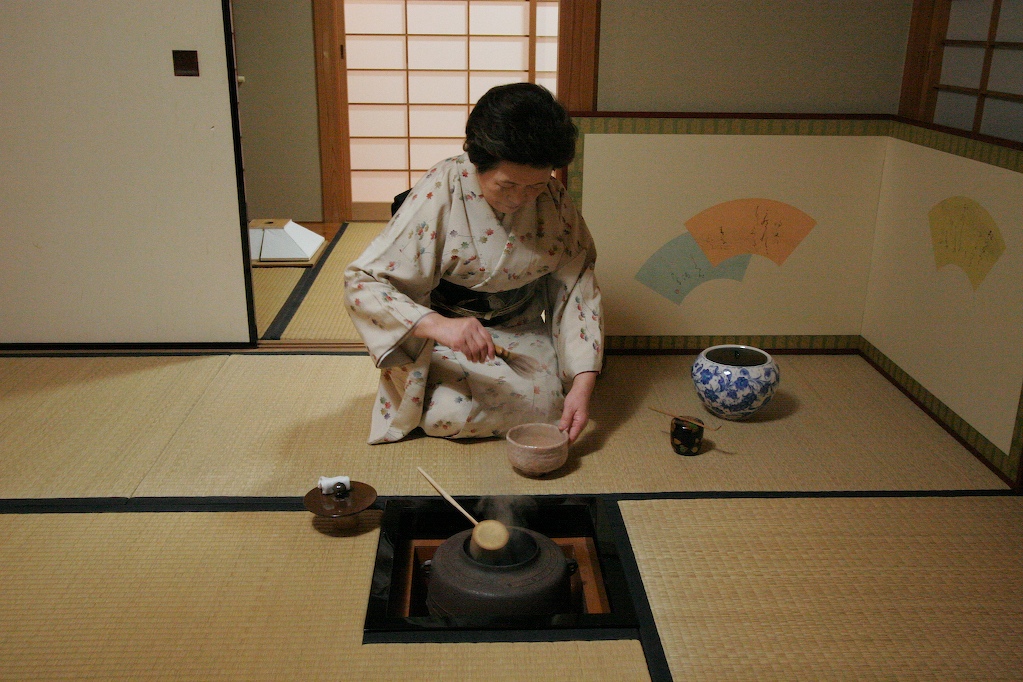
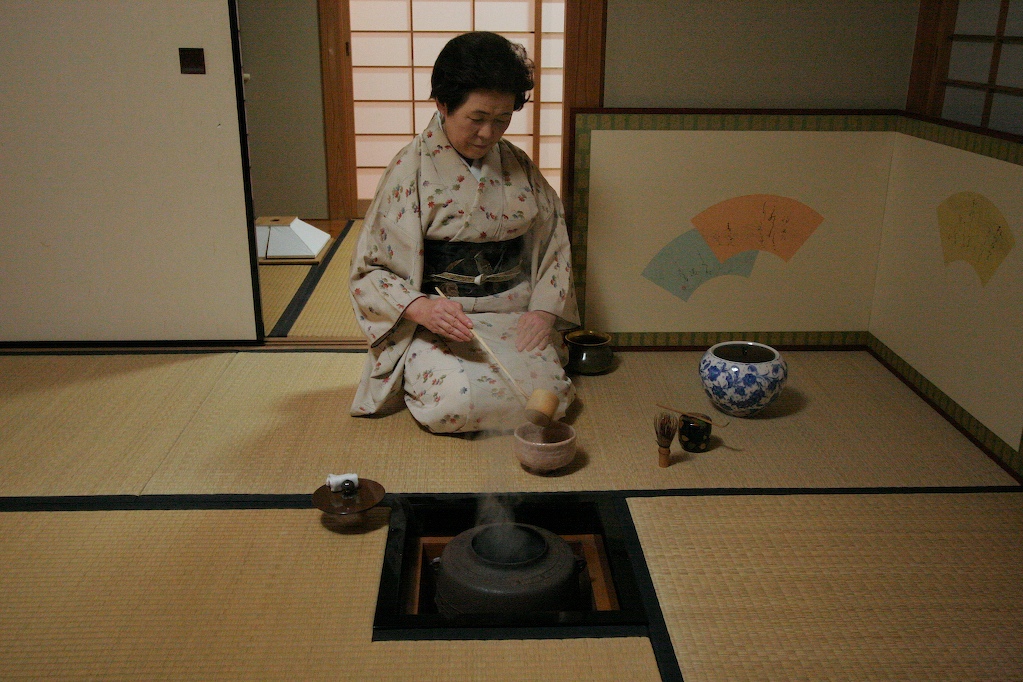
Yesterday I drank a cup of green tea while I did my Japanese calligraphy. The smell of green tea calms me so that I can focus on the ink, the brush, and the strokes. I enjoy it hot or cold, and loved drinking matcha-flavored soy milk or matcha frappacinos when I lived in Japan. Matcha is a kind of powdered green tea that is used in the tea ceremony.

I experienced the tea ceremony only twice. It is a highly ritualized event that gives meaning to the mundane. What could be more prosaic than making and drinking a cup of tea? Yet, in the tea ceremony each and every act is filled with meaning and purpose. The simplest act of stirring the tea, pulling the sleeve of the kimono away, or turning the teacup is noticed and appreciated. For a brief period of time, all that exists is this exquisite act of making and drinking tea.

When else do we make time to marvel at the ability of the body to kneel or enjoy the incredible ability of the wrist to rotate so delicately? During the tea ceremony, this moment, this bending, this pouring, this stirring becomes the sole focus of life. No thought is given to what happened before or what will happen next. What matters is what is happening now.

And it is a communal moment – the shared cup of tea, bitter but lovingly and tenderly made and offered, along with a small sweet. So like life itself. During the ceremony, time is tamed. Tea brings the participants together, and in that moment they belong to the tea and to one another.

Children understand these things so much better than adults. They love rituals. They do something over and over without tiring. The way the page is turned, the voice is modulated, the neck is kissed,  the pillow fluffed, and the last goodnight said – all to be done without variance. And loved for that very reason. The child leads the parent into the ritual – to share the moment, to be together in time, or better, outside of time as the parent usually experiences it. The parent may try to cheat, but the child will rarely allow it, or if the child does, it will be reluctantly and out of obedience or resignation. The moment will be lost.

Although I need time to look both backward and forward to understand this path I am on, I don’t want to miss this moment. There is still much I want to see, do, read, and experience, but the tea yesterday reminded me that I also need time to enter the familiar dance of ritual that brings me into the moment and gives meaning to the mundane. One of the phrases associated with the tea ceremony is “ichi go ichi e” ( 一期一会 ), which means one chance, one opportunity. That’s all we get. Now is our only chance to live, to see, to love, and to share. Let’s not lose the opportunity.

The memory of rain

Standard

Dark comes early since we pushed back the tiny hands of time. One hour makes a difference.


The other evening in the early dark, I drove home on rain-lacquered roads. In town, going through a line of traffic signals, the road was a lake of clear water; the red, green, and white lights the fish shimmering and swimming across it.  I thought of my father because rain and I share childhood memories.


When I was growing up, my family went for a ride on rainy nights. Daddy drove and mother sat close beside him. My sister and I sat in the backseat in a cocoon of sounds: the steady swish of wipers trying to keep up with the rain, the shushing sound of tires on the wet roads, and the clicking of our turn signal winking at the other cars to let them know we were turning.


As a family, we watched the rain transform the known world, first with a bright shine, then with a glaze of gray, but always with beauty. In the car, we marveled at the gallery of sights. There was no time or need to tell each other everything we saw in that kaleidoscope of color and shadow – things moved by too quickly.


Above the rain’s murmuring, soft but clear, we heard our parents’  voices. They told stories about us, our relatives, and their own lives. My sister and I listened, awash in the intimacy the rain brought. We learned that our Aunt Ann had been not only a psychiatrist but also a pilot. The rain matched the  faint echo of crying we could hear in those stories about her. Much later we learned she had committed suicide.


They laughed and whispered too. Mother snuggling closer, daddy putting his arm around her. The two of us in the back, following as they took us farther down the road. My sister and I didn’t realize it at the time that we had already begun our own journeys, away from childhood, away from our parents. But on those rainy nights in the car, we were together going in the same direction.


Soon the talk, the dark, and the hum of wheels would lull us to sleep, and my sister and I would lean against our separate doors to dream of catching the brightly colored fish that swam across the rain spattered streets.


Later we would awake to the place of our belonging because, as sure as rain, the road always led us home.


(Picture is from: http://gossipaboutcars.com/)