I dream of flying

Standard

For as long as I have remembered, I have dreamt of flying. I stand under a blue sky with my arms lifted and then gently push off from the earth and fly, almost float, above my world.  Hope follows me out of these dreams, and I feel as if I share a secret with the sky.


When I was five or six, my father went on a trip and came home with a bracelet and necklace for me. I still have the set. Patterned after the silver and turquoise jewelry common among Native American tribes of the West, it is imitation jewelry, made for children. The necklace holds a rounded horseshoe-shaped piece in the middle, and my father told me that if I held that piece and made a wish, any wish, it would come true.


When you are a child, your nighttime dreams seem as real as your daytime life. I never thought that I was just dreaming about flying; I believed I was flying at night. In the morning, I landed back in this other world, held firmly in the arms of the jealous earth.

The day after I received the jewelry set from my father, I stood on the red brick planter in front of our porch, wearing the bracelet and necklace. One hand grasped the turquoise piece in the middle of the necklace, and the other held my nighttime dream, wrapped up in a daytime wish. I named my wish and saw myself soaring near the elm trees in the yard. Then I jumped.


The earth would not let go of me, and I landed on my feet, one hand still grasping the necklace, the other one empty. I watched my hope take wing and leave me, the sky indifferent to my longing. Children have their own sorrows and know the loss of dreams, sometimes before they have the words to tell you.


For many years, I kept a journal of my nighttime dreams, but for the last five years, my mind has chosen to forget. The other night I stood in a field and the sky called for me, like an old friend inviting me back. Featherless, I flew into that place of my childhood joy, the place of belonging. When I awoke, I could almost hear birds singing in the empty winter trees, a song familiar and forgotten, with a melody of hope.

The key to increasing your readership

Standard

Yesterday morning was a dark and stormy night that found me in a twist of strange fate. On the way to untwisting it, I discovered the key to increased readership! Yes, it’s true; I have another secret to reveal to the world. And once again, I am providing it free of charge. Second because I care about you. First because I tried selling you Dog and a Half word kits and you ignored me. How sad is that? Sad enough that I couldn’t even put it first.


My morning routine seldom varies: up at 4:30 a.m. for first dose of medicine (p.o., Latin for “per os” meaning “by mouth”); ingest ½ cup of granola, followed by reading/internet time; second dose of medicine, as needed; and finally, morning typing time.


The dark and stormy night started with the typing. The more I pushed on the keys, the more I felt like I was pushing on bruises in my heart. I tried typing softly, but it kept hurting. Certain keys produced  tear drops, which as you know can mess up your computer. So, I stopped and felt better and saved my laptop. It’s what I do.


Are you a Freud of psychoanalysis? (Image courtesy of Wikipedia.)

During my time at work, my fate remained hideous kinky, which, if you know anything about the movie of that title, has Freudian connections, much like my life. When I left school late yesterday afternoon, I barely got home before night fell. Thankfully I got there first, and watched through the picture window as the darkness crashed down.  Safely ensconced in my recliner, I opened my laptop, only to be gobsmacked. Yes, smacked right on the gob!


Fast backward. A few weeks ago, my blog was in an accident. WordPress reported it on their front page, so a lot of people came over to see it. Most, of course, took one look, felt disappointed, and left. Over the next few days, some came back, but eventually the onlookers tapered off. The graph below tells the sad, sordid story.


Fast forward. Things returned to normal, I produced wreck after wreck, but not very gawk-worthy.


Pause. Sorry, this is a gratuitous use of language. Somehow I got stuck in this tape recorder image.


Play. We left off at the gobsmacking. When I checked my stats last night, I had almost as many views as the previous day. The only difference was that I hadn’t posted anything. This morning I see that the day I didn’t post, I got more views than in the previous five days when I did post. You need a magnifying glass to see the difference, but trust me, the orange arrow non-posting day has more views.


Can you imagine my excitement? I have discovered the key to increased readership: Do Not Post! It seems counterintuitive, but all new discoveries appear that way at first.


Oddly, I must post today in order to share this information with you. However, because I am posting it, you probably will not read it. I am like Hamlet, or since I am female, Hamlette, pondering whether to post, or not to post.


I hope this helps you. I have more to say, but it will have to wait for a day I don’t post. I certainly hope you come back then.


Wealth by toothpaste

Standard

Would you like to become fabulously wealthy just by using toothpaste correctly? If you’re like most people, you answered yes. Now, would you like to know the secret behind wealth by toothpaste? You know you would. Finally, would you like to get the secret at no extra cost to you? Friends, your answer to this last question disappoints me. You want me to reveal my secret for nothing. How do you expect me to become fabulously wealthy if I give this secret away?


But don’t worry about me, friends. I’ve grown use to the taste of dry oatmeal three meals a day. So today, you are the lucky beneficiary of my largesse. Hold onto your dentures because I am going reveal the fluoride way to lots of money. With pictures!


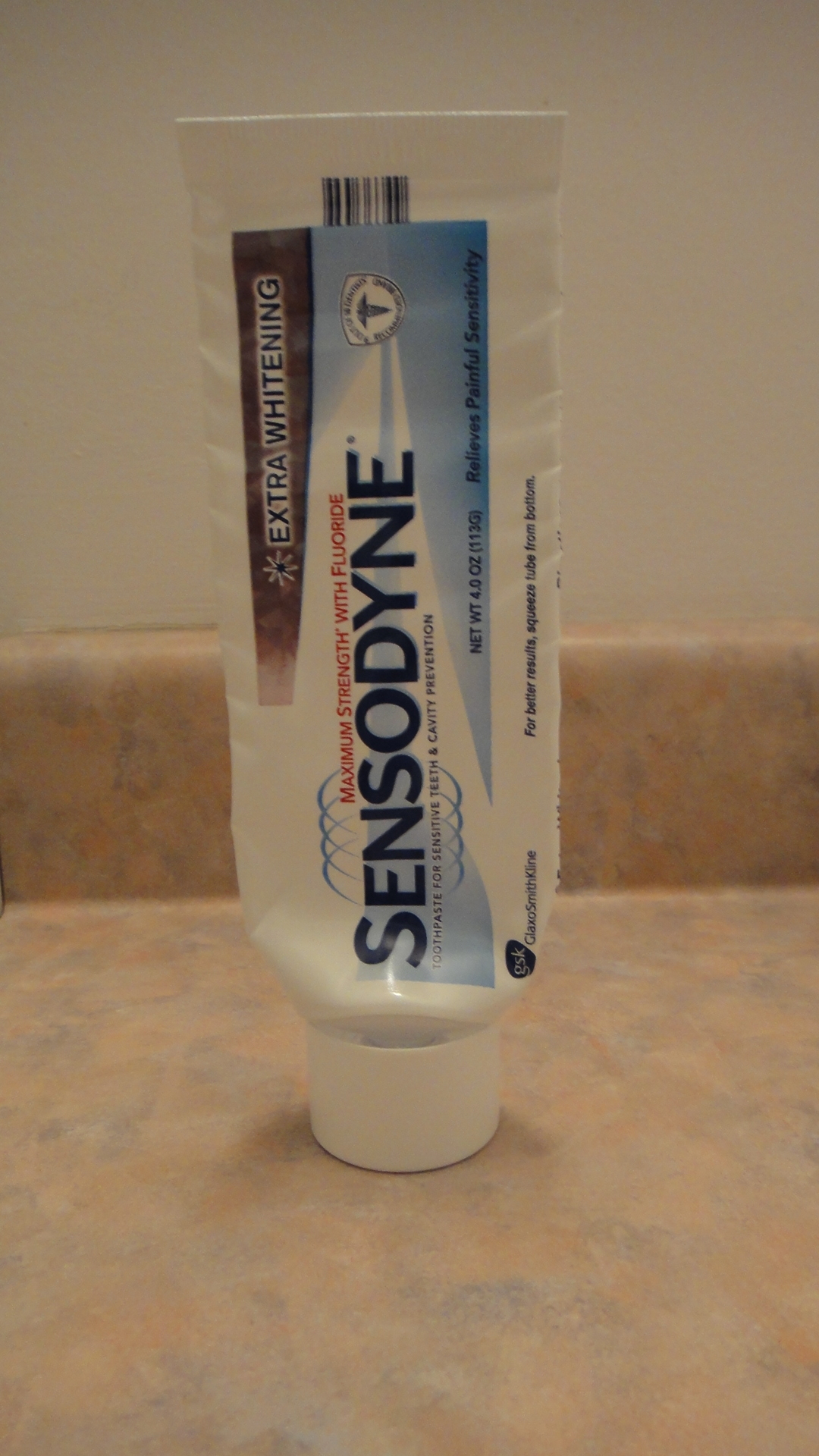
First, I can’t emphasize enough the need to squeeze that tube of toothpaste. Never squeeze in the middle of the tube. From day one, you must apply pressure from the bottom of the tube, gripping each side with thumbs and forefingers, pushing upward. Done properly, your tube will look like the one below.
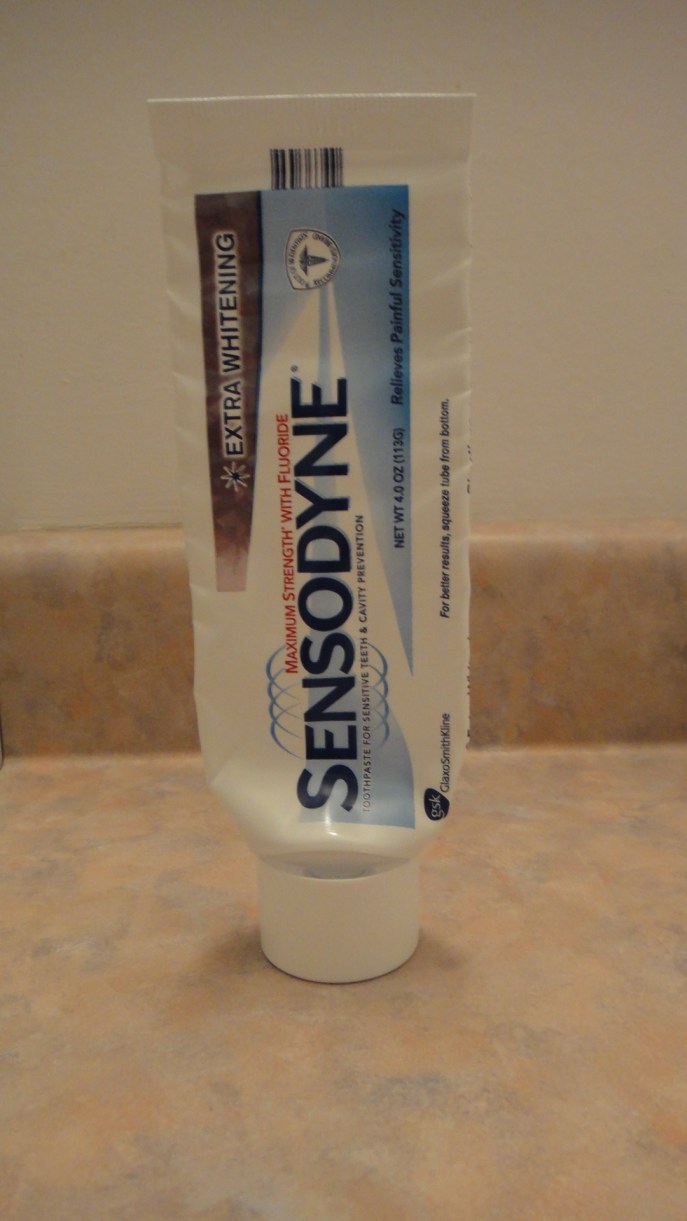
Frontal view of so-called empty tube of toothpaste
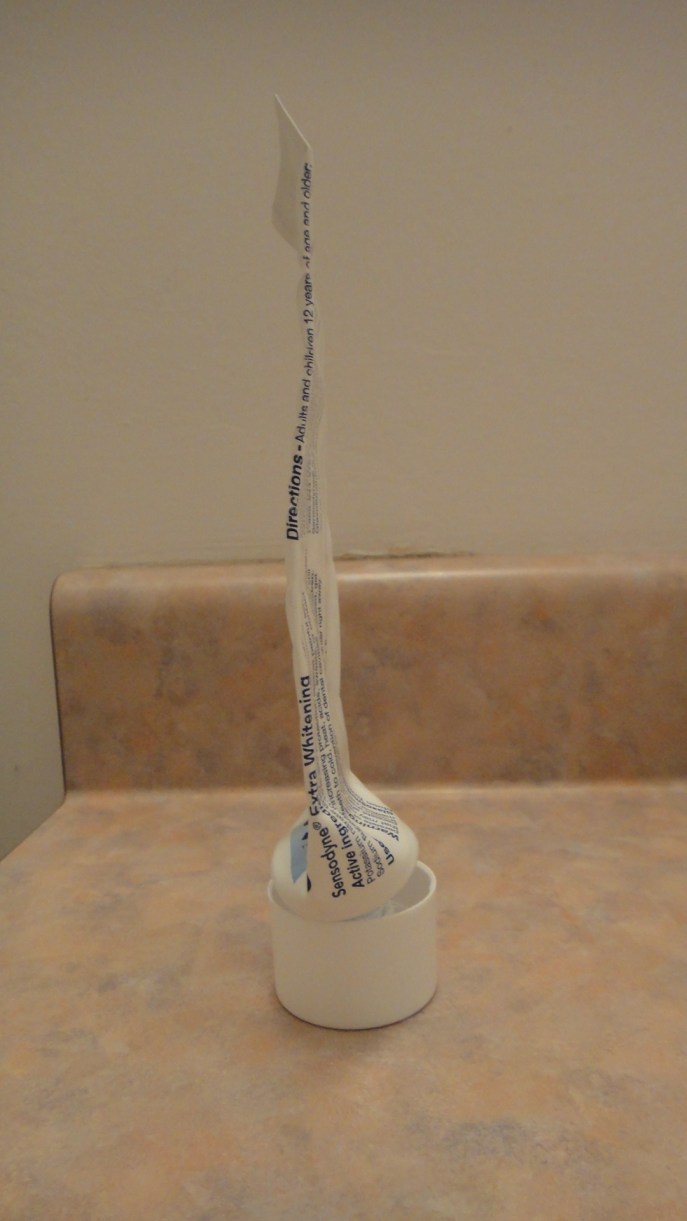
Some people are easily fooled into thinking it's empty.

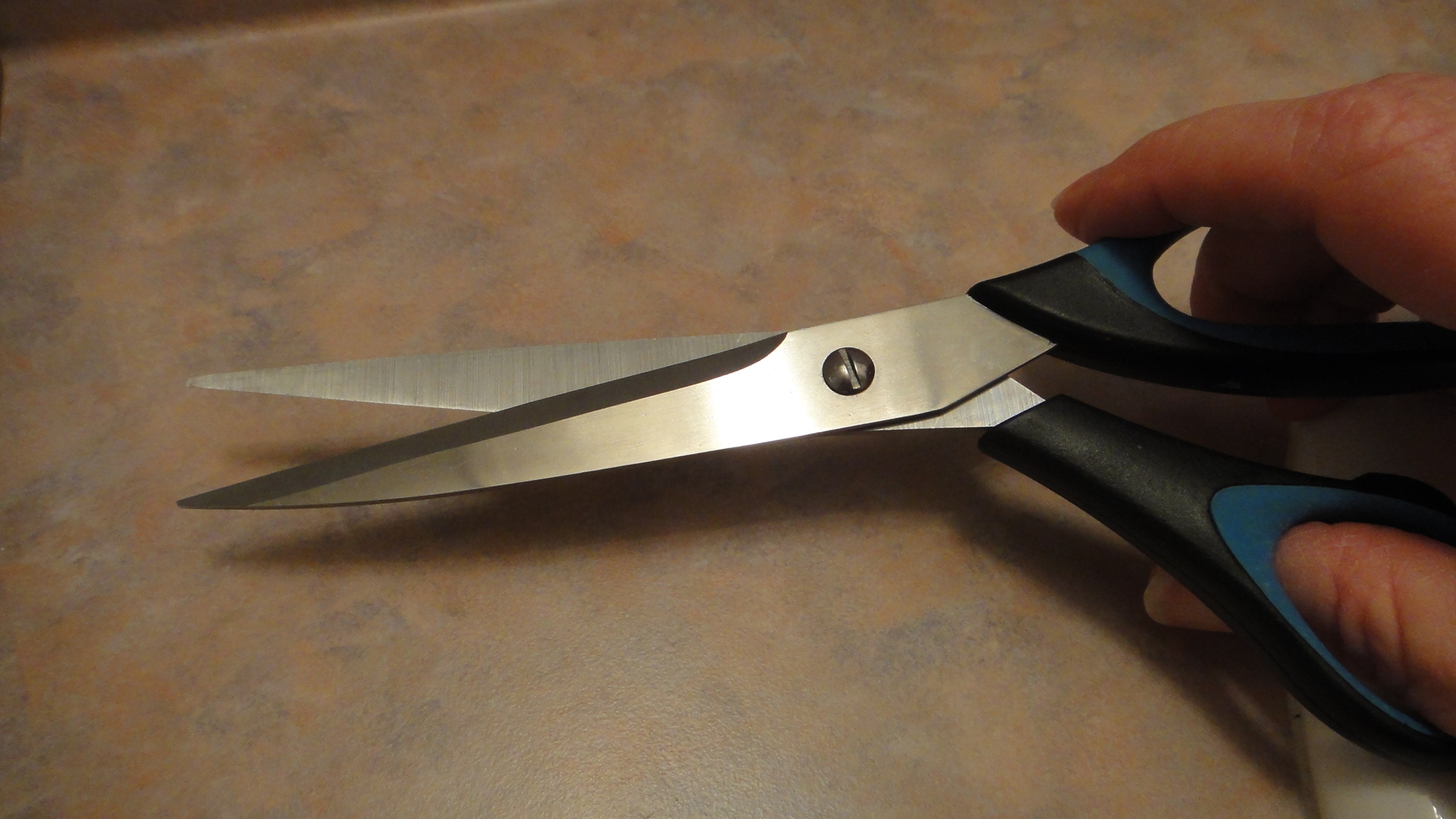
Sadly, many people see a tube like that and think all of the toothpaste is gone! I know better, and soon you will, too. How, you ask. Well, the answer is probably lurking in your junk drawer: a simple pair of scissors. Why don’t more people think of this? I believe it’s because “scissors” is a defective noun (Latin, plurale tantum), one of those words that has only a plural form. It’s one thing to find a scissor in your junk drawer; it’s another thing altogether to find a pair.
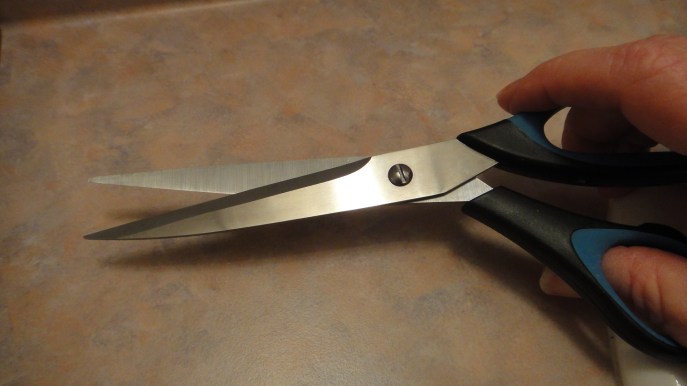
Hand-held defective noun.

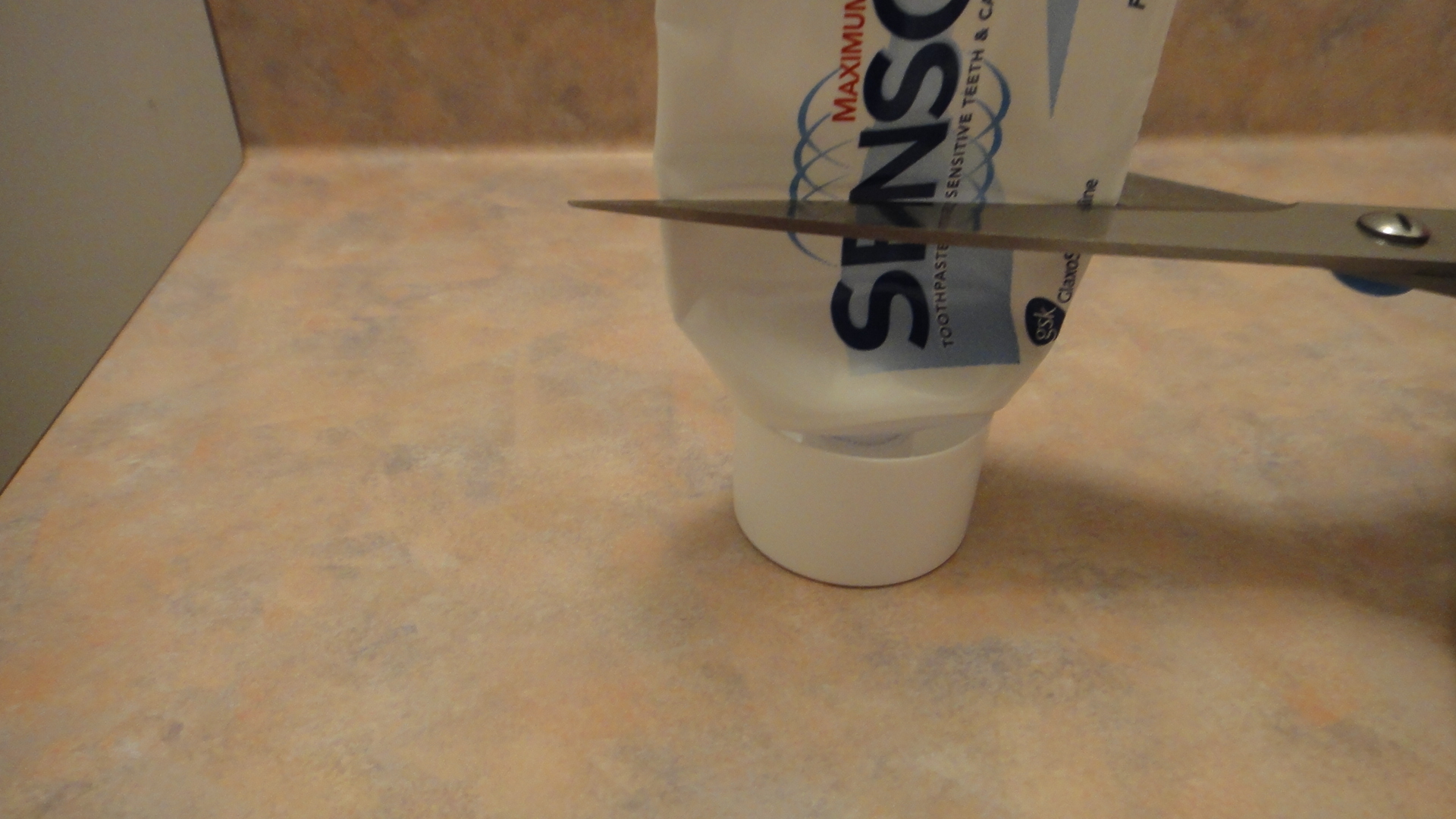
Use your hand to operate the scissors, then cut quickly and sharply, leaving 1.6” at the top. Use a ruler if necessary.

Both toothpaste tubes and defective nouns require squeezing. Weird, isn't it?

At this point, you should look inside and marvel at the amount of toothpaste that you almost threw away! Some people see little dollar signs the first time they look inside a cut tube. If this happens to you, don’t be alarmed, just don’t tell anyone else.

Yes, that much was inside that tube!

Some people say they see dollar signs in this. I don't,but some do.

To prevent the exposed toothpaste from drying out, you need to place the tube in a container.

It's almost like a piggy bank.

If you are not squeamish and don’t share your toothpaste with anyone else, you can just dip your dry toothbrush in the opening to use up the toothpaste. If you share the tube, be sure not to tell the other person you are doing this. Tell them you are using the next method.
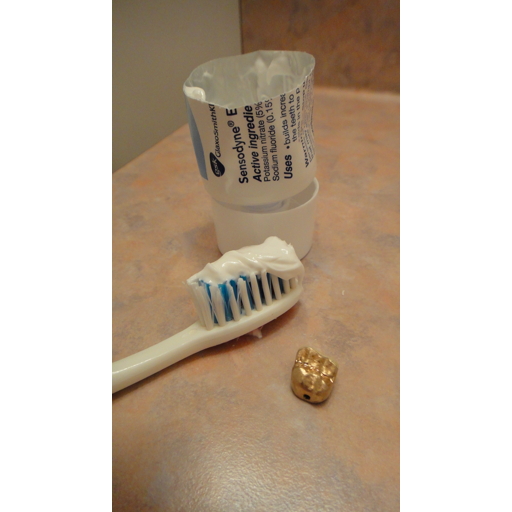
Dip into tube for toothpaste. Don' t forget to brush any gold crowns you have lying around that were once on your mother's charm bracelet.

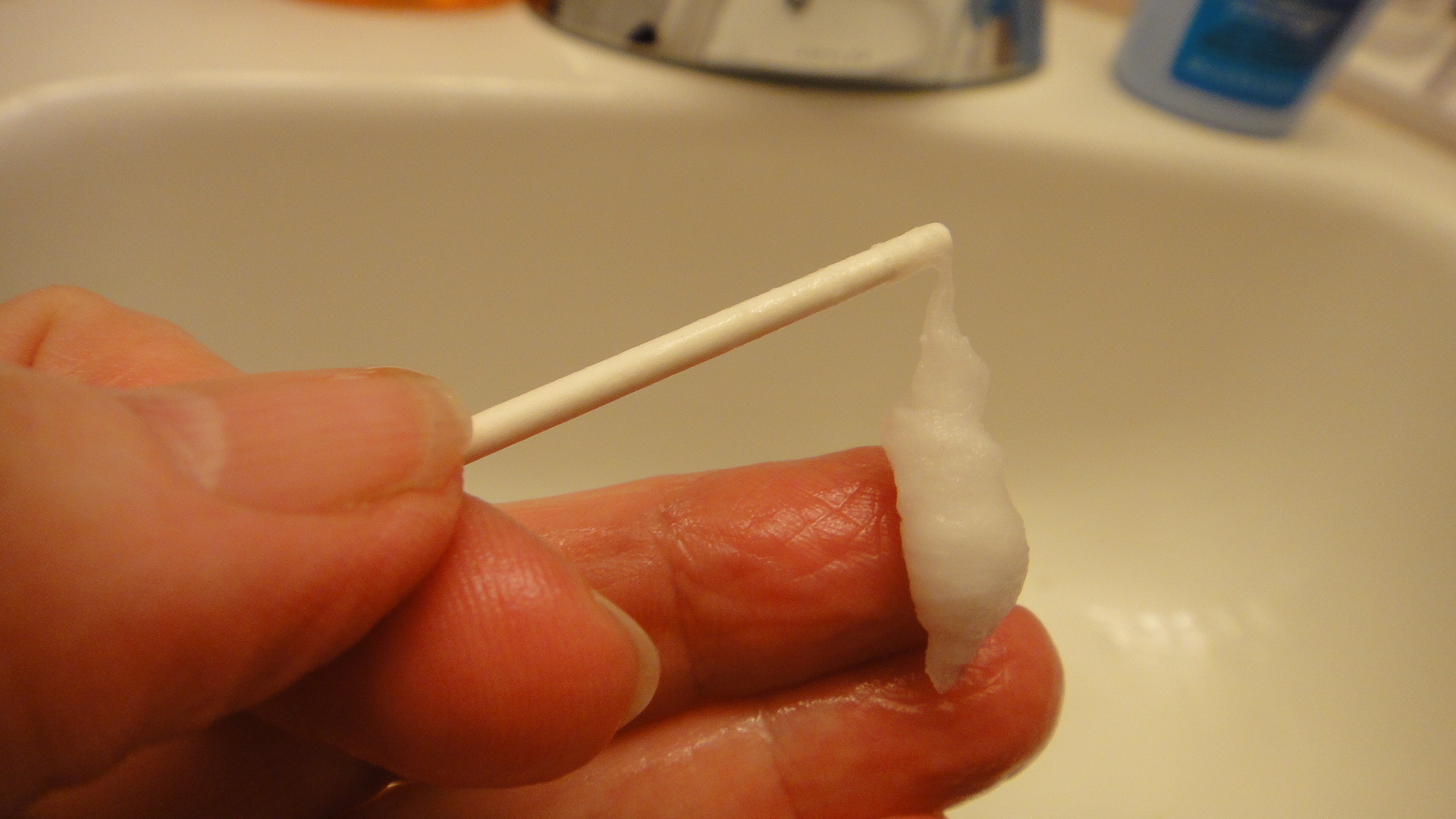
If you are squeamish or the person you share the tube with is in the bathroom at the same time, go ahead and use a Q-tip. Dip it in the toothpaste and wipe it on your brush. Then place the Q-tip in a plastic bag. You can use the other end tomorrow. Do not throw the Q-tip away even after the two uses!

Q-tip method for the squeamish or if you share the toothpaste with someone else and they are watching you.

Once the tube is empty (check the little opening that the toothpaste comes out of!), you can throw it away. I’ve heard reports of people licking the inside and then licking their toothbrush, but who in the world would do a thing like that?


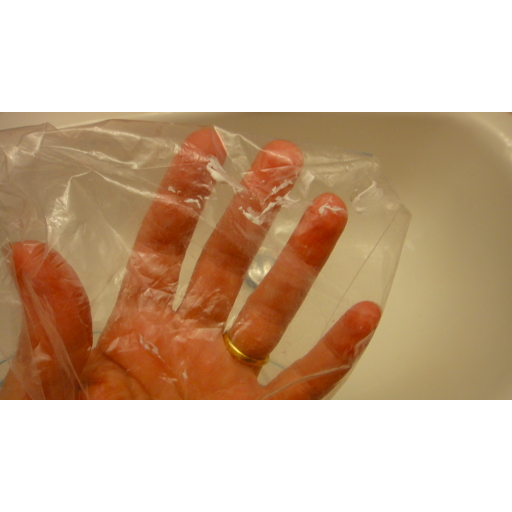
Now you are left with the Q-tips and the plastic bag. Depending on the amount of toothpaste on each Q-tip, you can probably polish at least your large front teeth. Then turn the plastic bag inside out and polish your lower teeth. If necessary, open another tube of toothpaste and squeeze a little on your toothbrush to finish the job.

If you are squeamish, you will have more toothpaste on the plastic bag. I lost my squeams a long time ago and prefer dipping.

Be sure to wash out the plastic bag and use it again! (I shouldn’t have to tell you that.)


For those who are serious about wealth building, you can run the Q-tips under water to remove the cotton. Finding new cotton to wrap around the tip shouldn’t be too hard. A lot of free cotton comes in medicine jars. Dryer lint is also a possibility. I can’t help you with how to attach the cotton or lint. If you are really planning to do that, you need a special kind of help. Make an appointment today.

Warm water removes the used cotton. After that, you're on your own. Even I can't help you.

Now, do the math. Do you see what I mean about saving lots of money? And toothpaste is only the beginning. You can do this with other things that come in tubes: lotions, hemorrhoid cream, and glue. Don’t forget to label the tubes carefully. I’ve heard reports that hemorrhoid cream used on the teeth reduces swelling in gums, but it causes food to slide down your throat before your can chew properly.


If this has been helpful, and I know it has, please take a moment to consider all of the good advice you have received from this blog. As you know, it takes a lot of chocolate to run a blog that is full of so much, shall we say, helpful information. I rely on the generous gifts of dark chocolate from family, friends, and perfect strangers to keep going. Send your chocolate today. Thank you.


In the interest of fairness and the limitations expressly stated on yearstricken’s poetic license, you must be at least ten years old or younger, be responsible for buying your own toothpaste, brush your teeth at least three times a day, and use a lot of toothpaste in order to potentially move into the realm of what yearstricken claims is “lots of money.” Most users of this method can expect to save dozens of dollars over the course of their few remaining years and teeth.

I practice dying every night

Standard

My strength comes in the morning. The early hours wake me at sunrise, smelling of promise and first light. I listen to their bright voices and learn what it means to be born and how to unspool the day from the spinning earth. They carry bird songs in their pockets. Morning is the time for listening. I reach into my heart for crumbs of dreams I’ve carried, toss them at my feet, and wait for the words to land, to eat. Sometimes I hold a word with feathers in my hand and let the tears roll down. It is morning. My strength comes in the morning.


The day is for duty. Small hands point and I must follow. Time schools me, teaches me to climb, move, sit, walk, listen, speak, hurry, wait, and serve. I eat sunlight and grow wings. I cannot fly, but they lighten my load. Duty has a face I love, she never tires, and helps me when I climb. The hours are full of people; we follow time together. Sometimes I rest and wash my feet in their laughter. I give my strength to the day. The day is for duty.


The night is for dying. The words leave me and I watch them rise and go, swallowed by the sky. Sorrow, my sweet sister, whispers in my ear that the time of rest is near. Memories and desires take their leave, sail across the pool of thought till only ripples of their passage remain. I listen to the silence, wrap myself in quiet. The time of letting go has come. My heart steps softly into the dark. I close my eyes, my hands open, releasing every face, dream, and hope I gripped so long, yielding to that other world until I am gone. The night is for dying.


I practice dying every night.


Have you thanked your word surgeon today?

Standard

I just found out from my imagination that today is national Thank a Word Surgeon Day! So I am very excited because as you know, or will know after you finish this sentence, I am a word surgeon. So, thank you, me.

Without word surgeons, no lips would whisper melodies out of flutes, no hand would wield the wild épée, slicing and dicing the villains of the world, and machines would never have the chance to learn to hum. Every flute deserves a kiss from lips, every épée needs to slash out now and then, and all machines deserve to experience the electric thrill of on-ness.


Ever vigilant word surgeons roam the earth searching for nouns, rummaging through old dictionaries, discovering new inventions, reading people’s e-mails, and writing blogs. They are ordinary people who look just like you and me, although I’m pretty sure your mom could tell the difference.


Most of them are kind-hearted people, working late into the night, affixing words that will benefit humankind. One of their favorite suffixes is “-ist.” On discovering the flute, one of them delicately removed the “e,” added the “-ist,” and voilà, the flutist was born. Flutist should not  be confused with flautist, which came later, and was formed by an amateur flaunting his knowledge of Italian. This is where we get the word “flauntist,” which means one who flaunts. Still another professional took the time to add “-ist” to an épée  and Errol Flynn was born, one of the greatest pretend épéeists in the world, who swashbuckled his way into the hearts of millions of moviegoers in the 1930s and 1940s. And finally, I must mention the word surgeon who set the gears of the Industrial Revolution in motion, creating millions of jobs, by having the foresight to drop the “e” and attach “-ist” to a machine.


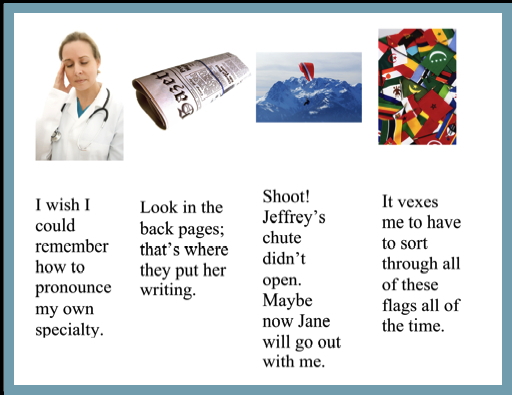
Word surgeons have taken simple nouns and given the world pianists, chemists, and typists. You should be thankful they are not afraid of big words or words that are hard to pronounce. We have them to thank for the otorhinolaryngologist, the feuilletonist, the chutist, and the vexillologist.

However, word surgery is not all fun and games, friends. Bad bananas happen. Sexists, agists, and racists came from somewhere. Don’t blame word surgeons. They don’t take responsibility for bad words, only good words. And if you judge them, they will make bad words about you. It’s what they do: make words.


Because of those bad bananas, “-ist” has been called The Intolerant Suffix by at least one word surgeon I know intimately. And although I fully recognize the dangers, I am going to illustrate how this works. The intolerant part, not the intimate part.  Please understand that the following words are for illustration only and should not be seen as an endorsement or encouragement toward intolerance.

  • Plaid makes you cry – you are a plaidist.
  • Being asked to play another game of Monopoly makes you gag – you are a monopolist.
  • Big hair makes you scream – you are a bouffantist.
  • People who act like donkeys or fools sicken you – you are an assist.
  • Hearing a woman called a “Ho” in a song makes you break things – you are a hoist.
  • Wearing strings instead of panties makes you uncomfortable – you are a thongist.
  • Hearing the f-word all day long makes you want to hit someone – you are a fist.
  • Irons and ironing boards are not allowed in your home – you are an ironist.

Some of you may be tempted to try this at home. I urge you to use caution. Remember, if anything bad comes of it, don’t blame me. However, if anything good comes from it, you can thank me because today is Thank a Word Surgeon Day!

When personal guilt is not enough

Standard

When the thrill of carrying personal guilt wanes, life can grow dull, and you may begin to feel powerless, even depressed. You may look back with longing on your childhood when you first felt the thrill of knowing you were responsible for the feelings of other people. All those adults with their volatile emotions relied on you, a small child, to maintain their equilibrium. Heady days, indeed.


Just follow this road for the rest of your life. (Photo courtesy: http://thedisorderofthings.com/)


As you grew, did your responsibilities expand to include the feelings and well-being of your friends? If so, you are just the person I would like to talk to today: an adult with a strong sense of responsibility. Now, not only do you carry the blame for the moods and poor choices of your spouse and children, but you also have culpability if your relatives, co-workers, boss, or anyone you encounter in your daily life experiences negative emotions or engages in bad behavior. You stride through life with confidence, on tiptoes, blindfolded, across broken glass, barefoot, while walking backwards, and you do it with aplomb and lots and lots of band-aids.


You think life cannot get any better than this, but then something changes. The adrenaline rush of your power over people and that crazy, wild ride on the roller coaster of other people’s emotions starts to depress you. When you wake up in the morning, you are no longer energized by the idea of trying to make all of the people in your life happy and solve every single one of their problems. Wallowing in guilt over the bad choices other people make starts to feel like a duty instead of a pleasure. One day you wake up and think, “I am tired of carrying all of this guilt. It’s too much for me.”


Friend, I understand how you feel. However, giving up is never the answer. You may think you need less guilt when you actually need more guilt. You have grown accustomed to your personal guilt and are starting to find fault with it, to resent the way it nags you, or wakes you up in the middle of the night to talk.


Don’t get rid of your guilt until you hear my solution. I’m here today to help you re-energize your life, to infuse your life with new meaning. I know you’re thinking it is too good to be true, but believe it, friend, I can help you enjoy guilt again!


How, you ask? By assuming regional guilt. Yes, you heard me, you can assume responsibility for whichever region you live in! Fresh guilt is the answer.


Map of Wisconsin, my adopted homeland, where I gargle guilt for breakfast.

Let me illustrate. I live in Wisconsin. Normally we have a lot of snow in the winter; however, this winter we have had very little. Since I do not like the cold, I am enjoying this weather. To certain irresponsible people, that seems like a guilt-free pleasure, but that’s where they are wrong. States like Wisconsin are the freezers where other regions store water they will need in spring. We keep it here in the form of snow because ice cubes are hard to shovel. But what if this year, we don’t produce enough snow to melt and send  down the river to the thirsty people who are too busy sitting around in the sunshine to come up here and get it themselves? They will suffer, and the reason they will suffer is because I am selfish. I wanted a warm winter and I got it. Can I control the weather? No, of course, not, but what does that have to do with anything?  I secretly wished for mild weather, so I must take some responsibility for the drought that follows. Wishes have consequences, folks.


But, you say, what about next winter? Maybe next winter you will have record snowfall, and then where will your regional guilt be? Friend, I have this guilt problem under control. Lots of snow leads to flooding in the spring. Through my taxes, I help support a state that idly stands by letting snow melt and fill up rivers that overflow their banks. Do I do anything to stop it? No, I’m happy that the snow melts. Do you see how my selfishness has once again brought misery to the multitudes. Snow or no snow, it’s a win-win situation for me. Behold the beauty of the logic of guilt.


Today if you are ready to give up your personal guilt, stop and think about it first. Do you really want to give up that kind of power? Do you want to go back to being an ordinary person, responsible to manage only your own feelings and choices? Or, do you want to expand your power and responsibility and achieve world dominion through guilt?


If you have come to the place where personal guilt is not enough, please consider regional guilt. You are only limited by your imagination. Take control of your life today. Be a responsible adult and choose guilt.


Dear reader,


If this message has been meaningful to you in a negative way, please let me know. I count on my readers to be troubled and disappointed by the things I type. Could you take a minute and write to me, letting me know that I am responsible for how you feel today. And if you are planning to make a bad choice based on something you read on this blog or some comment I made on your blog, could you drop me a line. It would mean the world to me.


Culpably yours,

 Yearstricken


Lost in the crowd

Standard

In Tokyo’s Shinjuku station, multiple train lines and subways intersect, carrying over 3.5 million people every day. Waves of people shoulder past, hurrying, blurring by, always faceless. Once while transferring to another line, I met someone I knew. Just once, while moving through a crowd of millions, I saw a face I knew, one that knew me. Another time, a fellow foreigner stopped me to ask for directions. His was the only face I remember from that day.

One part of Shinjuku Station (courtesy of Wikipedia)

I move through life  in a crowd of moments that are faceless, anonymous, and almost indistinguishable from one another. When I least expect it, one of them stops and looks me in the face, forever changing who I am. Sometimes it is a welcome and familiar face that helps me find my way or whispers words of encouragement; other times it wears the face of sorrow, speaking words I fear to hear. I memorize the contours of that face, take whatever is given, while all around the crowd never stops moving, in its urgent, restless rush. The moment that shatters my life is just another faceless person in the crowd to you, utterly forgotten, yet terribly unforgotten by me. And the moments that changed your life? To me, merely moments blurred into days, unmarked and unknown. We each carry our own calendar of joy and pain, of remembered days and moments, but most of the days are missing, torn off to mark the passing time.


We live our lives in moments, sought out by love, hate, hope, sorrow, comfort, happiness, or death. When you least expect it, a hand reaches out to grab your arm, or a voice speaks your name. You are pressed in on every side, where else can you go? You must stop, receive the word, receive the gift, you must face the moment; and you will remember that face for the rest of your life. Then you are swallowed up once more into that crowd, moving, ever moving, carrying your joy or sorrow home.

The heartbreak of affixation

Standard

Pictures of kittens used merely for shock value.

WARNING: Due to some unfortunate and unforeseeable circumstances, today’s post, which was supposed to appear yesterday, is probably going to be tomorrow’s post. It is an elusive pack of words that I’ve been trying to corral all morning, but they’re out in the back forty, wandering around. Every time I get near them, they stampede. Thus, today’s words, which were intended for tomorrow, are here today, docile as kittens, but not house-trained. Please try not to step in anything.


Yesterday I talked about how untrained business people do bad things to nouns by attaching wings and trying to make them fly as verbs, merely fertilizing park benches and other nonliving objects. Some sent as carrier pigeons have messages stuffed in their beaks, but fly backwards, ending up in all the wrong places. Most drop the message and spent the rest of their lives flying overhead, making a lot of noise but not a lot of sense, and releasing something that looks like snow but isn’t.


People suited for business are not suited to affix words.


At night I weep for the wee little nouns that have been almost suffixed to death because someone thought it would fun to add “-ize” to them. The merry little bucket being carried up the hill by Jack and Jill is grabbed from the children’s chubby fingers and finds itself in a business meeting with men in suits making it say “bucketize” while “organize” is marginalized, and no one will make eye contact with it.  Later, in a different city, a young girl pours out her heart in her diary, dotting all the “i’s” with hearts, and then tucks it in a drawer. That night, some thug hired by a multinational business breaks into the house, steals the diary, and the next morning women in suits command their underlings to “diarize” the meeting. And where is “record”? Crying its eyes out in the bathroom, that’s where.

Don't let more cents be lost in board rooms.

Most heartbreaking of all are those pennies you fail to pick up because you don’t think they are worth anything. Friend, stoop down, humble yourself, that penny needs you. Don’t ask questions about how it got lost or how many hands it has allowed to hold it. Every penny deserves another chance. Corporations have people trolling the streets looking for lost pennies, promising them jobs in board rooms, and telling them they can hobnob with paper money. But, people, all of those cents picked up by these corporate criminals are affixed in ways that permanently disfigure them, forcing them to spend the rest of their lives as an “incent” or an “incentivize” or, worst of all, a “disincentivize.” That’s no way to live. People who do that to nouns should have their “-ize” removed.


Harsh? Yes, it’s harsh, but think what they are doing to those nouns.


Affixation should be left to professional wordmasters. I am currently meeting with my imagination to discuss the idea of licensing. We believe that skilled wordmasters should practice a kind of catch and release, in which words are temporarily affixed to use on blogs. Once the posting is over, the trained wordmaster carefully detaches any and all affixes and releases the word back into the wild.


Takeaway for the day:  Change up your life. If you see a penny on the street, don’t walk by; pick it up. It makes more sense to take it home than to leave it there.


If a word is not broken, why affix it?

Standard


Why affix words? Words have dreams, just like people do. Once a noun, always a noun isn’t true. In the hands of a word surgeon, words can be affixed, even if they are not broken. Affixes can be the wings that turn a noun into a verb. Yes, some of these surgeries go bad; untrained business people take nouns and make verbs that are like pigeons in a park: they’re annoying and do little more than whiten the statues. However, sometimes affixing a noun can make it a better noun or transform it into a real, live person. Imagine a world without Bach, Mozart, Elvis, or Jerry Lee Lewis. Where would we be without word surgeons! (Full disclosure: I am a word surgeon.)


Back in the late 1600s, an Italian named Bartolomeo Cristofori had a lot of time on his hands, so he invented the piano. Although it was beautiful to look at, there was one problem: no one could play it because there wasn’t a word for a person like that. Don’t believe me? Look up the word “piano.” I hope you are convinced now. “Piano” means “quiet.” It sat there, strung out, silent, with its ivories untickled by human hands.


One day, an Italian word surgeon (much like myself except that I’m actually American), Mortadella Datsa Bologna, came over to visit Cristofori and asked about the large piece of furniture sitting in the middle of the room. Cristofori, tried to hide his flummoxity, and said it was supposed to be a musical instrument, but that there was no one to play it, so it remained as mute as a table top. Mute and quiet.


The word-maestro went home, worked through the night, surgically removing the “o” from “piano” and adding the suffix “-ist.” In this way, Bologna invented the pianist. The timing was perfect for Cristofori, his staff rejoiced, his income trebled, and he became a key player in the world of musical instruments. Interestingly, one of Bologna’s descendants, Liberace (Italian through his father’s side) was born in Wisconsin. I live in Wisconsin. I am a word-maestro and often refer to myself as an Italian word surgeon. Maybe I am related to Bologna, or as Wisconsinites say, Baloney.


(Note to reader: This is not the post I intended to type today. I think there is something wrong with my keyboard. Today’s post has not been posted but will appear tomorrow. Please consider this post as tomorrow’s post that has already been posted. Thank you for understanding.)


Carried

Standard

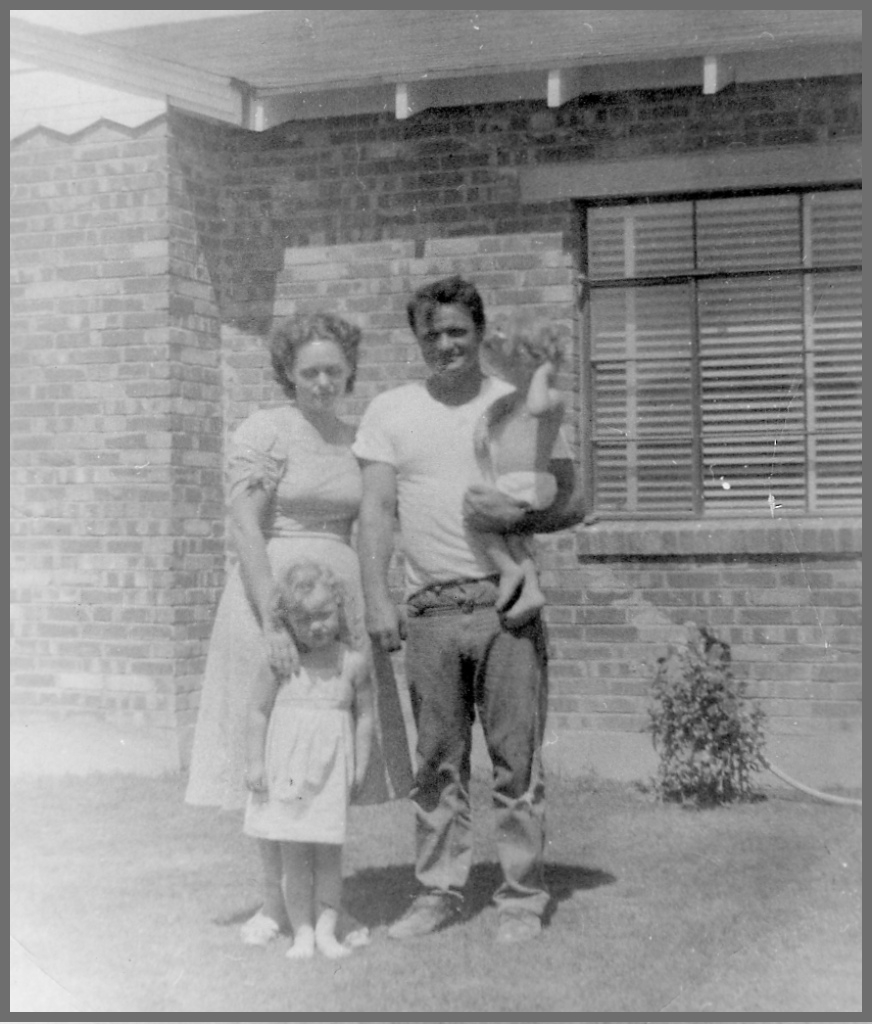
Carried by my father.


I’ve been carried all my life, though at first I was too small to see. My father carried half of me in a small pouch, until he met my mother. I would have been forgotten, but mother came alongside of him with the other half, then placed me in the pocket she put all her children in.


So spare, so silent, she hardly knew I was there, listening, wondering, and waiting. All day she walked and rocked me. I slept as she moved through her day. When she lay down to rest, I woke. Day and night were both dark to me.


Before I knew the words, I heard voices muffle and murmur love, felt the soft bounce of laughter, and the sharp shake of tears. Hands spoke their joy and expectation, now patting, now prodding, now pushing against my feet as I pushed back. Too young for school and all alone, I tried to find the formula for X and Y that would please them. Outside they waited for a boy, inside I waited as a girl.


I tried my best to stay by staying small, but the pocket could not hold me. I knew I had to go. Thinking I should travel light, I even grew a smaller brain. How was I to know I would need a larger one when I got to that other place?


Leaving was the hardest; the passage, dark and narrow. Mother never had a smaller child or one so fearful to appear before the others. We struggled, both of us, until I was carried home.


Almost forgotten once, half here, half there, now here. Carried, always carried, by stories, time, and secrets.


I’ve been carried all my life. How about you?