Thank you for coming

Standard

Every Wednesday evening, Jack and Mary walk into the classroom together. They greet the other students and then sit down at one of the round tables to study. They share a book because textbooks are expensive. When we read about the U.S. Civil War, a student from Somalia tells of her escape from that civil war. She has no hope of union for her country. Two more students speak up; they also fled their homelands because of political turmoil.


Not Jack and Mary. Our country is a good place to live, they tell me. They grew up on an island in Southeast Asia. Jack reads a short story he wrote about the clear ocean water he swam in as a child and the sea cucumbers the villagers gathered from the sea. Mary reads a story about her family’s cows. When she was young, she tended them. She would pick a cow, climb atop it, and spend the afternoon playing her flute or reading a book while the cows fed on sweet grass.


We talk about slavery and freedom. The topic veers when a student from Central America tells us how her government punishes those who speak against it or who dare to protest. Everyone agrees that we should be free to speak our mind, even if we disagree with the government. Mary breaks in and says, We have freedom in my country; it’s a good place.


Both Jack and Mary try to hide their homesickness when they talk about their island home. We came here for our son, they say. Many of the students I teach come to America for their children. They have simple dreams for their sons and daughters: safety, education, and jobs. Jack and Mary are no different. They want their son to get an education and a job, to be a productive member of society. This son, their only child, was born with mental disabilities.


Jack and Mary must be in their mid to late fifties now; Mary bore her son late. Neither one has enough English yet to do anything other than menial jobs. English sounds don’t fit well in Jack’s mouth, so he tries to reshape them into the familiar sounds of his childhood. When he asks me what Emancipation Proclamation means, it takes a minute before I understand what he is saying.


After class last week we talked about the opportunities available for their son. I mentioned the local packaging company that trains and hires people with disabilities. That’s what we want for our son, Jack said. Mary nodded. Our son wants to work, she said. They see his limitations, but they also see his possibilities. All three of them want to contribute, to be part of their new homeland.


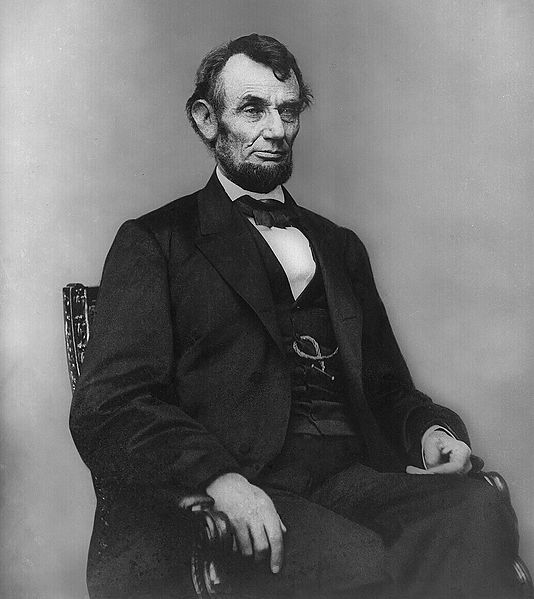
Jack and Mary have another two years before they are eligible to apply for citizenship, but they want to be ready, so they come each week to the citizenship class. We talk about Abraham Lincoln, the 16th president, and practice saying ‘Emancipation Proclamation.”
 

Last night we talked about more recent history: the Great Depression, the two World Wars, and Martin Luther King, Jr. Mary takes careful notes and asks a lot of questions. She wants to get it right. Jack and Mary listen carefully to the mottled stories of victory, failure, glory, shame, courage, and hope that we call U.S. history, and that they are learning to call, our history.


The citizenship class ends at 8 p.m. My day started with a class at 8:30 a.m., so I’m tired. Jack and Mary are the last to leave. They thank me for the class, and I thank them for coming. I mean it both ways: coming to class and coming to America. I don’t explain it; I just smile and say goodnight. I watch them walk down the hall, heads together, talking, just the way you would expect old lovers to do. I imagine them talking of all the possibilities.


Beware of acronyms

Standard


Someday I plan to tell a story of loss, accusation, denial, and the TSA, but not yet. I have been warned by my paranoia to be careful here. I hesitate to spell out TSA as Transportation Security Administration because, for all I know, they flag every mention of their name on the Internet. (Hi, Mr. TSA! You are doing a great job. No need to read further.)


Unfortunately, the acronym mentioned above already has my name and address because I made a formal complaint about an incident in New Orleans. I’m sure that had no connection to being singled out on my last trip through Chicago and made to stand in one of those see-through booths waiting for an agent who never came. I was not far from the conveyor belt where my purse and valuables waited for me, but half of the time my view was blocked by other passengers grabbing things from trays and walking away. I got a good ten-minute workout, bending right and left, standing on tiptoes, straining my neck to peer around people and moving from one corner of my glass booth to the other to make sure the passengers weren’t walking away with my things. Finally an agent walked over to me and said I could go. Maybe being forced to stay in a glass cage is their equivalent of time-out for whiners.


(Note to reader: Sometimes I am stupider than I look. I plan to travel this summer, but now I wonder if I will make it back home. If not, I have really enjoyed getting to know you.)


But that is not what I want to write about today.


Apparently the DHHS, the Department of Health and Human Services, resents the power of the TSA to open your luggage and remove items deemed unsafe or possibly too valuable for you. (You don’t really need that iPad.) The department’s Division of Childhood Development and Early Education, DCDEE, mandates all pre-kindergarten programs serve food that meets guidelines determined by the United States Department of Agriculture, USDA. And now, they have the power to open your child’s lunchbox or breakfast box and decide what is safe for the child to eat.

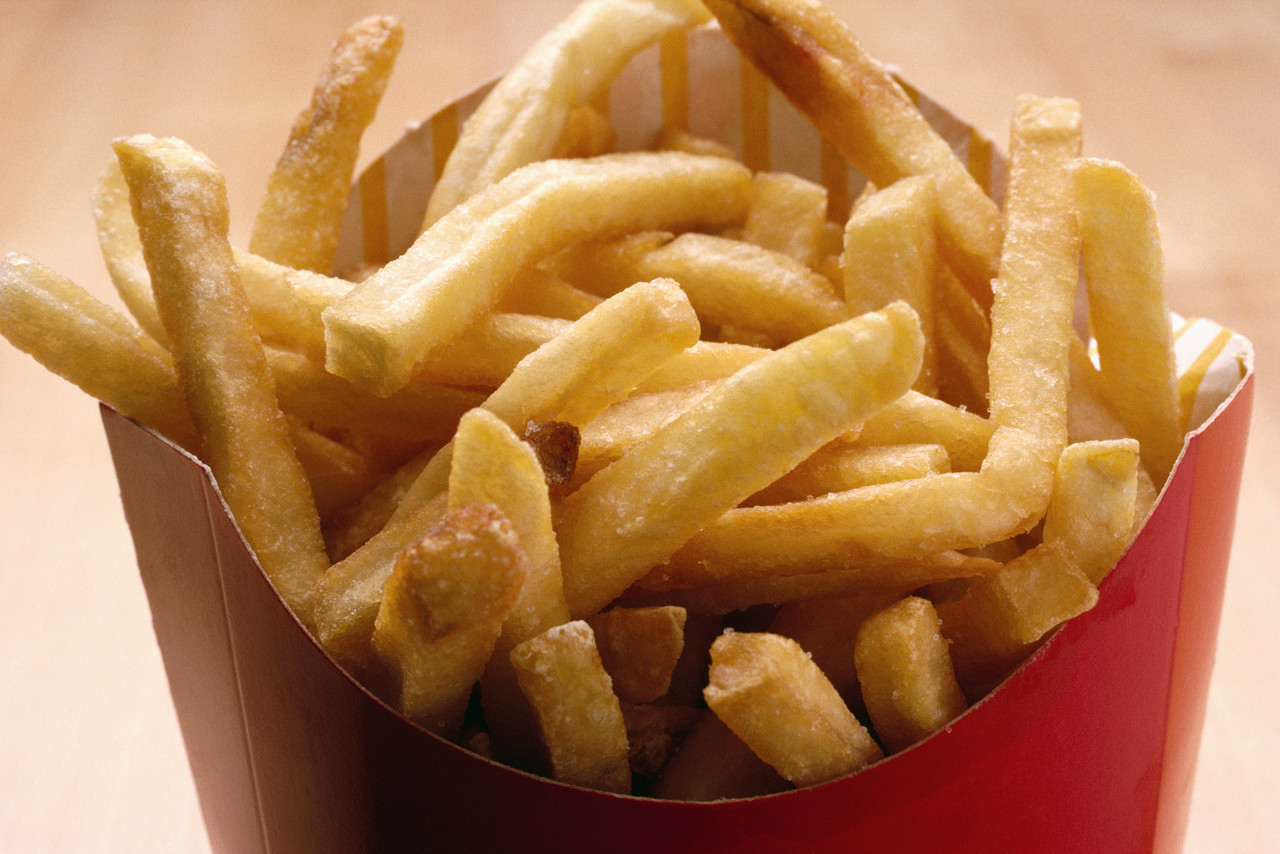
This concerns me for two reasons. First, if you put all those acronyms together, you come up with DHHSDCDEEUSDA. That hardly trips off the tongue the way TSA (Takes Stuff Away) does. It is ugly, gross, and hideous, or what I like to call UGH. Second, the USDA considers chicken nuggets and batter-coated French fries with ketchup healthy food. These are the foods our children receive at day-care centers and schools because we must take into consideration their taste preferences. Never mind offering good food to children and allowing them to develop a taste for fresh food. Give them what they want: processed food with lots of fat and sugar. And if you must serve vegetables, drown them in cheese sauce, mix them in a casserole using canned soup full of excess sodium and additives, or serve huge dollops of dressing to dip those carrot sticks in.


Can you tell this is a rant?


Last week, my daughter received a note from my grandchild’s day-care warning parents not to send any breakfast food such as donuts or pop-tarts. Only healthy breakfast foods are allowed. The following day, my daughter joined her child for lunch. You can imagine her delight at what was served: hotdogs in white buns, oven-baked French fries, canned tangerines, and lots and lots of ketchup. Nutritious, no?  Everything a growing child needs, assuming you consider any of that healthy food and you consider ketchup a vegetable.


Now, excuse me while I bite down very hard on a carrot.


When trees come back

Standard


Trees believe in reincarnation. After they die, they lumber back into our lives as boards, books, and toothpicks.


Trees spend their lives holding out their hands to birds, calling them to perch or rest. In their second lives, trees come back as chairs, inviting us to sit down, offering an arm to grip, attending to our conversations without remark, and sharing in our silences. At night, we nest in tree-made beds, hatching dreams like eggs.


In their first lives, trees provide banquets for the birds: beetles, ants, and caterpillars. When they return as tables, we flock to them and find the food and wine that fill the house with love and laughter. And we keep their perfect splinters in a jar to pick our teeth.


Some trees become the bones of houses, use their strength to keep the roof over the heads of all who have forgotten them. Others are the doors of daily life, sliding, slamming, creaking, opening, shutting us in and out. They make a place of quiet for one and provide the lock that opens love for two. So many secrets hinge on them.


Trees write the world’s story on their leaves. In fall they send the pages down, though few will stoop to read them. They tell the tale every year as if it were the first time. Coming back as books, they do the same, waiting on the shelves, leaves and leaves of stories falling into minds who stop to read them. And every telling new.

Trees who spend their lives trying to catch clouds come back as poles to hold the wires words squeeze through. A hundred years ago or more, people spoke with patterned sound, tapping news of wars, births, deaths, and regrets, like birds tapping on the bark of trees.


When taps and codes were not enough and people phoned their voices, the wires sang and hummed with promises and lies, rang with jokes, the murmured shame, or disconnected lovers; a goodbye click, the end of every story.


These unleaved trees with straightened arms, stand without a whisper, yet call out to the birds, who return, like acrobats with wings, to balance on their wires. In that other life, when poles were trees, they learned the art of listening from crows complaining of the rain and winds whispering of angry clouds to come.


Fewer voices travel on the wires now, but these poled trees do not complain. They shoulder power to brightens our lives as they once carried the luster of sun on their shimmering leaves.


When trees return a second time, they hold us, shelter us, offer us a place to lay our heads, bear the words that tell our stories, give us room to live, shut out the world of noise, and listen, always listen. When trees come back, they yield to our sharpness and our desire to measure and control. In the quiet, when we leave the room, they dream of rain, wind, and bird song; each tear falling softly as a feather on snow, lost by a winter bird in flight.


Some words

Standard


Yesterday I interviewed the word “some.” Today you’ll see why I was impressed.


The Anglo-Saxons, those lovers of sturdy, compact words, spelled “some” with just three letters, sum. When you are a warrior, you can’t go into battle with extra gear, so you like your words spare and without extraneous letters. They bog you down. Anglo-Saxon warriors invaded and settled much of Britain, with simple spears, throwing them at their enemies until they got the point that this was more than a road trip. The ships the Anglo-Saxons came in weren’t going back. Those warriors also sent their words out to conquer hearts: read Beowulf and be prepared to submit. Today, when we want to make a point, we often grab some of those well-honed Anglo-Saxon words and throw them at our listener or reader.


First page of Beowulf manuscript from Wikipedia


Although “some” has been working for writers since the 9th century, including King Alfred the Great who translated of The Consolation of Philosophy by Boethius, it still looks great. I think it’s because it gets so much exercise.


Some use it as a pronoun. As I just did. However, some people prefer it as an adjective. Like me, in that last sentence. Back when “some” was starting its career, it worked as both. Then in the late 1500s, it applied for a job as an adverb, pairing up with comparative adjectives, to say, “I’m feeling some better now.” Once it got used to being an adverb, some Americans asked it to work with verbs so they could say, “I think some about retiring from my job, so I can read blogs all day.” You might use it as an adverb, too, when you write your mother and say, “I’m sorry I haven’t written in the last six months, I now read some 200 blogs a day. I promise I’ll call at Christmas.”


Even though “some” likes being its own word and going out alone, it’s not a loner. In fact, it likes nothing better than going places with other words. After years of appearing in public with words like “one,” “body,” “where,” and “time,” it agreed to give up its autonomy and become one word, with the stipulation that its name appear first. It’s the only evidence of self-promotion that I discovered about “some.”


Since “some” rarely calls attention to itself, I’m inclined to look kindly on its desire to appear first because I admire its willingness to serve a suffix. As you well know if you read this blog, a suffix is like a dog’s tail. Had you bought my Dog and a Half kit (now marked down 85%!), which you didn’t, you would have been able to create a lot of words with the suffix –some. That should give you pause.


Back in the early 900s, “some” joined hands with “love” and produced that most lovable word, one of my favorites, called “lovesome.” Around the same time, it joined up with the word wyn, which meant “pleasant” or “agreeable” and gave us the word we now spell as “winsome.” It worked as a suffix for several hundred years, but for some reason, words like “whosome,” “whatsome,” and “wheresome” never caught on. I like them and think we should try to revive them.


In the middle of the 1400s, “some” became interested in numbers. Writers could now speak of a “twosome” or a “threesome.” Today, we have dozens of words – nouns,  adjectives, and verbs –  that end in the suffix –some. Some are regional, but they belong to all of us who love words. Here are some of my favorites:


  • Blithesome – cheery
  • Bunglesome – troublesome
  • Chucklesome – amusing
  • Delightsome – pleasing
  • Fulsome – abundant; plenteous
  • Fretsome – given to fretting
  • Irksome – wearisome
  • Meddlesome – given to meddling
  • Toothsome – pleasant to the taste
  • Ugsome – loathsome
  • Woesome – woeful

I could go on, but that would be tiresome and boresome. Have a heartsome day – one full of gladness and cheer.


An extract from the Anglo Saxon Chronicle © The Bodleian Library, University of Oxford, MS Laud Misc. 636, fol. 62v.

A word walks into a writer’s brain

Standard


A word walks into a writer’s brain looking for a job. The writer takes the resume and looks it over.


You have an impressive work history. I see that you worked with Chaucer and have worked for every writer that uses the English language since then. Do you work in every genre?


The word blushes and nods.


Okay, let’s look at role in syntax. You’re an indefinite pronoun. That’s an exclusive club that no new words are going to get into anytime soon. You also do a lot of work as an adjective, but don’t seem to mind working as an adverb now and then.


The word shifts in its chair, unused to drawing attention to itself. It gazes out the window.


The writer looks up from the resume and peers over her reading glasses. The word looks good for its age, she thinks, yet it’s nothing special to look at. She’s familiar with it and has never given it much thought, but now that she sees its resume she’s impressed. She lays the paper on her desk.


How do you see yourself? What are your strengths and weaknesses?


The word detests questions like this and feels its resume should speak for itself. Writers can be such snobs when it comes to words, it thinks, but these interviews are necessary. We need each other; writers can’t express their thoughts without words, and words die if they aren’t employed.


The word adjusts its glasses and sits up in the chair. “Let me start with my greatest weakness. If I am used too much, the writing becomes vague and imprecise. I do my best work if I’m used sparingly. But, of course, I don’t really have a choice.”  The word wonders if this sounds like blame shifting, so it tries to think of another weakness. “I am plain-spoken and try not to draw attention to myself, so I suppose, a few people might consider that a weakness. I’ve never been on anyone’s favorite word list.”


“My greatest strength is my versatility. As you can see from my resume, I can work alone as a pronoun, adjective, or adverb, but I also work well with others. When I started my career, I spent hundreds of years modifying and hyphenating words that I later collaborated with to form single words. I also enjoy supporting other words as a suffix to create new adjectives. In that role I have worked with adverbs, nouns, and other adjectives.”


The writer stretched out her hand and grasped the word’s hand.


Can you start tomorrow?


“Yes,” the word said.


Okay, be at this blog tomorrow morning and we’ll begin.


A day to leap

Standard


I perch on windowsills for years, waiting to jump, believing I can fly. When I finally leap into the arms of the air, I land on my feet in another room, just like the one I left.


Staring out of windows, I have believed for years that the outside is a different world. The sky holds her arms out wide and tells me, “Jump. Don’t be afraid. I will catch you.” It takes me years of courage to push off from that windowsill. With my clumsy wings of hope and desire, I leap and land inside again.


I still believe in windows. And after I readjust my wings, I may take another leap.


Icarus by Keith Newstead at http://www.cabaret.co.uk/artists/keith-newstead/

Image of Icarus from http://blog.dugnorth.com/2008/05/flying-mechanical-icarus-automaton-at.html

Froggery bloggery

Standard

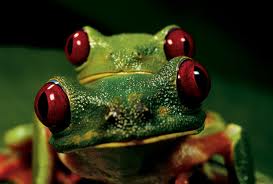
If a froggery is gathering of frogs, a bloggery must be a gathering of blogs. Or, for my purposes, a gathering of bloggers, who sit around the WordPress pond croaking. Not the kind of croaking that leads to funerals, although some days, because of the posting, the reading, the commenting, the researching, and  the revising, followed by more of the same, the exhausted blogger may feel close to death.


Headline: Death by Blog. Today in Podunk, Wisconsin, a husband discovered his wife’s dead body in their home office, sitting at her desk and staring at her computer with her fingers still on the keyboard. Mrs. Mortimer had been there for three days before her husband realized she was dead. “We often went days without speaking,” he said, “because she spent all day writing, reading, and commenting on blogs.” It’s the fourth case of death by blog this week. Experts attribute the deaths to blogged arteries, leading to permanent brain freeze.

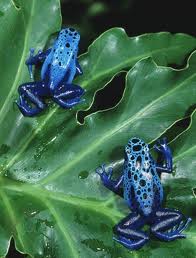
Okay, back to frogs and blogs. After extensive research, which may translate to over a hundred minutes, I have discovered some amazing similarities between frogs and bloggers, which I think you will find ribbiting. I know I did.

But first, you must understand that the crucial difference between frogs and toads is all in your head. Popular culture put the idea there, along with thousands and thousands of images of J*st*n B**b*r, he who must be asterisked. In spite of their differences, frogs and toads belong to the same order, Anura; they just have different last names. Some have more warts than others, but so do some of your family members.

At last we are on the same taxonomic page, so here are the similarities:


  • A frog’s skin hangs loosely on its body. Compare that with the slack-jawed look of bloggers who sit in front of a computer screen for hours and days. Then, if you dare, stand in front of a mirror with just your froggy skin on. Anything looking loose? I thought so.


  • Frogs are nocturnal creatures. Think how many people blog at night. When you wake up, are there new blogs to read and new comments to answer? Again, I thought so.


  • Frogs wear camouflage to help them sleep during the day. Many bloggers have so-called jobs during the day, but most of them just look awake. They are half asleep because they stayed up too late blogging. Also, they have special eyelids that make them look like they are engaging in a conversation with you while they are mentally composing blogs or comments for other blogs.


  • Some frogs produce psychoactive skin secretions that make you hallucinate. You know which blogs I’m talking about.


  • Frogs return by the thousands to breed at the body of water they call home. Every day close to 500,000 bloggers gather at the WordPress pond, post close to 850,000 new posts and almost one million comments. Just today, as of 6:30 a.m., that adds up to 182, 325, 317 words. That’s a lot of spawn.


  • A frog is an amphibian, which means “two lives.” Before you become a blogger you were a person with a life, once you become a blogger you lost that life and now live in the blog pond. And you look different, with looser skin.


  • Frogs appear in stories as harmless, unsightly, and clumsy creatures. However, they often hide some talent or their frogginess is merely a disguise. In the blog pond, reading a blog is like kissing a frog and being magically transformed. Sometimes. The other times, it’s like kissing a frog. With warts.

Happy Leap Day! I know it’s tomorrow, but I have been pondering this for a while and wanted to get a jump on all the celebrations and well-wishing. And, although I have toad you this before, thanks for reading.


All photos courtesy of http://www.theinformationarchives.com/frogs/


Getting home from the last station

Standard

The wind swept out the flooded floor of the sky, drenching the world below. I watched the night through the windows as the train hurried through the falling water. When we pulled into Hamadayama Station, I felt relief and dismay. In ten minutes, I could be home. But I had to walk through the rain to get there.


Ten minutes in that insistent rain felt like a lifetime. The cold didn’t think much of my jacket, and my umbrella was built for a kinder world. I carried the taut cloth over my head to hide myself from the sky, believing I could. Then I started walking.


My feet drowned first and my pants clung to me like a shroud. The wind resented the umbrella, which kept my head dry as long as it could. Finally, it threw its hands up in despair and surrendered.


I yielded to the baptism of rain until I managed to half open the broken umbrella. I belonged to the rain now. On the dark streets, I saw a few others, struggling forward. We didn’t speak. Lost in our private thoughts, we were willing ourselves to a place of belonging. All I could think of was home, where I would be safe, where I would be warm.


Those last few steps were the hardest. They always are.


You cannot imagine my delight, grasping that cold doorknob, knowing the door would open into a world of warmth and light, with all of my loved ones waiting for me.


It rained with fury that cold November night in Tokyo.


My feelings about sentimentality

Standard

Words are like celebrities. Some of them keep their signature style over the centuries; others turn into parodies of themselves. Public opinion is part of the reason. Words that socialize with people in power often become so popular that everyone knows and remembers their names. They use their connections to stay current. Other words go out of style because they only want to talk about the past.


Word handlers – writers, journalists, poets, and essayists – play a part as well. Too much promotion and people can grow sick of a word. Ask the word to perform in ways it’s not suited for and people will look for a different word, one that has honed that skill. Once the handlers start sending a word out on assignments just to make quick money, a word can grow jaded and start to say whatever the highest bidder offers, even if it is the opposite or near opposite its original meaning. Take a word like silly. Back in the 1200s, it meant “pious” or “blessed.” A century later, a silly person was “weak” or “pitiable.” By the 1570s, only fools and the feeble-minded were called silly.


Trace the root of “sentimental” back to the Latin sentire and you find the meaning “to feel.” The words “sense” and “sentient” come from the same Latin parentage. The first usage of the adjective “sentimental” in the 18th century referred to something characterized by feeling or sentiment. However, after the word began modifying ideas and novels filled with excessive emotions, people began to use it to mean too much emotion or sentiment. Hanging out with “maudlin” and “mawkish” ruined its reputation. Now its name is splashed across every dictionary tabloid in the land, so no one will ever believe it when it says, “But that’s not who I really am.”


Fortunately, even words with a bad reputation have cousins or other relatives that will stick up for them. Words are notorious breeders and there’s hardly one who doesn’t have at least one good apple in its thesaural barrel.


For some reason (call me tender-hearted), I started feeling sorry for “sentimental.” A few bad choices in life and suddenly you’re a pejorative. So I  looked up some of its first cousins and they introduced me to even more cousins who introduced to me some well-known, likable words that no one would be ashamed to be seen with in public. See the chart below.


Sentimental and its relatives


If you have time and would like to see how words come in and out of fashion, go to the Google Ngram Viewer and type in words. Please don’t go there is you have work to do. I didn’t, so I tried avuncular, of or about an uncle, and discovered that its growing popularity was unstoppable until just a few years ago.  However, verdant, green or covered in green growth, has started to fade, mowed down by the whims of fashion.


Enjoy.

Sentimental swoons

Standard

Sentimentality is one of the nicest pejoratives you’ll ever meet. Maude, as I call her, cries easily, regularly rams into icebergs of emotions that sink her unsinkable optimism, sending her to the bottom of the ocean, but not before she can remember her happy childhood when every flower smelled of heaven and housed a butterfly, and house-trained robins fluttered above her head, leading her safely home where she lived happily ever after. She always manages to escape or resurrect from her watery grave and dry off her emotions, just in time to plan her next voyage across the sentimental seas. She calls every sailing vessel the Titanic, closes her eyes or changes the channel when the bad parts of life come on, and always thinks in pink. Even her sunglasses are rose-colored.


The Titanic (photo from Google)


However, Maude wasn’t always a pejorative. She was the darling of philosophy and literature in the 18th century; she looked more attractive when she was younger. During much of the Age of Enlightenment, Sentiment had to eat in the kitchen, while Reason sat at the formal dining table entertaining scientists, philosophers, and writers. After a while, Sentiment got tired of eating the leftovers and seduced the master of the house. When she sat down at the formal table and poured her wine, the conversation turned to discussions about subjectivity, introspection and her role in developing a moral sense. Sharing the table was one thing, but now Reason, long used to hunting alone, had to take Sentiment with him when he went out looking for moral truth. Reason always fancied himself the better shot.


Not-so-stern-looking Laurence Sterne, author of The Sentimental Journey, a sentimental novel. (Photo from Wikipedia)


Maude appeared in many of the novels of that era, using her beauty and brilliance to appeal to the reader’s emotions. After loosening the reader’s hand from the grip of cold logic and reason, she grabbed it and took the reader with her as she supped with sorrow, fought off lascivious brigands, and succumbed to both love and terror by swooning. Carried across the stormy seas of emotion, battered and bruised, now aloft on the crest of a wave, now almost drowning in its trough, the reader arrived at port, armed with a moral compass to find his or her way safely home. It was the only way Maude knew to teach the reader how to live nobly and morally. Ever the heroine, she drowned or died in story after story, the consequence of being too good for this world. She always showed up for work again the next day, ready to teach someone else.


Modern and post-modern readers who have grown up eating irony-fortified cereal for breakfast usually feel seasick after riding the high waves of sentimental novels from that period. Maude’s excesses led inevitably to parody and ridicule. She moved out of her manor, where she had entertained well-bred friends with refined sensibilities, and bought a house in town, next to the used bookstore. You have probably seen her shopping at Wal-Mart; the prices make her swoon.


People who write capital L literature want nothing to do with Maude. If she appears in your story or poem or essay, critics will label your writing sentimental, and they will use a sneering font on the label. As you know, labels written in sneering fonts are almost impossible to remove, so you can forget your dream of obscure fame in literary journals. Oh sure, there’s always the New York Times best-seller list, but do you really want to end up like Nicholas Sparks?


It’s probably too late to try to clear Maude’s name, no matter how much we may like her. I’ve noticed that she often uses her first and middle name these days: Maude Lynn*. She was never one to show restraint, any more than I do when it comes to puns. She chose a life of excess; that’s why a lot of people won’t make eye contact with her. I think she will always be popular, maybe not with the big L people, but with people who don’t capitalize their literature. I feel a certain amount of sympathy toward her, but I don’t like it when she glosses over the hard truths or pretends they aren’t there. I don’t like it when she takes the shortcut to happiness, to avoid the winos, addicts, and broken people who hang out at the bus station downtown.


I would like to live in a world with fewer problems; a world where every broken person is fixed. But as much as I would like to get to happiness faster, today I am not going to try to get there with Maude. I am going to go downtown and take the bus instead.


(*Note to reader: Gratuitous puns found on this blog are the result of an almost imaginary medical condition. Try not to judge.)