Yard bunny

Standard


I’m partial to polka dots, so I leave the dandelions alone. My next-door bunnies are partial to dandelion leaves, so I often see their polka-dot tails in my yard.


When I sit in my favorite chair, I can see the backyard through the large picture window. A chain-link fence encircles the yard, dividing it from the empty fields to the east and south. The uneven ground beneath the fence provides a portal for the bunnies to squeeze through and enjoy the green buffet that we provide.


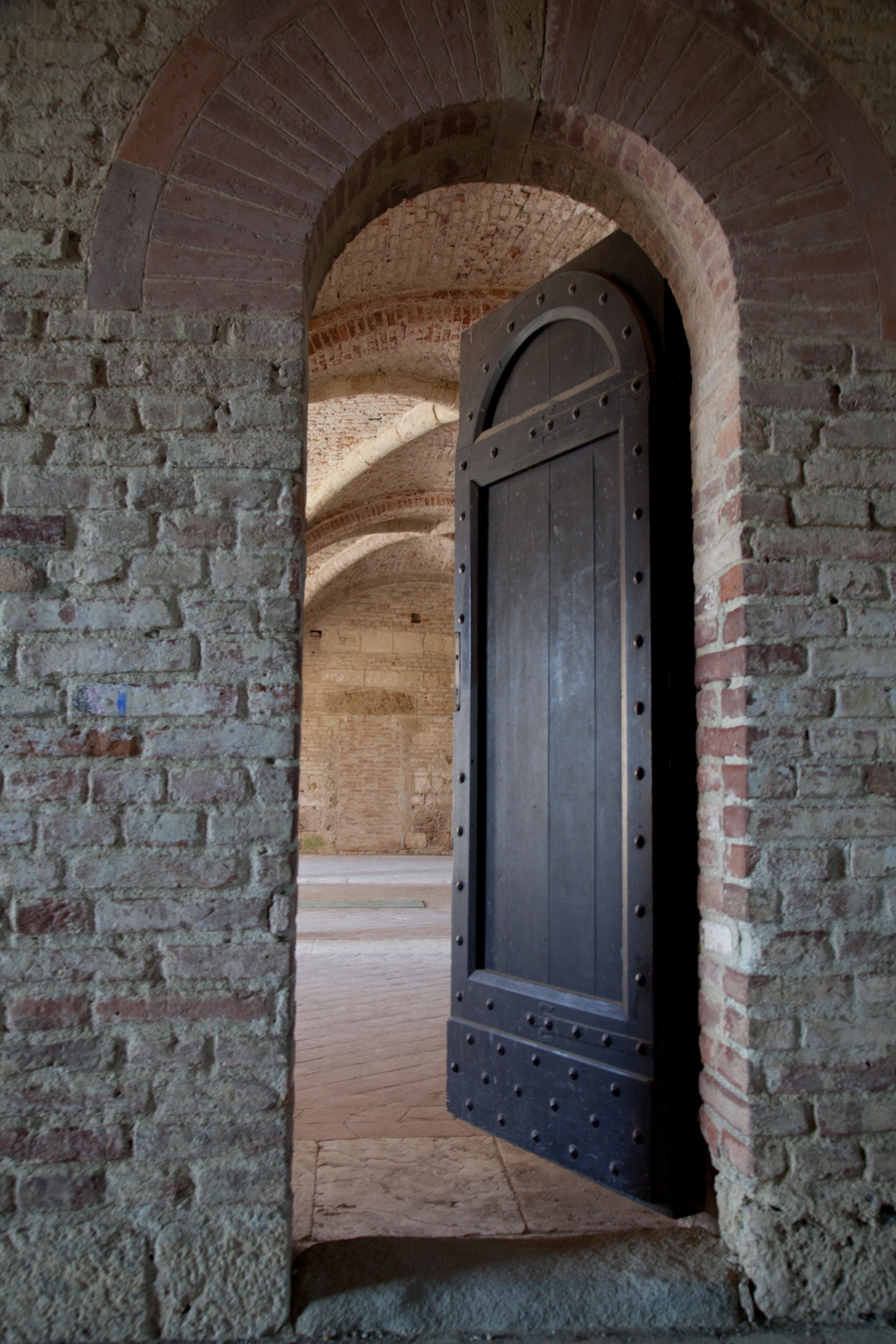
An open door for bunnies.


Earlier this month, the weather warmed and my husband cut the grass: the first of the season. Mixed in with the cut grass were handfuls of rabbit fur that once lined a shallow depression in the ground: a former birthing center for rabbits. Now they live in the further field, near the neighbor’s lilac bush.


In the soft light of late afternoon, one or more bunnies slide under the fence to eat. Last week I spent thirty minutes in my chair with my binoculars watching a lone bunny in the yard.


The yard bunny as seen through my window.


He tiptoed near the fence looking for something good to eat, wearing earth’s own colors – raincloud gray, sandy brown, and sandpiper buff, all detailed in either onyx or snow. Seen through the binoculars, his fur bore a pattern like feathers, and when he raised his head, ears erect, turning this way and that, I half expected him to fly away.


He nibbled on some dandelion leaves and chewed so rapidly, it seemed a kind of mincing. Often he lifted his head and scanned the skies and yard. He read the trees and clouds with his large brown eyes and studied all its smells with his ever twitching nose. I have seen a hawk or two fly overhead on other days, and I suppose he has as well.


Satisfied that he was safe, he settled into himself, sinking into a mound of fur, his ears like tiny horns, and rested in his stillness. Sitting sphinxlike in the yard, I thought he looked magisterial, small in size but great in wisdom.


Then he flared his nose and let loose ripples of twitches that rolled over his body, as if he had held his giggles long enough and now must return to his bunny ways and leave wisdom for the owls.


After grazing a bit more, he sat up, fluttered his two front paws and licked them. He groomed himself as carefully as a young man on a first date, then froze, suddenly remembering that the world must be watched.


More of the bunny through the window.


I could have watched much longer, but he had other places to go.  Turning back toward the fence, he showed me his improbable tail: a cotton ball glued on by a child’s hand. I waved goodbye and turned back toward my book.


Every evening I look for the rabbits, delighted that we share the world together. I know that dandelions and rabbits are often called pests, and perhaps they are, but they fill my heart with wonder. In my own way, I think the world bears watching.


On the outside

Standard


I learned the language of abandonment early. Before I knew words, I studied its grammar in my mother’s eyes.


I came unannounced and snuck into her womb. Although I did my best to stay small, she found me out. She tried to hide her despair at yet another child, so soon after the one before.


The child that came before me was my father’s first, my mother’s sixth. He felt delight to have another child of his own. So mother hid her sorrow and did her best. But children know.


I lived in my father’s delight for eight years and rested in that love. Mother lived on the edges of my life, but when he died, she was all I had.


His death felt like a leaving, not an ending. I saw his body in the coffin at the funeral, but no matter how much the adults tried to explain the empty place he left, I thought he had made a choice.


Years later, when I was in college, I went to see a counselor because my mind was unraveling. The woman welcomed me into her office and began to ask some background questions. First, she asked about my mother. I explained that she was a waitress, living in a different city. When she asked about my father, I said, “He’s dead.”


And then I wept.


My heart at last brought me the news that he had died; my tears flowed because my grief was fresh. I had always felt abandoned by him, left with my mother who seemed unable to accept me, even though I know she tried. That day I understand he had no choice.


Growing up I felt unwanted and believed that pleasing other people would make them love me. It never worked, but still I tried, making one bad choice after another, including trying certain drugs and smoking marijuana. It seemed harmless, and for some perhaps it was, but not for me. My mind unraveled and I came undone.


I never went back to the counselor. After I shared my grief with her that day, she opened up and told me of her impending divorce and the surgery she faced to deal with an inner ear problem. I must have seemed a sympathetic stranger, like someone on a bus you tell your every heartache. I listened well, but never told her of my unspooled thoughts or my tangled dreams and fears.


It took me years to understand my father’s death, and even more to understand my mother’s pain. I have lived on the outside so long, I have grown used to living on the fringes, unnoticed and unnamed. Now it’s the place of my own choosing.


When you step outside today, you’ll see the world is full of strangers.


I am one of them.


April’s fool

Standard


I am April’s fool.


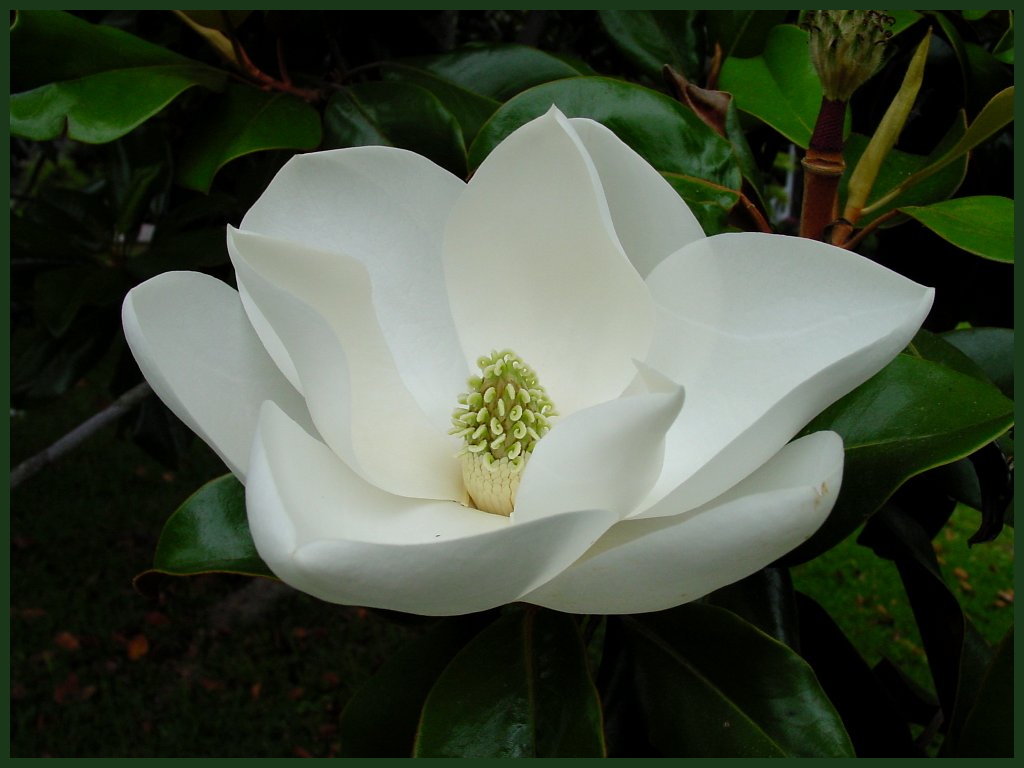
In April yellow comes to town in trumpets. Daffodils wake up the dead; forsythias resurrect. Magnolias tell you everything they know. You have to pay attention; they don’t speak very long. Apple trees declare the truth in white or pink to those who stop to listen, while cherry trees chatter pink to bees.


Earth swims round the sun, tilts her face to breathe. Each stroke draws her deeper into the sun-warmed waters.


The bitter winds of winter leave with just a sigh. Young winds come to play. They toss your hat or tug your coat like schoolboys out from school. They run through muddy fields all day, picking up the smell of sun and stones and flowers. When you open up your door, they forget to wipe their feet and track the smell of new-plowed earth throughout the house.


Ploughed Field


The sun calls “Ally, ally, in come free” and plants come out of hiding.


Trees wake up from winter with a thousand dreams of green, each one held in a tiny fist. Dreams come true in April.


Real estate in trees grows scarce. Birds move in to build.


Nest ,June 5


April’s first day honors pranksters, hoaxsters, and tricksters. We crown the jester king. At the coronation, we pass the salt as sugar, disguise the truth as lies, and hold a mirror to our face until we see the child inside.


April makes more scents than other month, and when I see her face, I cannot hide my smile.


I am April’s fool.


(Click the word to find the givers of the daffodil, magnolia, plowed field, and nest of eggs.)


Why I type

Standard

My laptop has a keypad lock that opens up a vault. Inside there is a labyrinth of rooms; and in those rooms: stories, poems, and word-hoards.


I type to get inside.


Some people know which keys to press. They spend their years alone and learn the secret sequence. Their fingers type until the doors crack open; then they step inside. When they return, their arms are full of stories. Others tap, tap, tap so lightly and open doors to poems.


Any combination lets you in that first door: an antechamber full of prose and verse. In that dim light all words glitter, enough to make you think they’re gold. I’ve been a fool and dragged more than a few out in the light and found them only brass.


Farther in, the light grows faint and you wander in a maze where every door is locked. No one can guarantee the doors will yield.  You walk by faith, not sight. I’ve stumbled into doors, heard the murmurs of the words, but failed to get inside.


I’m baffled by the combinations.


At night I dream of permutations and wake up full of simple faith. Stories and poems wait in that many-chambered place. So day after day, I type and hope that I can open doors. I want to find those words I’ve heard so much about.


History and the Will Cuppy cure

Standard

Today’s Special is a guest post by Courtenay Bluebird


History did not always bore me.  To put my stomach off history for an entire decade, the following three synchronous events had to coalesce:  three required undergraduate history credits; an unusually hot summer; and a professor who specialized in reading for four hours straight from a textbook that was written in a soda-flat monotone.


Et voilà!  I despised history as a solo subject for many years.  That aversion could be quite problematic when you’re a journalist and an MFA candidate.


If plain history were mixed with a little bit of, say, literary theory, I was fine.  I could stand the flat taste of historical fact if you mixed in the sociology of clothing.


Postmodern theory (Thanks a lot art school MFA!) leans heavily on the ideas of multiple histories  (history is a story; a story is a flawed construct) and historicism (no history is absolute; history is a combination of different disciplines).  Both of these items also sat well on my stomach, as they were light on the history and heavy on the theory.


History as a standalone subject, though, induced an intellectual queasiness in me that I tried to keep to myself.  When an entire subject area makes you dyspeptic and you are trying to teach college students to be open minded— you have a real problem.


I didn’t know how to fix my history issue.  I didn’t even know how to try to fix it.  Worse, even, I didn’t care to repair my history problem.


Do you know who healed my rift with history?


Oh, you’ll never guess, so let me tell you.


My mail carrier, a bibliophile of intense and diverse tastes, introduced me to a catalogue filled with drool-worthy books—  Bas Bleu.  (Bas Bleu is the French term for a bluestocking, a 19th century word for an aristocratic, educated lady.  The catalogue’s motto is “Champion for the small little book….” Don’t you love it already? )


My pip of a mail carrier introduced me to Bas Bleu and Bas Bleu gave me a formal posthumous introduction to Will Cuppy, a once popular and fascinating writer who specialized in humor and facts.


Facts.  Historical facts.  In fact, merely considering reading history made my stomach twitch.  I thumbed-down the page and waited for the sensation to pass.  It took three weeks.


After a little dithering, I ordered Cuppy’s back-in-print The Decline and Fall of Practically Everybody.  I fell in love with history for history’s sake again.  Not historicism.  Not history as a by-product of other interests.  Hardcore, unrepentant history.


Will Cuppy gave me back my own birthright— a curiosity about what happened where, to whom, and how the pattern of history repeats, indefinitely, like a crazy quilt made by your colorblind aunt.


Cuppy’s intense abilities come down to one incredibly difficult literary trick.


He could take any subject— world civilization, natural sciences, home economics — and with an astonishing sleight-of-hand— reduce it to its essential elements and make it pithy.  His writing style leans into this brevity, but do not be deceived— the research behind his tight sentences could, and did, take years at a stretch.


Most of his books were out of print for a few decades with the exception of Decline.  Like many writers I love, Cuppy went through a brief period after his death where people forgot how wonderful he was, where editors forgot how Cuppy gave their readers the gift of knowledge with ease, where literary reviewers forgot that writers could convey history without that self-congratulatory grandiosity that causes emotional vertigo in the average reader.


After reading Cuppy, no bland recitation of facts and figures could possibly evoke the great forces that make lives and countries collide and collude.  Cuppy, Bas Bleu, and my mail carrier, gave history back to me so sweetly and simply that really I can hardly believe my luck.  I never thought I’d love history again.


But here is my heart on the sleeve of my t-shirt— I adore history.  And here I am, late at night, relishing that soon I will lie down on my bed in a small pool of light to read an exquisite history of Sri Lanka.   I’ve read it six times before.  I’ll read it six times again.  It’s true— history repeats itself, cover to cover and back again.


Would you like to know more about Will Cuppy?  A well-written overview can be found on Wikipedia here!  In fact, Cuppy is so quotable, he has his on Wiki Quote page over here.


Want some more great news?  His writing is so popular again, according to the lovely Yearstricken, that my favorite Cuppy book The Decline and Fall of Practically Everybody is on backorder at Amazon.  Bas Bleu is still my go-to for new reprints of beloved favorites.  I highly recommend that you bebop to their website here.


And, finally, do you want to read my favorite history of modern Sri Lanka, in brief?  It’s gorgeous.  Michael Ondaatje’s  Running in the Family is so fine I give it as gift to new writers all the time.


 Courtenay Bluebird is a professional writer and   photographer, and a sort-of artist.  As she is currently writing about herself in the third person, she would like to tell you this is the first time she has shown her drawings to any sort of public.

As a writer, she has penned features and columns for major newspapers and magazines.   Her poetry, essays, and fiction have been published in a variety of respected journals.  As a photographer, she has hung four two-person shows.
Bluebird Blvd. is her first real grown-up blog.  And she’s awfully happy to be a guest writer on Year-Struck today.


Motherhood

Standard

For my mother and two older sisters, moving into motherhood was like moving into a new neighborhood. They picked out houses they liked, ones that came with a husband and children, set up the furniture, and settled down to get to know the neighbors. All three of them moved into that neighborhood before they turned 20.

I thought that one day I would move in there, too. Whenever I wanted to. Every woman I knew did; and there seemed to be a house for everyone.

One month before I turned 30, I finally said, “I do.” For the first year of my married life, I used a form of birth control because I thought I was in control of having babies.

Yesterday I wrote about the shame I felt because I couldn’t get pregnant. I felt like a failure. My husband tried to talk me out of both of those emotions; so did a counselor. It didn’t make sense to be so overwrought. My mind grasped that, but my emotions had their own reasons; on the surface, they seemed illogical, but they weren’t.

Underneath the shame and sense of failure, I had a deeper wound. One I couldn’t talk about or explain because I didn’t have words for it. I rummaged around in my heart and found something I couldn’t identify. I didn’t have enough light to see properly and when I tried to drag it out. I couldn’t: it was too big and all the edges seemed too sharp for me to grasp.

In the third year of my struggles, my husband and I went to visit my oldest sister and her family in Georgia. Mother lived with them at the time. I have no recollection of what we did or said that first day. We were never close the way some mothers and daughters are. I found fault with almost everything she did and had little patience with her. She, on the other hand, was always kind and did her best to please me. I found that especially irritating. I knew nothing of her pain, nor cared to know, but that day I must have seen truth flicker for just a moment in her glance or in her words. It was just the amount of light I needed.

That second day I told my mother I wanted to talk to her alone. We went into her bedroom and sat on the bed. I didn’t know yet what I would say because I still couldn’t articulate what I felt. When I opened my mouth, these words came out, “You never wanted me, did you?”

She gasped for air and broke down crying. We held each other for several minutes before she could speak.

“You were such a hard baby,” she said. “I didn’t want to get pregnant again so quickly, but your father was thrilled that were going to have another child. Of all my children, you were the smallest, but I had the hardest time with you. It was like you didn’t want to be born. And then you cried all the time, and I never felt like I could comfort you. Even though I loved you, it seemed like you didn’t want me.”

I don’t remember how long we cried; somehow the words and tears washed away years of hurt. It sounds impossible, even to me, but it’s true. From that day, our relationship radically changed.

Our lives are full of mystery. My mother carried shame and grief for a child she had; I carried mine for the child I never had. She needed me to say the words that could not tell herself; I needed to say the words so I could heal myself. My hard words released both of us that day. Sometimes words can do that.

Barren

Standard


You stand before a vast, empty country, the land taut and pinned to the horizon. You measure your journey in months, believing the mirages, imagining fruit-laden trees. Before you, emptiness; behind you, the bones of your hope, bleached white by the unblinking sun. Blistered by grief, you drink shame; it burns your throat.


Your womb refuses life; it is the tomb of lost children. A dozen die each year. You see their blood and weep.


Reason tells you that giving birth is not a measure of your worth. You are still a woman. You listen politely, go home and drown yourself in tears. You curse the moon.


At the store, you wander the aisles, fill your basket high with food; some hungers can be filled. A woman, great with child, walks by, smiles at you, as if the two of you shared a secret. You leave the basket; someone will come by later and empty it. You must leave quickly, before the wailing starts, before you rock yourself to silence.


You do not know the secret.


After the silence, you rage, scorch earth and heaven with your anger. You tend the fire of hatred and burn yourself.


In the times before this, when your body kissed your lover, you shut the door to time. Now you line the walls with calendars, watch the clock, measure love by numbers, as if there were a recipe for life.


You give yourself to doctors, learn the humiliation of need, fail, and try until you are tired of dying like this.


One night after some years have passed, you hear the soft whimper of a child, and rise to hold her in your arms. Standing before the window, you see the full moon and smile. You never learned the secret, and yet your arms are full, too.


Another woman, in a different place, rises from her sleep and stands beneath the moon. Her hands search beneath her breasts and feel the emptiness beneath her heart, where a child once slept. That child sleeps now in the arms of the barren woman.


On dark nights when the moon empties itself of light, you think of the woman who shared her secret. You weep for the moon and the woman. You, too, know something of emptiness.


A writing life

Standard

I’ve been writing all my life.


At first I merely drooled my poems on my mother’s shoulder. She never understood. I wrote on cloth day after day in words so rude my mother washed them all away. I scrawled runes on walls with crayons about my fear of farmer’s wives with knives and cradles that fall down, but none could parse my text.


My early days in school, I learned to wield a yellow pencil, its lead held every word I knew. My large block letters stayed between the lines, like banners on the page. The sky is big. The sky is blue. The clouds are white. I like the sky. I was Hemingway in pigtails.


Those middle years in school, I self-published a thousand reports, wrote memoirs every fall for teachers who pined for summers past, and critiqued more than a hundred books for free.


In high school, poems fell from my pen at an alarming rate. None survived the fall. They carried too much angst, unrequited love, and dark thoughts to land upon the page unscathed. I found poems and stories in a typewriter many years ago, then lost them when I moved away.


All the writing that I’ve done since, I’ve hidden in a drawer or filed away. My words have been a secret I whisper only to myself. I share them now because I’ve grown brave or old or maybe both.


I’ve been writing all my life.