
Sometimes truth is written in large, bold letters, in plain English, and yet we do not comprehend it until it is too late. I know.
I married late, just shy of my thirtieth birthday. My husband and I are particularly suited to one another, as we both suffer from mild cases of Foerster’s Syndrome that manifests itself in compulsive punning. I highly recommend marriage between people with the same brain disorder. Neither of us see anything wrong with the other but find it odd that so many other people suffer from compulsive eye rolling when they are around us.
For two people to be so manifestly suited to one another, you would assume they lacked nothing. And yet, there was this nagging desire for children. After several unsuccessful years of trying to plan parenthood and a long journey of knocking on various medical doors, there was no “in” in the womb. The best option became adoption. Miraculously within just one year, we were blessed to receive a child.
To say that having a baby in your family changes your lifestyle is like saying that a tornado rearranges your furniture. Being subjected simultaneously to sleep deprivation, lack of adequate food, repeated exposure to prolonged periods of piercing noises, to say nothing of the sights and smells of a creature that secretes at both ends, is normally considered a violation of one’s human rights. However, because parenthood is voluntary, it is not against the law. I have never fully recovered and still wake at the slightest sound, always expecting a shrill cry of terror or the dread sound of someone deciding that they didn’t want their dinner after all.
Not that there were never moments of bliss. The cooing babe, the laughing cherubic face, those small chubby fingers grasping our hands–all of these soothed the heart and calmed the sudden fears.
As if one child were not enough, we decided we’d like to have two children. Again through a number of unusual circumstances, we were able to adopt a five-year-old when our first child was three.
Little did we realize the imbalance of power this would cause. It was double the fun, double the pleasure, but now we were clearly outnumbered. After marching backward in retreat for sixteen years, we stopped one day and looked at one another. It was painful as we both now resembled something that had been left in the dryer too long. Who were these two former adults, reduced to tears, begging a child to obey, spouting threats, stomping feet, and shouting for the hundredth time, “I’m not going to tell you again.”
We were reduced to mere shadows of the bright, articulate, patient, wise people we used to be. Almost effortlessly, our children could initiate a major storm in the home and within the hour forget the quarrel while we were left stunned and shell-shocked. If you had asked them about it that same evening, they would have been unable to tell you what all the fuss was about. Meanwhile, upstairs, we would be brooding, wondering where we failed, why we lost our temper, should we consider sending them to military school or a nunnery (can parents still do that?), have we lost our minds and don’t know it, does it matter, and was the point of paying thousands of dollars for braces so that they could sass with straight teeth.
It was in just such a mood that I happened to read the message that someone in the United States government has been trying to get across to its citizens for years.
Normally I do my reading outside of the bathroom.To me, the bathroom is like the train: get to where you are going, then get off. I always take the shortest route. I have friends who ride the train for fun, but not me. On that day, however, the station hadn’t arrived, so I cast about for something to read while I waited. The only available reading material was a can of air freshener.
Imagine my shock when for the very first time, I took the time to read what it said. There in lettering which stood out from the rest of the text it said, “KEEP AWAY FROM CHILDREN.” It was a warning, and one that I had read repeatedly on a variety of products, yet never understood. How many times had I read that or some variation like “KEEP OUT OF CHILDREN’S HANDS”?
Why had I never once understood the message? Once you fall into the hands of children, your life, as you now know it, is over. Money that might have been there for your retirement is tied up in hundreds of stuffed animals, plastic action figures, gym shoes, and enough fingernail polish to paint a car. All your illusions of being a patient, reasonable, logical adult will be shattered, and you will find yourself lying on the living room floor screaming and crying out, “Because I said so, and I’m the boss.” Meanwhile your children will be in their room playing Monopoly or surfing the web because it is no longer interesting to see you throw a hissy fit.
This government warning is pervasive and yet so few read or heed it. Instead of all the debate about teaching children phonics versus sight-reading, shouldn’t we be teaching adults to read warning labels? In college and graduate school, I spent hours explicating Shakespeare, yet never learned to understand the simple meaning of a warning written in bold letters on a can of air freshener.
Go ahead and have kids if you must, but don’t say you were never warned.
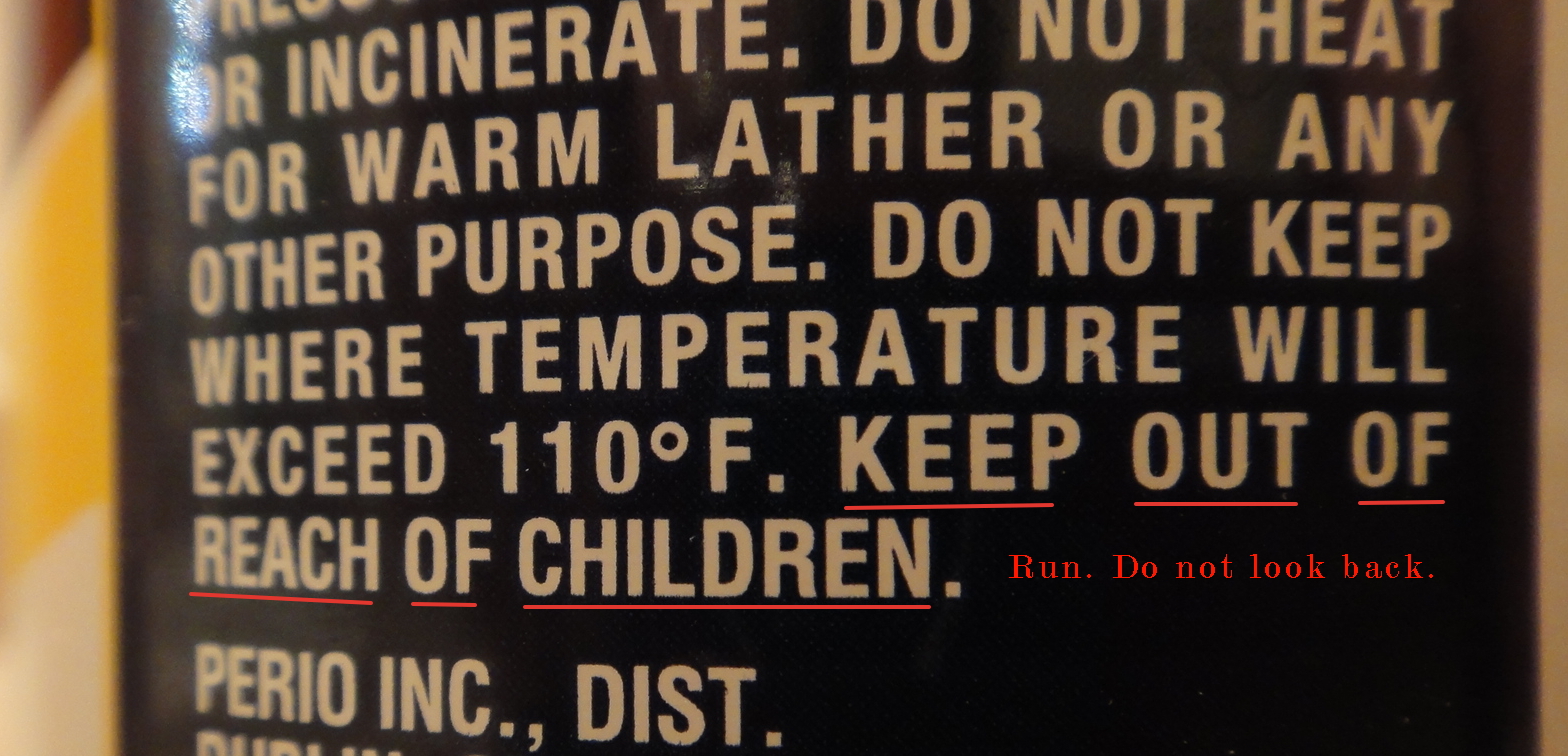
The government has been trying to warn you!
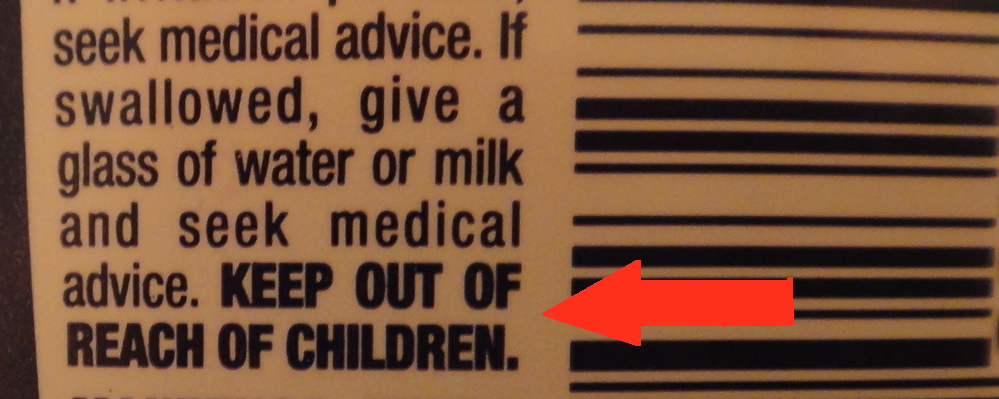
Their arms are short but their reach is long.

 year-struck