Crossing the frontier of childhood

Standard

Our nearest neighbor, The Golden Gate Bridge

The party started at Shakey’s. All of the other girls had already passed over the border from twelve to thirteen; we were celebrating my crossing. The twelfth year had been all uphill; my childhood treasures abandoned one by one as I slogged upward. The changes in my body made the climb harder, but I believed that if I reached the marker “Thirteen,” I would arrive in a place closer to freedom, a place closer to where dreams lived.


After the birthday pizza party, the girls came to my house for a slumber party. We lived in military housing on Fort Baker, a small Army base sitting across from San Francisco in Marin County. Our nearest neighbor, the Golden Gate Bridge, bore the scrawl of our names on its pillars. My stepfather, an Army Captain, defended us from the communists by working in the Nike missile program. We lived in one of the large duplexes up on the hill above the parade grounds.


Mother met Ralph within months of my daddy’s death. My father may have been the love of her life, but he was gone, and she needed a man. Her need, so much more than a want, compelled her to go in search of someone to marry her and take care of her. She searched in all the wrong places, but she found her man.
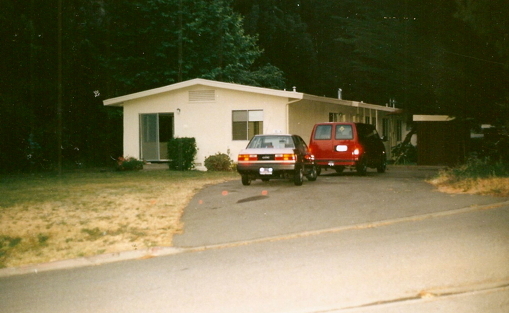
Our house on Fort Baker (photo taken over 20 years later)

Mother met Ralph at a bar; he was seven years younger and a first lieutenant in the Army. She was out dancing and drinking, doing her best to stop being a widow. She succeeded; less than six months after they met, they married. At that time we lived in El Paso, and Ralph was stationed at Fort Bliss.


After they got married, the dancing stopped, but not the drinking. Mother had married an alcoholic before, so you would think that she could recognize the signs. She didn’t, or maybe she didn’t care. She had someone to share her bed and her expenses; she wasn’t alone anymore.


The night of my thirteenth birthday party, Ralph went to Happy Hour. He always stayed longer than an hour, and it never made him happy. He came home late, while my friends and I were in my bedroom, laughing, whispering about boys, and eating snacks.


Ralph never liked my sister and me, and the older we got, the less he liked us. Particularly me. He talked ugly when he was drunk, so I was used to being called a bitch and a little whore, but I never thought he’d call my friends that. He did. Then he told them to get out of his house. Now.


I can’t remember much of the chaos that followed. I think my mom took the girls home. One or two lived in Sausalito; two of them lived in Marin City. I do remember that Ralph passed out in the bedroom he shared with my mother.


Sometime after midnight, my mom packed suitcases for all of us. Then we got in the car to drive to Texas to my oldest sister’s home. Mother took all the cash in the house, including a piggy bank made from an empty soap container that belonged to my three-year-old brother. Afraid that Ralph might hear the car engine, she put it in gear and let it roll down the driveway before starting it.


My sister welcomed the four of us into her small three-bedroom house, already full with the five of them.  Ralph sobered up and pled with mother over the phone until she agreed to go back. It will never happen again, he promised. Whatever he felt for mother or for us never looked like love to me, but maybe it was. Or maybe he needed a wife and a family to get promoted. He had his reasons, and she believed him or pretended to. I told her I wouldn’t go. My oldest sister invited me to stay; she understood why I couldn’t go back. She had lived the same story; in fact, all of mother’s children did or would. My daddy had been her stepfather, and he had never liked her; so she ran away at 17, got married, and had her first baby when I was two years old.


I spent a year away from home and loved living with my sister, her husband, and three children. I never noticed the cracks in the foundation of her home, but that year the walls still stood and they sheltered me. Within a couple of years, the walls crumbled; my sister fled, abandoning her children.


During that year, I had time to heal some of the wounds and forget some of the ugliness. In the middle of my freshman year at Irvin High School in El Paso, Ralph got orders for Alaska. My mom wanted me to come with them, and I agreed.


They came from California to Texas to get me, and in January of 1965, we drove up the ALCAN Highway to Fort Wainwright in Fairbanks, Alaska. It looked like a new beginning, a new chapter in our lives, but it wasn’t. That first chapter wasn’t over yet.


It’s a simple story, with more pain than some, but less than others. Standing on the peak of thirteen, my childhood looked to be a million miles away, the pathway back, long forgotten. On that first summit of my teenaged years, I thought I would be able to see the world, or least find a clearly marked path that would lead me to my dreams. I didn’t know what they were yet, but was sure I would recognize them once I saw them. No one told me it would be so hard. I had two choices: keep climbing or go through the dark valley. I chose the dark valley.
 

What are you looking for?

Standard

Imagine even shorter bangs!

I have gotten up early my whole life, except for my teenaged years when I ran marathons in my sleep and didn’t wake up until I finished. As an early morning child, after finishing my sugar-laden cereal, I could explore drawers and closets without anyone asking, “What are you looking for?” This is the kind of unanswerable question that grownups ask curious children. Imagine walking through the woods admiring the trees, and as you bend down to look at a mushroom, someone asks you, “What are looking for?” The answer is nothing, everything, I’ll know when I find it, or maybe, you are asking the wrong question.


Most of life is hidden, and just as the birdwatcher needs time and patience to see the birds beneath the canopy of trees, so the child needs space to explore her world, including drawers and closets, the repositories of grownups’ secrets.


Looking through places in the house became a habit. In the mornings, I could go through most of the house, but not the bedrooms, at least not the only bedroom of real interest: my parents’ room. Entrance into that room required an invitation, and if occupied, a knock.


But parents are not always at home and big sisters have better things to do than follow little sister around. I must have been in second grade when I sneaked into my parents’ bedroom. In the small drawer next to where Mother kept her underwear, I found a picture of a tiger I had colored in school. I had pressed down on the crayons, so the vivid yellowish-brown eyes glowed from the orange and black-striped creature that stood among the green, yellow-green, light green, and turquoise leaves. Seeing it there secreted in her drawer was like coming face to face with a real tiger, one of my own creation, which now lived in this unexplored place.  I felt happy that she would keep the colors that flowed out of me.


In that same drawer, I found a small envelope with her name written on it in textbook-perfect cursive letters.  Inside were short, brown hair clippings, not more than a tablespoon worth. They were mine.


One day during craft time in first grade, my best friend, Donna, leaned over and said, “I can see your bangs growing.” Her words both thrilled me and alarmed me. Donna could see the tiny hairs, still alive at the roots, pushing into the world, threatening my eyes.


Cutting your own hair was forbidden in our house, but nothing had ever been said about having friends cut your hair.


Our teacher was busy helping L.D. wash his hands, which he had painstakingly covered with the paste he had developed a craving for. Donna held the blunt-nosed scissors and clipped quickly.  In those days, teachers had eyes in the back of their head; at the second clip, she turned around and looked directly at Donna and me. Just like a game of Swing the Statue, we froze, Donna keeping the scissor hand suspended in the air, waiting for the teacher to come over and touch us to unfreeze us.


Instead, she said, “Come here girls.”


A moment earlier I had been enthralled at Donna’s powers of observation and her willingness to help me.  The look on our teacher’s face and her tone of voice shook my confidence in my friend.


“Scissors are for cutting paper, Donna,” she said.


Donna started crying.  Everyone in the room quieted down and looked at us. We were facing Mrs. Severe, so they could see only the teacher’s solemn face and the shaking shoulders of Donna as she cried.  Mrs. Severe reached into her desk and pulled out a small envelope. She walked over to the small tables where we sat, gathered up my hair clippings, and put them inside the envelope.


“I’m going to call your mother tonight to make sure she gets these.”  Then she went to the shelf where we kept our lunch boxes, opened the metal clasp, and put the envelope inside.


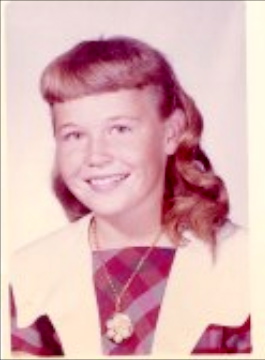
And she did call. Mother got out her haircutting scissors and evened out Donna’s work, leaving me only about an inch of bangs. Above my freckled nose loomed a white forehead, best hidden. The short hairs looked like the edge of a failed crew cut.


Mother had kept that envelope and the picture of my tiger. She was not very affectionate toward me, but here in this hidden, intimate place she kept parts of me. I opened her perfume jar and inhaled her sweet smell and loved her, secretly, like she loved me.


I am not Tippi Hedren

Standard

No, I don't want to carry on. I said I wanted carrion.


I want to tell a story about my father, but the crows won’t let me. I have to talk about them first.


When we lived in Tokyo, we shared the neighborhood with crows. Early risers, they would sit on wires, rooftops, or fences, watching us sideways in that way that birds do, the entire eye black, with no white part to indicate if their gaze had shifted and they had stopped watching you. Alerted by internal calendars and clocks telling them which days the wet garbage would appear, they chatted and argued until we brought out the vinyl bags stuffed with rotten food and placed them on the curb.


As soon as the morning offerings were laid out and we humans went back to making our breakfasts and scolding our children, who were sure to be late to school unless they woke up right now, the crows hopped down to the street or sat atop a bag and began ripping it open.  After pulling out as much garbage as possible and strewing it across the street like an open buffet, they began sampling. Occasionally a housewife would fly out of the house in her flip-flops to shoo them away, sweep up the mess, and re-bag it. More than one crow must have wondered why we put the food out in the first place if we didn’t want them to have it.


In some neighborhoods people nailed blue netting to a wall or telephone post and then placed the garbage bags underneath. Undaunted, the crows would poke around or through the netting and manage to pull part of a bag out from under the blue ban.  One of our neighbors hung an effigy of a crow near the collection area for a while because crows have a natural abhorrence of going near one of their dead.  The neighbor took it down after a short time. I think it may have been more unsettling to the humans than the crows.


In the summer, gangs of crows would meet around sunrise. Since there is no daylight savings time in Japan, that meant as early as 4:00 in the morning. Summers are hot and humid and few people have air conditioning in their bedrooms. Many sleep with very little clothing on (this is all hearsay), no covers or top sheets, and with just a fan blowing warm air across their damp bodies. Windows gape open, anxious to solicit  the slightest breeze.  Even from a distance the crows are loud, but when they are nearby, you cannot sleep through the noise.


I was, and still am, halfway afraid of the crows. In the park where I walked, they often lined the railing near the river and wouldn’t fly away even though they were within arm’s reach.  Now and then, one of them would set off a chorus of caws, not unlike the harsh laughter you may have heard in junior high school. The ones on the ground would hop a few paces, cock their heads, and stare. I never stared back. I know better: I’ve seen Hitchcock’s movie, “The Birds.”  The movie did not cause my fear as much as uncrack it. Locking eyes with birds in black trench coats, who are the size of a small dog but have sharp beaks and talons unnerved me. I felt incapable of deciphering what they were thinking, and yet believed that they could easily read my thoughts. The thoughts that said, “I am not Tippi Hedren. Do I look like a movie star? No, right? Please don’t stab me or scratch me. Oh, look. Over there! Garbage and vermin!”


Crow terror reached its peak in the spring. During nesting time, crows brood. In both senses of that word. They want to be left alone, and you are bothering them with your walking about like you own the neighborhood. Why are you walking about when you could be at home making garbage? So sometimes they fly straight at you, flapping their enormous wings, or jabbing at you with their hard, pointy mouths.


Most people don’t enjoy this kind of thing, and develop rational fears of crows. I know some of them.


One of my Japanese friends told me how a crow harassed her husband as he walked down a city street in Tokyo. In the crow’s opinion, the man had no business being there and should have known better, so it repeatedly flew over his head and pecked at him. I thought it might be because he looked like he was already henpecked, but she thought it had something to do with the bald spot on his head. In her theory, the crow looked down, saw the shock of hair surrounding that shiny circle on his scalp and mistakenly thought her husband was trying to carry an egg away.


That’s why I had to write about crows today. My father had a bald spot just like that on the back of his head. And one of these days, I’m going to tell you a story about that.


(Photo on loan from: http://www.pakshimitra.org/maharashtra-birds.html)

Double exposure

Standard

Double exposure: two lives in one world

Mother loved to read historical romances. She would find them at the Goodwill for ten cents apiece and bring home a stack. On almost every cover, a handsome, rugged-looking man held a beautiful woman in his arms. Sometimes the man wore a Civil War uniform and held a woman in a billowing dress. Other times he wore a royal crown and cape while he embraced his queen. Ripped bodices were optional.The historcial context varied, but the story never did: the search for love ended in someone’s arms.


She often sat on the gray couch in the living room to read. One summer day, I sat on the arm of the couch by her while she drank her can of beer and read. It must have been a day like the one in this photo. She was wearing shorts and a sleeveless blouse. I could see the blue spider veins in her thighs as she stretched her legs out on the coffee table.


I started reading the last words of each sentence to amuse myself and wanted to say something to her about it, but I didn’t want to disturb her. So I would read some of the words, then wait and listen for the soft slur of her finger on the paper as she turned the pages. I looked at her profile, her beautiful nose, straight and softly rounded at the tip; her lashes thick with mascara; and her lips, parted as if ready to sip from either her beer or her book; and I wondered if she even knew I was there.


Immersed in her book, she had no idea that I was  reading the words with her. Her books, I thought,  must hold some secret, one that she needed to be reminded of over and over, one embrace after another.


For the first time that I remember, I understood that we were completely separate beings, sharing the same space, our thoughts known only to ourselves. She knew nothing about the things my sister and I whispered while we were in bed at night, the forbidden sugar that I put on my cereal before anyone else awoke, and my fear of losing people. These and thousands of other thoughts belonged only to me. As I leaned on her arm and felt her warm skin next to mine, I realized that she, too, must have whispered things in the night to my father and done things in secret that no one else knew of besides her. Inside her head another world existed, one that I knew nothing about, that I would probably never know anything about.


I felt like I had just awoken from a deep sleep in a strange room, not knowing exactly where I was. Everyone lived a hidden life, unknown to anyone else, and words were all that we had to find one another. We stumbled in the dark, calling out, searching for the other, reaching out, always reaching out. And sometimes, if only in books, we found solace in someone’s embrace.


My head felt light and I wondered if I would fall off the couch. I leaned over, kissed mother on her forehead, and went outside into the sunshine looking for an adventure before the end of my childhood summer.


As a child, I tried to practice safe smoking

Standard

When I grow up, I want to smoke like that.

The first time I smoked a cigarette, I inhaled. After I stopped coughing and wiped the tears from my eyes, I inhaled again. That’s what seven-year-old children do. Or at least, that’s what my seven-year-old self did. I have a strong compulsion to finish what I start; something I learned at the dinner table. (See here for that story.) Some people think I am persistent; some think I am stupid. I try to see both sides of an issue, so I agree with both.

Although I received a 25-cent weekly allowance, it didn’t usually last very long. To feed our addiction to chocolate, my best friend, Terry B., and I collected coke bottles to redeem for cash. At one or two cents a bottle, we needed just a few to buy a five-cent candy bar. That’s why I cannot speak too highly of chocolate; it made me the recycler that I am today. Persistent, with fluffy hips.

Terry and I were regulars at the local convenience store. I think it was a 7-Eleven, but it could have been a Circle-K. (Ask my sister, she’s the keeper of memories in the family.) At some point, we decided to buy some cigarettes. As impossible as it sounds today, back then children could run to the store to buy cigarettes for their folks. We either pooled our allowances or saved up coke bottle money because we had enough money for a pack. At that time, probably around 25 cents.

One of us lied to the clerk and said the cigarettes were for a parent. I think it was Terry because this is my side of the story and she’s not here to contradict me. She brought the matches and we headed straight for the ditch.

In mid-century America, everyone smoked cigarettes. Movie stars inhaled and exhaled their glamour, neighborhood gossip flamed up as their small fires burned on women’s lips, and their smoke rings floated above our heads like forgotten halos. What was not to like about smoking?

At some point in that ditch, however, I stopped inhaling and put the cigarette out. I much preferred chocolate and still do.

Unprompted, I confessed to my mother that I had tried smoking. The business about how we got the cigarettes was left unmentioned. She seemed unfazed and only smiled when I said, “Don’t worry. It was mentholated.” In my muddled mind, I thought it made a difference.

At 17, I began my five-year smoking career. My father was long dead by then, and mother said she would rather have me smoke in front of her than behind her back. In mother’s muddled mind, she thought that made a difference.

For several years in a row, I got a carton of Winston cigarettes in my Christmas stocking: my reward for being an honest child. Had I shown an honest interest in bank robbery, she probably would have included a stocking cap and possibly a small revolver.

Mother was muddled but she meant well. Like me. And maybe, like you.

(picture on loan from:  http://www.mimifroufrou.com/scentedsalamander/)

Why I am not an arsonist

Standard

I struck up a friendship with Terry B.

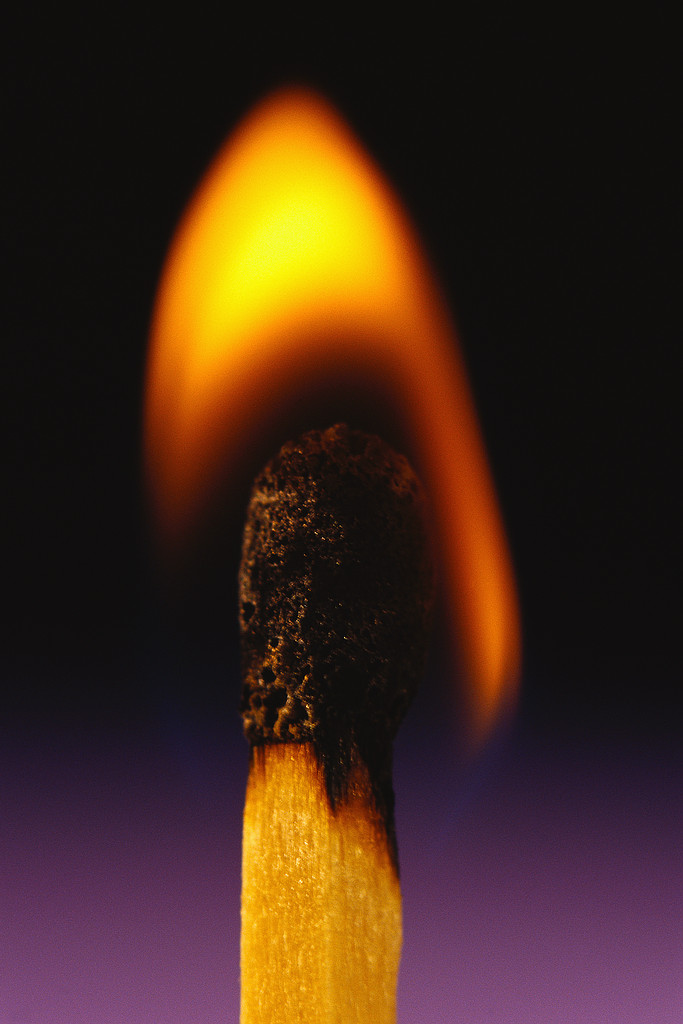
At seven, I realized  that arson would not be a good career choice. My best friend, Terry B., who shared my early fascination with trouble, introduced me to the delights of wooden matches. My parents didn’t smoke, and we didn’t have a gas stove, so I didn’t see many matches. The ones we used to light birthday candles were those flimsy paper ones that require a grownup type of skill to light. You had to pinch the paper stem between your thumb and middle finger, hold the match head down with your pointer, and then draw it across the striking surface. If you didn’t pull your pointer away quickly, you could burn yourself.


Wooden matches, however, are easy enough that even seven-year-olds can use them. Their small fingers can hold the end of the wooden stick, strike across the long strip on the side of the box, and create the wonder known as fire. One box provides hours of fun. Strike a match and watch it burn. Next, see how far down you can let it burn before you blow it out or drop it and step on it. Play chicken doing this. Put several matches together and light all of them from one match. And those are just a few possibilities.


But you can only watch so many matches burn before you yourself get burned out on it. The next step is to watch something else burn.


The street we lived on sat on the edge of the housing area, and the alleyway behind our house ran parallel to a drainage ditch. My sister and I took a shortcut to school through the ditch, and children often played there. Sitting in the dirt among the weeds was the perfect place to study the properties of combustion.


We began with the debris we found in the ditch, mostly paper trash. Then we moved on to dried leaves and small plants. El Paso has a dry climate so there was hardly ever water in the ditch. Any fires we started had to be small enough to stamp out with our feet or smother in dirt.


One afternoon, we experimented lighting up an entire bush. Like all of our ideas, it seemed reasonable at the time. The dry bush ignited another bush, and soon we had a small blaze that we could not control. In our eyes, it seemed we had set the whole world on fire. We threw a lot of dirt and sand at the bushes, which was very helpful in making us dirty, but not so helpful in extinguishing the fire. Had there been a wind, I would be telling an entirely different story. Something about my life at reform school.

Children, ditch those matches!


In those heart-stopping moments watching the disobedient fire, I imagined the fire spreading to our houses, leaving our neighborhood a pile of ashes. It’s a wonder that some all-powerful grownup (one who could see through windows) didn’t notice the smoke and call the fire department. Had that happened, I knew the consequences. I would not be seeing much of the Mickey Mouse Club and my bottom would be very sore.


The fire eventually burned itself out, and so did our desire to play with matches. We never misused them again. We just used them as they were intended to be used. For cigarettes.

The six-year-old criminal

Standard

An early run-in with the law ruined my smile. I'm the sullen one on the right.

When I was a child, I had a knack for getting caught. It never held me back, though. Trouble interested me and punishment was the price I paid for pursuing it.


Terry B., who lived on the corner of our block, was my best friend because we shared this same interest. In the summer, we were just this side of feral, in the sense that we played outside from morning until just past dark almost every single day. During the day, we found food where we could; everyone’s screen door was unlocked and every mother had large jars of peanut butter and jelly to spread on white bread. And Kool-Aid. Always a pitcher of Kool-Aid.


Where I grew up, children were expected to play outside. My mother, like every other mother on the block, never posed “Why don’t you kids go outside and play” as a question. They meant it as a command, one that we were happy to obey. While they made coffee cake and wandered back and forth to each other’s house to drink coffee, smoke, play cards, or gossip, the kids had the whole wide outside world to themselves. Our moms had to holler us back for dinner, but as soon as that was done, we joined our tribes outside until the darkness came and one of our parents hollered us back for good.


In my sixth summer of freedom, Terry and I decided it would be fun to switch people’s mail. We knew all of the neighbors, knew which houses we could go in, and which to avoid. Our next-door neighbors, the Coles, were an older couple. We were fond of Grandma Cole and her delicious cookies, but we had to eat them on the porch. Her husband liked to hold little girls on his lap, and even though our mothers never spelled it out, we understood and stayed away from him.


One afternoon, after the mailman made his delivery, Terry and I went to several houses and took the mail. We couldn’t get everyone’s mail because many of the mailboxes were too high to reach. In spite of the inconvenience, which seemed a marked lack of consideration on the part of our neighbors, we mixed up the letters and re-delivered them. Then we were off to our next adventure. Probably something involving matches.


Not once did we consider that we were doing all of this in plain sight, that most mothers were at home with the curtains and the front door open. Terry and I lived in a world of our own choosing, and all those adults with their watching eyes weren’t a part of it. Once the sun went down, we returned to their world, but daylight belonged to us.


We had telephones back then, the kind that were tied to the wall. Neighbors called my mom and told her what we were doing. She called my daddy and he called the police.


Yes, the police.


They arrived at our house right around suppertime. I don’t know if my empty stomach led me back home or someone was hollering about dinner, all I remember is the police car in front of our house. My daddy walked out of the house to greet the officer, and then called me over and made me confess what I had done.


I don’t remember a single word of what was said that summer evening. I probably cried, and if I did, my daddy held me.


Daddy just wanted to teach me a lesson or two. He did. I never messed with people’s mail again. It took me longer to learn the other lesson: the same broad daylight that made it so easy for me to find trouble was what made it so easy for grownups to find troublemakers like me. We roamed the neighborhood creating kingdoms, fighting wars, lighting fires, and creating as much mayhem as we could get away with, but the grownups were there, invisible, ever-present, and, it seemed at the time, ever-seeing.


Fear of the dark

Standard

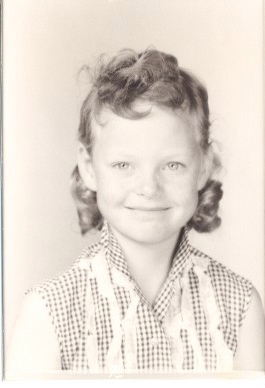
(K) The older, photogenic one

When my father died, I was eight and my sister (K) was ten. Mother’s world collapsed and she found it impossible to function. She stayed in bed under heavy medication for days, until our oldest sister (C) told her she would lose us to daddy’s relatives if she didn’t get up and start living again. Our oldest sister was 23 years old at the time and already a mother of three. We lived a complicated childhood, visiting our oldest sister and her children but hiding it from our father. He wanted nothing to do with mother’s past.

When mother got up out of her bed of despair, she couldn’t get any more medication from the doctor. So she self-medicated. And nothing dulled the pain better than booze.

Together with her best friend from work, mother began to “run the roads.” It’s what she called bar hopping. There’s something lop-sided about this story that no amount of explaining will set right. Mother said that daddy was the one she loved like no other, and yet within two months she was out most nights, drinking, dancing, and looking for love. I don’t try to explain it; I just tell the story as I know it.

During that era, I don’t think it was unusual to leave children our ages alone at home. But maybe at night it was. Mother needed somewhere to go, to find companionship, and to have a few drinks to help her forget. The bars all had a Happy Hour, and although she never found happiness there, at least the drinks were cheap. Rather than leave us at home, she would take us to a theater to let us watch the latest movie, often a horror movie. This provided me with lots of reasons to fear the dark.

Before the years struck me so hard

A few years ago, I was talking with my sister (K) and mentioned all the scary movies we saw when we were kids like The Blob,

The Tingler, The Fly, and House on Haunted Hill. I remember sitting the theater, my feet on the chair tucked under my dress, clutching my sister’s arm, thinking that if I held on tight enough the monster couldn’t get me.

She asked me if I remembered what happened after the movies on those nights mother dropped us off. I told her I didn’t have a single memory of what came before or after.

Have you ever heard someone tell a story about an event that you were part of but that you have absolutely no recollection of? What she told me stunned me.

More than once, after the movie or double feature was over, we waited out in front of the theater long past the last showing. One of those times, we were still there when the lights were shut off and the last person left the building. Then mother would show up smelling of whiskey, cigarette smoke, and sweet perfume. Beautiful, lonely, half-drunk, working hard to forget her pain, and doing such a good job that she forgot her girls out there in the dark, lonely and afraid.

For my sister the horror show started after we left the theater. She was too young to carry so much responsibility, but she had no choice. I clearly couldn’t take care of myself. I think the fear I felt during the long wait in the dark was too real, the sense of abandonment too raw to face, so I transferred it to the movies and thought they were the source of my terror. My sister was the brave one and faced the darkness for both of us. And for all these years, she has had to carry the memories alone. I cannot remember. And that’s one of the reasons I love her.

Much of my childhood I lived under water; the people and events blurred and distorted. Light is refracted when you are below water, so things are recognizable but they don’t line up. I’d come up for air now and then, then dive back under. Some of it I understand; some I don’t. I know one thing: I cannot watch horror movies. They make me afraid of the dark. I know, too, that love is strong and can carry the memories we cannot bear ourselves. But even love feels lonely sometimes.

The imaginary line

Standard

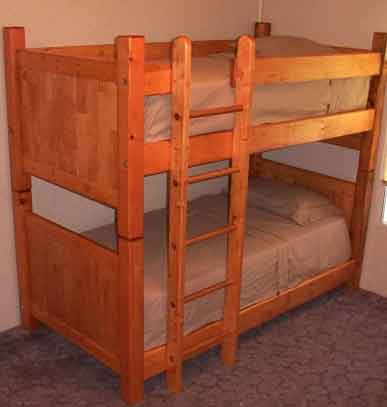
Bunk bed kit does not include alligator pit.

My sister and I had bunk beds part of the time when we were growing up. Since my sister is older, she had first dibs on the upper bunk, but I know I slept up there at least once because I remember falling out of bed. My parents came into the room and my father picked me up to check for broken bones. I even remember dreaming that I was falling into an alligator pit.


My fear of alligators stemmed, I’m sure, from the fact that there was an alligator park in our downtown. City planners could have built a botanical garden, an amusement park, or a duck pond. Instead they built a pond full of alligators.


“Kids, get in the car and let’s go see Oscar and Sally, the alligators with the big, shiny teeth. Did you know that they can chase you down if you fall in and try to run away?”


Maybe you’re living in Florida where people have these as pets, or in Louisiana where people hit them over their heads for their shoes and then eat them. The alligators, not the shoes. But I’m talking El Paso, Texas out in the middle of the desert. And all that separated little you from big them was a short “protective” fence.


But back to sleeping arrangements.


My sister and I also shared a double bed at one point. Since my parents couldn’t find a bed with a built-in wall down the middle, my sister drew an imaginary line to keep me from entering her territory.


Honoring the line was easy in daylight, but not at night. I was petrified of the dark. After alligators, my biggest fear was that my sister would turn into a witch. Perhaps because I had bonked myself silly, I believed that if I touched her, she would remain my sister, and I would save her from witchiness. So, I would dutifully remain on my side, waiting for her to fall asleep and then would slowly slide my hand or foot across the no-fly zone to touch her. And, of course, she would always be awake and yell, “Mom, she’s touching me!”


The sliding, the touching, and yelling would happen several times each night until one or the other of us fell asleep. It was exhausting.


In private, when my sister and I share these memories, I always say, “See what happened. You should have let me touch you.”


But I never say that in public.


(The picture is from:

http://www.swingplans.com/bunkbed.html

and you can build one yourself.)


What? You know I can’t hear you

Standard

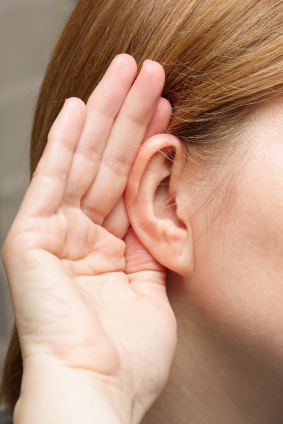
What? You know I can't hear you

In the last few years of my mother’s life, it became clear that she needed a hearing aid. No matter what you said to her, she responded with “what?”


“Hi, mom. Your hair looks nice.” “What?”


“I lost my job, and I live under the freeway now.” “What?”


“The house is on fire!” “What?”


“I think Congress is doing a great job.” “What?”


It didn’t matter if you told the truth or lied and said you thought Congress was more than a group of self-serving bootlickers, mother’s response was always the same. She knew she wasn’t hearing well, yet she resisted getting a hearing aid. The people around her had to repeat everything several times. The echo made people want to pull out their hair.


After months of reasoning and piles of hair all over the house (others, not hers), she agreed to see an audiologist and get fitted for a hearing aid. She wore the device for several days, and then began leaving it in the dresser drawer. The dresser began to hear everything that was said and eavesdropped on several conversations that were none of its business, and mother again started punctuating every statement and question with “what?”


I was visiting my brother and her when this happened. He was at work, so it fell to me to take mother back to the audiologist. Mother explained that the device didn’t fit properly, so the doctor fiddled and adjusted and asked several questions to make sure that it was comfortable. She was very patient with mother and didn’t rush her. Mother said yes to every question about how well it fit and we left.


On the way home, we carried on a normal conversation. And we had several days of echo-free talk. Then late one afternoon, I went into the kitchen to make dinner. Mother went to her room for a book, came back into the living room, and sat on the couch to read. The house had an open concept floor plan, so we could see one another. The first time I shut the cupboard door, she said, “What?”  I laughed and said, “I didn’t say anything.” She looked puzzled, so I repeated it. She sighed, put her book down, and said, “You know I can’t hear you.” I walked over, told her I hadn’t said a thing, and that I had just shut the cabinet door. I asked her where her hearing aid was. Of course I knew. I also knew that the dresser could now hear everything we said, so I listened patiently as she explained that the hearing aid felt uncomfortable.


I went back to the kitchen. A few minutes later, I shut another cabinet door and she hollered, “What?” Again, I had to walk over to her and explain that I was not speaking to her. I assured her that if I had anything to say, I would walk over  to tell her. She actually called out, “What?” one other time during that meal preparation. I have never cooked so quietly in my life.


At the meal, my brother and I asked her why she didn’t tell the audiologist that it still didn’t feel right.  She looked at us, incredulous that we would even ask such a question, and said, “I didn’t want to bother her.”


We laugh about it now. You don’t bother folks you hardly know. Bothering is for the ones you love, the ones who love you back. And now I miss all the bother that mother was.