Motherhood

Standard

For my mother and two older sisters, moving into motherhood was like moving into a new neighborhood. They picked out houses they liked, ones that came with a husband and children, set up the furniture, and settled down to get to know the neighbors. All three of them moved into that neighborhood before they turned 20.

I thought that one day I would move in there, too. Whenever I wanted to. Every woman I knew did; and there seemed to be a house for everyone.

One month before I turned 30, I finally said, “I do.” For the first year of my married life, I used a form of birth control because I thought I was in control of having babies.

Yesterday I wrote about the shame I felt because I couldn’t get pregnant. I felt like a failure. My husband tried to talk me out of both of those emotions; so did a counselor. It didn’t make sense to be so overwrought. My mind grasped that, but my emotions had their own reasons; on the surface, they seemed illogical, but they weren’t.

Underneath the shame and sense of failure, I had a deeper wound. One I couldn’t talk about or explain because I didn’t have words for it. I rummaged around in my heart and found something I couldn’t identify. I didn’t have enough light to see properly and when I tried to drag it out. I couldn’t: it was too big and all the edges seemed too sharp for me to grasp.

In the third year of my struggles, my husband and I went to visit my oldest sister and her family in Georgia. Mother lived with them at the time. I have no recollection of what we did or said that first day. We were never close the way some mothers and daughters are. I found fault with almost everything she did and had little patience with her. She, on the other hand, was always kind and did her best to please me. I found that especially irritating. I knew nothing of her pain, nor cared to know, but that day I must have seen truth flicker for just a moment in her glance or in her words. It was just the amount of light I needed.

That second day I told my mother I wanted to talk to her alone. We went into her bedroom and sat on the bed. I didn’t know yet what I would say because I still couldn’t articulate what I felt. When I opened my mouth, these words came out, “You never wanted me, did you?”

She gasped for air and broke down crying. We held each other for several minutes before she could speak.

“You were such a hard baby,” she said. “I didn’t want to get pregnant again so quickly, but your father was thrilled that were going to have another child. Of all my children, you were the smallest, but I had the hardest time with you. It was like you didn’t want to be born. And then you cried all the time, and I never felt like I could comfort you. Even though I loved you, it seemed like you didn’t want me.”

I don’t remember how long we cried; somehow the words and tears washed away years of hurt. It sounds impossible, even to me, but it’s true. From that day, our relationship radically changed.

Our lives are full of mystery. My mother carried shame and grief for a child she had; I carried mine for the child I never had. She needed me to say the words that could not tell herself; I needed to say the words so I could heal myself. My hard words released both of us that day. Sometimes words can do that.

Barren

Standard


You stand before a vast, empty country, the land taut and pinned to the horizon. You measure your journey in months, believing the mirages, imagining fruit-laden trees. Before you, emptiness; behind you, the bones of your hope, bleached white by the unblinking sun. Blistered by grief, you drink shame; it burns your throat.


Your womb refuses life; it is the tomb of lost children. A dozen die each year. You see their blood and weep.


Reason tells you that giving birth is not a measure of your worth. You are still a woman. You listen politely, go home and drown yourself in tears. You curse the moon.


At the store, you wander the aisles, fill your basket high with food; some hungers can be filled. A woman, great with child, walks by, smiles at you, as if the two of you shared a secret. You leave the basket; someone will come by later and empty it. You must leave quickly, before the wailing starts, before you rock yourself to silence.


You do not know the secret.


After the silence, you rage, scorch earth and heaven with your anger. You tend the fire of hatred and burn yourself.


In the times before this, when your body kissed your lover, you shut the door to time. Now you line the walls with calendars, watch the clock, measure love by numbers, as if there were a recipe for life.


You give yourself to doctors, learn the humiliation of need, fail, and try until you are tired of dying like this.


One night after some years have passed, you hear the soft whimper of a child, and rise to hold her in your arms. Standing before the window, you see the full moon and smile. You never learned the secret, and yet your arms are full, too.


Another woman, in a different place, rises from her sleep and stands beneath the moon. Her hands search beneath her breasts and feel the emptiness beneath her heart, where a child once slept. That child sleeps now in the arms of the barren woman.


On dark nights when the moon empties itself of light, you think of the woman who shared her secret. You weep for the moon and the woman. You, too, know something of emptiness.


A writing life

Standard

I’ve been writing all my life.


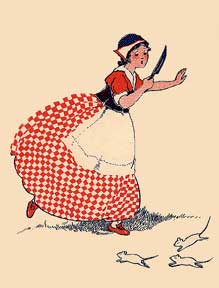
At first I merely drooled my poems on my mother’s shoulder. She never understood. I wrote on cloth day after day in words so rude my mother washed them all away. I scrawled runes on walls with crayons about my fear of farmer’s wives with knives and cradles that fall down, but none could parse my text.


My early days in school, I learned to wield a yellow pencil, its lead held every word I knew. My large block letters stayed between the lines, like banners on the page. The sky is big. The sky is blue. The clouds are white. I like the sky. I was Hemingway in pigtails.


Those middle years in school, I self-published a thousand reports, wrote memoirs every fall for teachers who pined for summers past, and critiqued more than a hundred books for free.


In high school, poems fell from my pen at an alarming rate. None survived the fall. They carried too much angst, unrequited love, and dark thoughts to land upon the page unscathed. I found poems and stories in a typewriter many years ago, then lost them when I moved away.


All the writing that I’ve done since, I’ve hidden in a drawer or filed away. My words have been a secret I whisper only to myself. I share them now because I’ve grown brave or old or maybe both.


I’ve been writing all my life.

Remembering dreams

Standard

My dreams are back, those stories I tell myself at night. I don’t believe the stories ever left, but for most of the last four or five years, I have woken up with no remembrance of my dreams.


For years I wrote down my dreams in the back of my journals. My day-time thoughts began on the first page, my night-time thoughts began on the last page, and each moved toward the other, claiming pages until the book was full.  It seemed fitting that my dreams were hidden in the back, behind my more lucid thoughts.


On Tuesday night I dreamt about a good friend in Japan. I still carry some of the joy of seeing her again, if only in my brief dream. My emotions don’t seem too concerned with the fact that I didn’t actually meet her face to face. It must be like this when a mind is in decline. People are forgotten, the world grows strange, but the emotions are remembered, as familiar in this singular reality as they were in the shared reality of the former life.


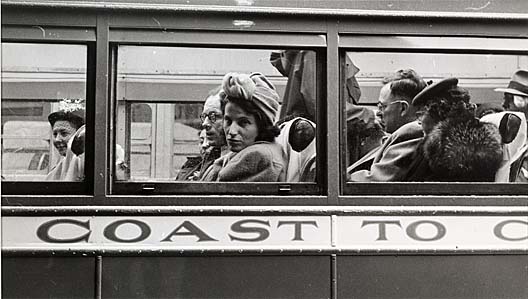
Before the world spun me old, I lived as a young woman. That was decades ago. I remember dreaming that I was old and was riding a bus through an unfamiliar city. I sat next to a window and watched the world go by. When the bus stopped at a light, I saw a good friend standing on the street, still her young self. When our eyes met, we both smiled and, for a long moment, I couldn’t tell who I was or whose dream it was. Was I an old woman dreaming about her as a young woman, or was she a young woman dreaming about me as an old woman? When the bus stopped, the doors opened and I got off in the room of morning light where I lived life.


For the last three nights, I have remembered the stories I told myself in dreams. I stopped journaling three years ago when I lost my words. Writing this blog has helped me find them again. Maybe that’s why my dreams came back.

◊ ◊ ◊ ◊ ◊ ◊ ◊ ◊ ◊ ◊ ◊ ◊ ◊ ◊ ◊ ◊ ◊

Photo courtesy of Smithsonian American Art Museum, Museum purchase made possible by Mrs. Alexander Hamilton Rice and Linda Adair Miller <http://americanart.si.edu/collections/search/artwork/?id=32331&gt;

Thank you for coming

Standard

Every Wednesday evening, Jack and Mary walk into the classroom together. They greet the other students and then sit down at one of the round tables to study. They share a book because textbooks are expensive. When we read about the U.S. Civil War, a student from Somalia tells of her escape from that civil war. She has no hope of union for her country. Two more students speak up; they also fled their homelands because of political turmoil.


Not Jack and Mary. Our country is a good place to live, they tell me. They grew up on an island in Southeast Asia. Jack reads a short story he wrote about the clear ocean water he swam in as a child and the sea cucumbers the villagers gathered from the sea. Mary reads a story about her family’s cows. When she was young, she tended them. She would pick a cow, climb atop it, and spend the afternoon playing her flute or reading a book while the cows fed on sweet grass.


We talk about slavery and freedom. The topic veers when a student from Central America tells us how her government punishes those who speak against it or who dare to protest. Everyone agrees that we should be free to speak our mind, even if we disagree with the government. Mary breaks in and says, We have freedom in my country; it’s a good place.


Both Jack and Mary try to hide their homesickness when they talk about their island home. We came here for our son, they say. Many of the students I teach come to America for their children. They have simple dreams for their sons and daughters: safety, education, and jobs. Jack and Mary are no different. They want their son to get an education and a job, to be a productive member of society. This son, their only child, was born with mental disabilities.


Jack and Mary must be in their mid to late fifties now; Mary bore her son late. Neither one has enough English yet to do anything other than menial jobs. English sounds don’t fit well in Jack’s mouth, so he tries to reshape them into the familiar sounds of his childhood. When he asks me what Emancipation Proclamation means, it takes a minute before I understand what he is saying.


After class last week we talked about the opportunities available for their son. I mentioned the local packaging company that trains and hires people with disabilities. That’s what we want for our son, Jack said. Mary nodded. Our son wants to work, she said. They see his limitations, but they also see his possibilities. All three of them want to contribute, to be part of their new homeland.


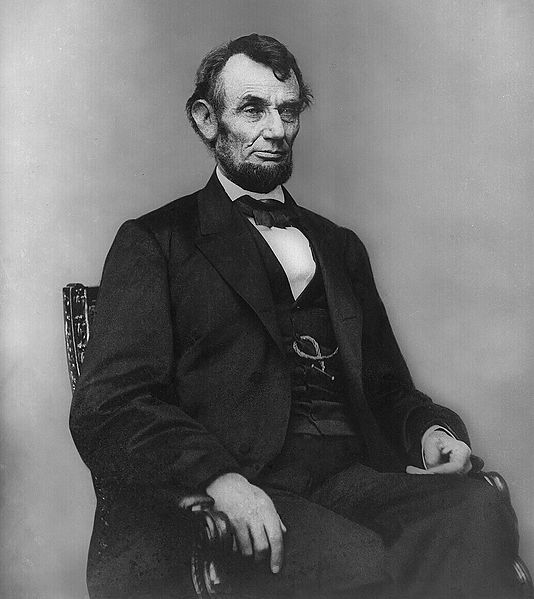
Jack and Mary have another two years before they are eligible to apply for citizenship, but they want to be ready, so they come each week to the citizenship class. We talk about Abraham Lincoln, the 16th president, and practice saying ‘Emancipation Proclamation.”


Last night we talked about more recent history: the Great Depression, the two World Wars, and Martin Luther King, Jr. Mary takes careful notes and asks a lot of questions. She wants to get it right. Jack and Mary listen carefully to the mottled stories of victory, failure, glory, shame, courage, and hope that we call U.S. history, and that they are learning to call, our history.


The citizenship class ends at 8 p.m. My day started with a class at 8:30 a.m., so I’m tired. Jack and Mary are the last to leave. They thank me for the class, and I thank them for coming. I mean it both ways: coming to class and coming to America. I don’t explain it; I just smile and say goodnight. I watch them walk down the hall, heads together, talking, just the way you would expect old lovers to do. I imagine them talking of all the possibilities.


A day to leap

Standard


I perch on windowsills for years, waiting to jump, believing I can fly. When I finally leap into the arms of the air, I land on my feet in another room, just like the one I left.


Staring out of windows, I have believed for years that the outside is a different world. The sky holds her arms out wide and tells me, “Jump. Don’t be afraid. I will catch you.” It takes me years of courage to push off from that windowsill. With my clumsy wings of hope and desire, I leap and land inside again.


I still believe in windows. And after I readjust my wings, I may take another leap.


Icarus by Keith Newstead at http://www.cabaret.co.uk/artists/keith-newstead/

Image of Icarus from http://blog.dugnorth.com/2008/05/flying-mechanical-icarus-automaton-at.html

Getting home from the last station

Standard

The wind swept out the flooded floor of the sky, drenching the world below. I watched the night through the windows as the train hurried through the falling water. When we pulled into Hamadayama Station, I felt relief and dismay. In ten minutes, I could be home. But I had to walk through the rain to get there.


Ten minutes in that insistent rain felt like a lifetime. The cold didn’t think much of my jacket, and my umbrella was built for a kinder world. I carried the taut cloth over my head to hide myself from the sky, believing I could. Then I started walking.


My feet drowned first and my pants clung to me like a shroud. The wind resented the umbrella, which kept my head dry as long as it could. Finally, it threw its hands up in despair and surrendered.


I yielded to the baptism of rain until I managed to half open the broken umbrella. I belonged to the rain now. On the dark streets, I saw a few others, struggling forward. We didn’t speak. Lost in our private thoughts, we were willing ourselves to a place of belonging. All I could think of was home, where I would be safe, where I would be warm.


Those last few steps were the hardest. They always are.


You cannot imagine my delight, grasping that cold doorknob, knowing the door would open into a world of warmth and light, with all of my loved ones waiting for me.


It rained with fury that cold November night in Tokyo.


Losing what you never had

Standard

I remember the first time I read the stories of the Greek gods, particularly Zeus and the birth of Athena. To most people, the idea of a full-grown daughter emerging from someone’s forehead sounds incredible, the stuff of dreams and mythology; however, it didn’t seem strange to me. Zeus reminded me of my mother who could open her mouth and speak fully grown siblings into existence.


In the galaxy of our neighborhood, my family was one of the smaller solar systems.  Daddy blazed like the sun in the center, circled by mother, his reflecting moon, and his two small planets, my sister and me. Friends and relatives, like distant stars, were out there somewhere, but we lived primarily in a world of four.


Mother had been someone’s moon before; this was her third attempt at marriage. She had escaped the drunken rages, violent beatings, and evictions of her earlier life, and found a man who loved and provided for her. As this new man drew her forward and away from those events, her memory looked back and wrote them into a story she told, but no longer lived. Daddy treated her with kindness and love, but he wanted nothing to do with her past. That included her other children, the five she had before she met him.


When my daddy was alive, I moved between two parallel worlds. In one, I was the second daughter of a loving father and his faithful wife, living a typical middle-class life. We lived in a three-bedroom, one-bath brick house with elm trees in the front and a swing set in the back. In the parallel world, I was the fifth daughter of a father who was my oldest sister’s abusive stepfather. He married a woman, twice divorced, whose last known address in Alabama had been on White Trash Avenue. The point of intersection of these two worlds was my oldest sister, Connie.


Clyde and Connie: mother's first two children

Connie was mother’s firstborn, dragged into mother’s three marriages and written into mother’s story of abusive men, poverty, and abandonment. She learned early to take care of herself. Funny, independent, and defiant, she left home at 17 to get married. I was two years old, too young to remember. My father, the love of mother’s life and the man ever kind to mother and his two children, once beat Connie with an electrical cord, a story I learned years and years after he died.


By age 23, Connie had three children. From as early as I can remember, we visited her and her children. I was their youngest aunt, just two years older than Connie’s first child. Mother forbade us to tell our daddy of our clandestine visits. Since Connie had been in my life from the beginning, she was a secret, but not a surprise.


Daddy wanted mother to himself. To please him, she locked her secrets up and never spoke of the past in front of him. But when he was not around, she shared those secrets with my sister and me. Her words carried us back into the past with her, and I began to understand that the story of my life didn’t begin with me. I had arrived in the middle of her story, the story she must tell. So, secret after secret, she told us her life. I doubt she had any idea how heavy those secrets were to the two little girls listening and wondering. But how can I blame her? Stories demand to be told and give us no rest until we give them voice.

Clyde as a young boy


I don’t remember how old I was when a brother, Clyde, sprung full-grown from mother’s mouth into my consciousness. Born two years after Connie, he was mother’s firstborn son from her first marriage. She never spoke much about him, but when she did, she prefaced the story by mentioning the car accident. When Clyde was around ten years old, a car hit him and threw him several yards, causing a head injury. “He was never the same after that,” she said, as if that explained everything that followed.


What followed was a life of petty theft and then more serious crimes, which led to at least one felony and internment in La Tuna prison in New Mexico.


Even before my daddy died, mother kept in touch with Clyde, sending him small gifts of money, trying to right some of the wrong he suffered by being left behind so many times. Daddy must have known that mother contacted Clyde. If he could have stopped her, I’m sure he would have. On the other hand, my grandmother could have been her go-between, passing the occasional letter back and forth, because she had been the one to raise Clyde most of his life.


Out of focus: how I remember Clyde

Clyde visited us a few times after my daddy’s death and during the time mother’s fourth husband was stationed in Korea on a remote tour. Out of nowhere, my oldest brother would knock on the door, looking as handsome and charming as his father, with the same dark, curly hair and green eyes. When Clyde left, things left with him: money, jewelry, silver dollars, and even a small revolver mother kept because there was no man in the house at the time.


In my senior year in high school, two men from the FBI came to our house looking for Clyde. Mother denied knowing his whereabouts, and I think she was telling the truth. Clyde drifted in and out of her life, much like she had done to him when he was small. He usually contacted mother when he was in need of money. To support himself, he took various jobs, often driving a truck.


Although I visited Clyde with my mom when he was in La Tuna prison, I don’t know or remember what his crime was, but I’m pretty sure it involved theft. After he left prison, mother lost touch with him. A few years before she died, she asked my younger brother to try to find Clyde. He searched online and discovered Clyde’s death certificate, and in the space marked “next of kin,” the word, unknown.


I can’t believe how little I knew or asked my mother about Clyde. When I was a child, part of my reluctance may have been fear. Mother had children from both of her previous husbands, and the children from those marriages were left behind as she moved on to new husbands. If it happened twice before, maybe it would happen again. She could leave me, find a new husband, and I would become just a secret she whispered in another little girl’s ear. “That’s her,” she would say, pointing at me standing in front of the brick house, “she had green eyes too.” The new girl would smile, snuggle closer, and soon forget about me, just as I forgot about Clyde and the others mother told me about. I would be left behind with the scenery, entrusted to my grandmother or some other relative willing to take me.


Or maybe I didn’t ask more questions because I chose to hide her secrets, my complicity an act of seeking her favor. Perhaps it was my way of saying: Keep me! Keep me! Abandonment was my greatest fear and after my daddy abruptly left through death’s door, mother was all I had.


Fear may explain my childhood disinterest, but I can’t explain why I didn’t try to find out more about Clyde when I was older. I felt mother’s reluctance to talk much about him. She only told the stories she could; the others stayed inside, breaking her heart. My demands to hear more may have awakened words that would have shattered her world or her sanity. Sometimes silence is the only way we can survive. I don’t really know why I never asked more questions.


We make choices in life. We walk down a road, afraid to turn back, driven forward until it’s impossible to find our way back even if we want to. Now, no one is left to answer my questions. Clyde became the book I never read, buried years ago.


Some stories never find a voice in this lifetime.


I wonder if those buried stories come back as ghosts to haunt us. Do they roam the earth seeking to be embodied in someone’s words, willing to take on new names, live in strange locations, just as long as their story can be told? Maybe Clyde’s story waits for me in a book: he has changed his name, moved to Montana, and now wears his blond hair short. Maybe he is sitting at a table in a small café, looking for me in the crowds and waiting to tell me what I seek to know.


I cried when my younger brother told me about Clyde’s death certificate. Next of kin: unknown. It breaks my heart that he died alone, like a motherless child. I want to tell his story but I don’t know how.


How much is that doggie in the window?

Standard

One of the chief delights of blogging is discovering writers, cooks, painters, photographers, teachers, and poets who delight and instruct you. One blogger who does just that is RAB at You Knew What I Meant. A multi-talented woman who also teaches college-level writing and literature, RAB draws from her collection of bloopers written by her students and comments about them on her blog. She ranges from serious and thoughtful to wry and funny. I learn something from her every day. If you go there, you will too, and you will not be disappointed.


Today I asked her to write something for my blog. Enjoy!

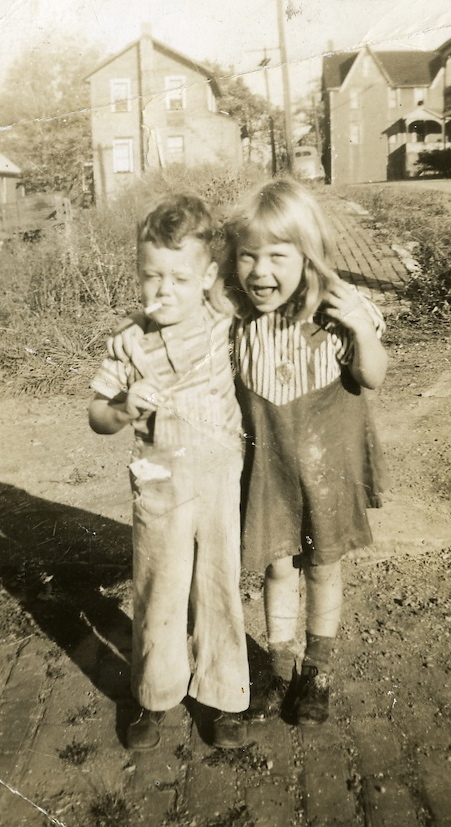
RAB and her younger sister: a little older but probably no wiser.

That parents would think their kids are special comes as no surprise: it seems to be part of the job description. I was blessed with parents who encouraged and supported their children while still trying to help them keep their perspective on their own achievements. But that didn’t keep my sisters and me from deciding we were, more or less, Infant Phenomenons. My parents’ smiles at manifestations of that were, I’m sure, part pride and part enormous amusement. And sometimes they also had to draw on what seem in retrospect to have been infinite stores of patience.


Here’s my most vivid recollection of one of those instances.


My sister and I were quite taken with the television show Arthur Godfrey’s Talent Scouts. Reading about it now, I find it was the #2 television hit show during the 1950s. People would come on the show and perform; at the end of the program the audience would applaud, and the applause-o-meter would indicate the winning act. Kind of like American Idol, but without the hoopla or the nastiness.


I imagine that, in what has become the pattern of televised contests, at some point in every show somebody explained the procedures and rules; but I’m not sure that anybody ever explained where the acts had come from. Helen and I reasoned that since the show was called Arthur Godfrey’s Talent Scouts, the acts must have been found by a band of talent scouts, whatever that might mean, who brought their discoveries back to Arthur Godfrey so he could put them on his show. And Helen and I formed the ambition not only to be found and brought back, but also to win the prize.


When I was six and Helen was three (and my other sister was yet to be born), my parents decided to make the first of what would be three family car trips to Florida. That was before Route I-95: they planned to drive from New Jersey to Florida on Route 1, stopping for meals etc. but otherwise driving straight through the night, alternating the driving between them. My father stowed the family luggage in the back seat foot wells and then laid a crib mattress down, covering luggage and back seat. This made a luxuriously spacious bed-cum-recreational space for Helen and me, with room for coloring books, a few stuffed toys, Weenie the sacred blanket (shreds), and bedding. There is no more magically comforting experience, I think, for a child than lying drowsily in the back seat of the family car, looking up at the stars through the back window, and hearing Mommy and Daddy conversing softly and seemingly far away in the front seat over the hiss of the tires on the ribbon of paved road. The drive down had that kind of magical peace, even when we were awake and trying to be the first to see a car with a Delaware…and then Maryland…and then Virginia…license plate.


Once in Florida, we cavorted on beaches and visited relatives and met some nice people from Michigan who were staying in the motel unit next to ours. And at some point, for some reason, we developed the plan for being discovered by Arthur Godfrey. This plan must have made the return trip from Florida to New Jersey sheer hell for our parents.


How do Talent Scouts operate, after all? Well, I knew what Girl Scouts and Boy Scouts did, having read about them and aspiring to join GSA (for the uniform): they hiked around, especially in the woods. They looked at things. They collected things. I had also read about Indian Scouts, who traveled around looking for bent twigs and other important things along the trail. So Helen and I figured that Talent Scouts probably drove the roads of America looking for talent. We were too young to have much of an idea of what went on in night clubs and the like, so it didn’t occur to us that the Talent Scouts might be traveling to look at actual ACTS. Our notion was, they kept their eyes and ears open for Talent wherever it might be—someone singing in church, somebody doing cartwheels in her yard, somebody tap-dancing with friends at school or maybe on the sidewalk. What more likely place for the Talent Scouts to be driving, we thought, than Route ONE?


Our plan was to get discovered on the way home to New Jersey. And so we insisted on riding with the windows open as we sang our best number, “How Much Is That Doggie in the Window?” It was a pretty big hit at the time, and we fancied our rendition of it quite a bit, especially the “Arf! Arf!” part. No one in a passing car would be able to see Helen’s affecting gestures of desire as we peered through an imaginary pet-shop window, but our voices alone would surely cause any Scouts worth Arthur Godfrey’s imprimatur to shout over to Daddy and ask him to pull over and let them meet the Amazingly Talented Girls. Because it was impossible to know exactly where or when the Scouts would be driving by, we of course had to sing the song over and over. And over.


My parents made the drive from New Jersey to the Florida border in exactly twenty-four hours. I’m sure the drive home was faster.


I will love them forever for never once telling us the truth about Arthur Godfrey’s Talent Scouts, or asking us to call a halt to our naïve and lusty audition.


Listening to your eyes

Standard

Sight seems simple enough. First, you open your eyes. If the room is dark, you go back to sleep. If not, the lenses in your eyes focus. If your eyes find this difficult to do, your nose offers to hold your external lenses because it, too, would like to get a better look at what is right in front of it. Photons of light, like tourists hurrying off the bus, rush into your eyes to see your retina. They crowd around the retina while the brain takes their pictures, and then they rush out, so the next crowd can come in. Some of the same ones visit every single day. Apparently they have nothing better to do, or perhaps the retina is worth seeing again and again.


The brain collects these photos from morning till night, ignoring the most familiar, studying the unfamiliar, and sorting them into piles of those it likes and those it doesn’t. But what is the point of taking pictures if you don’t have someone to share them with? So, the brain shares them with the heart and that complicates sight. Hearts may be born with 20/20 vision, but over time they can change. Life can scar the lens of the heart and pressure can change its ability to focus. An astigmatic heart can’t see clearly, and looking through the lens of expectations only makes it half-blind. Even with the corrective lenses of a friend, lover, or family member, some things remain distorted, blurry, or impossible to see.


If the heart insists loudly and persistently enough that its way of seeing things is true, the brain can start believing the heart instead of the eyes. And the heart is often right. The eyes need light to see; the heart sees in both the light and the dark and can feel truth even when she can’t see it.

But sometimes the heart isn’t right. You come to a crossroads and see a sign telling you where you are. The heart reads the unfamiliar script, not even sure how to pronounce it. Lost again, she says. One more sign of failure. Everyone, except me, knows where to belong. I will never find my way home now. The eyes, however, see the bright, bold letters, the flourishes around the words put there by some sign painter writing his heart in simple words for the weary traveller who would surely walk this way and need some direction. You are here. Just follow the sign. A place of rest lies up ahead. This road might be the one that leads you home.


This time the eyes are right. The heart must trust and follow.