On the outside

Standard


I learned the language of abandonment early. Before I knew words, I studied its grammar in my mother’s eyes.


I came unannounced and snuck into her womb. Although I did my best to stay small, she found me out. She tried to hide her despair at yet another child, so soon after the one before.


The child that came before me was my father’s first, my mother’s sixth. He felt delight to have another child of his own. So mother hid her sorrow and did her best. But children know.


I lived in my father’s delight for eight years and rested in that love. Mother lived on the edges of my life, but when he died, she was all I had.


His death felt like a leaving, not an ending. I saw his body in the coffin at the funeral, but no matter how much the adults tried to explain the empty place he left, I thought he had made a choice.


Years later, when I was in college, I went to see a counselor because my mind was unraveling. The woman welcomed me into her office and began to ask some background questions. First, she asked about my mother. I explained that she was a waitress, living in a different city. When she asked about my father, I said, “He’s dead.”


And then I wept.


My heart at last brought me the news that he had died; my tears flowed because my grief was fresh. I had always felt abandoned by him, left with my mother who seemed unable to accept me, even though I know she tried. That day I understand he had no choice.


Growing up I felt unwanted and believed that pleasing other people would make them love me. It never worked, but still I tried, making one bad choice after another, including trying certain drugs and smoking marijuana. It seemed harmless, and for some perhaps it was, but not for me. My mind unraveled and I came undone.


I never went back to the counselor. After I shared my grief with her that day, she opened up and told me of her impending divorce and the surgery she faced to deal with an inner ear problem. I must have seemed a sympathetic stranger, like someone on a bus you tell your every heartache. I listened well, but never told her of my unspooled thoughts or my tangled dreams and fears.


It took me years to understand my father’s death, and even more to understand my mother’s pain. I have lived on the outside so long, I have grown used to living on the fringes, unnoticed and unnamed. Now it’s the place of my own choosing.


When you step outside today, you’ll see the world is full of strangers.


I am one of them.


When chocolate disturbs

Standard

I like chocolate dark, three taste buds shy of bitter. One small bite and I start getting messages from my brain saying, “Thank you,” and “More, please.” As food, it delights my tongue, and as medicine, it soothes my brain.


I have liked chocolate since I was a small child and discovered that the Easter bunny laid small chocolate eggs in my Easter basket. I later learned that rabbits do not lay eggs; they do, however, extrude something that is eerily similar to little chocolate pellets. I lived with that disturbing juxtaposition of ideas for years, but eventually got over it and continued trying to consume my allotted 11.64 pounds of chocolate each year. That’s how much each American averages. The Swiss eat almost twice that. Clearly, I was born in the wrong country.


http://www.flickr.com/photos/wheatfields/2310156154/


As an adult I have lived a relatively undisturbed life as far as chocolate goes. However, these last few years, an uncomfortable truth has been knocking on the door of my brain. It has pamphlets, which is always a bad sign. Opening the door means I must listen to a prepared speech, sign a petition, and probably donate some money. Maybe even the money I would use to buy chocolate.


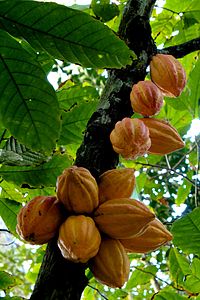
For me, the best chocolate has at least 70% cocoa. That’s the ingredient that has so many health benefits, including helping to protect my heart. Cocoa makes my brain happy; and like so many gifts, it grows on trees.


The cocoa plant is delicate, especially when it is young. It requires attention, care, and nurture to develop properly. If a plant is tended carefully, it can start bearing fruit when it is four or five years old and produce for several decades.


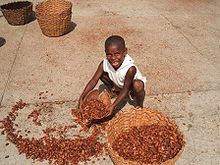
Cocoa plants sound a lot like children, don’t they? Children need care and nurture to grow properly, too. And that’s the problem. Many cocoa farms employ children, and some farmers enslave children, making them work 12 hours a day without pay or much to eat.  At night, the children are locked up. If they try to run away, they are beaten.


I don’t want to eat chocolate that has someone’s childhood as its main ingredient. No amount of sweetener can make that kind of bitterness palatable. And if I know that the price on my candy bar is low because some children are forced to pay the real price by spending their childhood enslaved on farms, no amount of inexpensive chocolate is going to make me happy. My tongue doesn’t mind at all; it likes chocolate no matter what, unlike my brain, which has nothing better to do than gossip with my heart.  Once my heart gets involved, the two of them always insist that I do something.


Refusing to buy chocolate might make me feel good, but that’s about all it will do. It won’t help the thousands of smallholder farmers in West Africa, Indonesia, Brazil, and Ecuador who grow cocoa. They deserve a living wage; however, they receive only a pittance of what I pay for chocolate. Some of these farmers resort to forced labor to make growing cocoa worth their while. If I’m going to enjoy eating chocolate, I can’t ignore these facts.


Ignorance is bliss until it isn’t. Now I have to pay attention, read labels, and check up on the companies I buy from. I have to sign petitions. And I have to pay more money for chocolate that doesn’t have “essence of childhood” as an ingredient. But I don’t mind because then I can start listening again when my brain says, “More, please.” And it will make my heart happy again in more ways than one.


To see the places I have been that knocked the bliss out of my ignorance, go here, here, here, and here. To see the places my heart and brain conspired to send me, go here, here, or here to see what people are doing about it.


(Chocolate kisses go to Wikipedia and <http://www.flickr.com/photos/wheatfields/2310156154/ > for the pictures.)

April’s fool

Standard


I am April’s fool.


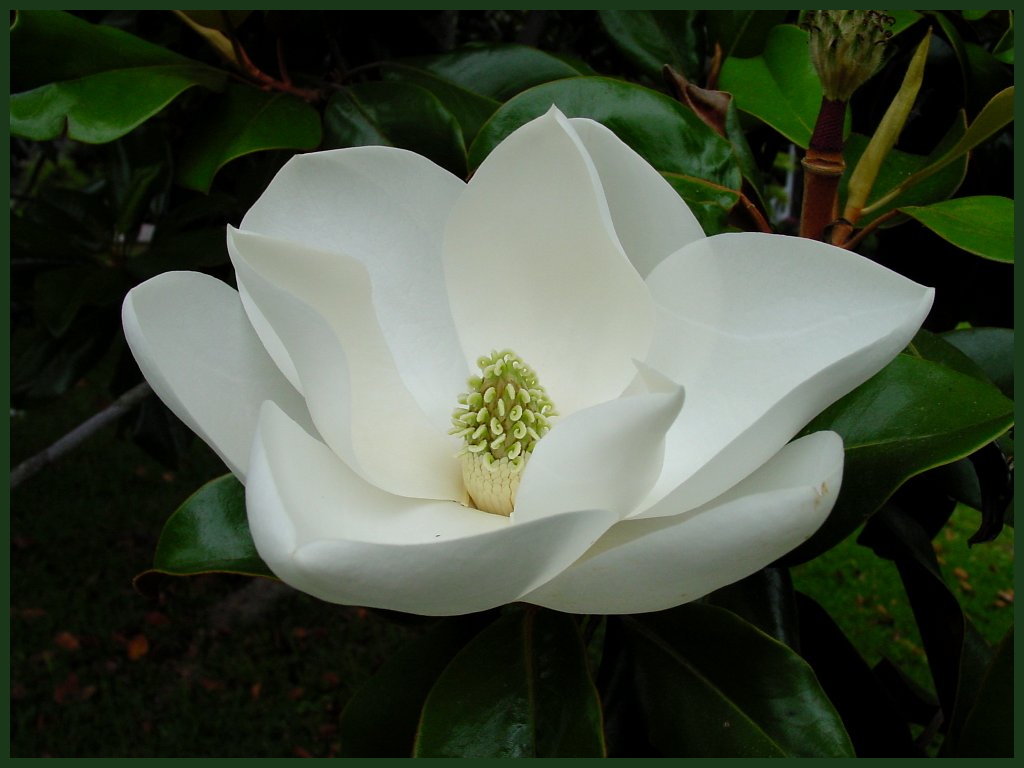
In April yellow comes to town in trumpets. Daffodils wake up the dead; forsythias resurrect. Magnolias tell you everything they know. You have to pay attention; they don’t speak very long. Apple trees declare the truth in white or pink to those who stop to listen, while cherry trees chatter pink to bees.


Earth swims round the sun, tilts her face to breathe. Each stroke draws her deeper into the sun-warmed waters.


The bitter winds of winter leave with just a sigh. Young winds come to play. They toss your hat or tug your coat like schoolboys out from school. They run through muddy fields all day, picking up the smell of sun and stones and flowers. When you open up your door, they forget to wipe their feet and track the smell of new-plowed earth throughout the house.


Ploughed Field


The sun calls “Ally, ally, in come free” and plants come out of hiding.


Trees wake up from winter with a thousand dreams of green, each one held in a tiny fist. Dreams come true in April.


Real estate in trees grows scarce. Birds move in to build.


Nest ,June 5


April’s first day honors pranksters, hoaxsters, and tricksters. We crown the jester king. At the coronation, we pass the salt as sugar, disguise the truth as lies, and hold a mirror to our face until we see the child inside.


April makes more scents than other month, and when I see her face, I cannot hide my smile.


I am April’s fool.


(Click the word to find the givers of the daffodil, magnolia, plowed field, and nest of eggs.)


Why I type

Standard

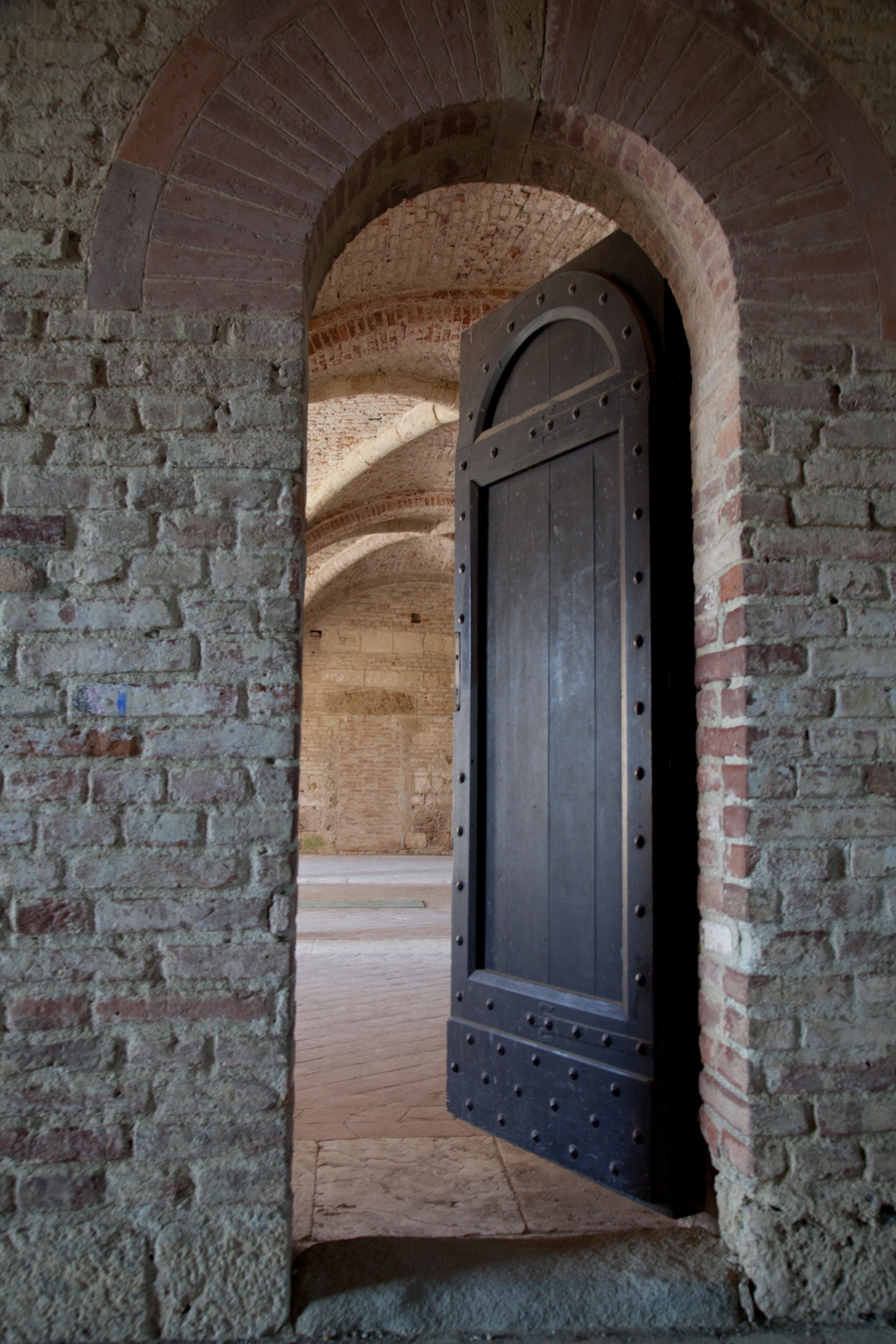
My laptop has a keypad lock that opens up a vault. Inside there is a labyrinth of rooms; and in those rooms: stories, poems, and word-hoards.


I type to get inside.


Some people know which keys to press. They spend their years alone and learn the secret sequence. Their fingers type until the doors crack open; then they step inside. When they return, their arms are full of stories. Others tap, tap, tap so lightly and open doors to poems.


Any combination lets you in that first door: an antechamber full of prose and verse. In that dim light all words glitter, enough to make you think they’re gold. I’ve been a fool and dragged more than a few out in the light and found them only brass.


Farther in, the light grows faint and you wander in a maze where every door is locked. No one can guarantee the doors will yield.  You walk by faith, not sight. I’ve stumbled into doors, heard the murmurs of the words, but failed to get inside.


I’m baffled by the combinations.


At night I dream of permutations and wake up full of simple faith. Stories and poems wait in that many-chambered place. So day after day, I type and hope that I can open doors. I want to find those words I’ve heard so much about.


Motherhood

Standard

For my mother and two older sisters, moving into motherhood was like moving into a new neighborhood. They picked out houses they liked, ones that came with a husband and children, set up the furniture, and settled down to get to know the neighbors. All three of them moved into that neighborhood before they turned 20.

I thought that one day I would move in there, too. Whenever I wanted to. Every woman I knew did; and there seemed to be a house for everyone.

One month before I turned 30, I finally said, “I do.” For the first year of my married life, I used a form of birth control because I thought I was in control of having babies.

Yesterday I wrote about the shame I felt because I couldn’t get pregnant. I felt like a failure. My husband tried to talk me out of both of those emotions; so did a counselor. It didn’t make sense to be so overwrought. My mind grasped that, but my emotions had their own reasons; on the surface, they seemed illogical, but they weren’t.

Underneath the shame and sense of failure, I had a deeper wound. One I couldn’t talk about or explain because I didn’t have words for it. I rummaged around in my heart and found something I couldn’t identify. I didn’t have enough light to see properly and when I tried to drag it out. I couldn’t: it was too big and all the edges seemed too sharp for me to grasp.

In the third year of my struggles, my husband and I went to visit my oldest sister and her family in Georgia. Mother lived with them at the time. I have no recollection of what we did or said that first day. We were never close the way some mothers and daughters are. I found fault with almost everything she did and had little patience with her. She, on the other hand, was always kind and did her best to please me. I found that especially irritating. I knew nothing of her pain, nor cared to know, but that day I must have seen truth flicker for just a moment in her glance or in her words. It was just the amount of light I needed.

That second day I told my mother I wanted to talk to her alone. We went into her bedroom and sat on the bed. I didn’t know yet what I would say because I still couldn’t articulate what I felt. When I opened my mouth, these words came out, “You never wanted me, did you?”

She gasped for air and broke down crying. We held each other for several minutes before she could speak.

“You were such a hard baby,” she said. “I didn’t want to get pregnant again so quickly, but your father was thrilled that were going to have another child. Of all my children, you were the smallest, but I had the hardest time with you. It was like you didn’t want to be born. And then you cried all the time, and I never felt like I could comfort you. Even though I loved you, it seemed like you didn’t want me.”

I don’t remember how long we cried; somehow the words and tears washed away years of hurt. It sounds impossible, even to me, but it’s true. From that day, our relationship radically changed.

Our lives are full of mystery. My mother carried shame and grief for a child she had; I carried mine for the child I never had. She needed me to say the words that could not tell herself; I needed to say the words so I could heal myself. My hard words released both of us that day. Sometimes words can do that.

Barren

Standard


You stand before a vast, empty country, the land taut and pinned to the horizon. You measure your journey in months, believing the mirages, imagining fruit-laden trees. Before you, emptiness; behind you, the bones of your hope, bleached white by the unblinking sun. Blistered by grief, you drink shame; it burns your throat.


Your womb refuses life; it is the tomb of lost children. A dozen die each year. You see their blood and weep.


Reason tells you that giving birth is not a measure of your worth. You are still a woman. You listen politely, go home and drown yourself in tears. You curse the moon.


At the store, you wander the aisles, fill your basket high with food; some hungers can be filled. A woman, great with child, walks by, smiles at you, as if the two of you shared a secret. You leave the basket; someone will come by later and empty it. You must leave quickly, before the wailing starts, before you rock yourself to silence.


You do not know the secret.


After the silence, you rage, scorch earth and heaven with your anger. You tend the fire of hatred and burn yourself.


In the times before this, when your body kissed your lover, you shut the door to time. Now you line the walls with calendars, watch the clock, measure love by numbers, as if there were a recipe for life.


You give yourself to doctors, learn the humiliation of need, fail, and try until you are tired of dying like this.


One night after some years have passed, you hear the soft whimper of a child, and rise to hold her in your arms. Standing before the window, you see the full moon and smile. You never learned the secret, and yet your arms are full, too.


Another woman, in a different place, rises from her sleep and stands beneath the moon. Her hands search beneath her breasts and feel the emptiness beneath her heart, where a child once slept. That child sleeps now in the arms of the barren woman.


On dark nights when the moon empties itself of light, you think of the woman who shared her secret. You weep for the moon and the woman. You, too, know something of emptiness.


A writing life

Standard

I’ve been writing all my life.


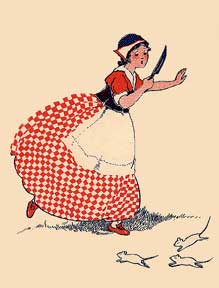
At first I merely drooled my poems on my mother’s shoulder. She never understood. I wrote on cloth day after day in words so rude my mother washed them all away. I scrawled runes on walls with crayons about my fear of farmer’s wives with knives and cradles that fall down, but none could parse my text.


My early days in school, I learned to wield a yellow pencil, its lead held every word I knew. My large block letters stayed between the lines, like banners on the page. The sky is big. The sky is blue. The clouds are white. I like the sky. I was Hemingway in pigtails.


Those middle years in school, I self-published a thousand reports, wrote memoirs every fall for teachers who pined for summers past, and critiqued more than a hundred books for free.


In high school, poems fell from my pen at an alarming rate. None survived the fall. They carried too much angst, unrequited love, and dark thoughts to land upon the page unscathed. I found poems and stories in a typewriter many years ago, then lost them when I moved away.


All the writing that I’ve done since, I’ve hidden in a drawer or filed away. My words have been a secret I whisper only to myself. I share them now because I’ve grown brave or old or maybe both.


I’ve been writing all my life.

The other f-word

Standard

This week I used the f-word in a conversation with my grandchild. Not the four-letter f-word; that one continues to grow weaker with each use in its tiresome march toward banality. I used the other one, the three-letter f-word, which according to my grandchild, isn’t nice.


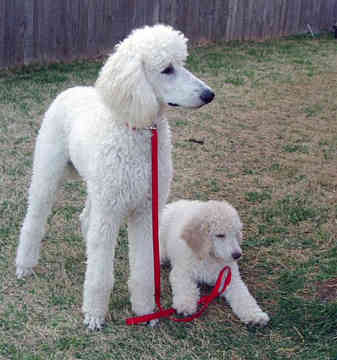
We were poodles at the time, so we had to call our lunch “dog food.” One minute we were talking about how poodles enjoy eating worms, the grandchild’s take on our pesto pasta; and the next minute, we were discussing Santa Claus and pregnant women. If you have ever talked to a poodle, you understand that they have wide-ranging interests. When we talked about Santa, I said his belly was fat. That led to the “not nice” comment.


I agreed and said we shouldn’t call people fat. It’s fine for imaginary people, but real people come in all sizes. Some are big and some are small, I said. We shouldn’t call bigger people fat.


Satisfied that I had learned my lesson about calling people fat, the little poodle said, “We can tell big people, ‘You look fat, but you’re not fat.’”


Small children and poodles are literalists. They understand the denotation, literal meaning, of a word; but they can also understand the connotations, other words and emotions associated with a word. Fat in its literal meaning refers to the size of a person’s body; but it is stuffed with connotations. Fat is more often used as a pejorative, a sign of moral failure, and implies that a person is lazy, dull, or stupid.


We have many synonyms for fat: corpulent, obese, chubby, plump, thick-set, and pudgy, just to name a few. But “fat” appears in print earlier than all the rest. It comes from the Old English word fǽtt and shows up in writings around the late 9th century.


In every day speech, we favor words with Old English roots. According to the University of Texas website, half of the thousand most commonly used words in English come from Old English. That includes pronouns, prepositions, conjunctions and all those short, direct words like fast, good, wonder, water, and “word” itself. You can’t open your mouth without one of those ancient words strolling out.


Talking about fat is delicate business because the connotations keep getting in the way. We can use words like overweight, big, and heavy to talk about body size, but “fat” will still be there. Eliminating it from our bodies is possible; eliminating it from our lexicon is near impossible.


In the U.S., about one-third of our children have more stored fat than they need. At school and on the playground they hear the three-letter f-word all of the time. Name-calling causes a lot of emotional pain and suffering, so we need to teach children not to call other people fat. But having too much fat on a body causes a lot of physical pain and suffering, so we need to feed our children real food; then they will be healthy and won’t get called names.

Snacking with the grandchild
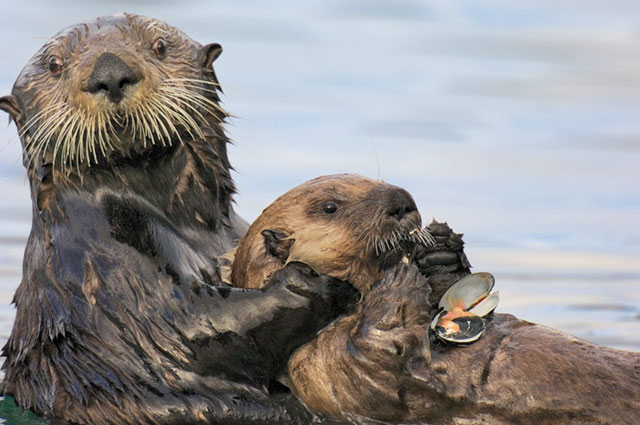
Photo by Tom and Pat Leeson, Vancouver, Washington, USA at ahttp://www.mnh.si.edu

My grandchild and I went to the zoo after lunch. By the time we got home, we were otters, hungry ones, so we munched on carrots and tangerines, and talked about the animals we had seen.


We feed our children both information and food. We can teach them to speak nicely about others, and we can teach them to eat good food. Both are necessary, and both are nice, that is to say, in good taste.

Thank you for coming

Standard

Every Wednesday evening, Jack and Mary walk into the classroom together. They greet the other students and then sit down at one of the round tables to study. They share a book because textbooks are expensive. When we read about the U.S. Civil War, a student from Somalia tells of her escape from that civil war. She has no hope of union for her country. Two more students speak up; they also fled their homelands because of political turmoil.


Not Jack and Mary. Our country is a good place to live, they tell me. They grew up on an island in Southeast Asia. Jack reads a short story he wrote about the clear ocean water he swam in as a child and the sea cucumbers the villagers gathered from the sea. Mary reads a story about her family’s cows. When she was young, she tended them. She would pick a cow, climb atop it, and spend the afternoon playing her flute or reading a book while the cows fed on sweet grass.


We talk about slavery and freedom. The topic veers when a student from Central America tells us how her government punishes those who speak against it or who dare to protest. Everyone agrees that we should be free to speak our mind, even if we disagree with the government. Mary breaks in and says, We have freedom in my country; it’s a good place.


Both Jack and Mary try to hide their homesickness when they talk about their island home. We came here for our son, they say. Many of the students I teach come to America for their children. They have simple dreams for their sons and daughters: safety, education, and jobs. Jack and Mary are no different. They want their son to get an education and a job, to be a productive member of society. This son, their only child, was born with mental disabilities.


Jack and Mary must be in their mid to late fifties now; Mary bore her son late. Neither one has enough English yet to do anything other than menial jobs. English sounds don’t fit well in Jack’s mouth, so he tries to reshape them into the familiar sounds of his childhood. When he asks me what Emancipation Proclamation means, it takes a minute before I understand what he is saying.


After class last week we talked about the opportunities available for their son. I mentioned the local packaging company that trains and hires people with disabilities. That’s what we want for our son, Jack said. Mary nodded. Our son wants to work, she said. They see his limitations, but they also see his possibilities. All three of them want to contribute, to be part of their new homeland.


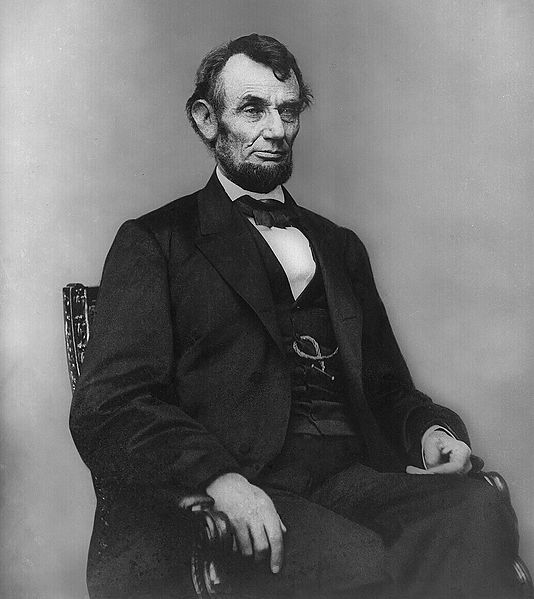
Jack and Mary have another two years before they are eligible to apply for citizenship, but they want to be ready, so they come each week to the citizenship class. We talk about Abraham Lincoln, the 16th president, and practice saying ‘Emancipation Proclamation.”


Last night we talked about more recent history: the Great Depression, the two World Wars, and Martin Luther King, Jr. Mary takes careful notes and asks a lot of questions. She wants to get it right. Jack and Mary listen carefully to the mottled stories of victory, failure, glory, shame, courage, and hope that we call U.S. history, and that they are learning to call, our history.


The citizenship class ends at 8 p.m. My day started with a class at 8:30 a.m., so I’m tired. Jack and Mary are the last to leave. They thank me for the class, and I thank them for coming. I mean it both ways: coming to class and coming to America. I don’t explain it; I just smile and say goodnight. I watch them walk down the hall, heads together, talking, just the way you would expect old lovers to do. I imagine them talking of all the possibilities.